
If you’re traveling from Seoul to Busan with more bags than usual, the practical answer is simple: choose an option that matches how much luggage you have, confirm the provider’s luggage policy before you book, and plan time and transfers to avoid rush-hour hassles. On the travel day, prioritize transport that accepts larger or extra bags, uses straightforward station layouts, or offers add-on baggage services you can prepay. There are tradeoffs: faster options may have stricter size limits or crowded stations, while slower or private alternatives can ease handling but add cost and complexity. In this guide I’ll outline how to evaluate train, bus, and car options specifically for luggage, what to verify on booking pages, and step-by-step actions for the day so you arrive in Busan with fewer surprises.
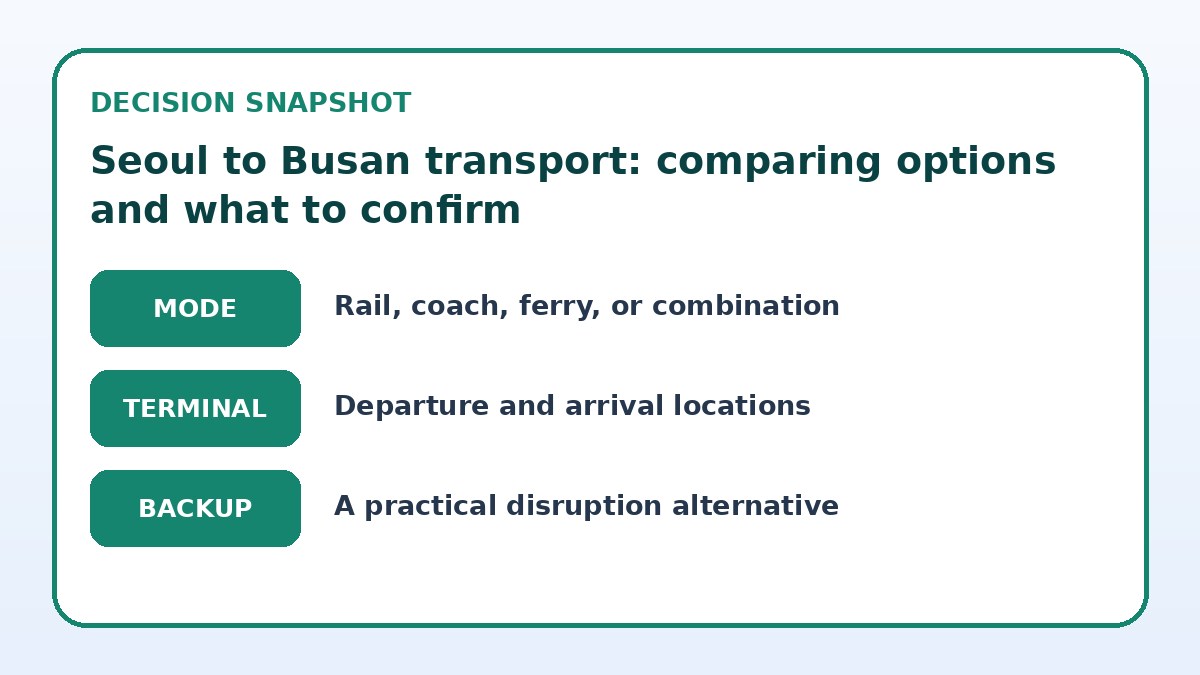
See current options before you compare the details
Availability and final conditions change. Open Trip.com now or keep reading for the practical comparison.
Decide the mode by how you handle your luggage
Start by matching the mode of transport to the amount and type of baggage you’ll carry. Trains often provide open luggage racks and more space to stand with bags, but that space isn’t reserved and can fill up at busy times. Long-distance coaches may have large underfloor bays for suitcases, which removes the need to juggle bags on platforms, while renting a car gives you total control of loading and unloading at both ends. Think in realistic terms: if you have many large suitcases, a solution with dedicated luggage storage or a staffed drop-off will reduce physical strain.
Decisions should consider transfers: how you get from your accommodation in Seoul to the departure point and from Busan station to your final stop. Short, single-transfer journeys reduce the number of times you must move bags across platforms or down staircases. If your day plan includes subway rides, check station accessibility for elevators or ramps. Finally, balance budget and convenience: the cheapest option may add transfers and heavy carrying, while paying a bit more can buy simplicity and time—important on a travel day with lots of luggage.
What to verify on the booking page
Before finalizing any reservation, verify the provider’s luggage rules and any extra-charge policies on the provider’s final booking page. Look for explicit limits on weight, dimensions, number of free items, and whether sports equipment or oversized boxes are treated differently. If the page mentions a separate baggage reservation or an add-on fee for heavy or excess bags, add that into your total cost and assess whether prepaying is possible. If the website is unclear, use its contact channel to confirm in writing so you have a record if staff at the terminal later raise issues.
Also check operational details that affect moving luggage: the exact departure and arrival station names and which platforms or concourses are used, whether assistance for boarding is available, and whether luggage storage or porter services are offered at the destination. If you’ll need to transfer between different transport modes, confirm connection windows and whether luggage is carried through by staff or you must collect and recheck. Trip.com can be useful to compare current availability and conditions, but always verify luggage-specific terms on the provider’s own booking page before payment.
| Approach | Best for | Tradeoff to check |
|---|---|---|
| High-speed train with open racks | Travelers who want speed and can manage hand-carried luggage | Racks are first-come first-served and space may be limited at busy times |
| Intercity coach with underfloor storage | Those with multiple large suitcases who prefer not to carry bags onboard | Coaches may require exact drop-off points and could add time for loading and unloading |
| Private transfer or taxi van | Door-to-door convenience and minimal handling of heavy items | Typically more expensive and subject to road traffic and parking limitations |
| Combination: train plus luggage-forwarding service | Travelers who want fast transit while avoiding carrying bulky items on platforms | Requires coordinating schedules and trusting a third-party service to deliver on time |
Ready to check the option that fits your plan?
Use your exact dates and traveler details so the provider page can show the current total and conditions.
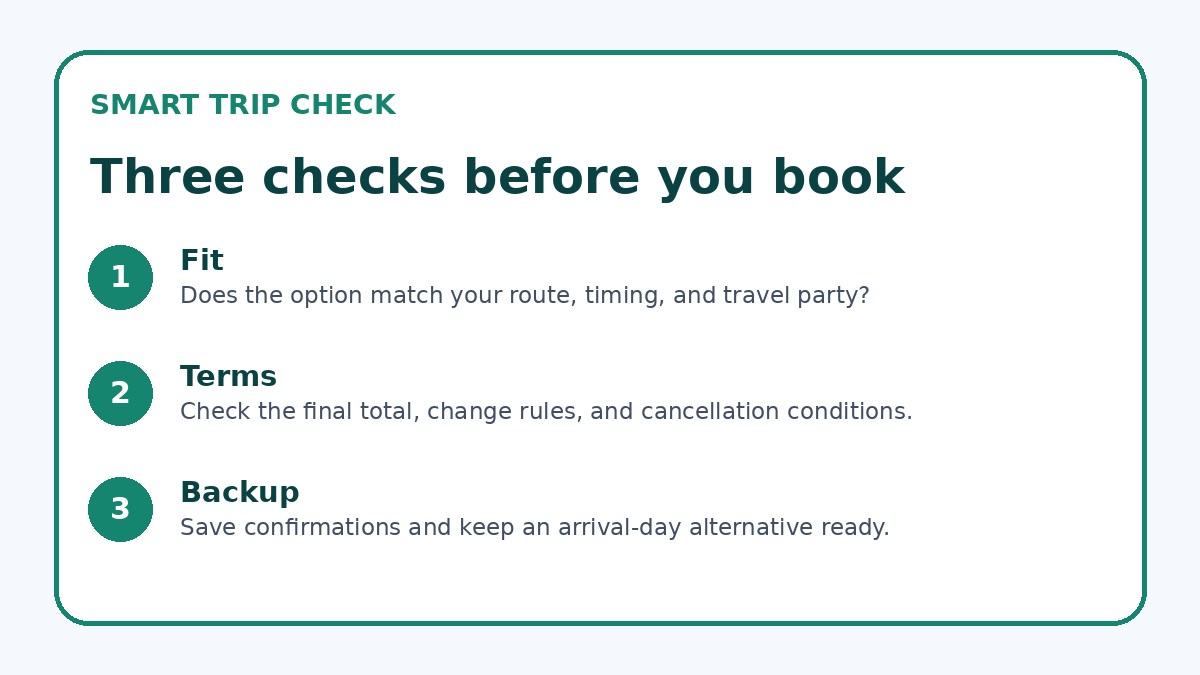
Planning the travel day timeline and transferring bags
Build a travel-day schedule with buffer time for every luggage handoff. On the departure side, arriving earlier than a typical solo traveler lets you find elevators, buy last-minute supplies, and store or tag bags if necessary. Map the exact route from your accommodation to the station or terminal, noting stairs, long corridors, and elevator locations; many station maps and apps show accessible routes. If you rely on taxis, book one that can carry your full load—or split into two pickups to avoid cramming trunks and risking delays.
At arrival in Busan, plan for the last-mile logistics: will you need a taxi that accepts large suitcases, or will a hotel offer luggage pickup? If you’ll change transport modes, check whether there are staffed left-luggage offices, coin lockers, or private luggage-forwarding services you can use to lighten the final leg. Keep receipts for any paid handling services so you can track costs. Finally, coordinate with travel companions about who carries what and where to meet if you’re splitting up for connections to avoid chaotic reunions with heavy bags.
Before you book
- Confirm luggage size, weight, and item limits on the provider’s final booking page and save a screenshot of the policy.
- Map transfer routes in Seoul and Busan, highlighting elevators or barrier-free access between platforms.
- Reserve a transport window with extra buffer time—add at least 30–60 minutes for luggage handling.
- Arrange a taxi or private pick-up suited to your luggage volume, and confirm vehicle capacity in advance.
- Pack a compact daypack with documents, chargers, medication, and a change of clothes for easy access.
- Photograph and label each bag, and leave a copy of the booking confirmation and contact details inside one piece of luggage.
Gear, packing tactics and day-of practices
Choose luggage that moves well: wheeled suitcases with sturdy wheels, well-balanced backpacks, and compression straps make transfers simpler. Use packing cubes to keep fragile or heavy items centered and avoid a bag that tips. Label each bag clearly with your name, phone number, and an alternative contact, and add a secondary inside label. Keep essential items—documents, medication, a change of clothes, chargers—in a small carry-on or daypack stowed under the seat or in an overhead area, so you won’t need to open a big case at every stop.
On the travel day, stage everything the night before so you can load the car or taxi efficiently and avoid last-minute repacking. Bring simple repair items like extra zip ties, a strap, and a small toolkit for zippers or wheel issues. Photograph the exterior of each bag and its contents if anything is valuable or hard to replace. Finally, move deliberately on platforms: stand away from the yellow line while you arrange luggage, and board earlier than peak crowds when possible to secure space for bags and reduce stress.
Frequently asked questions
Can I bring oversized suitcases on intercity trains between Seoul and Busan?
Policies differ by operator and train type, so check the specific luggage allowances on the provider’s booking page before you pay. Many trains allow standard suitcases in open racks or designated areas, but oversized or extra items may require a reservation or incur an extra fee. If the website is unclear, contact customer service and request written confirmation of whether your specific bag dimensions and weight are acceptable. At the station, staff may enforce rules differently than advertised, so having the booking confirmation helps resolve disputes.
What are good options if I don’t want to carry heavy bags through stations?
Look for services like scheduled luggage forwarding, hotel-to-hotel delivery, or coaches with underfloor bays that remove the need to manage bags on platforms. Private transfers or taxis that can load luggage for you are another practical choice for door-to-door convenience. Each option has tradeoffs: forwarding adds coordination time and reliance on a third party, while private vehicles cost more but simplify movement. Confirm pickup and delivery windows and any insurance or claims process before handing over valuables.
How much time should I allow at Seoul departure points when traveling with extra luggage?
Allow significantly more time than for a light-packing trip: arrive early enough to find elevators or ramps, check in baggage if needed, and navigate ticket gates without rushing. Exact buffer depends on your luggage volume and the complexity of the station transfer, but planning at least 30 to 60 extra minutes beyond normal check-in or boarding times is prudent. If you must use public transit to reach the station, add extra margin for elevator waits or peak crowding; when in doubt, contact the station or transport provider to ask about recommended arrival times for passengers with large luggage.
Final planning note
Traveling Seoul to Busan with extra luggage is mainly a planning problem rather than a technical one. Choose the transport mode that matches how much you need to move, verify luggage rules on the provider’s final booking page, and plan transfers and timing to minimize carrying. On the travel day, staged packing, clear labeling, and prearranged pickups or luggage services reduce stress and delays. If you’re undecided, compare the tradeoffs—speed versus handling ease, cost versus convenience—and pick the option that leaves you with the fewest physical lifts and the most time buffer. That approach makes the journey smoother and lets you enjoy Busan once you arrive.
Continue planning
Check current options and final conditions
Use the provider page to confirm live availability, the final total, cancellation terms, and every condition that matters to your trip.
This evergreen planning guide was created with AI-assisted drafting and a structured quality review. It does not display live prices, schedules, availability, visa guidance, or provider rankings. Verify current details before booking. Some links are affiliate links; we may earn a commission at no additional cost to you.