
If your family wants fewer lines, manageable weather, and better availability of family rooms without chasing headline discounts, plan Budapest around the shoulder seasons—late spring (April–early June) and early autumn (September–October). These windows typically mean smaller crowds at major sights, easier museum and thermal-bath access for kids, and more hotel options that will gladly adapt rooms or add cots. The practical move for booking: compare weeknight vs weekend rates, check refundable or flexible family room policies, and pick neighborhoods that cut transit time to your must-see list. Use those comparisons to weigh whether a slightly higher rate is worth the convenience of a central apartment or the savings of a quieter outer district with quick tram links.
See current options before you compare the details
Availability and final conditions change. Open Trip.com now or keep reading for the practical comparison.
Why shoulder seasons suit family travel to Budapest
Shoulder seasons balance the upside of lower visitor numbers with reasonable weather, which matters for families juggling naps, outdoor breaks and sightseeing stamina. Less crowding at the Parliament, Fisherman’s Bastion, and the Széchenyi baths means shorter waits and more relaxed pacing—helpful when attention spans are short and plans need to be flexible. Museums and family-friendly attractions tend to feel less rushed, and you can reserve a table at a family-friendly restaurant without long queues. These benefits help you shape days that keep children comfortable while still covering the highlights parents want to see.
However, shoulder weather is inherently changeable: you might get a sunny, warm afternoon or a chilly, rainy morning, sometimes on the same day. That variability affects daily logistics—do you book an outdoor river cruise or rely on indoor options as a backup? It also affects packing and activity choice: layers, waterproof shoes and a compact umbrella are practical, and planning alternating indoor and outdoor activities helps avoid wasted travel time. The goal is to use shoulder-season crowd advantages while layering contingency plans for the weather and energy levels of your family.
Where to stay: neighborhoods and family tradeoffs
Picking a neighborhood is one of your biggest levers for comfort and savings. For first-time visitors with small kids, choose a central district near the Danube or District V for short walks between attractions, fewer transfers, and easier returns to the hotel for naps. Families wanting quieter evenings or lower nightly rates might prefer Districts VI or VII, where short tram or metro rides connect you to major sites while giving more apartment-style lodging options. Consider whether you want a one-bedroom apartment with a kitchenette to simplify meals or a hotel that offers early breakfasts and on-site laundry.
Weigh convenience against price and apartment style: a central location shortens walking distance but can cost more or offer smaller rooms; an outer neighborhood may be roomier but add transit time and logistics with strollers or evening returns. If public transport is a factor for you, prioritize places close to metro lines or tram stops that have direct routes to your priority sights. Whatever you choose, verify family-specific amenities—cribs, interconnecting rooms, sofa beds—directly on the provider’s booking page and confirm cancellation and change policies before committing.
| Approach | Best for | Tradeoff to check |
|---|---|---|
| Central hotel with breakfast | Families wanting short walks and quick returns for naps | Usually higher nightly rate and smaller room size than apartments |
| Apartment in quieter district | Families who want kitchen facilities and more living space | Requires more transit planning and may lack daily housekeeping |
| Flexible refundable booking | Families with uncertain dates or higher chance of itinerary change | Often costs more upfront than strict nonrefundable deals |
| Nonrefundable bargain rate | Families with fixed plans and a lower tolerance for higher upfront cost | Little to no flexibility if plans change due to illness or weather |
Ready to check the option that fits your plan?
Use your exact dates and traveler details so the provider page can show the current total and conditions.
How to compare Budapest travel deals for families
When you hunt deals, compare the same package across criteria that matter to family life: refundable rate vs nonrefundable savings, whether breakfast is included for kids, bed configuration options and any incidental fees for extra guests. Start by listing your non-negotiables—nap-friendly proximity, kitchenette, or specific bed types—then filter options against those needs. Price is only one component; a slightly higher nightly cost that saves transit time or eliminates a taxi at night can be worth it. Keep a short spreadsheet or notes listing those tradeoffs so you can compare apples to apples.
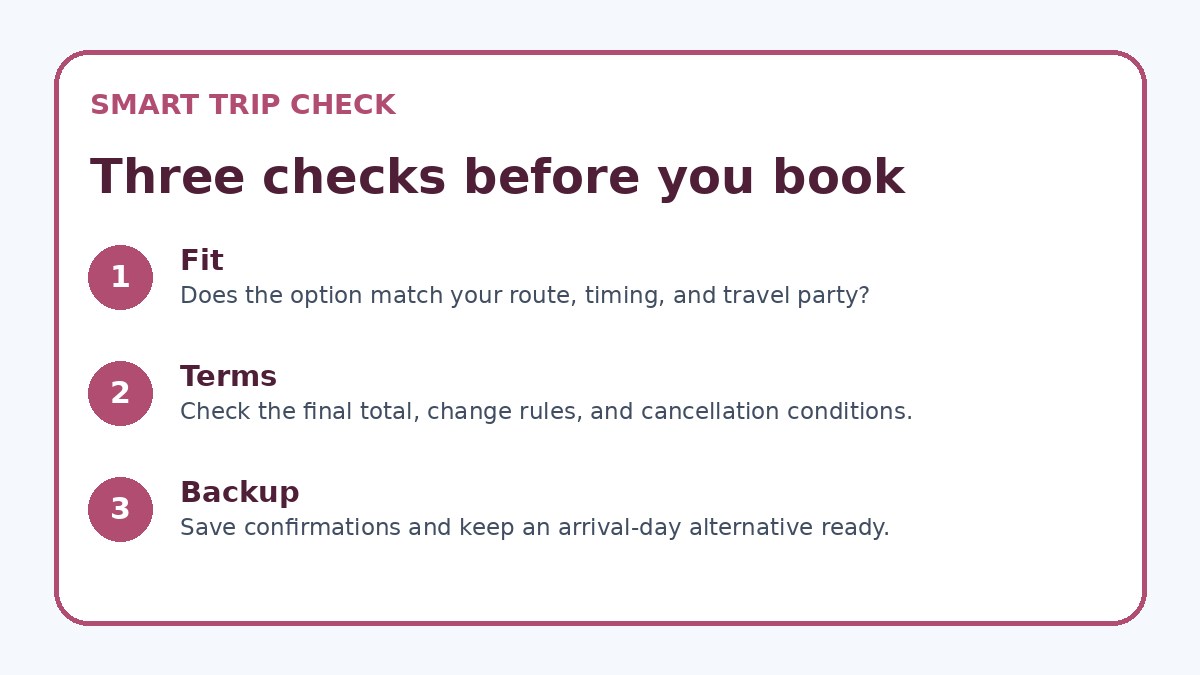
Always read the fine print on the booking page before finalizing: verify the exact room type, whether extra beds are free or charged, check the hotel’s policy on child age definitions, and confirm how cancellations or date changes are handled. If you use an aggregator, follow through to the hotel’s own page or the booking provider’s final confirmation screen to ensure amenities and rules haven’t changed. Trip.com can be a place to check availability alongside other sites, but treat each rate and policy as provisional until you see the provider’s final terms.
Before you book
- List your must-have amenities (crib, kitchenette, interconnecting rooms) before searching and use those as non-negotiable filters.
- Compare refundable and nonrefundable rates side by side and calculate the break-even point for likely changes in your plans.
- Check transport links from shortlisted properties to your top three attractions and note walking times or transfer counts.
- Read the final provider booking page for room descriptions, child policies, extra-bed fees, and cancellation terms before confirming.
- Pack layered clothing, a lightweight rain jacket, and comfortable shoes to handle shoulder-season weather swings.
- Identify nearby conveniences—grocery, pharmacy, playground—and save their locations to your phone for quick access.
Activities and pacing for shoulder-season visits
Plan each day with a mix of indoor and outdoor options to accommodate the variable shoulder-season weather: morning museum visits, an outdoor break in a park or along the river, and an indoor afternoon option like a thermal bath or interactive museum. Kids tire, so pick one headline attraction per day and slot smaller, nearby activities to fill time without extra travel. Use free days or light travel days for longer experiences, and reserve high-demand activities for mornings when energy is higher. Leave buffer time for unexpected needs—snacks, rest breaks, and quick returns to the room.
Booking ahead helps for specific family needs like guided tours with child-focused themes or timed-entry attractions, but flexibility matters too. If you’re comparing deals for tours or timed tickets, prioritize refundable or changeable options where possible; kids’ moods and weather changes can force last-minute schedule shifts. Finally, identify a few local conveniences near your stay—pharmacies, grocery stores, playgrounds—and keep them on hand so small emergencies or delays don’t derail a day.
Frequently asked questions
Is Budapest a good family destination in shoulder seasons?
Yes; shoulder seasons offer fewer crowds and more relaxed museum and attraction experiences, which makes moving around with children easier. The weather is cooler and can be changeable, so plan alternating indoor and outdoor activities. Pick accommodation that reduces daily transit—either centrally or near a direct tram or metro line—to make returns for naps or late evenings simple. Keep flexible booking options where possible so illness or weather won’t force expensive last-minute changes.
How do I find family-friendly Budapest travel deals without sacrificing convenience?
Start by defining what convenience means for your family—short walking distances, a kitchenette, specific bed arrangements—and use those criteria to filter options rather than chasing the lowest price. Compare similar room types across refundable and nonrefundable rates and value added services like breakfast or laundry. Verify family amenities and cancellation rules on the final booking page, and consider the tradeoff between a slightly higher central rate and the savings in daily transit time and stress.
Should I book activities in advance during shoulder season?
Booking key timed activities—like guided tours or popular thermal-bath time slots—can reduce stress and guarantee space, especially for family groups. For more flexible days, leave some afternoons open for spontaneous choices depending on weather and energy levels. If you reserve tours or tickets, prefer options that allow changes or cancellations when possible. Always confirm meeting points, child age policies, and what’s included for children on the provider’s booking confirmation.
Final planning note
Planning Budapest travel deals around the shoulder seasons gives families a practical balance of lower crowds and manageable weather—but it requires active comparison of what matters to you. Prioritize accommodation that reduces daily friction: a central spot for short walks, or an apartment that lets you pace meals and naps. Compare refundable and nonrefundable rates against the likely costs of a disrupted plan, and verify children’s amenities directly on the provider’s final booking page. With a short list of non-negotiables and flexible daily plans, you’ll get the benefits of shoulder-season travel without being surprised by last-minute changes.
Continue planning
Check current options and final conditions
Use the provider page to confirm live availability, the final total, cancellation terms, and every condition that matters to your trip.
This evergreen planning guide was created with AI-assisted drafting and a structured quality review. It does not display live prices, schedules, availability, visa guidance, or provider rankings. Verify current details before booking. Some links are affiliate links; we may earn a commission at no additional cost to you.