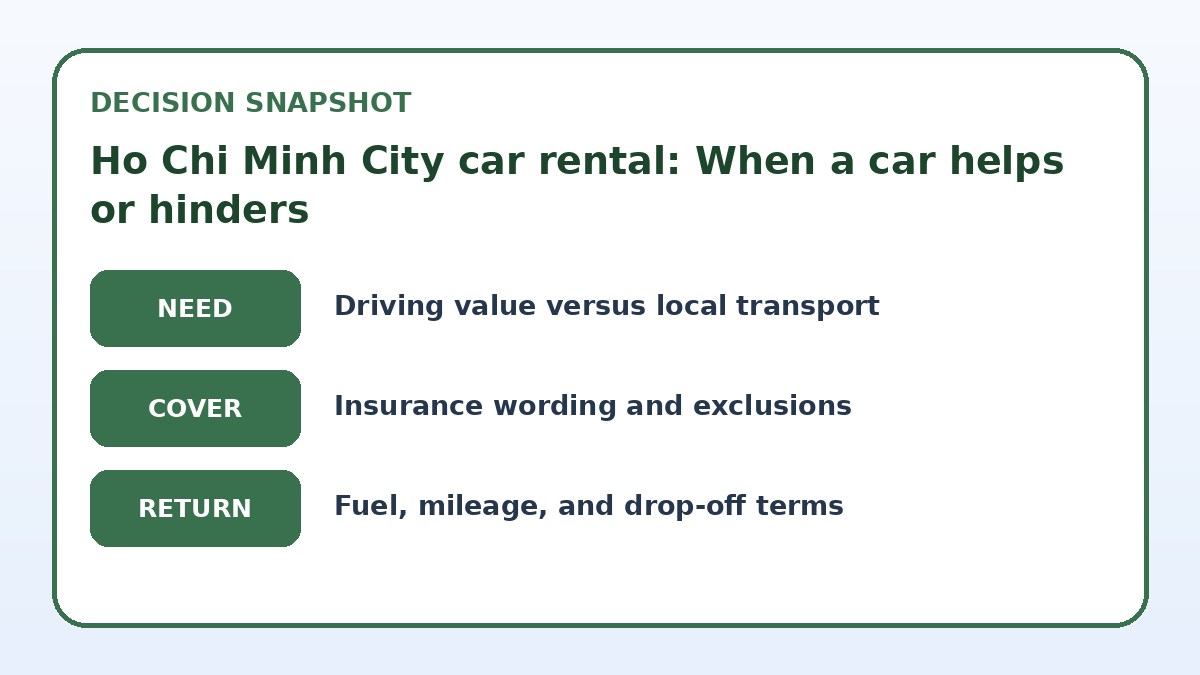
Practical answer up front: for most first-time visitors to Ho Chi Minh City, renting a car for use inside the city itself is usually more trouble than it’s worth. The traffic is dense, parking is limited, and getting around by motorbike taxi, ride-hailing, public transport, or guided tours is generally faster and less stressful. A rental car makes sense if your itinerary includes day trips outside the metropolitan area to destinations where public transport is sparse, you need secure luggage storage for several passengers, or you value a private vehicle for mobility and comfort. This guide explains the tradeoffs, helps you compare options, and lists what to check on provider pages before you book. If you want to compare current availability, Trip.com can be one place to view offers, but check each supplier’s terms and local rules directly before confirming.
See current options before you compare the details
Availability and final conditions change. Open Trip.com now or keep reading for the practical comparison.
When a rental car helps
A rental car is most useful when your calendar includes substantial travel beyond Ho Chi Minh City’s core. If you intend to visit outlying attractions, rural provinces, or multiple towns where public transit options are infrequent or require long connections, a car gives you schedule flexibility and control over stops. Family groups, older travelers, or anyone carrying lots of luggage often appreciate the comfort, shade, and climate control a private vehicle offers compared with motorbikes or crowded buses. A car can also be a practical solution for early-morning departures or late-night returns when other services are scarce.
Another scenario where a rental makes sense is when your itinerary relies on precise timing—such as business meetings, airport transfers for a group, or photography plans that require arriving before dawn. You’ll want to plan routes that avoid peak congestion if possible, and pick a vehicle size that fits both passengers and luggage comfortably. Consider whether you need a driver: hiring a car with a local driver lets you avoid navigating chaotic traffic and reading Vietnamese road signage, but it changes costs, responsibilities, and the level of interaction you’ll have with local regulations.
Why driving inside the city is often impractical
Ho Chi Minh City’s streets are vibrant but crowded. Two-wheel traffic dominates many neighborhoods, lanes narrow quickly, and drivers routinely use close gaps to keep traffic moving. This environment makes for a steep learning curve for visitors unfamiliar with local behaviors and traffic patterns. Parking can be limited, expensive in tourist hotspots, and sometimes requires negotiation with a private attendant. Beyond the stress of driving itself, finding and paying for legal parking spaces near major attractions may negate the time savings a car could provide.
Navigation apps help but don’t eliminate the challenges. One-way streets, temporary roadworks, and market-day closures can force sudden changes to your route. Ride-hailing services and taxis let you avoid these hassles while often arriving faster because drivers are adapted to local conditions and can use smaller means of transport when needed. For short intra-city trips, this tends to be the faster, cheaper, and less stressful option, freeing you to focus on planning activities instead of parking and traffic management.
| Approach | Best for | Tradeoff to check |
|---|---|---|
| Self-drive rental inside the city | Experienced drivers who need door-to-door flexibility and private luggage space | High stress from traffic, parking difficulty, and learning local driving behavior |
| Rental car for intercity or rural day trips | Groups or families visiting outlying attractions with limited public transport | Extra time and cost to find parking at start/end points; consider driver option |
| Car with local driver | Visitors who want comfort and schedule control without handling local traffic | Higher cost and less privacy; verify driver credentials and included terms |
| No rental—use taxis, ride-hailing, and public transport | Solo travelers or short-stay visitors focusing on inner-city sights | Less flexibility for day trips outside the network; luggage management can be harder |
Ready to check the option that fits your plan?
Use your exact dates and traveler details so the provider page can show the current total and conditions.
Costs, insurance, and rules to compare
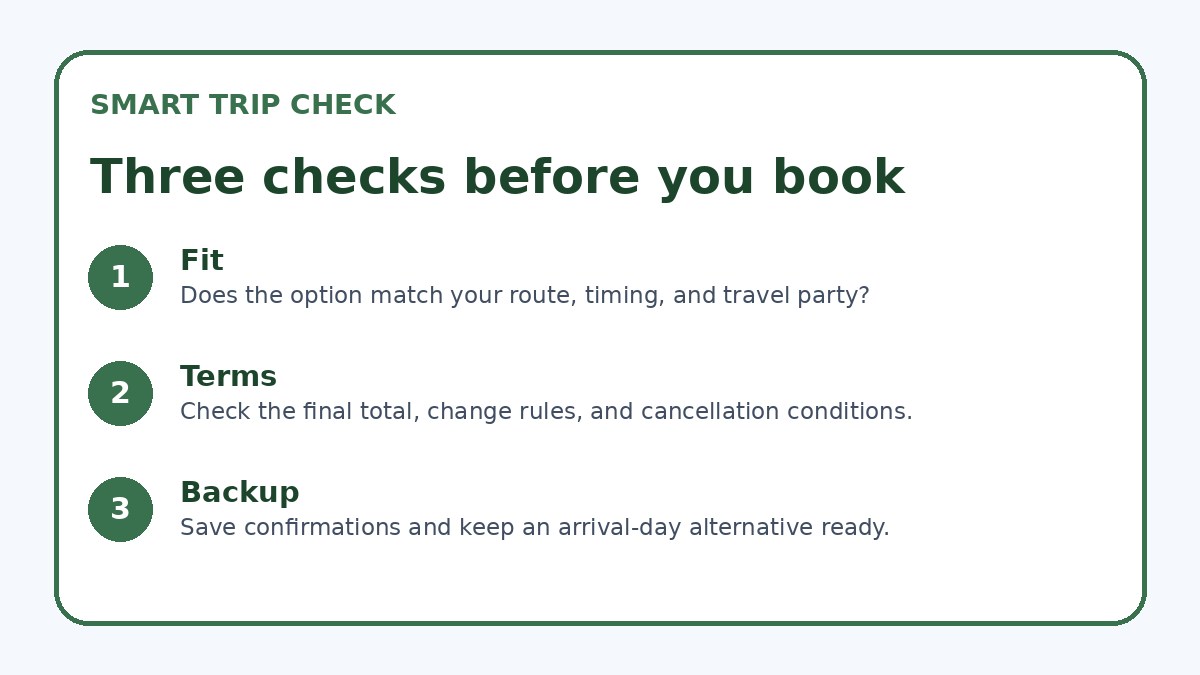
When evaluating a rental, look beyond the headline daily rate. Compare fuel policy (full-to-full is usually simplest), mileage limits, young driver surcharges, and deposit requirements. Insurance is especially important: verify whether basic coverage is included, what the excess (deductible) is, and whether you have sufficient third-party liability. If you plan to drive across provincial borders, or beyond Vietnam (rare but sometimes offered), confirm cross-border permissions and extra insurance needs. Always read the supplier’s final booking page for exact terms—don’t rely on summary text from aggregators.
Licensing and paperwork deserve careful attention. Many providers require an International Driving Permit alongside your national license; others accept only certain license types or a local temporary permit. Some rentals include a local driver option; compare that cost to self-drive, particularly if you don’t want to navigate city traffic. Also confirm fuel type and where to refuel, the provider’s breakdown and emergency procedures, and how they handle tolls and traffic fines. These operational details will materially affect both cost and convenience.
Before you book
- Decide whether your itinerary includes multi-stop day trips outside the metropolitan area before considering a rental.
- Confirm on the provider’s final booking page what licenses are accepted and whether an International Driving Permit is required.
- Compare insurance options and note the excess (deductible), what is covered, and any available waivers.
- Check fuel policy, mileage limits, deposit amount, and how tolls or traffic fines are handled by the rental company.
- If you want a car with a driver, verify whether the driver’s hours, language ability, and accommodation provisions are included.
- Map planned routes and parking options for each day to estimate time lost to congestion and parking searches.
Alternatives and mixed approaches
You don’t have to choose just one mode of transport. A mixed approach often works best for first-time visitors: use taxis, ride-hailing, and public transport inside the city, and rent a car only for specific day trips or overnight excursions. This reduces time spent navigating congested streets and lowers parking hassle, while still giving you control and comfort when traveling to less-connected areas. Booking a driver for certain legs—such as a multi-day Mekong Delta trip—can combine local knowledge with door-to-door convenience.
Guided day tours are another practical alternative for time-pressed travelers. Tours handle logistics, entry arrangements, and navigation, letting you focus on sightseeing. If you do decide to rent for excursions, try to reserve by the day rather than the hour, plan your route to minimize backtracking, and leave buffer time for traffic. Layering transport modes lets you adapt to real-world conditions: start with public options and add a car only when the itinerary clearly benefits.
Frequently asked questions
Can a tourist legally drive in Vietnam with a foreign license?
Whether you can drive on a foreign license depends on the license type and local rules. Some visitors use an International Driving Permit alongside their national license, while others must obtain a temporary local permit. Rental companies enforce their own requirements and may refuse a booking if paperwork is incomplete. Always check the rental provider’s final booking page for the exact documents they require, and confirm any immigration or vehicle registration conditions with local authorities if your travel plans are complex.
Is it safer to hire a driver than to self-drive in Ho Chi Minh City?
Hiring a local driver reduces the risk and stress of navigating heavy traffic, one-way streets, and bustling intersections because drivers understand local patterns and informal rules. It’s often safer for visitors unfamiliar with Vietnamese driving behavior. However, safety also depends on the provider: confirm the driver’s credentials, insurance coverage, and emergency procedures on the booking page. Compare the added cost to the value of reduced stress and better local knowledge when making your choice.
How should I plan day trips if I choose not to rent a car?
If you skip a rental, plan day trips using a mix of options: guided tours for complex itineraries, private transfers for early or late travel, and public buses or trains where practical. Research transfer times and how frequently services run, and buy tickets from reputable providers or official stations. For destinations off major routes, consider arranging a private car for just that day rather than throughout your stay. Always confirm pickup locations and cancellation rules before departure to avoid last-minute hassles.
Final planning note
For most first-time visitors, Ho Chi Minh City travel is smoother without a self-drive rental: dense traffic, limited parking, and local driving patterns make taxis, ride-hailing, and targeted guided trips the more convenient choices for urban sightseeing. A rental car becomes worthwhile when your route extends beyond the city into rural areas with poor public transport, or when group size and luggage needs make private transport practical. If you opt to rent, concentrate on verifying documentation, insurance details, fuel policy, and any cross-province rules on the provider’s final booking page. A mixed approach—using public transport inside the city and renting a car only for specific excursions—often gives the best blend of convenience, cost control, and low stress.
Continue planning
Check current options and final conditions
Use the provider page to confirm live availability, the final total, cancellation terms, and every condition that matters to your trip.
This evergreen planning guide was created with AI-assisted drafting and a structured quality review. It does not display live prices, schedules, availability, visa guidance, or provider rankings. Verify current details before booking. Some links are affiliate links; we may earn a commission at no additional cost to you.