
Practical answer: for families, aim to book Vancouver travel during the shoulder months—late April to early June and September to October—when weather is often milder than winter and crowds are noticeably lower than peak summer. Focus on flexible accommodation rates, refundable or changeable tickets, and neighborhoods that cut daily transit time to key family activities. Prioritize central stays with easy public transit links or short drives to parks, science and aquatic centres, and ferry terminals if you plan a day trip to nearby islands. Use the shoulder window to trade a little unpredictability in weather for quieter museums, more available family-sized rooms, and easier restaurant reservations. When evaluating Vancouver travel deals, compare total daily convenience (sleep, meals, travel time) rather than just headline rates.
See current options before you compare the details
Availability and final conditions change. Open Trip.com now or keep reading for the practical comparison.
Why shoulder seasons suit family travel to Vancouver
Shoulder seasons compress many advantages families care about: fewer people in parks and museums, easier dining reservations, and better availability of rooms with multiple beds or kitchens. For families with strollers or small kids, quieter streets and attractions make movement simpler and reduce wait times. Museums, the aquarium, and indoor play spaces tend to be less crowded, which shortens lines and gives kids more comfortable, flexible visits where you can leave and return without losing your spot.
The downside is more variable weather versus peak summer. Rain showers and cooler days are normal in spring and fall, so plan a mix of indoor and outdoor activities and pack layering options. This is also the time when some seasonal services—ferry routes, specific boat tours, or outdoor festivals—may operate on reduced schedules, so verify current timetables and reservation rules on provider pages before locking in plans.
Choosing a neighborhood: convenience versus quiet
For families, location matters more than a few dollars in savings. Downtown Vancouver and nearby West End give the shortest transit rides to major attractions such as science centers and waterfront activities, easing days when tired kids need quick returns to the hotel. These areas also have concentrated dining and grocery options, which simplifies meal planning. If your family prefers quieter streets and more green space right outside the door, consider South Granville or Kitsilano neighborhoods—still transit-accessible but with a calmer vibe.
Tradeoffs include price and space. Central neighborhoods are convenient but may offer less square footage for the same price compared with farther-out options that include suites or family apartments. When comparing Vancouver travel deals, calculate daily door-to-door time and typical taxi or transit costs for your planned activities; a slightly higher nightly rate downtown can save time and aggravation, especially with small children or tight schedules.
| Approach | Best for | Tradeoff to check |
|---|---|---|
| Stay downtown hotel with short transit times | Families prioritizing ease of movement and short returns during the day | Higher nightly cost for less living space and possible limited kitchen facilities |
| Family apartment farther out with kitchen | Families who value space, self-catering, and longer stays | More transit time to attractions and potential extra commute costs |
| Flexible refundable booking | Families with uncertain dates or weather-sensitive itineraries | Higher upfront cost or stricter rate for fully flexible options |
| Non-refundable discounted deal | Families with fixed dates who want lower base cost | Little to no leeway if plans change; consider trip insurance |
Ready to check the option that fits your plan?
Use your exact dates and traveler details so the provider page can show the current total and conditions.
How to evaluate Vancouver travel deals for families
Don’t chase the lowest headline rate alone. Break a package or deal into its components: the room configuration, cancellation and change rules, included breakfasts or credits, and whether transfers are included or require extra steps. Confirm on the provider’s final booking page what is refundable and what incurs fees. If you use comparison sites (Trip.com can be a place to check availability), always click through to the property or carrier page to verify baggage rules, extra-bed policies, and whether taxes or service fees are added at checkout.
Also compare travel times and schedules, not just prices. A cheaper flight with an extra connection or a very early departure may work for adults but can be difficult with children. For ferries and day-trip operators, verify seasonal timetables and whether child fares or family cabins are available. Make decisions based on the family’s tolerance for transit rather than saving a small amount of money that would add complexity to daily plans.
Before you book
- Confirm room configuration and crib/rollaway availability on the property’s official booking page before paying.
- Compare total transit time and connections for each flight or ferry option, not just the headline price.
- Choose a rate with change or cancellation flexibility that matches your family’s risk tolerance.
- Identify three indoor backup activities and confirm operating days and reservation requirements.
- Check parking options and costs with the accommodation if you plan to rent a car for day trips.
- Save all confirmation emails and note the final cutoff for free changes for each booking.
What to check before you book: logistics and contingency plans
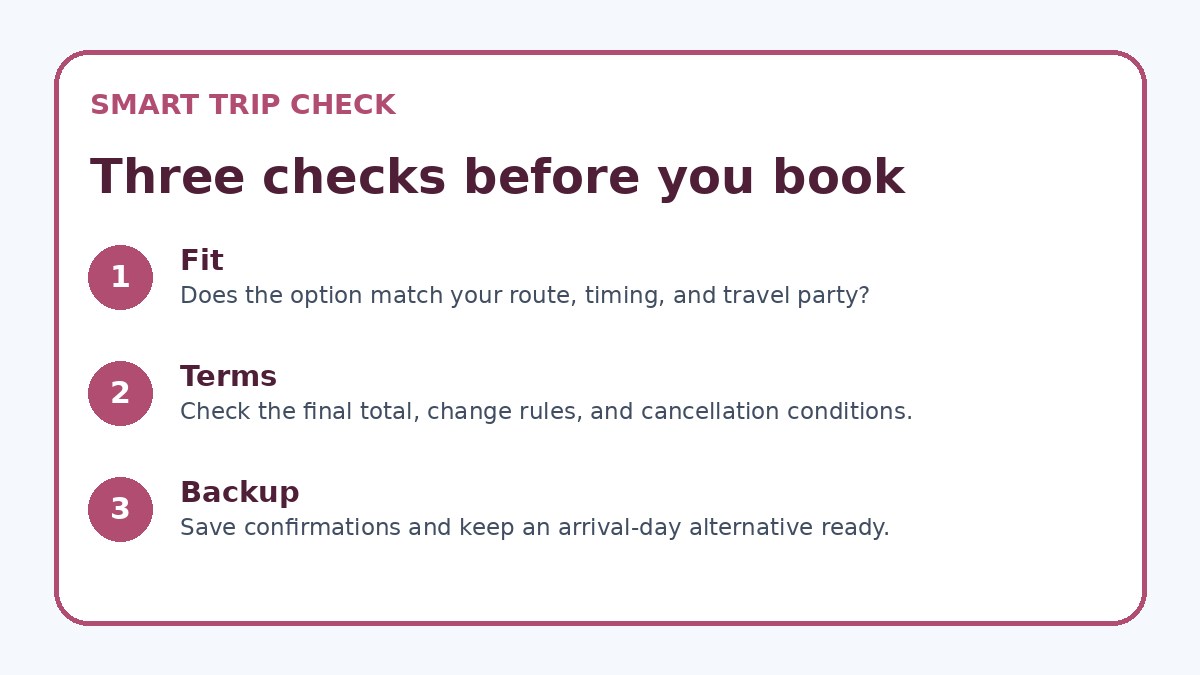
Before finalizing bookings, check three practical items: the property’s sleeping layouts and crib availability, the cancellation/change policy, and transport links for arrival and day trips. Confirm on the hotel or rental’s page whether rooms include a kitchenette, laundry access, or interconnecting rooms if you need them. If you plan to rent a car for day trips outside the city, verify parking availability and costs at your accommodation; some centrally located properties may have limited or expensive parking.
Build simple contingency plans for weather and health: identify a few indoor backup activities and the nearest urgent care options. For outdoor adventures like short island trips or mountain excursions, review operator refund and rebooking rules in case conditions change. Keep copies of confirmation emails accessible on your phone and ask providers about the final cut-off time to change reservations without penalty so you can adapt travel plans efficiently if needed.
Frequently asked questions
Are Vancouver shoulder seasons worth choosing for younger children?
Yes, shoulder seasons are often a strong choice for younger children because attractions are less crowded and accommodations are more available for family-sized rooms. Shorter lines at popular spots mean you can move at a child-friendly pace and return to a quiet hotel room for naps without losing time to queues. The main downside is more changeable weather, so plan indoor alternatives and pack layers and waterproof gear. Also verify attraction opening days and any seasonal schedule changes on the provider’s booking page before finalizing plans.
How much should I prioritize location versus price when searching Vancouver travel deals?
Prioritize location if your days will include frequent returns to the hotel, early starts, or if you have very young children—time saved on transit often outweighs minor nightly savings. If your family is comfortable using transit or you plan longer, apartment-style stays with kitchens, a quieter neighborhood farther out can provide more space and convenience for meal preparation. When comparing deals, calculate likely daily transit costs and door-to-door times alongside the nightly rate to make an informed choice.
What common booking mistakes do families make for shoulder-season trips?
A few frequent mistakes are: assuming every attraction runs full services in shoulder months, booking the cheapest nonrefundable rate without a backup plan, and underestimating transit times from suburban rentals. Families sometimes skip checking whether ferries, guided tours, or seasonal parks are operating full schedules. Always check the provider’s current timetables, refund and change policies, and the accommodation’s practical amenities like laundry or kitchenette access that make family travel easier.
Final planning note
Shoulder seasons in Vancouver give families a workable balance: smaller crowds, more room choices, and easier daily logistics, traded against more variable weather and occasional reduced seasonal services. Make decisions by prioritizing convenience—short transit times and family-friendly room layouts—over marginal savings. Choose flexible rates or confirm change policies, plan indoor backups, and verify schedules on the provider’s final booking pages before committing. When comparing options, think in terms of daily stress and time saved rather than nightly rate alone; that perspective usually produces a smoother family trip and better use of any Vancouver travel deals you find.
Continue planning
Check current options and final conditions
Use the provider page to confirm live availability, the final total, cancellation terms, and every condition that matters to your trip.
This evergreen planning guide was created with AI-assisted drafting and a structured quality review. It does not display live prices, schedules, availability, visa guidance, or provider rankings. Verify current details before booking. Some links are affiliate links; we may earn a commission at no additional cost to you.