
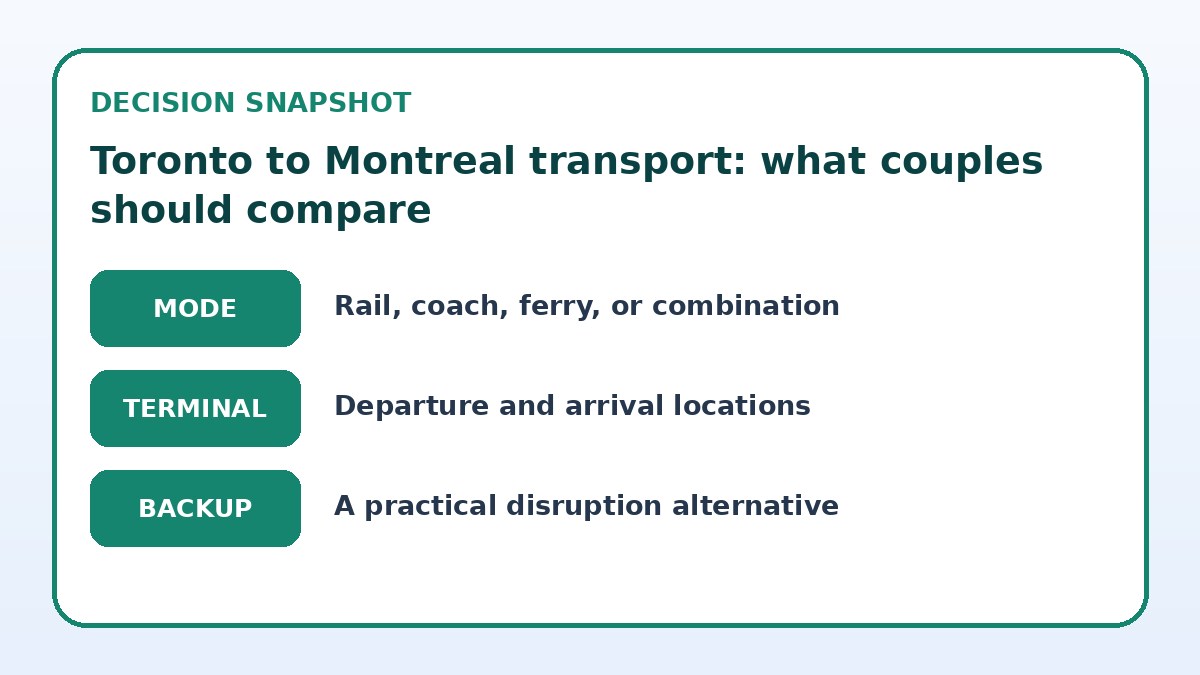
If you want the most practical Toronto to Montreal transport for a couple, start by deciding which matters most: comfort and scenery, door-to-door convenience, or total trip time. For many couples who prioritize relaxed travel and easy station access, rail offers comfortable seats, room to move, and a city-center-to-city-center route that reduces logistics. Driving gives you flexibility and privacy, and can be ideal if you plan side stops or have lots of luggage. Flying can save time in the air but usually adds airport transfers and security time that often negate the speed advantage. Buses are usually the lowest-effort, low-cost option but trade space and legroom for price. Read on to weigh tradeoffs, compare decision criteria, and get a practical checklist so you can choose the option that matches your couple-style and the specifics of your trip.
See current options before you compare the details
Availability and final conditions change. Open Trip.com now or keep reading for the practical comparison.
Decide what matters to your relationship and trip style
Before checking schedules and fares, talk with your partner about how you want to travel together. Are you aiming for a romantic, unhurried journey where you can chat and watch the countryside? Or do you prefer to get there fast, maximize time at your destination, and check into your hotel? Practical questions—how much luggage you’ll bring, whether either of you gets motion sick, whether you want room to work on a laptop, and whether shared driving is fun or stressful—will sort options quickly. Couples who like leisurely time together often prioritize comfort and city-center arrivals; those on a tight schedule prioritize speed.
Also consider logistics that affect both of you: access to the departure and arrival points, mobility or health needs, and whether you’re carrying bulky items like skis or large suitcases. A single long train leg might be the least effort if you want minimal transfers. Conversely, driving may be worth it if you plan to visit small towns or parks en route. By deciding priorities up front—speed, comfort, budget, or flexibility—you’ll filter options and avoid last-minute arguments about tradeoffs.
Train travel: why couples often choose it and what to check
Trains suit couples who want space to relax, the ability to walk and stretch, and a city-center arrival that avoids long airport transfers. For a practical decision, inspect seat classes, available table seating if you plan to dine together, and baggage allowances. If scenic views are part of the appeal, pick daytime departures that maximize daylight. Also check station locations at both ends so you can plan onward transfers or a short taxi to your accommodation; being on the right station side can save time and reduce stress after arrival.
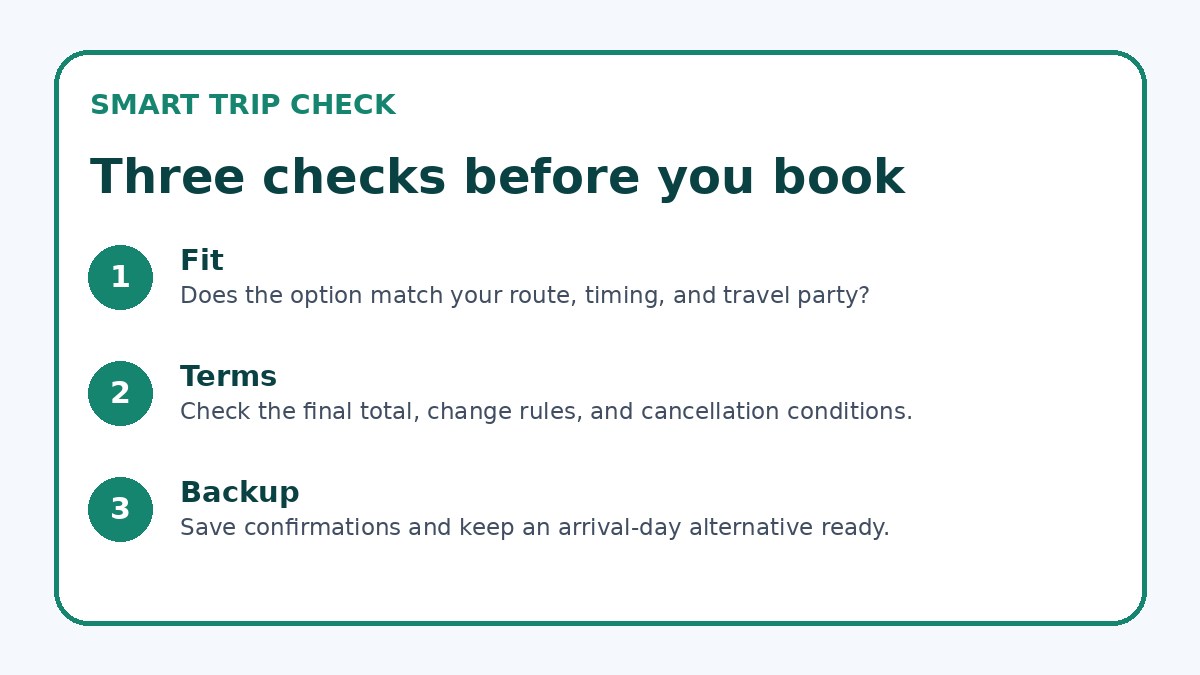
When comparing specific services, verify whether the route is direct or requires a connection and how long the transfer would be—connections change the comfort equation significantly. Confirm luggage rules and the size of storage areas if you’ll carry bulky items, and check onboard amenities like meal service or power outlets if you need to work en route. Finally, review the provider’s final booking page for exact seat selection policies, change and cancellation terms, and any required ID or documentation for boarding.
| Approach | Best for | Tradeoff to check |
|---|---|---|
| Rail (day train) | Couples who value comfort, space, and city-center arrivals | Longer scheduled travel time than flying and potentially higher ticket prices than buses |
| Driving | Couples wanting privacy, flexible detours, and control over schedule | Responsibility for driving, parking logistics, and potential traffic or tolls |
| Flight | Couples prioritizing shortest airborne time and who accept airport steps | Airport transfers and security often add time and complexity to the trip |
| Intercity bus | Cost-conscious couples who accept simpler onboard comfort | Less legroom and more stops, which can make the journey feel longer |
Ready to check the option that fits your plan?
Use your exact dates and traveler details so the provider page can show the current total and conditions.
Driving and road trips: privacy and flexibility versus logistics
Driving gives couples total control over departure times, detours, and playlists—ideal for private conversations, photography stops, and exploring small towns between Toronto and Montreal. Before committing, realistically map door-to-door driving time including likely stops, and compare that to combined train or flight door-to-door time. Factor in parking near your Montreal accommodation, potential tolls, fuel costs, and who will drive; switch-driving plans reduce fatigue and make the trip more enjoyable for both partners.
Practical checks include confirming your vehicle’s condition, choosing a comfortable route, and planning rest stops. If you don’t own a car, compare rental terms and insurance carefully—pay particular attention to mileage limits and cross-province rules. When parking downtown, check your hotel’s parking options and rates, and consider where you’ll leave the car if you plan to stay in Montreal for several days. Driving is best if flexibility and privacy matter more than avoiding city traffic or parking hassles.
Before you book
- Decide together whether comfort, speed, flexibility, or budget should be the top decision factor for this trip.
- Compare door-to-door time for each option by adding transfers, parking, or pre-departure time to scheduled travel time.
- Verify on the provider’s booking page whether the service is direct or requires transfers, plus exact baggage rules and seat selection policies.
- If driving or renting, check vehicle condition, insurance details, cross-province rules, and parking options at your Montreal accommodation.
- For flights, confirm recommended airport arrival time, ground transfer options at both airports, and any carry-on limits on the carrier’s page.
- Match departure times to your preferred arrival window in Montreal and choose daytime travel if you want scenic views or evening if you prefer late arrival.
Flights and buses: speed or cost-focused choices to compare
Flying can be attractive for couples prioritizing airborne time, but the real measure is door-to-door duration once you add airport transfers, security, and early arrival recommendations. If you compare flights, include ground transfer time and typical wait times in your calculations. Also consider how comfortable you are with airport procedures and whether either of you has mobility needs that make the extra steps of flying a burden. For short-haul air travel, the stress of airports can offset the time saved in the air.
Buses tend to be the simplest budget option and are worth checking if you’re cost-conscious and don’t need extra space. When comparing bus services, look at departure and arrival locations, onboard amenities such as Wi‑Fi or restroom access, and how many intermediate stops will be made. For both flights and buses, confirm exact schedules and baggage allowances on the provider’s booking page before finalizing plans, and consider how each option affects your arrival energy levels and first impressions of Montreal.
Frequently asked questions
Should couples take the train or drive between Toronto and Montreal?
It depends on priorities: choose the train for relaxed time together, onboard space, and a city-center arrival that reduces transfers. Choose driving for privacy, the option to stop at smaller towns, and flexible departure times. Compare total door-to-door time and parking logistics if you own or rent a car, and check whether a direct train is available or involves a connection that would change comfort and total time. Talk honestly about who will drive and how much highway time either of you enjoys.
How should I factor luggage and comfort into the choice?
List what you plan to carry and how important seat space is to both of you. Trains and private cars usually handle larger or more numerous bags with less hassle than flights where carry-on limits and checked luggage procedures add time. Buses often have external luggage holds with limits and less onboard space, while some short flights have strict carry-on size rules—always confirm luggage allowances on the provider’s booking page. If comfort is key, prioritize options with larger seats and the ability to move around during the trip.
What practical checks should couples make before booking?
First, verify exact schedules, whether the service is direct, and any transfer times listed on the provider’s final booking page. Check seat availability if you want to sit together, luggage allowances, and change or cancellation terms. If driving, confirm rental insurance and parking options at your destination. For flights, add estimated airport transfer and security time to the advertised flight duration. Finally, agree on a backup plan if one of you prefers a different option at the last minute—clear expectations prevent tension on travel day.
Final planning note
Choosing the most practical Toronto to Montreal transport for a couple comes down to shared priorities: comfort and a relaxed pace favor trains, flexibility and privacy favor driving, speed can favor flights if airport logistics are minimal, and buses work when cost is the main concern. Start by agreeing on what matters most, then compare door-to-door time, luggage rules, and how each option affects arrival energy. Always verify direct-versus-connecting status, baggage policies, seat selection, and cancellation terms on the provider’s booking page before you commit. For a quick availability check, you can optionally compare current schedules on Trip.com, but rely on the provider’s final page for booking details.
Continue planning
Check current options and final conditions
Use the provider page to confirm live availability, the final total, cancellation terms, and every condition that matters to your trip.
This evergreen planning guide was created with AI-assisted drafting and a structured quality review. It does not display live prices, schedules, availability, visa guidance, or provider rankings. Verify current details before booking. Some links are affiliate links; we may earn a commission at no additional cost to you.