The quickest practical answer: pick the mode that best matches your priorities—comfort and fewer transfers (train), lowest luggage friction (private transfer or car), or budget and frequency (coach)—then plan door-to-door logistics around terminals and transfers. For first-time visitors, build a multi-city ground-transport plan by mapping exact pickup/dropoff points, realistic transfer time, luggage handling, and a disruption backup before you book. This article walks you through how to choose between rail, coach, driving, or a mixed approach; what to check at terminals; how to handle luggage and transfers; and the backups to keep you moving if a service is delayed or canceled. I’ll also compare four planning approaches and offer a checklist and FAQs so you can finalize a safe, practical itinerary from Toronto to Montreal.
How to choose between rail, coach, driving, or mixed options
Start by listing your priorities: fewer transfers and onboard comfort, lower cost and more frequent departures, or maximum door-to-door control. Rail often gives a smooth, seat-reserved experience with simple city-center terminals; coaches usually offer more budget-friendly frequency but may use terminals that are less central. Renting a car or arranging a private transfer gives the most flexibility for onward journeys and luggage, but you must weigh parking, city driving, and drop-off logistics at both ends. A mixed plan—for example, train one leg and local transfer at arrival—can combine strengths and reduce friction if you plan transfers carefully.
Next, match those priorities to practical constraints: how close your arrival terminal is to your accommodation, whether you need to connect to another city on the same day, and how comfortable you are handling luggage across transfers. Create a short matrix: priority versus mode, and list the top two choices. For first-time visitors, a straightforward comparison of door-to-door time, number of transfers, and luggage handling will quickly reveal whether a single-mode journey or a mixed approach is the most practical.
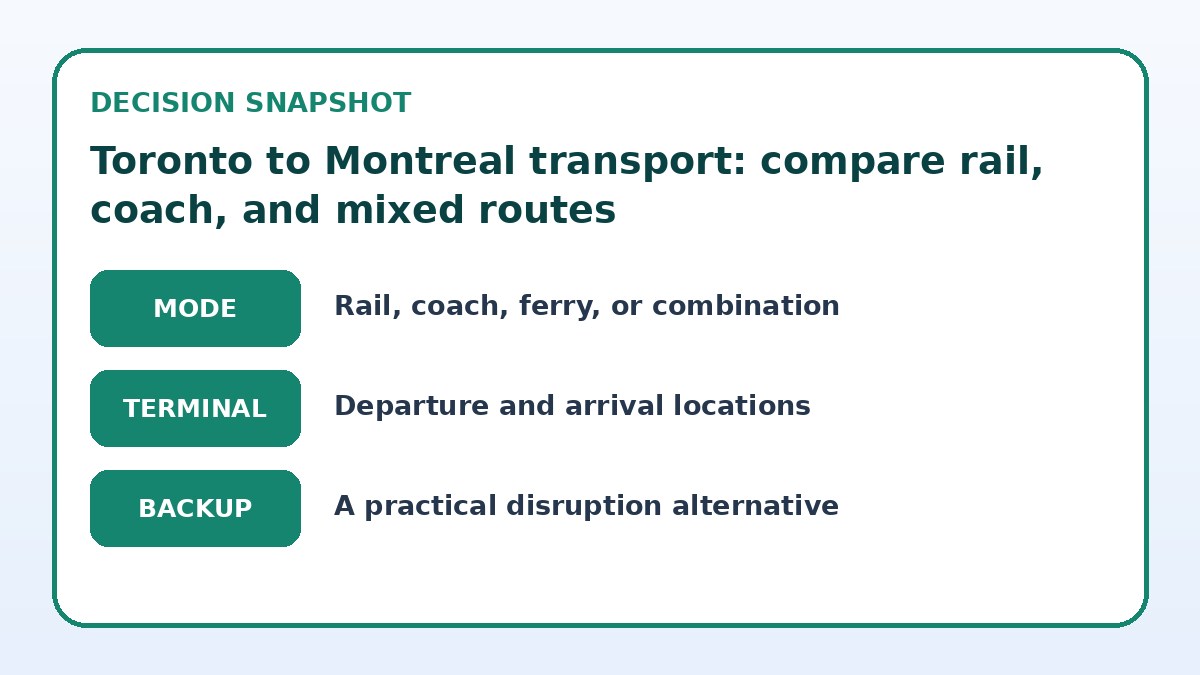
Choose the end-to-end journey plan
| Journey approach | Best for | Friction to check |
|---|---|---|
| Single-mode train plan | Travelers who want reserved seats, simpler transfers, and a city-center-to-city-center route. | Fewer daily departures and less flexibility if you miss a scheduled service; check rebooking rules in advance. |
| Single-mode coach plan | Budget-minded travelers prioritizing frequency of departures and cost flexibility. | Longer or unpredictable door-to-door times due to traffic and potentially less central terminals. |
| Private transfer or rental car | Groups with lots of luggage, mobility needs, or those requiring direct door-to-door service. | Higher logistical control but more responsibility for city navigation, parking, and drop-off planning. |
| Mixed-mode plan (train + local transfer) | Visitors balancing comfort and last-mile convenience, or those connecting to nearby towns. | Requires careful timing and more pre-trip coordination to avoid missed connections and extra walking. |
Check live intercity options
Look beyond the ride itself and compare terminals, transfers, luggage, and arrival fit.
Terminal fit and the door-to-door picture
Terminal fit means more than the building name: verify the exact address, the location of pickup/dropoff points, taxi ranks, and nearest transit stops. A downtown train station typically places you closer to hotels and transit than a coach terminal located on the city periphery. For each candidate journey, map the complete route from your accommodation in Toronto to your final stop in Montreal, including the last-mile transfer options: subway, local bus, rideshare pickup zones, or prebooked shuttle services. That mapping shows the real time and friction costs beyond the scheduled travel leg.
Don’t forget check-in and security steps that add time at some terminals; if you have large luggage or mobility needs, look for elevators, ramps, and luggage assistance services and verify them on the provider’s booking or station pages. If you plan combined modes, account for walking distance between different terminals or platforms and include buffer time. The goal is a realistic door-to-door itinerary where you can estimate total travel time and complexity before buying tickets or booking a car.
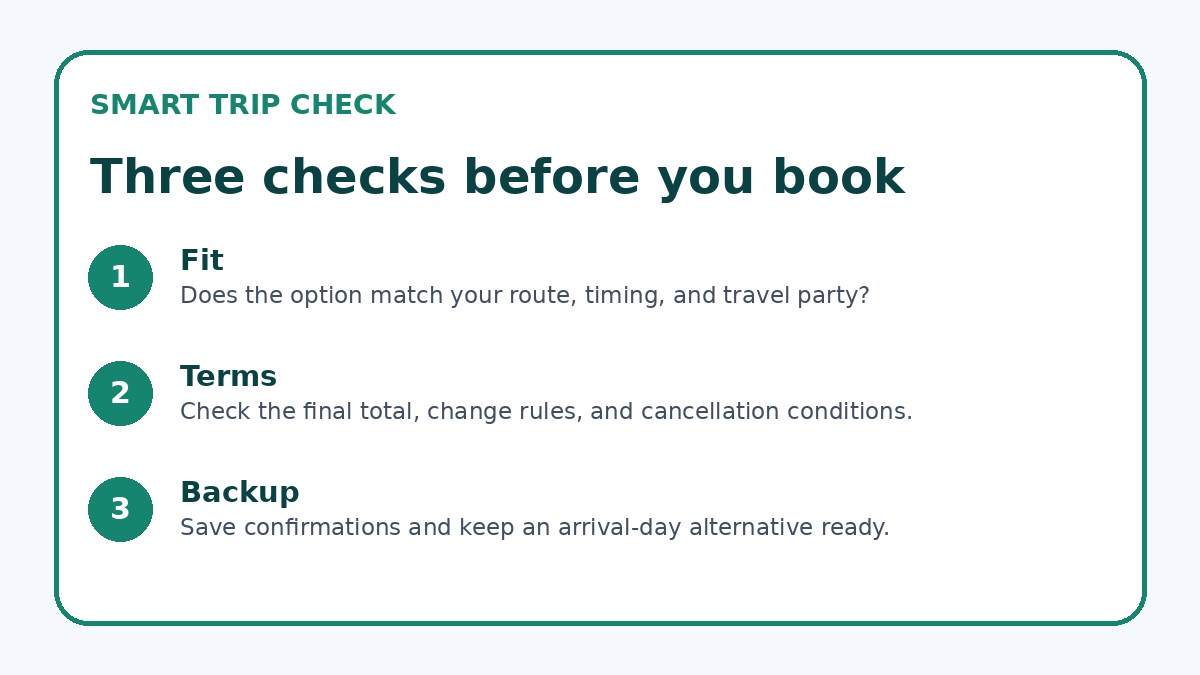
Luggage, transfer friction, and timing flexibility
Luggage rules vary by mode and provider; check the final booking pages for permitted sizes, how many bags are included, and whether staff will assist with stowing or retrieving luggage. Coaches often have underfloor storage and may require luggage drop-off; trains typically allow carry-on bags plus checked items on some services, while private transfers eliminate most friction but require space for larger items. For first-time visitors, choosing a mode with minimal transfer-related handling reduces stress—especially if you have multiple bags, bulky items, or mobility aids.
Timing flexibility matters more than advertised frequency: coaches may run more often across the day but can be slower in traffic, while trains usually follow a fixed timetable with fewer daily departures. If your schedule is tight or inflexible, prioritize earlier departures and longer buffers for transfers. When mixing modes, align connections conservatively—leave ample time between arrival and the next pickup or departure so you can account for delays, luggage retrieval, and travel between terminals without rushing.
Compare the practical alternatives
Use the final page to confirm what is actually offered on your dates and save a workable fallback.
Intercity travel checklist
- Map the exact pickup/dropoff addresses for your chosen terminals and your accommodation in both Toronto and Montreal.
- Confirm luggage allowances and handling procedures on the provider’s final booking page before you finalize any reservation.
- Allow conservative buffer time for transfers—plan at least 45–90 minutes between scheduled services when changing modes.
- Identify two disruption backups: an alternate service time and a different mode you can realistically switch to.
- Locate the terminal’s rideshare or taxi pickup point and note its hours and any entry/access restrictions.
- Save provider contact numbers, the station help desk location, and a screenshot of your booking for offline access.
Disruption backups and what to verify before booking
Plan at least two backups: an alternate service on the same day (earlier or later), and a different transport mode that you can reasonably switch to if needed. For example, if your chosen train is delayed, a coach or a pre-arranged car may save your schedule; conversely, if road congestion disrupts a coach, rail could be a reliable fallback. Before you book, confirm rebooking or refund policies, how to change reservations, and the contact options for on-the-ground assistance listed on the provider’s final booking page.
Verify practical details that affect disruption recovery: exact terminal addresses, the location and opening hours of ticket counters or help desks, and whether mobile ticketing is accepted. Also check whether a rideshare pickup point or taxi rank is available at the terminal and where it is located. If you use an online aggregator to compare options, such as Trip.com, use the provider’s booking page to confirm luggage rules, change/cancel policies, and terminal maps so you can implement your backup plan confidently.
Rail & Intercity Transport questions travelers ask
How do I decide whether to take a train or a coach between Toronto and Montreal?
Compare door-to-door time, transfer complexity, and luggage needs rather than focusing only on the ride. Trains often provide reserved seats and city-center terminals, which can cut last-mile time, while coaches may offer more departure options during the day. Map the full journey from your front door to your final Montreal stop to see which mode actually saves time or effort. Also check the provider’s booking page for baggage rules and rebooking policies so you know how easily you can switch services if plans change.
What’s the safest way to plan transfers with heavy luggage or mobility needs?
Choose options that minimize walking and platform changes: a single-mode door-to-door transfer or a train with accessible station facilities often reduces friction. Prebook assistance where available and verify elevator locations, ramps, and baggage handling on the station or provider pages. If mixing modes, increase transfer buffers and consider booking a short local taxi or rideshare for the last mile to avoid navigating multiple stairs or long corridors with luggage.
If my chosen service is delayed or canceled, what immediate steps should I take?
First, contact the provider via their official customer service channels listed on your booking confirmation to confirm rebooking or refund options. Then, activate your preplanned backups: check the next available services of the same mode or switch to your alternate mode if time-critical. If you’re at a terminal, locate the help desk and rideshare or taxi pickup area so you can arrange immediate transport; keep screenshots of your booking and any cancellation notices for quick reference when requesting assistance.
Final decision note
Planning Toronto to Montreal transport as a first-time visitor becomes manageable when you focus on door-to-door practicality: map terminal fit, account for luggage and transfer friction, and build clear backups. Choose the mode that fits your priorities—comfort and fewer transfers, frequency and budget, or full control with a private transfer—and verify key details on the provider’s booking page before purchase. Use conservative transfer buffers and identify local pickup points so you can change plans with minimal stress. With a short checklist and two backups in place, you’ll have a resilient multi-city ground-transport plan that keeps your itinerary on track.
Continue planning
Check current options and final conditions
Use the provider page to confirm live availability, the final total, cancellation terms, and every condition that matters to your trip.
This evergreen planning guide was created with AI-assisted drafting and a structured quality review. It does not display live prices, schedules, availability, visa guidance, or provider rankings. Verify current details before booking. Some links are affiliate links; we may earn a commission at no additional cost to you.