If you’re traveling to Tokyo with extra luggage, use price alerts — but don’t let a good-looking alert force a rushed booking. Practical strategy: set alerts for the exact trip parameters you will actually use (same dates, same number of travelers, and the actual luggage allowances you need), then wait for a clear, comparable option that matches those details. Alerts are most useful when they track equivalent itineraries and room types rather than vague “cheap flight” notices. Before buying a bundled package, compare the bundle’s inclusions, change/cancellation rules, and the carrier or hotel luggage policies against booking components separately. That comparison will tell you whether the bundle actually saves time, reduces total risk, or simply hides restrictions that will cost you later.
Test package value fairly
| Booking approach | Best for | Tradeoff to check |
|---|---|---|
| Full bundled package (flight + hotel + transfer) | Travelers who value single-vendor convenience and need included transfers or porter service for heavy luggage. | Less flexibility to change parts separately; verify baggage inclusions and change/cancellation terms before booking. |
| Flight with checked-bag fare + separate hotel | Travelers needing specific baggage allowances who want control over airline policies and hotel selection. | More administrative work tracking reservations, but greater ability to change one component without affecting the other. |
| Low-cost flight + paid baggage + hotel bundle later | Price-sensitive travelers who will pay for exactly the bags they need and shop hotels separately for luggage-friendly amenities. | Potentially lower headline cost but higher risk of added baggage fees and compatibility issues at booking time. |
| Book everything separately with refundable/changeable tickets | Travelers who require maximum flexibility for dates, luggage, and itineraries, willing to pay more for changeability. | Higher upfront cost; requires actively managing multiple suppliers and cancellation policies. |
Check current package and separate options
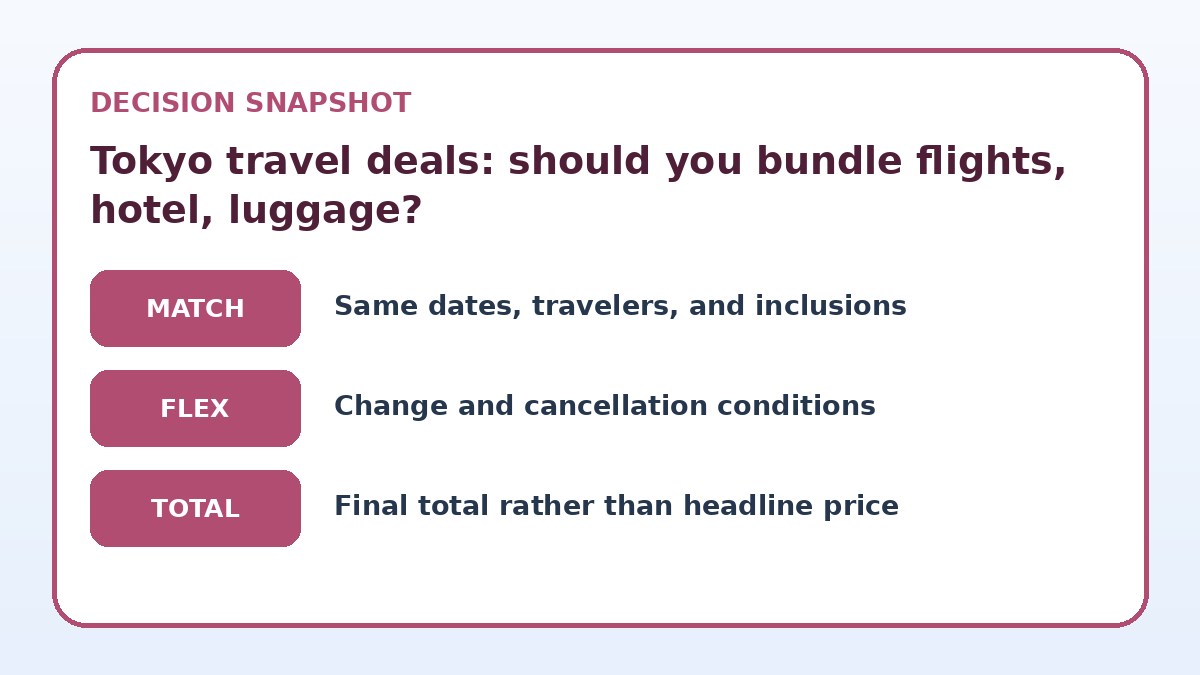
Use identical dates, travelers, room needs, baggage, and flexibility so the comparison stays meaningful.
What to compare before a bundle looks useful
Start by listing the precise trip elements that matter when you travel with extra luggage: number of checked bags per passenger, maximum weight per bag, airport transfer needs, and whether you need a flexible flight or refundable hotel nights. Don’t assume a bundle includes higher baggage allowances; sometimes a package pairs a low-fare flight with a standard hotel room but keeps the airline’s basic-bag policy. For an accurate apples-to-apples comparison, copy the bundle’s travel dates, number of travelers, and any baggage allowances into a separate search for flights and rooms.
Next, create a checklist of non-price items to verify on the provider’s final booking page: luggage weight limits, dimensions, per-bag fees, rules on oversized items, change and cancellation fees for both flight and hotel, and whether the package forces you onto a specific, nonrefundable fare class. These provider-side details can change, so always read the booking terms when an alert triggers. If you see vague language like “limited availability” or “terms apply,” click through and confirm the exact baggage rules and penalty amounts before you even consider purchase.
How to set price alerts that avoid impulse buys
Use two-tier alerts: one for baseline monitoring and one as a trigger for a purchase review. Baseline alerts run broadly to tell you fare trends, while the purchase-trigger alert is narrowly configured to your exact itinerary and baggage needs. For example, set a narrow alert only for fares that include the baggage allowance you require or for hotel rates that include a free luggage-friendly room or free early check-in if you’ll arrive with heavy bags. Label alerts clearly so you know whether each one represents a trend or a booking-ready offer.
When a purchase-trigger alert fires, don’t buy immediately. Use a short checklist: verify luggage allowances on the provider’s final booking page, confirm change and refund rules, and compare the bundled total to separately booked alternatives using the same dates, travelers, and baggage conditions. If the bundle adds travel insurance or airport transfers you want, factor those in. If you still need time to think, allow a fixed cooling-off period (for example, 6–12 hours) to avoid emotional decisions driven by perceived scarcity.
Look past the headline total
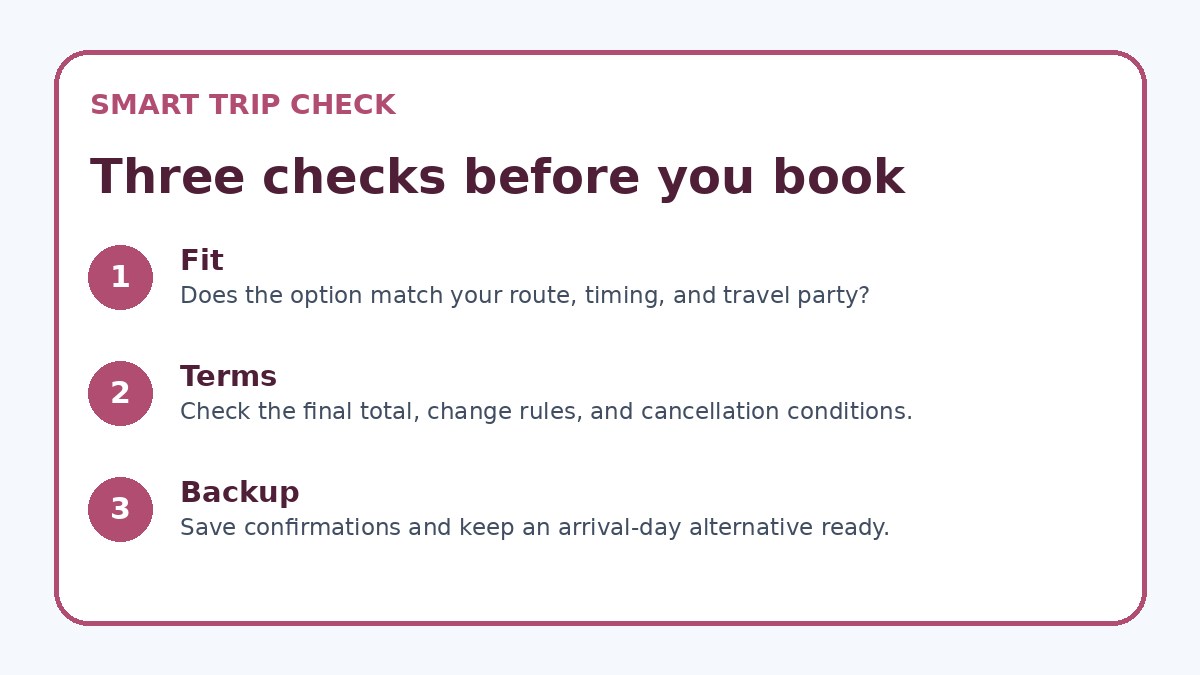
Compare inclusions and change conditions before deciding whether a package is genuinely useful for this trip.
Deal comparison checklist
- Set price alerts configured to the exact travel dates, passenger count, and number of checked bags you will actually use.
- When an alert fires, click through to the provider’s final booking page and verify baggage weight limits, per-bag fees, and oversized-item rules.
- Compare the bundle total to separate bookings using identical dates, travelers, and baggage allowances before deciding.
- Confirm change and cancellation rules for every component shown on the provider’s booking page, not just the headline bundle terms.
- Factor in logistics: check whether included transfers accept large or extra bags and whether the hotel provides luggage storage or porter service.
- If unsure, allow a short cooling-off period before purchase to avoid impulse booking; use that time to run the separate-booking comparison.
Bundled vs separate bookings: inclusions and flexibility
Bundled packages can simplify booking by combining flights, hotel, and sometimes transfers. For travelers with extra luggage, the relevant inclusions are crucial: does the package include additional checked bags, priority boarding, or free airport transfers that save you carrying heavy bags on public transit? Sometimes bundles include airport transfers that accept larger luggage without extra fees, which may be genuine convenience. But always verify whether any “included” baggage is transferable across travelers or limited to specific flights or room types.
Separate bookings give you control to pick a flight fare that includes the baggage you need and a hotel that can accommodate oversized luggage or offers a late check-in service. This route often gives greater flexibility to change one component without affecting the rest. The tradeoff is administrative: you must track multiple confirmation codes and change policies. Evaluate whether the bundle’s convenience and any included luggage-friendly services outweigh the flexibility loss and potential change fees if plans shift.
Traveler-specific value: when bundles make sense for heavy-packing travelers
Bundles are most valuable when they include services that directly reduce the friction of extra luggage: dedicated transfers, hotels with luggage storage or porter service, or airline fares that include multiple checked bags. If your trip involves inner-city moves, family travel, or oversized sports equipment, a package that bundles a guaranteed baggage allowance or a private transfer can save real time and stress. Consider the full door-to-door experience rather than just upfront cost when assessing value.
If you prioritize flexibility — for example, you may extend your stay, change airports, or alter departure dates — separate bookings typically give you more leeway. Heavy-pack travelers who can’t commit to exact dates may prefer refundable or changeable components even at a higher nominal price. Decide which matters more: an integrated, lower-effort trip where some flexibility is sacrificed, or modular bookings that let you tailor baggage and timing precisely.
Travel Deals & Booking Strategy questions travelers ask
How exactly do I set price alerts that reflect my extra-luggage needs?
Use an alert tool that allows specifying cabin class, fare type, or baggage-included options; many fare trackers let you include only fares that show at least one checked bag. If the tool cannot specify baggage, set alerts for fare classes that typically include checked bags (confirm on the provider page). For hotels, add filters for free luggage storage, early check-in, or accessible transfers. Label your alerts clearly so you know whether each one represents a full, baggage-inclusive offer or a generic price trend. Always verify baggage rules on the booking page when an alert fires.
Will a bundle generally save money if I need extra checked bags to Tokyo?
Not necessarily. A bundle can save money when it includes a fare class or transfer that covers your baggage needs; however, some bundles pair low-fare flights that do not include checked bags, then sell baggage separately or restrict refunds. To avoid false savings, calculate total cost by adding expected per-bag fees to the separate flight and hotel options and compare that to the bundle price using identical dates and passenger counts. Also verify change penalties, which can erase any apparent savings if plans change.
What provider details should I always verify on the booking page after an alert?
On the final booking page, check the exact baggage allowances (number of free checked bags, weight and size limits), any per-bag fees, the ticketed fare class, change and cancellation fees, and whether transfers or hotel services are conditional or one-time only. Look for explicit language about refunds and date changes and confirm whether included services apply to all travelers on the reservation. If you see ambiguous terms, use the provider’s help or FAQ pages or contact customer service for clarification before purchasing.
Final decision note
Price alerts are a powerful planning tool for Tokyo travel deals when used with discipline. For travelers with extra luggage, the key is configuring alerts to match the actual baggage needs and avoiding reactions to vague “cheap fare” notices. Always confirm baggage allowances, change rules, and the precise inclusions on the provider’s final booking page, and run a straightforward comparison between the bundle and equivalent separate bookings using identical dates, travelers, and luggage conditions. That comparison — not the alert alone — should decide whether you book the package or assemble the components on your own.
Continue planning
Check current options and final conditions
Use the provider page to confirm live availability, the final total, cancellation terms, and every condition that matters to your trip.
This evergreen planning guide was created with AI-assisted drafting and a structured quality review. It does not display live prices, schedules, availability, visa guidance, or provider rankings. Verify current details before booking. Some links are affiliate links; we may earn a commission at no additional cost to you.