
For couples traveling between Tokyo and Osaka, the practical decision is to pick a ticket that balances flexibility with simplicity: choose refundable or change-permitted train tickets if your plans might shift, or reserve fixed-seat, nonrefundable tickets when dates and times are locked and you want lower hassle. Think about how likely your schedule will change, how much time you want to spend at stations, and whether you prefer guaranteed seats together. This piece compares the main flexibility tradeoffs—refunds, free changes, seat reservations, and transfer options—and gives criteria couples can use to decide. It also lists what to verify on booking pages (refund windows, change fees, seat availability, and any ID or name-change rules). If you want to compare current availability or supplier terms, you can check a travel site like Trip.com for live options, then confirm directly with the operator before buying.
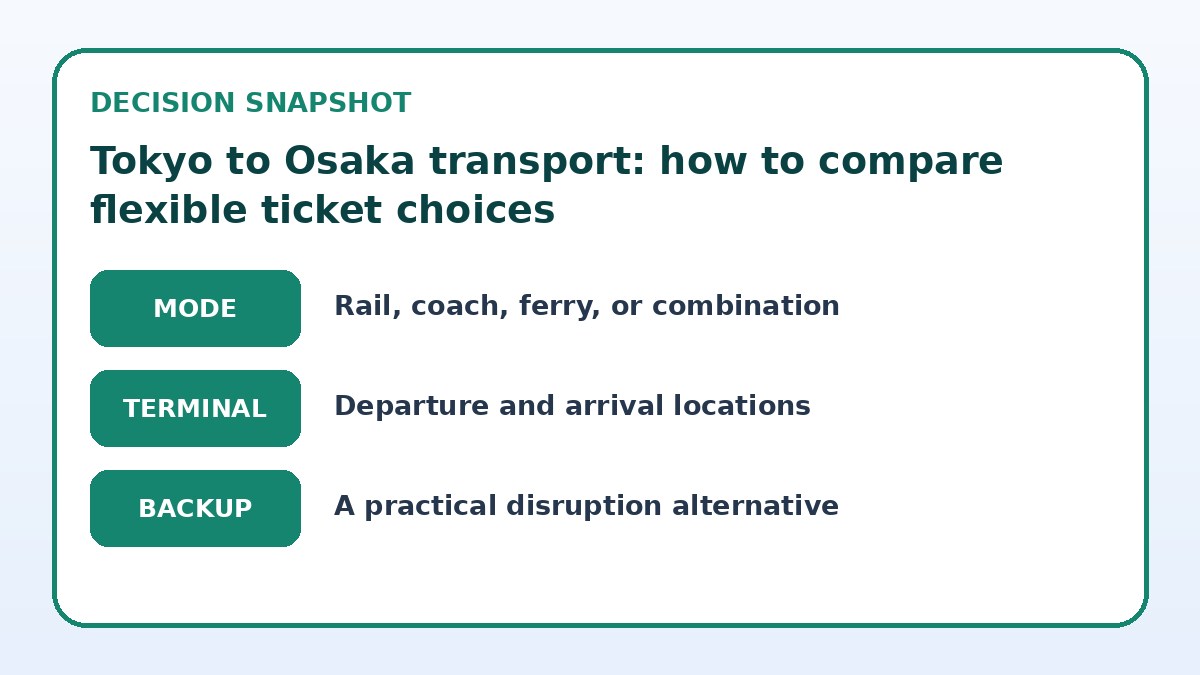
See current options before you compare the details
Availability and final conditions change. Open Trip.com now or keep reading for the practical comparison.
How to compare flexibility features
Start by listing the flexibility features that matter to you as a couple: refundable fares, free or low-cost date/time changes, reserved adjacent seats, and protection for missed connections. Look for explicit language on the booking page about when refunds are allowed and whether changes are free up to a certain time. If a fare offers unlimited changes but no reserved seats, treat that as different from a fully refundable reserved-ticket option. Note: provider pages can use different terms for the same feature, so read the small print where they explain cancellations, name changes, and what happens if a particular train is canceled.
When fares are displayed, compare the conditions rather than the headline price alone. Take a spreadsheet or simple notes: record fare type, change fee timing (for example, whether changes are free more than 24 or 48 hours before departure), refund percentages, and whether the fare includes a seat reservation. Also check whether couples traveling together can reserve seats next to each other under the fare rules, or whether seat allocations are first-come-first-served at the station. Always verify the final rules on the operator’s checkout page before completing a purchase.
Ticket types and what they mean for couples
Many routes offer tiered ticket types: fully refundable or flexible, semi-flexible with limited changes, and nonrefundable advance fares. For couples who value certainty and comfort, a refundable or flexible ticket with reserved seats removes the worry of split seating and last-minute reshuffles. If the ticket includes guaranteed adjacent seats, you can plan your arrival and departure times more confidently. However, fully flexible tickets usually cost more and can be subject to availability constraints if you try to change to a different service at short notice.
On the other hand, nonrefundable advance fares are often the simplest and cheapest option when plans are fixed. These fares may still allow seat reservations at booking but will impose penalties or disallow refunds and changes. For couples with a locked itinerary and a tight budget, this tradeoff can make sense. If your schedule might change, weigh the potential cost of buying a refundable ticket now against the likelihood and potential expense of rebooking later if one partner needs to change travel plans.
| Approach | Best for | Tradeoff to check |
|---|---|---|
| Refundable flexible fare with reserved seats | Couples with uncertain schedules who value guaranteed seating together. | Higher upfront cost and potential limited availability on popular departures. |
| Semi-flexible fare (limited free changes) | Couples who may shift dates but can commit to a general travel window. | Some change flexibility while often lacking full refunds or full seat guarantees. |
| Advance nonrefundable fare with reserved seats | Couples with fixed plans who prioritize simplicity and lower upfront cost. | Little or no refund option and possibly high change penalties if plans shift. |
| Open/flexible pass without seat reservations | Couples seeking spontaneous travel and multiple-day flexibility on the route. | No guaranteed adjacent seating and risk of crowded trains during peak periods. |
Ready to check the option that fits your plan?
Use your exact dates and traveler details so the provider page can show the current total and conditions.
Practical tips for couples on seat reservations
If traveling as a couple, securing adjacent seats is often the top priority. When booking, check whether the fare includes reserved seating and whether you can select seats together during checkout. Some systems allow you to choose specific seat numbers; others simply assign seats at check-in or at the station. If seat selection is limited, plan to arrive at the station early to secure adjacent seating if the operator allocates on a first-come basis. Also confirm whether seat reservations are included for both directions if you plan a round trip.
Consider how you will handle situations where you cannot reserve seats together: prioritize travel times with lower demand, book earlier departures, or buy a couple-facing seat class if available. For overnight or long journeys, adjacent seating is especially important for comfort and privacy. If you need to change trains mid-route, remember that a new reservation may be required for the connecting leg; clarify whether your ticket covers connections or if you must hold separate reservations for each segment.
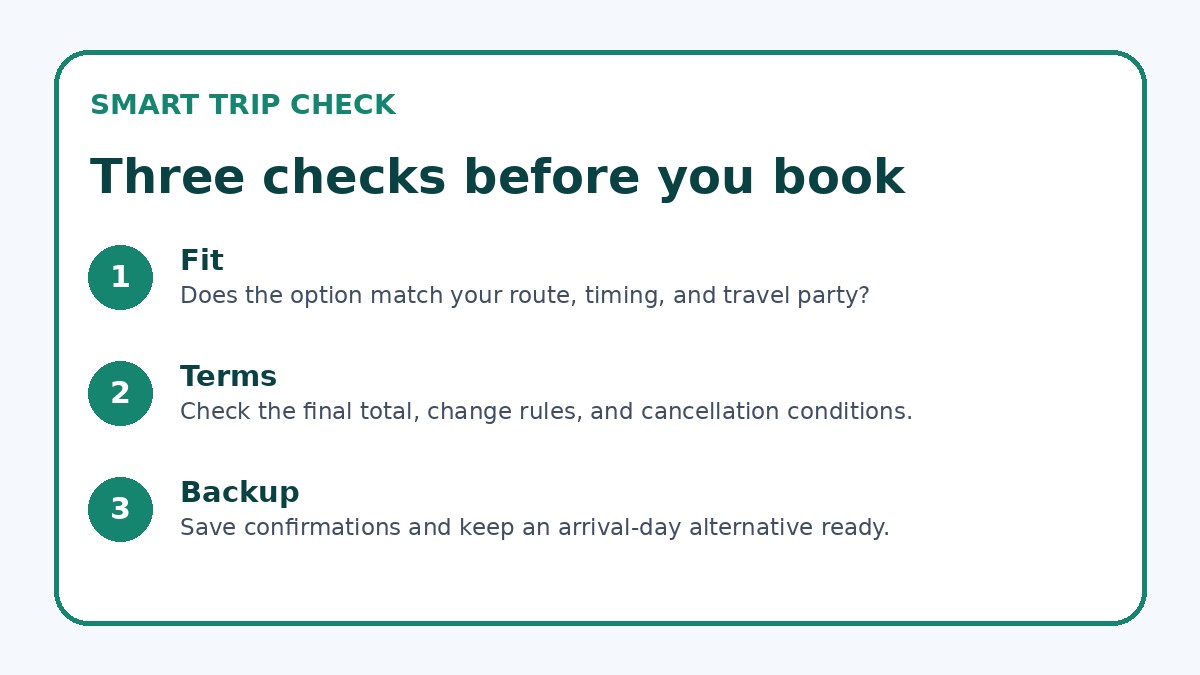
Before you book
- Confirm whether your chosen fare includes reserved adjacent seats for both outbound and return journeys on the operator’s checkout page.
- Read the fare’s change and cancellation windows and note any deadlines when changes become chargeable.
- Verify refund method (card refund, voucher, or credit) and the processing time listed by the provider before booking.
- If booking through an agent, check for extra service fees or differing change/refund rules on the agent’s final booking confirmation.
- Check identity and name-change policy in case one traveler must be substituted or names corrected later.
- Save or screenshot the full fare conditions shown at payment as proof if you request a change or refund later.
Last-minute changes, cancellations and what to verify
Before booking, check the precise deadlines for free changes and refunds and whether any third-party reseller fees apply. Many policies allow changes without charge up to a certain window, then impose a fee or refund penalty closer to departure. Verify how refunds are handled—whether you receive a full refund to your original payment method, a voucher, or travel credit—and whether refund processing times affect your planning. If you’re booking through an agent, confirm whether that agent’s rules add extra conditions or fees.
Also confirm identity and name-change rules because couples may need flexibility if one person’s plans change. Some operators allow modifications to passenger names or substitutions under specific conditions; others do not. If you anticipate changes that affect who travels, verify whether the ticket can be transferred or whether you must cancel and rebook. Always save screenshots or PDFs of the full fare conditions shown at checkout; those are what you will need when requesting a refund or change.
Frequently asked questions
Can couples always get seats together on trains between Tokyo and Osaka?
You cannot assume adjacent seating without a reservation. Many operators offer reserved seats you can choose at booking; otherwise seats may be assigned at check-in or on a first-come basis. For couples, the safest approach is to pick a fare that includes seat selection and confirm both passenger names at the time of booking. If seat selection is not available, plan to arrive early at the station to try for adjacent seats, and verify the operator’s seating policy on the final booking page before purchasing so you know whether seats are guaranteed.
How should couples decide between refundable and nonrefundable fares?
Decide based on how likely your plans are to change and how much you value peace of mind versus saving money. If there’s a real chance one person will need to change dates, a refundable or change-permitted fare can avoid costly rebooking and logistical hassle. If your plans are fixed and you prefer a simpler booking process, a nonrefundable advanced fare might be suitable. Always weigh the potential price difference against the likelihood and cost of rebooking, and confirm the exact refund/change rules on the provider’s final checkout page.
What should we check when booking through a third-party site?
When using a third-party seller, verify that the ticket terms shown there match the operator’s own conditions and check for extra service fees or different cancellation rules. Confirm who handles refunds and changes—the agent or the operator—and how requests are submitted. Look for explicit statements about name changes and seat reservations, and save both the agent’s confirmation and the operator’s original fare terms. If anything is unclear, contact the operator directly or use a reputable aggregator to view live availability, then confirm details on the official provider page before finalizing payment.
Final planning note
For couples traveling Tokyo to Osaka, the core planning decision is whether you prioritize flexibility or certainty. Flexible, refundable fares with reserved seats cost more but reduce stress if plans change; advance nonrefundable tickets save money when your schedule is set. Semi-flexible tickets and open passes offer intermediate options—mixing some change flexibility with tradeoffs in seat guarantees. Use the checklist above when comparing options, and always verify the exact change, refund and seat policies on the booking or operator checkout page before you pay. If you want to survey live options quickly, a travel site such as Trip.com can show current availability, but confirm the provider’s terms directly to avoid surprises.
Continue planning
Check current options and final conditions
Use the provider page to confirm live availability, the final total, cancellation terms, and every condition that matters to your trip.
This evergreen planning guide was created with AI-assisted drafting and a structured quality review. It does not display live prices, schedules, availability, visa guidance, or provider rankings. Verify current details before booking. Some links are affiliate links; we may earn a commission at no additional cost to you.