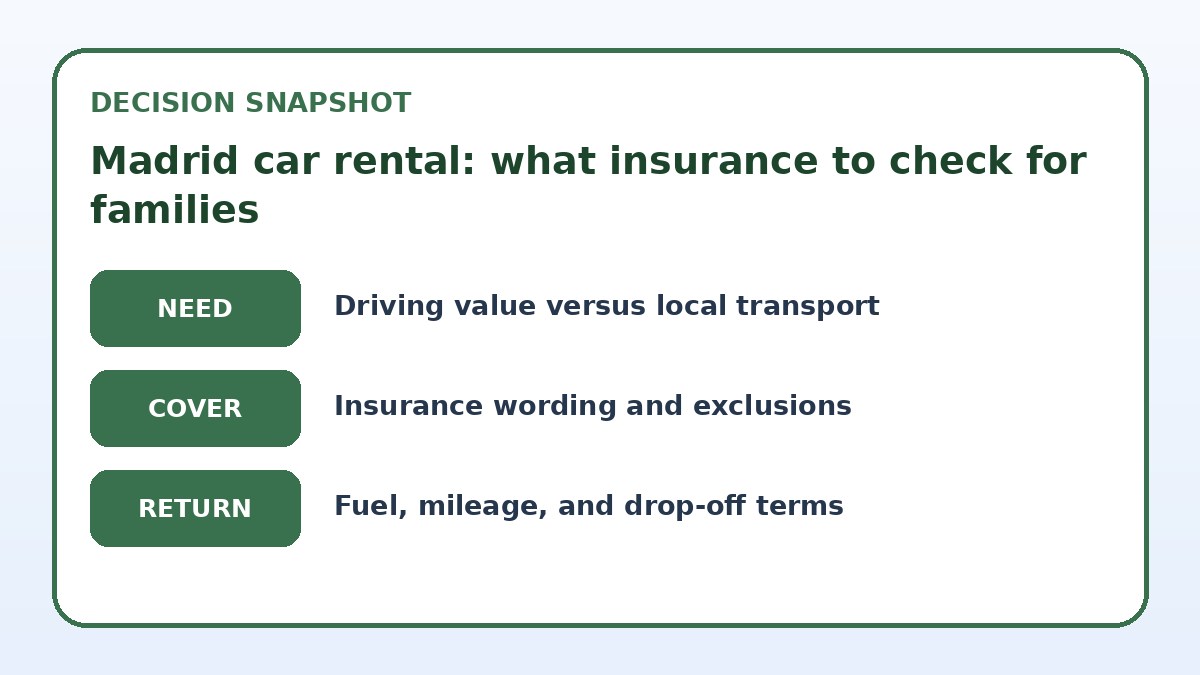
If you’re planning to rent a car in Madrid with children, the practical choice is to focus on three things: collision/waiver wording, third-party liability limits, and how deductibles or excesses are applied and refunded. Those items determine how much you could pay after a scratch, collision, or minor parking damage — the most common family risks. Read the supplier’s policy language closely: “zero excess” can be conditional, and “CDW” sometimes excludes undercarriage, glass, or tyre damage. Also check whether optional extras — child seats, additional drivers, or young-driver surcharges — affect insurance terms. Before you book, prepare documentation (driver’s license, credit card) and a camera or phone to record the car’s condition at handover. These steps reduce stress and unexpected costs when juggling kids and luggage in Madrid.
See current options before you compare the details
Availability and final conditions change. Open Trip.com now or keep reading for the practical comparison.
Key insurance terms families must understand
Start with a short glossary of terms that matter for family trips. Collision Damage Waiver (CDW) and Loss Damage Waiver (LDW) are commonly offered but they are not the same as full protection — they typically limit your liability for damage to the vehicle, while an excess or deductible remains unless explicitly removed. Third-party liability covers injury or damage you cause to others; its limit is crucial, especially in urban areas. Personal Accident Insurance covers occupant injuries; for families with children this sounds useful, but check whether your travel medical insurance already covers those costs.
Also look for definitions of “damage” and listed exclusions. Many contracts exclude tyres, windscreen and glass, undercarriage, interior damage, and theft when keys are left in the car. Understand whether the supplier requires reporting damage immediately and whether roadside assistance or replacement vehicles are included. These specifics determine how a minor incident — a shopping-trip scrape or a broken rear-view mirror from a tight parking spot — translates into real costs and hassle while you’re trying to care for kids.
How deductibles, excesses and hold amounts work
The excess (or deductible) is the amount you are responsible for after a covered incident. Many Madrid rental quotes show a low headline price but leave a high excess in the fine print. Some desks offer a Super CDW or Zero Excess product to remove that balance for an extra daily fee; others require a hold on your credit card equal to the full excess amount. With children in tow, a high hold on your card can reduce available credit for hotels, fuel, or emergencies, so plan accordingly.
If you prefer pre-purchased third-party insurance that promises to cover deductible costs, read the provider’s claim process carefully. Some require you to pay the excess to the rental company first and then submit a claim for reimbursement later — a process that can be inconvenient when traveling with little ones. Confirm timelines for reimbursements, documentation they require (itemized repair bills, rental agreement, police reports), and whether they cover situations common for families, such as damage in parking garages or when multiple drivers are listed.
| Approach | Best for | Tradeoff to check |
|---|---|---|
| Accept desk insurance (Super CDW / Zero Excess) | Families wanting hassle-free pickup and lower direct liability at the desk | Usually higher daily cost and check that the wording actually removes all excess and specific exclusions |
| Use credit-card rental insurance | Families with qualifying cards that cover CDW/LDW and provide secondary coverage | Coverage limits, exclusions for certain vehicle types, and reimbursement claim processes can be inconvenient |
| Buy third-party excess insurance | Cost-conscious families willing to file claims for reimbursed excesses later | You often must pay the excess upfront and wait for reimbursement, which can be slow and document-heavy |
| Bring your own car seats and minimize extras | Families prioritizing safety and avoiding supplier equipment liability | Increases baggage and mobility burden, especially through airports and public transport |
Ready to check the option that fits your plan?
Use your exact dates and traveler details so the provider page can show the current total and conditions.
Young drivers, additional drivers and child seats — how they affect coverage
Rental contracts commonly place age restrictions or surcharges on young drivers and may limit coverage for drivers under a certain age. If a parent under the minimum age will drive, check if coverage is voided or limited. Likewise, adding an additional driver usually requires registration and may change the insurance status — sometimes increases liability or requires another fee. Make sure anyone who will handle the wheel is listed on the rental agreement to keep insurance valid and to avoid denied claims after an incident.
Child seats are not only practical but tied to safety compliance. Suppliers typically charge for child seats and treat them as optional accessories rather than insurance items. If a seat is defective or improperly fitted by the rental company, responsibility can be unclear. Bring your own properly fitting car seats for infants and toddlers when possible; if you rent them, inspect them at pickup and get any defects noted in the agreement. Confirm whether rental company negligence regarding child restraints could affect their liability in an accident.
Before you book
- Confirm the exact excess amount and whether a ‘zero excess’ option removes that balance entirely in writing on the booking page.
- Verify third-party liability limits and whether the rental company’s policy meets or exceeds Spanish legal minimums.
- Photograph the vehicle thoroughly at pickup, including tyres, glass, interior, and fuel level, and keep time-stamped images.
- Ensure every intended driver is listed on the rental agreement and meets the insurer’s age and licence requirements.
- Bring your own correctly installed child seats when possible; if renting seats, inspect and have defects annotated on the agreement.
- If relying on credit-card or third-party cover, save policy numbers, claim procedures, and required documentation before you travel.
What to verify on the final booking page and at pickup
On the booking page, verify exact insurance coverages, the value of any excess, and whether optional waivers are included in the quoted price. Look for line items that change the liability or list exclusions; if something is ambiguous, take a screenshot or save the terms. If you plan to use a credit card insurance or a third-party excess insurer, read the card issuer’s conditions about country limitations, vehicle types excluded (luxury cars, vans, or crossovers), and driver-age rules. For peace of mind, note emergency contact numbers and roadside assistance details.
At pickup, do a thorough vehicle inspection with the agent and document every scratch or dent on the contract and with photographs or video; insist the agent initials or signs any pre-existing damage entries. Ask the agent to read aloud any clauses that affect family-related scenarios — child seat liability, young-driver limits, or blocked cover for inner-city parking garages. Keep both digital and printed copies of the signed rental agreement and insurance pages, and confirm the exact return instructions to avoid disputes over fuel, timing, or late returns that could trigger additional charges.
Frequently asked questions
Does CDW mean I won’t pay anything if the car is damaged?
Not always. Collision Damage Waiver (CDW) often reduces your financial responsibility but may leave an excess (deductible) you must pay for each claim unless you have purchased a specific zero-excess option. Some CDWs exclude items like tyres, glass, windscreen, undercarriage and interior damage — meaning you could still be charged for those even when CDW applies. Always read the rental car’s insurance wording and confirm any zero-excess product actually covers the items you worry about for a family trip.
Can my credit card cover rental insurance in Spain for a family vehicle?
Many premium credit cards offer CDW/LDW coverage when you pay for the rental with the card, but terms vary. Common limitations include exclusions for certain vehicle classes (vans or luxury cars), required primary or secondary coverage distinctions, and driver-age rules. For families, also confirm whether the card’s cover applies when additional drivers are listed and whether child-seat-related incidents are covered. Before relying on a card, print the issuer’s rental coverage policy and call to verify it applies in Spain and to your rental type.
What should I do if I find damage after I pick up the car?
Report it to the rental agent immediately and insist the damage is recorded on the check-out inspection form before you drive away. Take clear photographs or video with timestamps of the damage and the corresponding area of the car. If the agent refuses to record a visible issue, ask to speak to a manager and document the refusal. Having the pre-existing-damage record prevents disputes at return, especially important when you’re traveling with children and cannot deal with long disagreements while transporting luggage or car seats.
Final planning note
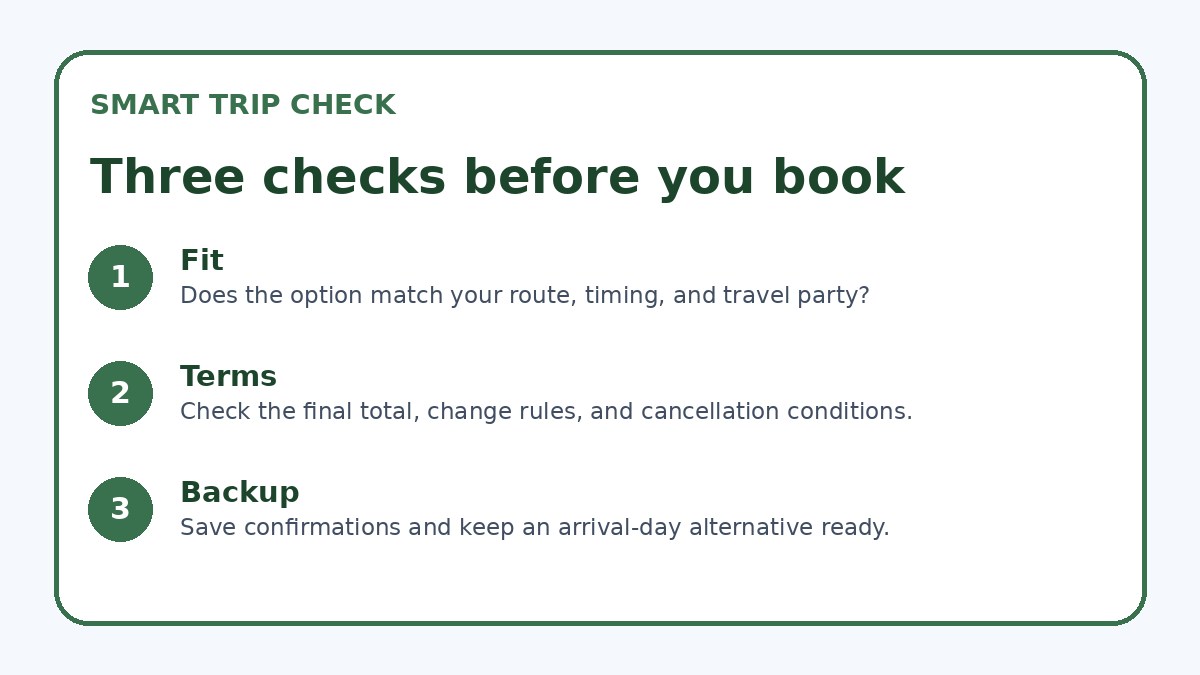
Families renting a car in Madrid will find fewer surprises when they prioritize three checks: what the CDW/LDW actually covers, the size and handling of the excess, and any exclusions that commonly affect family usage such as child-seat issues, tyres, and glass. Decide whether to accept desk waivers, rely on credit-card coverage, or buy third-party excess insurance based on how much upfront hassle, potential hold on your card, and paperwork you’re willing to accept. At pickup, document the car thoroughly, list all drivers, and get any verbal promises written into the agreement. These practical steps keep focus on the trip — exploring Madrid’s parks, museums, and neighborhoods — instead of disputing a damage claim later.
Continue planning
Check current options and final conditions
Use the provider page to confirm live availability, the final total, cancellation terms, and every condition that matters to your trip.
This evergreen planning guide was created with AI-assisted drafting and a structured quality review. It does not display live prices, schedules, availability, visa guidance, or provider rankings. Verify current details before booking. Some links are affiliate links; we may earn a commission at no additional cost to you.