For families traveling between Tokyo and Kyoto, the practical choice is to prioritize flexibility: choose refundable or changeable fares for at least one adult passenger, book seats together if possible, and allow extra time for transfers. Flexible tickets reduce stress when a child is sick, plans shift, or luggage and stroller needs change. That said, flexibility usually means tradeoffs in advance booking certainty and sometimes higher upfront cost. This article explains the decision criteria families should use, how to compare fully flexible, semi-flexible, and fixed tickets, and which family situations favor each option. Use the guidance to decide what to verify on the provider’s booking page—cancellation rules, seat reservation policies, and family discounts—so you can travel with confidence.
Understand the main ticket flexibility types
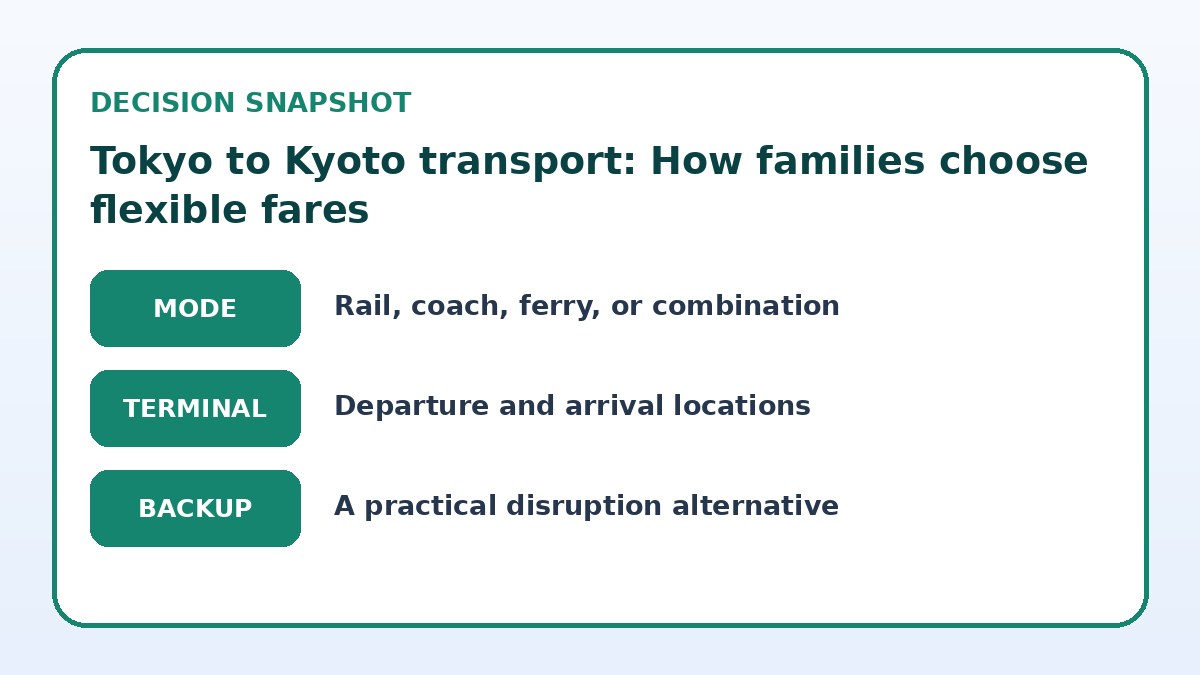
Tickets for the Tokyo to Kyoto route generally fall into a few practical categories: fully refundable, changeable with a fee, and non-changeable/non-refundable. Fully refundable fares allow you to cancel and recover the fare (subject to provider policies), while changeable fares let you alter travel times for a fee or for free within a set window. Non-changeable tickets are cheaper in many markets but carry the risk of losing the fare if plans shift. For families, the real value of flexibility is not just the possibility of a full refund but the option to rearrange departure times without splitting the group.
When comparing these categories, look beyond labels and read the booking conditions carefully. Key details to verify include whether seat reservations are included, how many name changes are permitted, whether change fees scale with how close you are to departure, and whether child fare policies differ. Also confirm whether a flexible ticket applies to the whole family on one booking or must be purchased individually. On the provider’s final booking page, verify the exact cancellation and change steps and any documentation the provider may require for refunds or exchanges.
How family needs change the ideal flexibility choice
Different families have different priorities: traveling with infants, toddlers, or older children, carrying strollers, or planning a packed itinerary affects what flexibility will help most. If you have a very young child or a child with special needs, fully refundable or highly changeable fares give peace of mind because caregivers can respond to last-minute health or sleep-related changes. Families traveling with lots of luggage or a stroller may need guaranteed seat reservations or dedicated space; flexibility is less useful if there’s no seating guarantee and the train is busy.
For families on fixed holiday schedules where connections and activities are booked tightly, semi-flexible fares that allow limited changes may be sufficient and cheaper than fully refundable options. Conversely, if you expect uncertain arrival times to the station—because of sightseeing or delayed flights—full flexibility or later departure options reduce risk. Weigh how likely plans will change against the extra cost and availability of flexible fares, and always check whether a flexible fare lets you rebook without losing pre-booked reserved seats or bonuses like children’s discounts.
| Approach | Best for | Tradeoff to check |
|---|---|---|
| Fully refundable fare | Families with infants, health concerns, or highly uncertain plans | Higher upfront cost and possibly fewer seat availability options on peak trains |
| Changeable fare with fees | Families wanting some flexibility without the full cost of refunds | Fee structure can be complex; last-minute changes may still be expensive |
| Non-changeable discounted fare | Families with fixed, confirmed schedules and low risk of disruption | Lowest flexibility—risk of losing fare if plans change or a connection is missed |
| Separate leg tickets with mix-and-match flexibility | Families willing to manage logistics to get flexible coverage where it matters most | Adds booking complexity and may leave one leg unprotected if not coordinated |
Comparing direct and connecting options with flexibility in mind
Direct journeys reduce the chance that a missed connection ruins part of your trip, which can make a less flexible direct option worthwhile for families who prioritize simplicity. However, direct services sometimes have limited seats and stricter ticket rules, so confirm whether a direct ticket allows seat reservations and what the change rules are. If direct trains have no reasonable refundable options, consider a connecting itinerary with more flexible segments—especially if the connections are long enough to absorb delays and allow for rebooking without penalty.
When evaluating connecting options, compare the flexibility of each leg separately and whether a single ticket can cover both legs. A single flexible ticket for the whole journey provides stronger protection—if a provider issues a through-ticket, it may reroute or rebook you if a connection is missed due to a covered delay. If you must buy separate tickets, flexibility on only one leg won’t protect the other. Always confirm on the booking page whether the fare protects connections, whether rebooking assistance is offered, and what happens to reservations if you change times.
Before you book
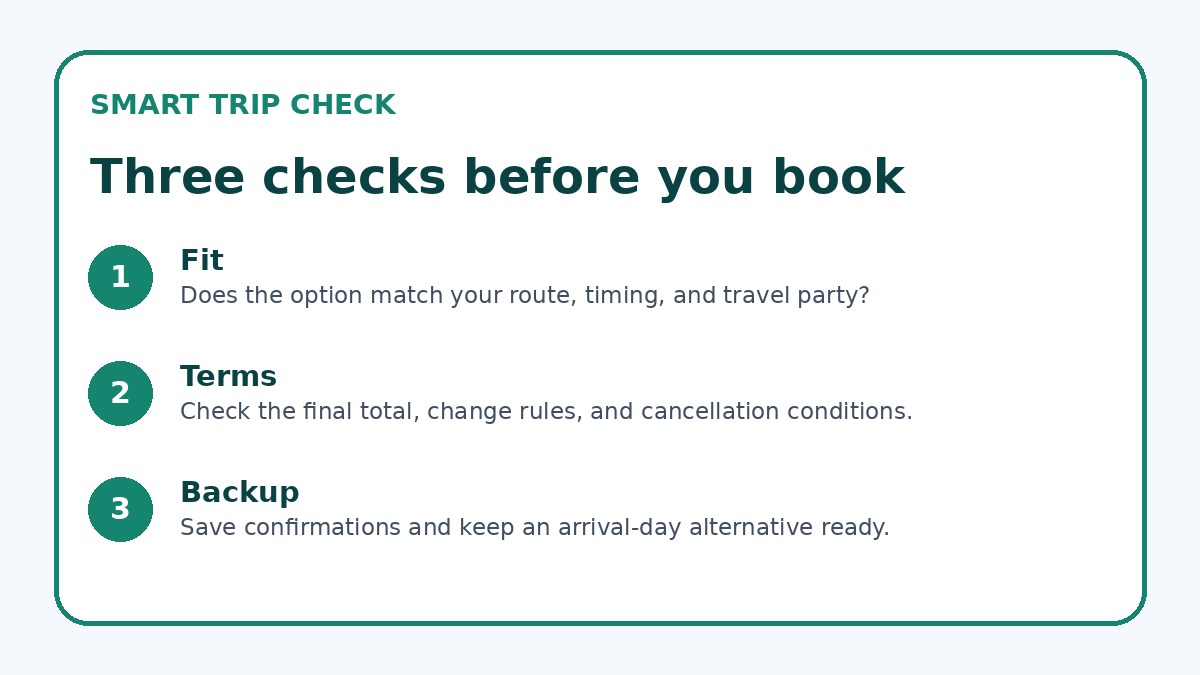
- Confirm whether the ticket includes seat reservations and how to reserve seats together for your family before payment.
- Read the exact change and cancellation rules on the provider’s final booking page, including deadlines and fees.
- Verify child and infant fare policies and what documentation, if any, is required at the station.
- Decide whether to buy a single through-ticket or separate tickets for connecting legs and confirm connection protection.
- Check luggage, stroller, and accessibility policies and pre-book assistance or priority space when available.
- Simulate the booking process to see final charges, refund methods, and any required name or ID matching rules.
Practical booking checks and family-friendly add-ons to verify
Before you commit, inspect the provider’s fine print. Verify exact change and cancellation deadlines, how refunds are processed (credit, voucher, or card reversal), and whether child fares, infant policies, or family discounts are applied automatically or require evidence at the station. Check seat reservation rules—can you pick adjacent seats, and are priority seats for families available? Also confirm luggage allowances and stroller policies; some trains have limited space where reservations matter more than fare flexibility.
Look for family-friendly add-ons that can make travel smoother: options to pre-book baby bassinets, wheelchair or stroller assistance, and seat types with extra space. If you’ll use a rail pass or a regional discount card, verify how it interacts with seat reservations and whether the pass requires separate reservation fees. When in doubt, use the provider’s booking page to simulate the booking so you can read the exact steps and fees you’ll face; Trip.com is one optional place to compare availability, but always confirm refund and change rules with the carrier before finalizing.
Frequently asked questions
Is it better to buy refundable tickets for the whole family or just one adult?
Buying at least one refundable or changeable ticket for a family can be a pragmatic compromise: it lets you rebook the main reservation without needing to change every passenger immediately, and one adult can rearrange plans if needed. However, policies vary—some carriers require changes for all passengers on a single booking, while others let you modify individual names or segments. Check the provider’s terms on the final booking page to understand whether a single flexible ticket effectively protects the group or whether each person needs individual flexibility.
How do seat reservations interact with flexible fares for families?
Seat reservations and fare flexibility are often separate rules. A flexible fare may allow changes or refunds, but seat reservations can be time-limited or non-transferable, meaning you might keep the fare flexibility yet lose your specific seats when you change. For families, reserving seats together at the time of booking is usually worth the extra step; confirm whether changing your travel time preserves your seat reservation or requires rebooking seats (and whether that incurs a fee). Always verify seat policy wording on the booking page.
If we miss a connection because a child was ill, will a flexible ticket cover rebooking?
Whether your ticket covers rebooking after a missed connection depends on how the itinerary was booked. A single through-ticket that includes both legs is more likely to offer rebooking assistance or protection than two separate tickets. Refundable and highly changeable fares are more forgiving, but carriers’ obligations differ. Check the booking conditions for missed-connection or force majeure rules, and confirm the provider’s recommended contact procedure for on-the-day assistance in case you need to change plans due to illness.
Final planning note
Families traveling Tokyo to Kyoto benefit from thinking in probabilistic terms: what’s the chance plans change, and how disruptive would that change be? If uncertainty is high—young children, multiple activities, or potential delays—prioritize refundable or highly changeable fares and reserve seats together. If you have a tightly planned itinerary and connections are covered, a semi-flexible or non-changeable fare may be acceptable. Always read the final booking page for exact change, cancellation, and seat-reservation rules, and simulate a booking to reveal hidden steps or fees. A little verification at the time of booking buys a lot of calm on travel day.
Continue planning
Check current options and final conditions
Use the provider page to confirm live availability, the final total, cancellation terms, and every condition that matters to your trip.
This evergreen planning guide was created with AI-assisted drafting and a structured quality review. It does not display live prices, schedules, availability, visa guidance, or provider rankings. Verify current details before booking. Some links are affiliate links; we may earn a commission at no additional cost to you.