If you plan to rent a car in Tokyo as a solo traveler, the practical starting point is simple: choose a pickup location and return policy that fits your arrival and departure times, local transport connections, and comfort with driving in Japan. Most rental searches default to major airports and city-center stations, but smaller neighborhood branches often offer easier late-night pickup or returns. Confirm that the provider accepts your driver’s license (international driving permit or translation may be required), the exact ID documents they need at pickup, and whether single-driver bookings have extra penalties or limits. Finally, verify fuel, mileage and after-hours procedures on the booking page before paying, since those operational details vary and directly influence your itinerary and total cost.
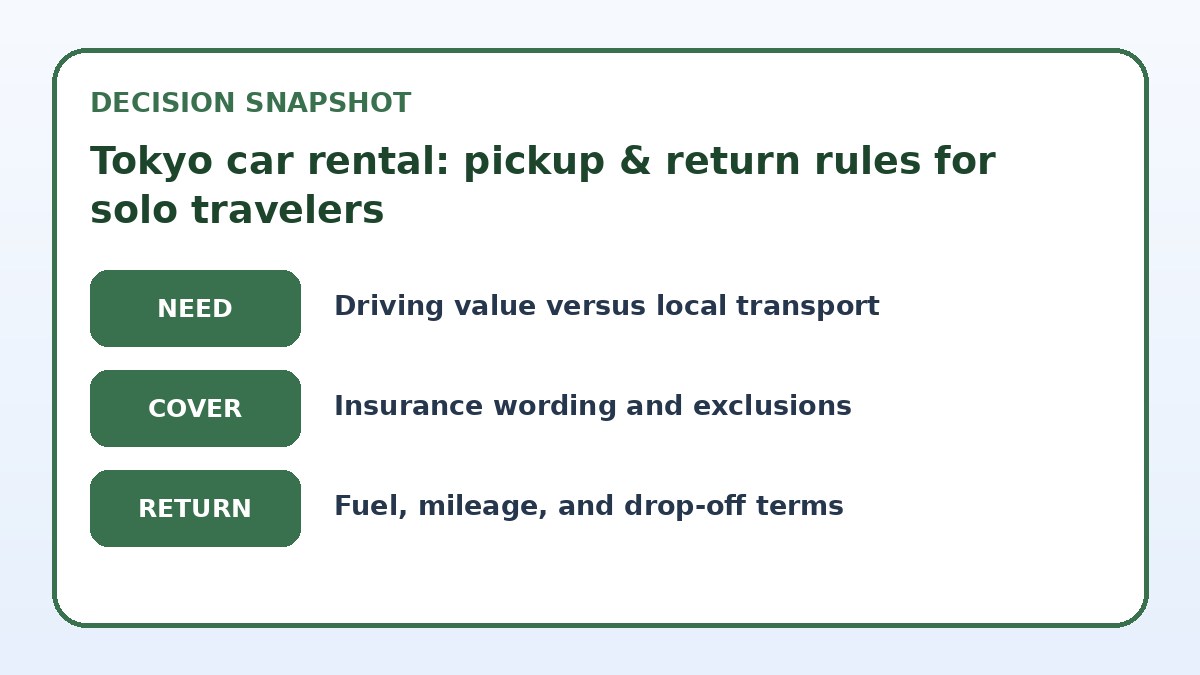
See current options before you compare the details
Availability and final conditions change. Open Trip.com now or keep reading for the practical comparison.
Where to pick up: airport, station, or city branch?
Choosing a pickup spot is about convenience and timing more than price alone. Airports like Narita or Haneda often have the largest fleet and English-speaking counters, which can be reassuring after a flight; they also may offer wider pickup hours. Picking up at a major train station or a neighborhood branch can save time if you’re based centrally and want to avoid long airport transfers. Factor in how you’ll reach the pickup location from your arrival point—train, shuttle bus, or taxi—and whether you prefer to pick up immediately or wait until you’re settled in the city.
For solo travelers, ease of navigation matters. If you expect to arrive late in the evening, a branch with known after-hours procedures or 24-hour return options reduces stress. If your plan includes returning the car to a different location, check whether one-way rentals are available and what restrictions apply. Always read the provider’s final booking page to confirm pickup desk hours, exact directions to the pickup counter, and any documentation checks required at handover.
Driver eligibility, ID, and documentation to verify
Japan has precise rules about what constitutes a valid license; providers commonly require either a domestic Japanese license, an International Driving Permit (IDP) accompanied by your home license, or an officially translated driving license for certain countries. Some agencies accept only specific types of IDP, so check the provider’s exact requirements on the booking page. Solo travelers should also verify age restrictions and additional driver policies—some companies charge extra for solo or young drivers or limit which vehicles you can rent.
Bring all documentation in original form and keep digital copies. Beyond your driving license, expect to present your passport, the credit card used for reservation, and proof of your return travel or accommodation in some cases. If any of these requirements could disrupt your plans, contact the rental company before booking. When the rental page lists acceptable documents, save screenshots or confirmation emails so you can show them at pickup if questions arise.
| Approach | Best for | Tradeoff to check |
|---|---|---|
| Airport pickup and drop-off | Travelers arriving by air who want a single-car solution after landing | Ease and language support versus potentially higher fees and extra city driving |
| City station or neighborhood branch | Those staying centrally who prefer less driving into Tokyo | Lower transfer time but possibly limited vehicle choice and shorter desk hours |
| One-way rental between branches | Itineraries that move between regions without backtracking to start point | Great flexibility but often comes with a significant drop-off surcharge |
| After-hours return option | Arrivals or departures at odd hours who need quiet, late drop-offs | Convenient timing but requires strict photo documentation and may incur extra charges |
Ready to check the option that fits your plan?
Use your exact dates and traveler details so the provider page can show the current total and conditions.
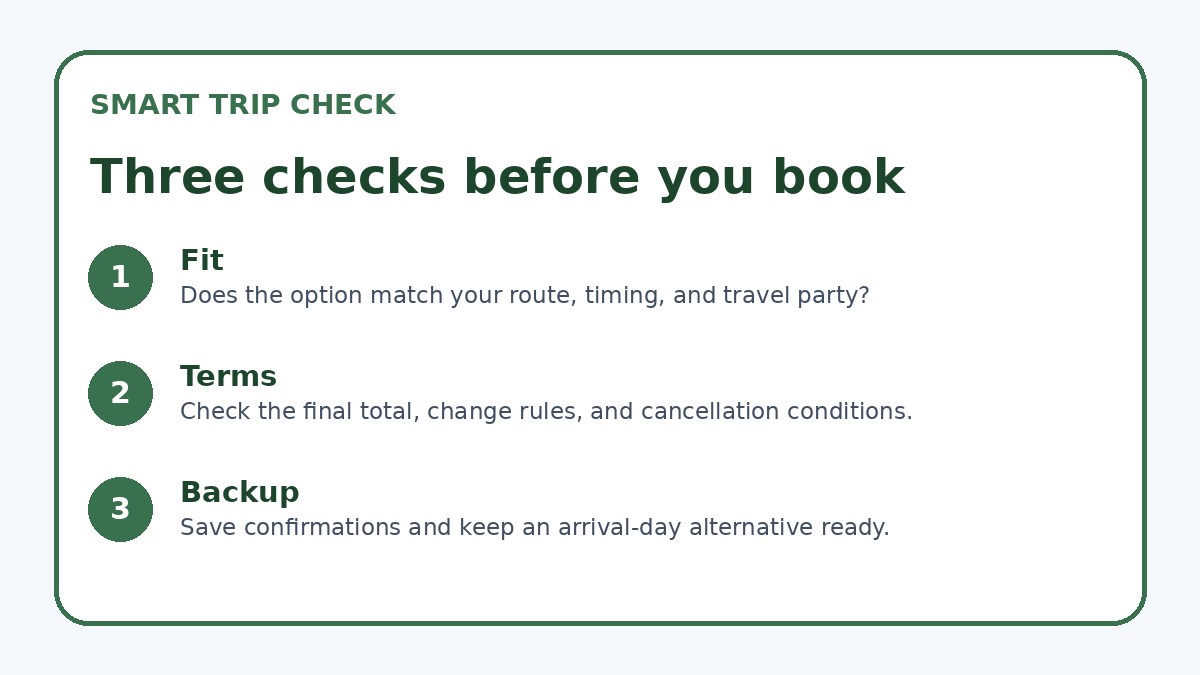
Return terms: fuel, mileage, after-hours, and inspection
Return policies are where extra charges often appear. Common fuel options include full-to-full (recommended for clarity) or near-empty penalties; confirm which option your booking provides. Understand the mileage policy—some daily rates include unlimited kilometers while others impose strict daily or per-rental limits. Solo travelers should calculate expected distance between Tokyo and any day trips to avoid excess-mileage fees. Also ask about tolls and whether the vehicle uses an electronic toll collection (ETC) device that you can use or will be charged for separately.
After-hours returns and vehicle inspection are critical details. Many branches allow after-hours key drop but still require you to document the car’s condition with photos or a signed form; others may charge extra for returns outside staffed hours. Always photograph fuel gauge and any existing damage before you drive off, and repeat the photos when you return the vehicle. On the provider’s final booking page, verify the exact return address, accepted return windows, inspection procedure, and how disputes about condition are handled.
Before you book
- Confirm accepted license types and any required International Driving Permit or official translation on the provider’s final booking page.
- Verify pickup desk hours, exact pickup address, and directions from your arrival point before you travel to Tokyo.
- Choose a clear fuel policy (full-to-full recommended) and note how fuel level is checked at return.
- Photograph the car’s condition and fuel gauge at pickup and immediately on return; keep time-stamped records.
- Check whether toll payments, ETC device fees, and parking rules are included or charged separately.
- Note the modification and cancellation deadlines, and the credit card hold amount for incidentals shown on the booking confirmation.
Practical tradeoffs: convenience, cost, and flexibility
Opting for airport pickup feels convenient but can involve heavier traffic and longer drives into central Tokyo; costs for airport pickup or drop-off may be higher. City branches shorten city driving and parking logistics but may have smaller vehicles and limited availability for last-minute bookings. One-way rentals grant flexibility for multi-city travel but frequently carry a substantial drop-off fee. As a solo traveler, weigh whether you value a stress-free pickup and return over saving a little on the base rate.
Flexibility for schedule changes is another tradeoff. Fully refundable or flexible tariffs let you adjust pickup times if flights are delayed, but these rates are often pricier. Non-refundable deals are cheaper but risky if your flight or train is uncertain. Read the fine print on modifications and cancellations on the provider’s booking page: confirm deadlines for free changes, penalties for late returns, and whether the rental company requires a credit card hold for incidentals or damage.
Frequently asked questions
Do I need an International Driving Permit to rent a car in Tokyo?
Many rental companies in Japan require either an International Driving Permit (IDP) issued under the 1949 Geneva Convention or an officially translated license for certain countries. Requirements vary by provider, so confirm accepted license formats and any additional ID they request on the rental company’s final booking page. Bring original documents and digital backups, and contact the provider ahead of time if your license type is uncommon.
What happens if my flight arrives late and no staff are at the pickup desk?
Late arrivals are common; some branches provide an after-hours key-drop or allow a shuttle pickup, while others close and require rescheduling. Check the provider’s stated after-hours procedures—how to notify them of delays, where to park, and whether photo documentation is required. If no official after-hours option exists, you may need to wait for the next staffed opening or arrange alternate transport; verify these contingencies on the booking page before you finalize the reservation.
How should I handle returning the car if I’m unsure about damage claims?
Prevent disputes by documenting the car thoroughly at pickup and return with photos showing all sides, close-ups of existing scratches, and a clear image of the fuel gauge. Request a signed return report if staff are present, and save any email confirmations. If you suspect a claim afterward, contact the rental company immediately and have your booking number and photo records ready. Always check the provider’s damage dispute and insurance procedures listed on the booking page before you accept a reservation.
Final planning note
For solo travelers in Tokyo, the pickup and return choices you make shape the whole rental experience. Prioritize a pickup location and policy that fit your arrival time and mobility—airport branches for flight arrivals, city branches if you’re already central, or one-way options if you’re moving on. Verify license acceptance, fuel policy, mileage limits, and after-hours procedures on the provider’s final booking page, and document the car’s condition to avoid disputes. If you want, compare current availability and terms on a multi-provider site such as Trip.com, but always treat the rental company’s booking page as the definitive source for pick-up and return conditions.
Continue planning
Check current options and final conditions
Use the provider page to confirm live availability, the final total, cancellation terms, and every condition that matters to your trip.
This evergreen planning guide was created with AI-assisted drafting and a structured quality review. It does not display live prices, schedules, availability, visa guidance, or provider rankings. Verify current details before booking. Some links are affiliate links; we may earn a commission at no additional cost to you.