If your family is deciding how to travel between Sydney and Melbourne, start by deciding how much schedule freedom you actually need. Flexible tickets, refundable fares, and flexible-change policies reduce stress when plans shift, but they usually come with tradeoffs: higher upfront cost, more complex fare rules for groups, and occasionally stricter seat availability. This guide focuses on comparing flexibility options across common transport choices between Sydney and Melbourne—train, coach, car, and air—and gives practical criteria families can use to decide. Read the quick verdict first, then the tradeoffs and checklist to use at booking time. Verify precise refund and change conditions on the provider’s final booking page before you pay; if you want a single place to compare current options, Trip.com can be used for availability checks but always confirm the carrier’s rules directly.
Practical decision: what flexibility means for families
Flexibility can mean several things: free or low-cost date changes, refunds on cancellations, the ability to change passenger names or split bookings, and guaranteed seat assignments even on flexible fares. For families, the most valuable types of flexibility are usually the ability to move the whole group together without excessive change fees, and clear rules for children and infants so you aren’t penalised when a single child’s situation forces a swap. Also check whether flexibility applies per passenger or to the entire booking — a family might find one refundable adult seat with several non-refundable child seats creates awkward limitations.
When comparing options, use scenarios rather than headlines. Imagine a child’s illness two days before travel, a delayed school return that shifts dates by a week, or adding another relative at the last minute. Then check the provider’s documented remedies: will they refund unused tickets, allow free date changes within a window, or require new tickets? Factor in how easy the provider’s customer service is for quick family fixes, and whether online self-service change processes exist; these practicalities often matter more than a slightly lower fare.
Comparing transport modes: flexibility tradeoffs
Train and coach services often offer a range of fare types—fully flexible, semi-flexible, and saver tickets. Fully flexible rail tickets typically allow same-day rebooking or refunds with minimal penalty; they can be the simplest option for families who might shift plans. However, fully flexible train fares are less common on long-distance intercity routes and may sell out faster, so you’ll need to weigh seat availability versus peace of mind. Coaches can be inexpensive, with some operators offering flexible vouchers or open-date tickets that work well for families who want an inexpensive safety net.
Flights usually sell the widest menu of fare classes, from basic non-refundable to fully refundable business fares, each with different baggage and change rules. Family bookings may complicate this if child discounts or separate infant rules apply; changing one passenger’s flight could trigger a fare difference for everyone if tickets are tied to a single reservation. Driving yourself offers ultimate schedule control but transfers uncertainty into fuel, toll, and fatigue management; car rental agreements and insurance flexibility also vary, so verify cancellation and age-driver rules before booking.
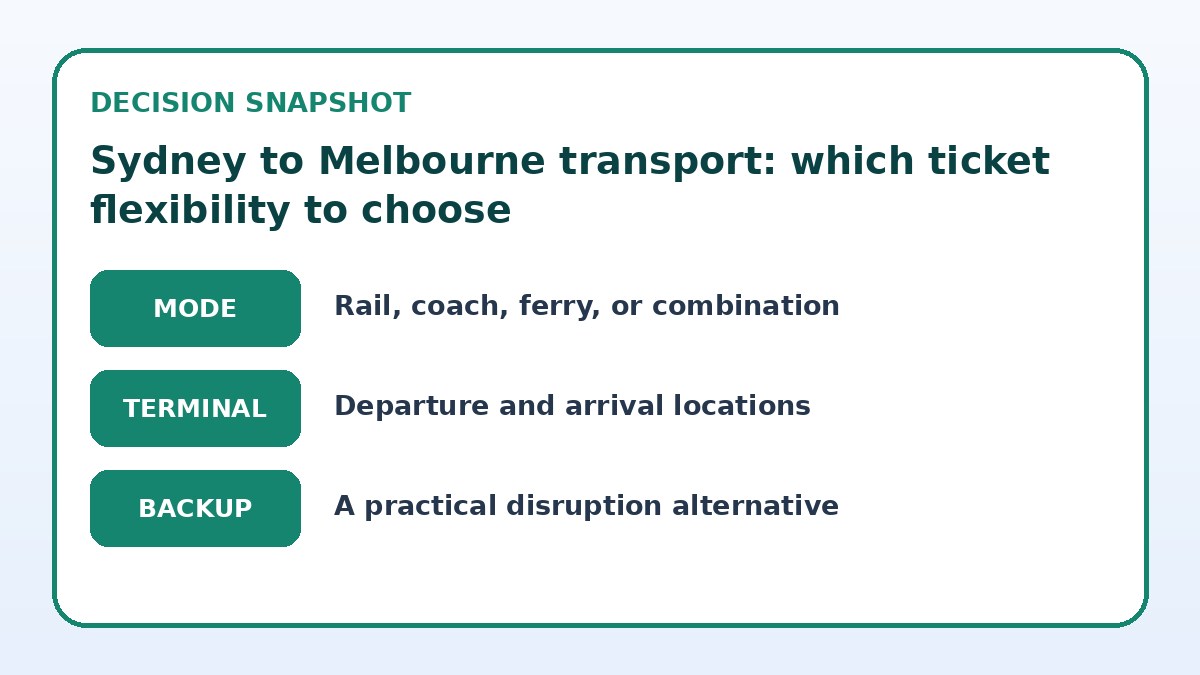
| Approach | Best for | Tradeoff to check |
|---|---|---|
| Buy fully flexible tickets for everyone | Families who need stress-free changes and minimal risk | Higher upfront cost and possible limited availability |
| Mix refundable adult fares with cheaper child tickets | Families balancing cost with some flexibility | Complex changes if only one passenger must move; potential extra fees |
| Buy low-cost non-refundable tickets and add insurance | Families confident in fixed plans but wanting contingency | Insurance may not cover every reason for cancellation; claims add paperwork |
| Book separate legs or suppliers for price reasons | Families prioritising cheapest routing or combining transport types | Higher exposure to missed connections and multiple change fees |
How to compare ticket flexibility in practice
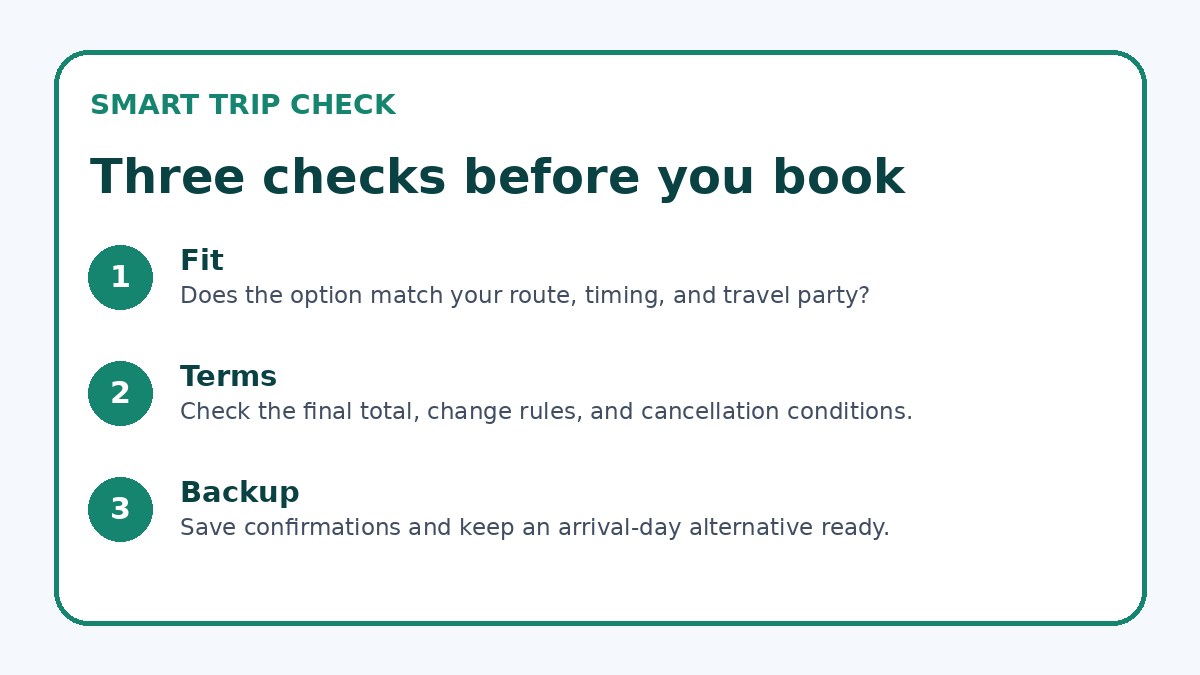
Start by mapping what matters: date-change fees, refundability, name-change policy, whether changes apply per ticket or per booking, and seat assignment guarantees. Get the provider’s cancellation policy and change fees in writing on the booking page before paying—don’t rely on third-party summaries. If a provider offers credit vouchers instead of cash refunds, check the voucher validity and any blackout periods. For families, also check whether child fares are refundable under the same rules as adult fares or are treated separately.
Use a side-by-side checklist for each option you consider: list the total price, change fee, refund process, child policies, required documentation for making changes (medical notes, proof of school closure), and customer service channels. Consider buying travel insurance that explicitly covers cancellation for family illness and verify that the insurer accepts the booking class you purchase. Finally, if you are comparing direct versus connecting options, assess how ticket splitting affects flexibility: single-ticket itineraries usually protect connections in change/refund events, whereas multiple separate tickets may leave you exposed to missed connections and separate change fees.
Before you book
- Read and save the full ticket fare rules and cancellation table from the provider’s final booking page before payment.
- Confirm whether changes and refunds apply per passenger or to the entire family booking.
- Check child and infant fare rules—age cutoffs, lap infant policies, and whether they share the adult’s flexibility terms.
- Compare whether a single combined itinerary protects connecting legs versus separate tickets for each segment.
- Ask the carrier about seat assignment policies for families and whether changes preserve assigned seats.
- If buying travel insurance, verify it covers family illness and accepts the ticket fare classes you plan to buy.
Booking tips and family-friendly extras to check
When you’re ready to book, choose the smallest set of tickets that meets your needs: one family booking with flexible conditions is usually easier to manage than several individual lower-cost tickets. Check whether carriers offer family or group fares that allow easier changes, and whether seat selection is included so you can reserve adjacent seats when plans shift. For air and rail, confirm baggage rules and whether a change in ticket class or date will alter baggage allowances for children.
Before finalising payment, screenshot or save the full fare rules, cancellation table, and any confirmation emails that describe flexibility terms. If using a travel agent or aggregator like Trip.com to compare availability, still confirm the specific refund/change wording on the carrier’s official booking page. Keep emergency contact numbers, and record the booking reference in a shared family document so any adult can manage changes quickly if needed.
Frequently asked questions
Should families always choose refundable or fully flexible fares for Sydney to Melbourne travel?
Not always. Fully flexible fares give the most peace of mind if plans are likely to change, but they cost more and may offer limited seats. For families with predictable dates, a semi-flexible fare or a low-cost ticket plus targeted travel insurance can be a sensible middle ground. The right choice depends on how likely changes are, the financial hit you’d take from cancelling, and whether you need to move an entire booking or only a single passenger. Always check the provider’s exact refund and change wording on the booking page.
How do child fares affect ticket flexibility and changes?
Child fare rules vary by operator and are sometimes tied to a different set of conditions than adult tickets. Some carriers treat child fares as non-refundable even when adult fares are refundable; others allow children to be changed separately but with fees. When booking, read the child fare terms and note whether changing one child’s ticket forces a reissue for the whole booking. If in doubt, contact the carrier to confirm the operational process for changing a family reservation involving children or infants.
If we book different transport modes (flight one way, train return), how does that affect flexibility?
Mixing modes can give you greater scheduling freedom but increases complexity: each ticket follows its own rules, so a change or cancellation affects only that leg. That setup can be advantageous if you want flexibility on one leg and lower cost on the other, but it also means managing multiple fare rules, customer-service contacts, and potential separate change fees. For connections, there’s no protection if a delay on one mode makes you miss the other unless you buy protected connecting tickets or leave generous time buffers between segments.
Final planning note
For most families traveling between Sydney and Melbourne, deciding how much ticket flexibility to buy comes down to a simple risk calculation: how likely are plans to change, and what financial or logistical pain will you accept if they do? Fully flexible fares reduce hassle but cost more; mixing flexible and saver tickets can save money but complicate changes. Use concrete scenarios when comparing options, verify full fare rules on the provider’s booking page, and consider travel insurance that specifically covers family cancellations. Save confirmations and fare-rule screenshots so you can act quickly if plans shift—preparedness often delivers more calm than the most flexible ticket alone.
Continue planning
Check current options and final conditions
Use the provider page to confirm live availability, the final total, cancellation terms, and every condition that matters to your trip.
This evergreen planning guide was created with AI-assisted drafting and a structured quality review. It does not display live prices, schedules, availability, visa guidance, or provider rankings. Verify current details before booking. Some links are affiliate links; we may earn a commission at no additional cost to you.