For families travelling between Sydney and Auckland, the most practical decision is to pick a flight plan that balances total journey time with predictable connections, good onboard facilities, and realistic rest breaks for children. A comfortable long-haul connection is usually about minimizing overnight disruptions, securing adjacent seats, and choosing connection times that reduce rush and stress at transit airports. Before you book, decide whether you prefer fewer connections and a slightly longer single-leg flight, or a well-timed multi-leg itinerary that breaks the journey into manageable chunks. Use the opening booking page to confirm aircraft type, seat maps, baggage rules, and whether bassinets, child meals, and priority boarding are available. If you need a comparison site, Trip.com can be useful to see live options, but verify all family services and connection minimums directly with the airline before purchasing.
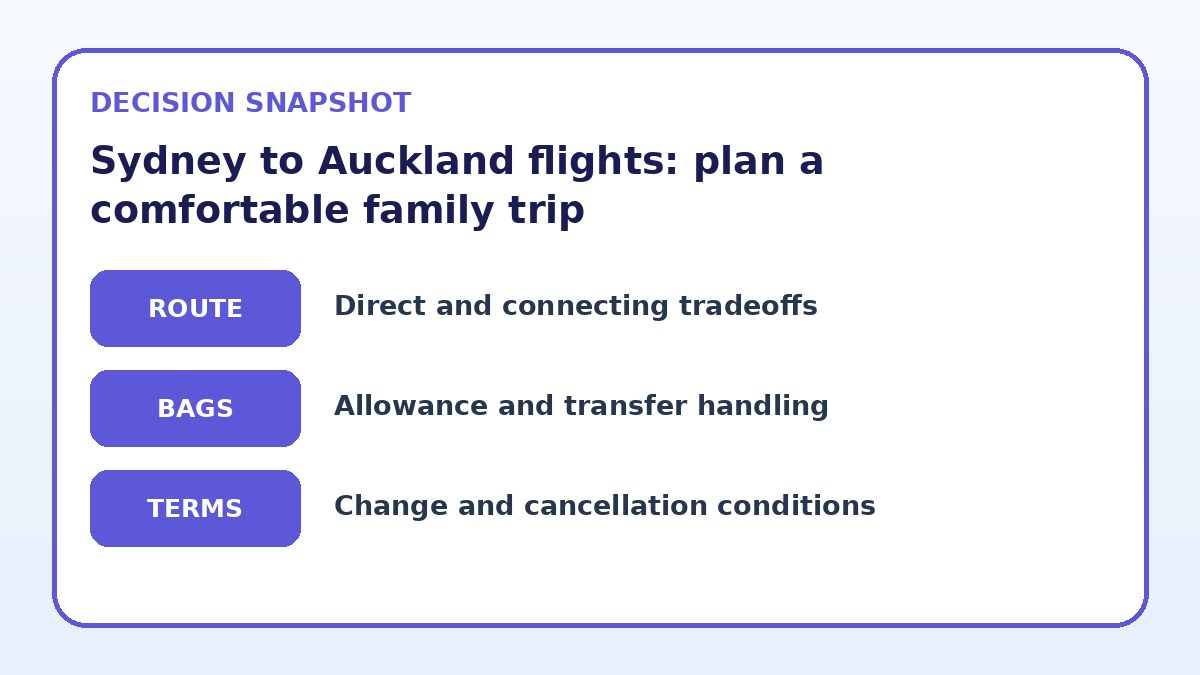
See current options before you compare the details
Availability and final conditions change. Open Trip.com now or keep reading for the practical comparison.
Deciding between direct and connecting Sydney–Auckland itineraries
Although some travellers prefer a single nonstop to reduce hassle, families often gain flexibility from a planned connection if it breaks the trip at a convenient time or airport. When comparing options, look beyond total elapsed time: consider door-to-door transfer time, the number of takeoffs and landings younger children will endure, and the reliability of each connection airport. A single long flight may be shorter overall but can be harder to manage for restless toddlers, while a deliberate stopover might provide a predictable chance to stretch, change nappies, or swap caregivers without rushing.
To compare fairly, pull the carrier seat maps and aircraft types for each leg and confirm how baggage is handled across segments. If a connection requires changing terminals or re-clearing security or immigration, budget extra time and consider a longer layover. For multi-airline itineraries, verify whether each airline codeshares and which one is responsible for missed connections and transfers. Always check the airline’s family services list on the booking page so you know whether bassinets, child meals, or priority boarding are confirmed or must be requested separately.
Choosing seats and cabin options with children in mind
Seat choice makes a huge difference: families usually benefit from bulkhead rows, seats with extra legroom, or contiguous middle seats so a parent can easily attend to a child. If you are flying with infants, check whether the flight offers bulkhead bassinet positions and how they are assigned. For older children, pick seats close to the galley or lavatory for quick access, but balance this against potential noise. If the airline allows pre-assignment at booking, lock in adjacent seats as early as possible to avoid being split up later.
Consider cabin class tradeoffs: premium economy or business can provide extra space that eases long connections, but that must be weighed against cost and seat availability for the whole family. If you cannot afford an upgrade, look for subtle improvements: choosing an exit-row (if children meet age and size rules), or a section with fewer rows behind so you don’t sit in the busiest aisle. Always verify seat assignments, bassinet availability, and any family-specific amenities on the airline’s final booking page, not only on search aggregator screens.
| Approach | Best for | Tradeoff to check |
|---|---|---|
| Nonstop flight when available | Families who prioritise simplicity and a single takeoff/landing | Less flexibility for breaks; long continuous flight time may be harder for very young children |
| Single planned connection with longer layover | Families who need a predictable pause to refresh and reset between legs | Longer total travel time and more time in airports |
| Tight multi-leg itinerary to minimise total time | Families seeking the quickest door-to-door journey with fewer overall hours | Higher stress risk if transfers are tight or terminals are distant |
| Split overnight stopover | Families wanting to rest properly and break the journey into two restful portions | Requires an extra hotel booking and more planning for luggage and transfer logistics |
Ready to check the option that fits your plan?
Use your exact dates and traveler details so the provider page can show the current total and conditions.
Packing and onboard comfort: small changes that help
Pack the carry-on like a compact survival kit: familiar snacks, a refillable water bottle for post-security, spare clothes, a compact blanket, nappies, wipes, and any necessary medicines. Include small activities that have worked at home rather than many new toys, and bring headphones sized for kids plus a charged tablet with pre-downloaded shows or games. Keep items you’ll need during the flight in an easily reachable compartment or a small daypack per parent so you don’t need to dig through a large bag mid-air.
For comfort during a long connection, bring a light travel pillow and a soft wrap that can double as a blanket. Pay attention to footwear that’s easy to remove and put back on during security, and consider noise-cancelling solutions for sensitive sleepers. If you expect a long layover, pack a compact change kit with toothbrushes and face wipes so everyone can refresh between flights, and check whether your transit airport offers family rooms or quiet lounges where you can regroup.
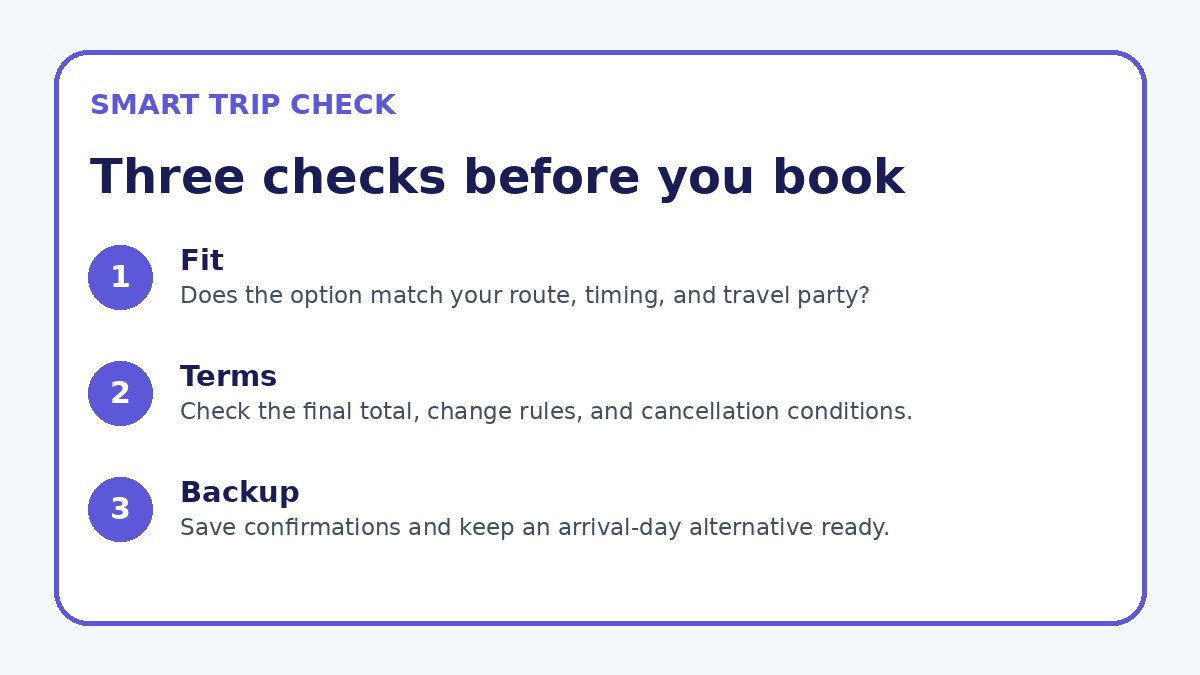
Before you book
- Confirm seat assignments and bassinet availability on the airline’s final booking page before finalising tickets.
- Select connection times that include at least 90 minutes if you must change gates or terminals with children.
- Pack a carry-on with medicines, snacks, chargers, spare clothes, comfort items, and entertainment for each child.
- Verify how checked luggage is handled across carriers and whether you must recheck bags during the connection.
- Identify family facilities at transit airports—parent rooms, nursing areas, and priority security lanes—and save maps.
- Save airline contact numbers and booking references offline; screenshot tickets and seat maps in case of app issues.
Managing transfers at airports and unexpected disruptions
Plan your airport transfers with realistic walking times and potential shuttle or security queues in mind. When booking, note whether you change terminals or re-clear security and passport control—these steps extend the connection time needed with kids and luggage. Use apps or airport maps to see gate distances and plan a buffer for stroller gates and family lanes at security. If you have very young children, check whether the airport provides strollers, parent rooms, and priority lanes to make moving between gates easier.
Prepare for delays by building small contingencies into your schedule: a longer planned layover, flexible tickets, or identifying nearby airport lounges you can access for a fee or with a credit card. If a connection is missed, knowing which carrier is contractually responsible is crucial—verify responsibility and rebooking processes at purchase. Keep digital and printed copies of reservations, and store airline contact details so you can quickly request assistance or family re-accommodation if plans change.
Frequently asked questions
How much connection time should I allow for families travelling from Sydney to Auckland?
For family travel, aim for a minimum of 90 minutes for domestic-style connections and 120–150 minutes if you need to change terminals, re-clear security, or expect stroller retrieval. Young children slow down passage through security, and parents often need extra time to carry baggage, use restrooms, or feed infants. If an itinerary involves different airlines without a through-checked baggage agreement, add more time to account for possible recheck steps. Always review the airline’s minimum connection time guidance on the booking page before you commit.
What should I pack in my carry-on specifically for a long connection with kids?
Include essentials that cover comfort, health, and distraction: medicines, a small first-aid kit, nappies and wipes, a change of clothes per child, snacks that travel well, water bottle for after security, and devices pre-loaded with age-appropriate entertainment plus child-sized headphones. Pack a lightweight blanket or wrap, a compact pillow, plastic bags for soiled clothes, and travel cutlery if your children need familiar utensils. Put frequently used items in an external pocket or a small daypack so you can access them without unpacking larger luggage.
If my family’s connection is disrupted, what practical steps should I take at the airport?
First, locate your airline’s transfer or re-accommodation desk and explain you are travelling with children—many carriers prioritise families for the next available seats. Keep everyone together and use family lanes if available. Confirm baggage status and whether checked bags will be transferred automatically. If you must wait, ask about meal vouchers or lounge access for families, and request information on overnight accommodation policies if the delay requires an unexpected hotel stay. Document any rebooking confirmations and get a contact for follow-up.
Final planning note
Choosing comfortable Sydney to Auckland flights for families is mostly about predictable pacing and a few practical preparations. Prioritise seat selection, realistic connection times, and carry-on packing that anticipates small emergencies and entertainment needs. Compare direct versus connecting itineraries not only by total time but by how the schedule fits your children’s sleep and meal routines. Before you pay, check the airline’s final booking page for seat maps, bassinet policies, baggage transfer rules, and family services to avoid surprises. With deliberate planning—buffered connections, adjacent seats, and a compact comfort kit—you can turn a long-haul connection into a manageable, even restful, part of your family journey.
Continue planning
Check current options and final conditions
Use the provider page to confirm live availability, the final total, cancellation terms, and every condition that matters to your trip.
This evergreen planning guide was created with AI-assisted drafting and a structured quality review. It does not display live prices, schedules, availability, visa guidance, or provider rankings. Verify current details before booking. Some links are affiliate links; we may earn a commission at no additional cost to you.