
If you’re travelling from Sydney to Auckland for the first time and want a comfortable long-haul connection, start by deciding which comfort factors you value most: total travel time, seat comfort, overnight rest, or a simple single-stop itinerary. Practical choices often come down to whether a direct flight is available and suits your schedule, or whether a one-stop option with an overnight layover—or a daytime connection—gives you better rest and less rush. Consider airport transfer times in Sydney and Auckland, the timing of check-in and security, and whether an airline’s change and rebooking policies matter to you. Use the opening paragraph to make your priorities clear, then compare options by comfort, schedule, and airport logistics so you can pick the connection that fits your energy level and trip purpose.
See current options before you compare the details
Availability and final conditions change. Open Trip.com now or keep reading for the practical comparison.
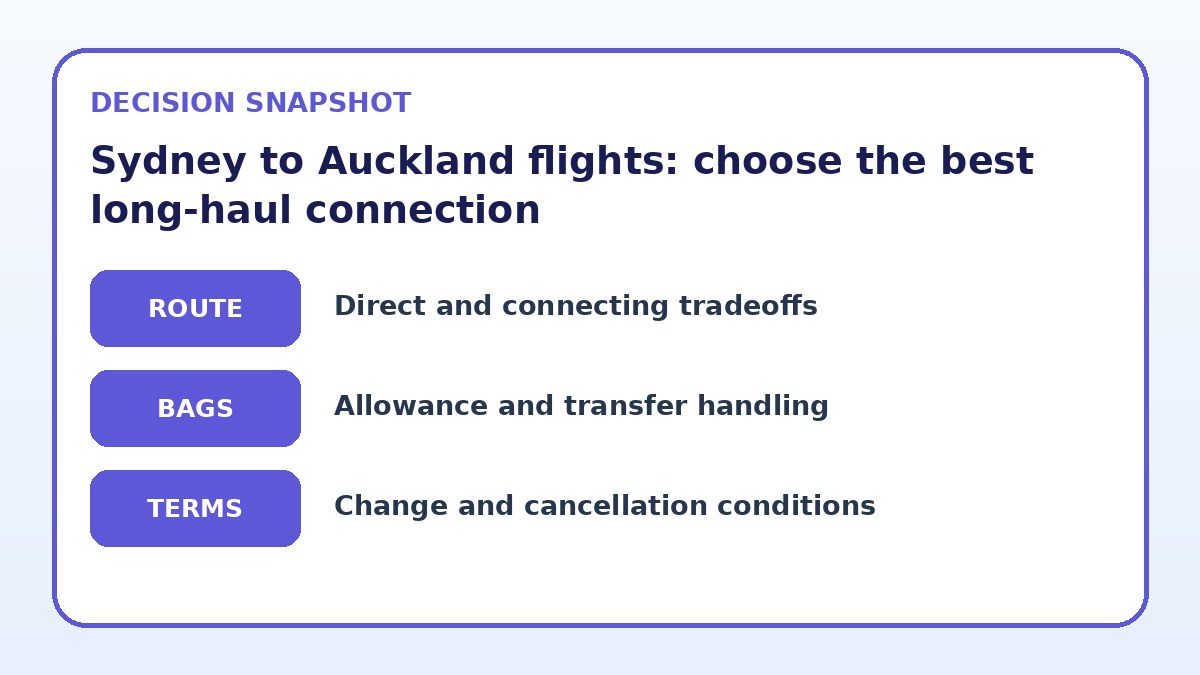
Direct vs connecting options: comfort tradeoffs
Direct flights usually mean less logistical complexity: fewer touchpoints, no extra check-ins, and a smaller chance of missed connections. For first-time visitors, that simplicity can reduce travel stress and save time dealing with unfamiliar airports. However, direct services may operate at times that conflict with your preferred sleep schedule or may use aircraft with denser seating on busy routes. Compare the advertised flight duration with the aircraft type and seat pitch—these factors influence whether you’ll actually be able to sleep or stretch out during the flight.
Connecting itineraries can offer more flexibility on departure times and sometimes better seat options if you split the journey into a long overnight leg and a shorter daytime hop. The downside is added uncertainty: a missed connection, extra security lines, or baggage transfer issues. If you choose a connection, plan generous layover time and verify whether your tickets are on a single reservation (which typically protects you from missed-connection charges) or separate tickets (which shift responsibility for missed flights to you).
Timing your departure and arrival for better rest
When comfort is the priority, you’re effectively choosing a sleep strategy. A late-evening departure from Sydney that arrives early morning in Auckland can align with natural sleep windows, but aircraft noise, cabin lighting and seat type may still interrupt your rest. Alternatively, an overnight layover in a comfortable airport hotel lets you break the journey and arrive refreshed, though it adds planning and cost. Check realistic door-to-door timing: factoring in transport to the airport, recommended pre-flight arrival times, and the time to clear immigration on arrival, which affects how much usable rest you actually get.
Daytime travel can be better if you want to avoid jet lag at the destination, especially for short stays when immediate activity is expected. If you need to be alert on arrival, prioritize daytime arrivals and consider an overnight in Auckland to adjust gradually. Also look at airport facilities — quiet lounges or pay-to-use sleep pods at either end of the journey can significantly improve comfort if you have a long layover but prefer not to book a hotel.
| Approach | Best for | Tradeoff to check |
|---|---|---|
| Direct daytime flight | Travelers wanting minimal logistics and daytime arrivals | May offer less sleep-friendly timing and fewer upgrade options |
| Direct overnight flight | Those aiming to sleep on the plane and arrive ready for the day | Sleep quality depends heavily on seat comfort and aircraft layout |
| One-stop with short connection | Passengers prioritizing total travel time and lower fares | Higher risk of stress from tight transfers and baggage complications |
| One-stop with overnight layover | Travelers who prefer a rested arrival and break in the journey | Adds lodging and local transfers, increasing total trip time and cost |
Ready to check the option that fits your plan?
Use your exact dates and traveler details so the provider page can show the current total and conditions.

Seat selection, upgrades and onboard comfort
Seat choice is one of the most tangible comfort improvements you can make without changing flights. A wider seat, extra legroom, or a bulkhead row can make a big difference on a long leg. If you’re traveling economy, consider exit-row or premium-economy options when available; for night travel, aisle seats may let you get up more easily without disturbing neighbors, while window seats offer a wall to lean against. Verify seat maps and exact seat pitch with the airline before booking—third-party seat charts can be inaccurate or outdated.
Upgrades, whether purchased in advance or via airport bid systems, should be weighed against comfort gains and cost. A business class seat will usually improve sleep and space, but the incremental benefit depends on aircraft type and the length of the longest leg. If an upgrade isn’t feasible, simple investments—noise-cancelling headphones, a supportive travel pillow, eye mask and layered clothing—can substantially increase onboard comfort for a long-haul connection.
Before you book
- Decide whether you prefer fewer connections or better sleep onboard and rank those priorities before searching flights.
- Check aircraft type and seat map for the longest leg and select seats that match your sleep strategy (window for leaning, aisle for mobility).
- Verify baggage transfer policy for connecting itineraries on the airline’s booking page to avoid last-minute recheck requirements.
- Allow extra connection time when booking separate tickets or unfamiliar airports; confirm minimum connection recommendations with the airline.
- Prepare a comfort kit (eyemask, earplugs/headphones, inflatable pillow, layered clothing) tailored to the expected flight timing.
- Confirm change, cancellation and rebooking terms on the carrier’s final booking page before paying, and consider travel insurance if flexibility matters.
Airport logistics and what to verify before booking
Before you commit to any Sydney to Auckland flights, check the practical details that affect comfort and risk. Confirm how your baggage will be handled when booking connecting itineraries—will it be checked through to your final destination, or must you collect and recheck it during a layover? Also verify minimum connection times recommended by the airline and whether you’ll need to clear security or immigration between flights. These operational points determine whether a tight connection is a manageable convenience or a stress-inducing gamble.
When comparing itineraries, read the airline’s final booking page for change and cancellation policies, boarding and seat-assignment rules, and any ancillary fees that affect comfort (for example, paid seat assignments, carry-on limits, or lounge access). If you plan ground transfers, research typical taxi or shuttle times at your chosen departure and arrival airports and whether pre-booked transfer services or airport hotels could simplify the transition. Trip.com can be used as one place to compare availability and conditions, but always verify operational details on the airline’s own site.
Frequently asked questions
Should I always choose a direct flight from Sydney to Auckland if available?
Not necessarily. Direct flights reduce the chance of missed connections and simplify logistics, which many first-time visitors appreciate. But if a direct schedule conflicts with your preferred sleep window or uses an aircraft with very tight seating, a well-timed connecting option—especially one with an overnight break—can offer better rest and a more comfortable door-to-door experience. Compare total travel time, seat comfort, and the risk of tight connections when deciding.
How much layover time should I allow when booking a one-stop connection?
Allow enough time to clear immigration, possibly change terminals, and re-clear security, plus a buffer for delays. For a single reservation on reputable carriers, airlines often set safe minimums, but first-time travelers should add extra padding—especially if you must collect and recheck baggage. If you booked separate tickets, double the usual minimum connection time and plan for slower movement through unfamiliar airports. Check the airline’s published minimum connection times and operational advice before you book.
What practical steps improve sleep on a long Sydney–Auckland flight?
Choose a seat that matches your sleeping preference (window to lean on, aisle for easy movement), bring a supportive travel pillow and noise-reducing headphones, and use an eye mask to block cabin light. Dress in layers to manage temperature changes and avoid heavy meals and stimulants before trying to sleep. If you’re planning to sleep, pick a departure time that aligns with your normal night and consider asking cabin crew about dimming lights or seat adjustments to maximize rest.
Final planning note
Planning a comfortable long-haul connection between Sydney and Auckland starts with clarifying what comfort means for you: fewer connections, better sleep onboard, or a relaxed overnight break. Compare direct and connecting itineraries against your prioritized comfort factors, verify seat maps and aircraft details, and always confirm baggage-through policies and rebooking rules on the airline’s final booking page. Small decisions—seat selection, departure time, and packing a simple comfort kit—often deliver the largest improvements. If you need a quick way to compare current availability and options, Trip.com can be one tool to see what’s offered, but use the airline’s site to confirm operational details before you book.
Continue planning
Check current options and final conditions
Use the provider page to confirm live availability, the final total, cancellation terms, and every condition that matters to your trip.
This evergreen planning guide was created with AI-assisted drafting and a structured quality review. It does not display live prices, schedules, availability, visa guidance, or provider rankings. Verify current details before booking. Some links are affiliate links; we may earn a commission at no additional cost to you.