Practical answer: for a small group visiting Sydney for the first time, choose a pre-booked private transfer or a taxi/ride-share if you want door-to-door convenience; use public rail if your group is light on luggage and wants the fastest predictable journey into the city. Decide primarily by group size, luggage volume, comfort needs and arrival time. Next, compare pickup locations at Sydney’s terminals, whether the driver meets you at arrivals or at a designated curb, and cancellation and luggage policies. Read the operator’s final booking page for exact pickup instructions, vehicle capacity, and any extra-fee rules. Trip.com can be used as one place to compare current availability, but always verify details on the provider’s page before you commit.
See current options before you compare the details
Availability and final conditions change. Open Trip.com now or keep reading for the practical comparison.
Choosing the right mode for group size and luggage
Start by matching vehicle capacity to the people and bags you have. A small group of two to three with minimal luggage can fit comfortably into a standard taxi or rideshare; four to six people usually need a people-mover/van-style vehicle or a private shuttle. Count large suitcases, instruments or sports equipment and treat each as a separate space requirement—many cars that seat five people will struggle to carry five large suitcases. If anyone needs child seats, mobility assistance, or a wheelchair-accessible vehicle, confirm availability well before travel because those options may be limited.
Also consider how often your group is willing to stop. Shared shuttles or public transport can involve extra stops or short walks, which some travelers find inconvenient after a long flight. Private transfers and direct taxis take you straight to your accommodation but may be costlier and subject to airport pickup rules. Factor in door-to-door convenience against budget and luggage ease. Make a quick checklist of passenger counts, luggage pieces, and any special items before you start getting quotes—this prevents surprises when you reach the provider’s booking page.
Meeting points, pickup procedures and what to verify
Sydney’s terminals have specific arrival areas and designated commercial vehicle lanes; however, the precise pickup point varies by operator. On the booking page, look for a map pin or clear description of where the driver will meet you—inside arrivals, at an allocated curb, or in a short-term parking bay—and whether the driver will display your name. Confirm stated wait times, meeting instructions for delayed flights, and a contact method (phone or app) so you’re not stranded if plans change. If meeting by phone, ensure roaming or local connectivity so somebody can be reached on arrival.
Check cancellation and amendment policies and any surcharge rules that apply for flight delays, additional wait time, or extra stops. For rideshares and taxis, review the app or meter rules the driver will use and where the trip officially begins; for private transfers, look for explicit notes about flight-number monitoring, grace periods, luggage allowances and whether multiple pickups are combined. Don’t assume airport curbside rules are the same for all vehicle types—read the provider’s final booking conditions to be certain.
| Approach | Best for | Tradeoff to check |
|---|---|---|
| Private transfer (pre-booked) | Groups needing a single vehicle and door-to-door service | Higher upfront cost and requires checking pickup and wait policies carefully |
| Taxis or rideshares | Flexible small groups who value point-to-point convenience | Subject to traffic and may require two vehicles if luggage or group size is large |
| Airport rail or express train | Groups with light luggage wanting predictable travel times | Involves walking or short transfers from the station to final accommodation |
| Shared shuttle services | Budget-conscious groups willing to make multiple stops | Longer door-to-door time because of drop-offs and possible limited luggage space |
Ready to check the option that fits your plan?
Use your exact dates and traveler details so the provider page can show the current total and conditions.
Comparing cost, convenience and timing
Cost is often a primary factor, but convenience and timing can matter more for stressed travelers. Public rail usually offers a predictable timetable and avoids traffic delays during peak hours; it is a dependable choice for groups who can manage bags and transfers on foot. Taxis and rideshares are more flexible with door-to-door service and better when you have late arrivals or multiple stops, but traffic can add unpredictable time. Private transfers offer the clearest expectation of service—vehicle reserved for you, direct route, and a single drop-off—but compare cancellation terms and whether waiting time is free.
When you’re deciding, factor in the time of day you arrive and any scheduled events immediately after landing. Busy periods like peak morning and evening commutes can turn short distances into long drives; rail or dedicated airport express options that bypass traffic may actually save time. Always check how each choice handles flight delays: do they monitor flights and hold you, or do they require you to rebook? These operational details are often only on the provider’s booking page, so verify them before committing.
Before you book
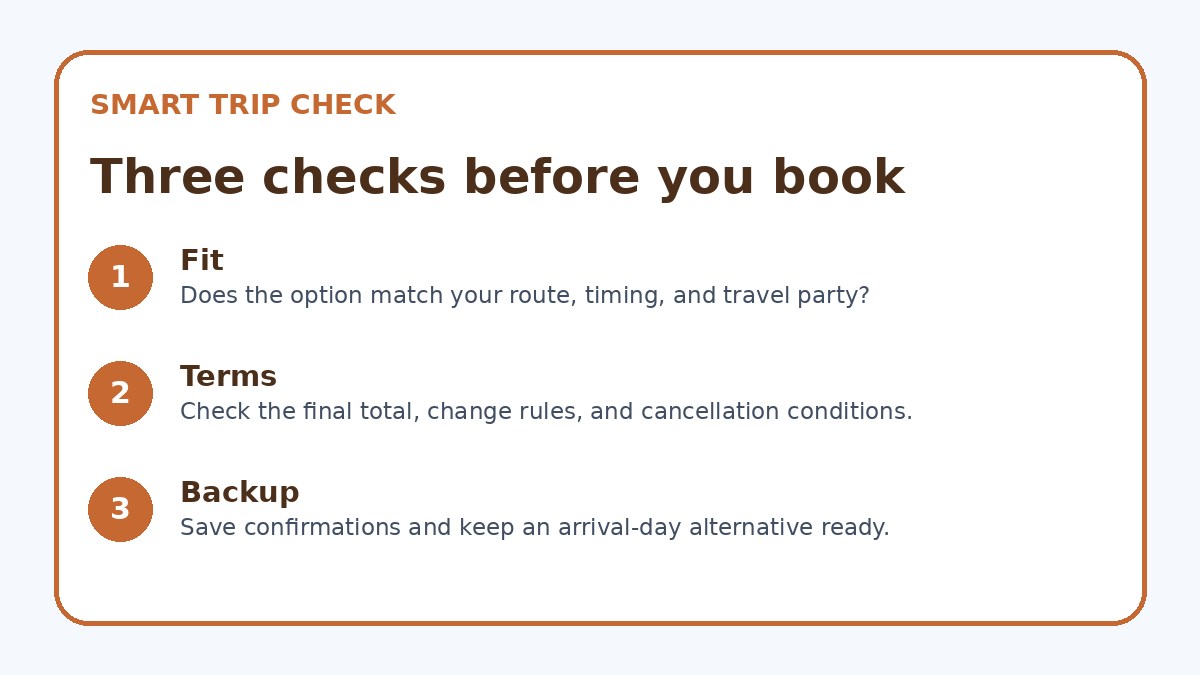
- Count people and all luggage pieces, note any oversized or special items, and record child-seat or accessibility needs.
- Confirm exact airport pickup location and how the driver will identify you (name sign, vehicle plate, app message).
- Verify flight-monitoring, grace periods, wait-time charges, and contact methods on the operator’s final booking page.
- Decide whether door-to-door convenience outweighs possible traffic delays at your expected arrival time.
- Keep printed or screenshot copies of booking confirmations, pickup instructions, and the driver’s phone number.
- Plan a simple backup (taxi rank, nearest station, or a second booking platform) in case the primary transfer is delayed or cancelled.
Practical tips for a smooth arrival with a small group
Assign roles before you land—one person handles communication with the driver or app, another manages luggage, and someone checks local transport info. Take a photo of baggage and a note of the vehicle registration if you’re meeting a driver. Have a backup plan: know where the nearest taxi rank is, what the closest rail station is called, and which central-area addresses your accommodations use as reference. Keep printed or screenshot copies of booking confirmations and pick-up instructions in case mobile reception is spotty after arrival.
Plan luggage distribution to avoid one oversized item blocking everyone’s movement. If you anticipate a lot of walking after the transfer, consider shipping bulky items ahead or asking accommodation for interim storage. If group members will split later, plan a meeting point and an agreed check-in time. Finally, leave margin time in your itinerary for clearing customs and baggage; a relaxed buffer avoids rushed decisions about transport and reduces the chance you’ll choose a more expensive option out of stress.
Frequently asked questions
Is taking the train from Sydney airport a good option for a small group with luggage?
The train is often the fastest option into the city when services are frequent and you’re travelling light. For a small group with one medium bag each, trains avoid road traffic and deliver you to central stations with good onward connections. However, factor in the effort of moving multiple suitcases across platforms and the last-mile from the station to your accommodation—if its door is not within easy walking distance, you may need a taxi or short rideshare for the final leg. Check exact station names and step-free access on provider pages before choosing.
How should we handle meeting a driver at Sydney airport if our flight is delayed?
First, confirm the provider’s delay and wait-time policy on the booking page so you know whether the driver monitors your flight and how long they will wait at no extra cost. Share your real-time flight number with the operator if requested, and keep a working phone or app connection so the driver can communicate changes. If your flight arrives much later than booked, be prepared to pay extra waiting-time fees or rebook; have a backup plan such as the taxi rank or a rail option for contingencies.
Should we pre-book child seats, wheelchair access, or larger vans for sports equipment?
Yes—special requests like child seats, wheelchair-accessible vehicles, or vans with extra cargo need explicit confirmation from the operator. Availability can be limited and policies vary, so include these requirements on the booking form and confirm on the provider’s final page. Note whether there are extra charges or if you must bring your own child seat. For items such as bikes or surfboards, describe their dimensions and packing method in advance to ensure the chosen vehicle can accommodate them safely.
Final planning note
For first-time visitors organising transport for a small group in Sydney, the right choice depends on the balance you want between convenience, luggage handling and budget. Private transfers and taxis give direct door-to-door service and reduce hassle with bags, while trains can be faster and more predictable if your group can handle transfers on foot. Always verify pickup points, wait times, luggage allowances and special-service availability on the operator’s final booking page before you confirm. Prepare a simple plan and a backup, assign roles for communication and luggage, and you’ll turn an arrival into a smooth first step in Sydney.
Continue planning
Check current options and final conditions
Use the provider page to confirm live availability, the final total, cancellation terms, and every condition that matters to your trip.
This evergreen planning guide was created with AI-assisted drafting and a structured quality review. It does not display live prices, schedules, availability, visa guidance, or provider rankings. Verify current details before booking. Some links are affiliate links; we may earn a commission at no additional cost to you.