If you’re traveling solo from Singapore to Bangkok, the two immediate planning questions are simple: what bag to take and when to be at the airport. For most solo travelers on direct routes, a carry-on plus a personal item will speed security and immigration, avoid checked-bag waits, and simplify transfers across Bangkok’s airports or onward trips. That choice trades off packing flexibility and checked-bag protections against time and hassle. Arrival timing depends on whether your flight is direct or connecting, which airline you use, and whether you need visa checks or plan to buy duty-free goods. Below you’ll find a clear, practical approach: a decision flow for baggage; timing rules keyed to common scenarios; how to verify airline and airport rules; and checks to make on the booking page before you finalize anything.
See current options before you compare the details
Availability and final conditions change. Open Trip.com now or keep reading for the practical comparison.
Choosing between carry-on and checked baggage
Decide based on how long you’ll be away, what you’ll do in Bangkok, and how mobile you want to be. A single carry-on and a small personal item (laptop bag or daypack) work well for trips up to a week if you can wear or compress heavier items. This setup minimizes time at both airports: you skip the check-in counter queues, bypass the carousel on arrival, and reduce the chance of lost luggage. For solo travelers, less baggage also means simpler transfers from Bangkok’s airports to hotels or onward transport by taxi, rideshare, or public transit.
Choose checked luggage when you need bulkier items—formal wear, gear, or more toiletries—or when you prefer not to manage a heavy bag through public transport. If you check a bag, give yourself extra time for drop-off before security and pick-up at the carousel on arrival. Consider travel insurance that covers delayed or lost checked luggage if you carry valuables. Note that if you connect between flights, checked bags can save you the hassle of carrying everything through transit, but they may extend minimum connection times and complicate transfers between different airports.
How to plan airport arrival time
Start from the airline’s recommended arrival time, then add buffers for the factors that apply to you. For direct international Singapore to Bangkok flights, many airlines suggest arriving two to three hours before departure; use the lower end if you travel light with a carry-on, and the higher end if you need to check luggage. Add extra time for morning or late-night congestion, long visa or immigration queues, or if you need to buy or return a SIM card or local currency at the airport. Solo travelers often underestimate the time needed for last-minute packing adjustments or printing travel documents.
If your itinerary includes a connecting flight, plan around the minimum connection time specified by the airlines and airports involved. For self-transfer between separate airports or terminals, build in transport time plus a generous safety margin for traffic and airport security re-entry. When flying on a low-cost carrier, factor in their stricter cut-off times for check-in and bag drop. Finally, use live tools on the airline or airport website to check recommended arrival windows when you book, and treat those recommendations as the authoritative baseline to verify before you travel.
| Approach | Best for | Tradeoff to check |
|---|---|---|
| Carry-on only | Short trips, fast transfers, avoiding baggage delays | Limited clothing and souvenirs; strict size/weight limits |
| Checked bag plus carry-on | Longer stays, bulky items, less daily packing stress | Longer airport time, risk of delay or loss, potential fees |
| Buy baggage at booking | Securing allowance at lower known cost and simplifying check-in | Less flexibility if plans change; fees may be non-refundable |
| Travel very light and buy baggage at gate | Maximizing mobility while keeping an option for extra luggage | High gate fees and risk of insufficient allowance if gate sells out |
Ready to check the option that fits your plan?
Use your exact dates and traveler details so the provider page can show the current total and conditions.
Packing strategy and carry-on essentials
For a smooth Singapore to Bangkok trip, pack with mobility and climate in mind: lightweight layers, a compact umbrella, and breathable fabrics. Keep essential items in your personal item—passport, boarding pass, wallet, phone, chargers, medicines, a small toiletry kit (compliant with liquids rules), and one change of clothes in case a checked bag is delayed. Distribute weight to keep your carry-on within size and weight limits; a wheeled carry-on plus a lightweight backpack gives the best balance between airport mobility and day-to-day use in Bangkok.
Think about security screening and customs when packing. Place liquids and electronics where you can remove them quickly at security; place any items that might attract attention—large batteries, unusual equipment, or restricted goods—where you can access them to show or remove. If you’ll be claiming duty-free items on arrival, keep receipts accessible and know that some items may require declaration. Finally, confirm prohibited and restricted items on your airline’s page before you pack to avoid confiscation and delays at security.
Before you book
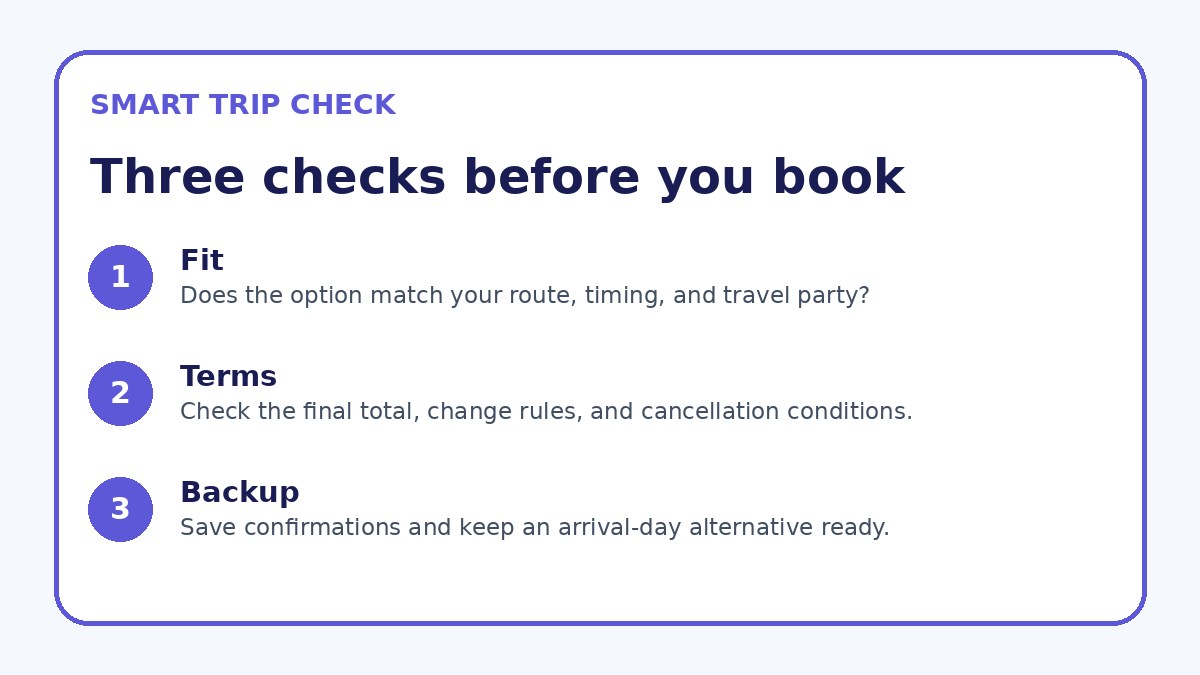
- Confirm carry-on dimensions and weight on the airline’s official booking page before finalizing your ticket.
- Decide if you need checked luggage and, if so, pre-pay baggage online to lock the allowance and avoid higher airport fees.
- Set your airport arrival time based on carry-on vs checked bag, direct vs connecting flights, and the airline’s stated check-in cut-off.
- Pack essentials (passport, boarding pass, medicines, chargers) in your personal item for easy access and security screening.
- Print or download receipts for duty-free purchases and any required travel documents to keep them accessible at immigration.
- If transferring between airports or terminals in Bangkok, book reliable ground transport and add at least one extra hour for unexpected delays.
Verifying rules and making final booking checks
Before you book, check three live details on the airline’s official booking page: exact bag dimensions and weight limits for both carry-on and checked pieces; baggage fees and when they apply (at booking, at check-in, or at the gate); and the airline’s recommended check-in cut-off time. If your ticket has fare differences for baggage, compare the total door-to-door time and overall cost when deciding whether to pay for checked baggage at booking or travel light and buy baggage later if needed. Also confirm whether your fare includes a seat assignment if a specific seat helps with mobility in the cabin.
If you’re using a third-party site to compare options, verify the final price, baggage allowance, and schedule on the airline’s website before paying. For complex itineraries that mix carriers, check whether bags transfer through to your final destination or whether you must re-check them during a self-transfer. Trip.com can be a useful place to compare current availability and conditions, but always treat the airline’s own booking page as the final authority for baggage rules, check-in cut-offs, and boarding times.
Frequently asked questions
How early should a solo traveler arrive at the airport for a Singapore to Bangkok direct flight?
Start with the airline’s recommended arrival time on their booking page and then add a buffer based on your baggage choice: arrive at the lower end if you travel with carry-on only, and at the higher end if you need to check luggage. Also add time for peak-hour lines, visa-on-arrival procedures if they apply to you, and any tasks like buying a local SIM. Use live guidance from the airport or airline before you leave—these sources give the final recommended window for check-in, security, and boarding.
Can I transfer between Singapore and Bangkok airports quickly with checked luggage?
A checked bag adds time to both drop-off and collection and can complicate transfers if you must move between separate airports or terminals. If your itinerary requires an inter-airport transfer in Bangkok, check whether your ticket covers through-checked baggage or whether you must collect and re-check it yourself. When transfers are self-managed, allocate extra time for transport, re-checking, and security. Confirm bag transfer policies and minimum connection times on the airline or airport pages before finalizing your plans.
What items should I keep in my personal item for ease at security and arrival?
Keep travel documents (passport, boarding pass), essential medicines, phone and charger, a small toiletry set compliant with liquid rules, and one change of clothes in your personal item. Place electronics and liquids where you can remove them quickly at security. Also keep receipts for any duty-free purchases, and have a pen for arrival forms. This setup reduces time at screening and protects you if checked luggage is delayed, making solo travel between Singapore and Bangkok more straightforward and less stressful.
Final planning note
For solo travelers on Singapore to Bangkok flights, the practical trade is between speed and packing freedom. Carry-on plus a personal item gives the quickest airport experience and smoother transfers; checked luggage offers packing ease at the cost of time and the potential for delays. Base your decision on trip length, the need for bulky items, and how much buffer you can allow at the airport. Before you book, verify bag dimensions, weight limits, fees, and check-in cut-offs on the airline’s official page, and confirm transfer rules if you have connections. With those checks done, you can pick the baggage and timing strategy that matches your comfort and schedule, making the journey simpler from door to hotel in Bangkok.
Continue planning
Check current options and final conditions
Use the provider page to confirm live availability, the final total, cancellation terms, and every condition that matters to your trip.
This evergreen planning guide was created with AI-assisted drafting and a structured quality review. It does not display live prices, schedules, availability, visa guidance, or provider rankings. Verify current details before booking. Some links are affiliate links; we may earn a commission at no additional cost to you.