
If you’re traveling to Seoul with extra luggage, the single number spotlighted on a deal page — the headline fare — rarely tells the whole story. Before you click book, add one line items: checked-bag charges (return and onward), seat selection or premium-economy upgrades, transport from the airport to central Seoul with large bags, and any hotel surcharges for oversized or extra pieces. Those extras can change which flight or hotel is the better deal, or whether it’s worth changing dates to avoid peak baggage surcharges. This article gives a straightforward checklist and practical ways to compare options, plus the tradeoffs you’ll face when prioritizing cost, convenience, or baggage flexibility.
See current options before you compare the details
Availability and final conditions change. Open Trip.com now or keep reading for the practical comparison.
Build the full fare: flights plus realistic baggage costs
Start with the headline airfare, then open the carrier’s baggage rules page for the specific fare class you’re viewing. Low-cost and standard carriers often restrict checked allowance by fare class; the same flight number can show very different included baggage. Add the one-way fee for the exact number and size of checked pieces you plan to bring, then double it for a round trip. If you might add a bag on return or at the airport, include the higher airport-day fee rather than the cheaper advance purchase rate.
Also include seat selection and any cabin upgrades you want. Exit-row or bulkhead seats help if you need overhead space for carry-on items, while economy-plus or premium-economy can make long flights more tolerable with heavy bags. Don’t assume loyalty status will save you — verify the carrier’s final booking page to confirm whether your fare class actually grants an allowance or free seat assignments.
Airport-to-city transfer costs and practicalities with luggage
Seoul has several airport transfer options with different costs and convenience for travelers with extra luggage. Trains and airport buses are economical but can mean stairs, crowded platforms, or multiple transfers where dragging suitcases is awkward. Taxis and private transfers take you door-to-door and usually handle oversized bags without extra steps, but those convenience options add to total trip cost. Estimate fares for all plausible transfer modes and include the cost of tipping or luggage surcharges if listed on the provider’s page.
If you’ll arrive late at night or with many pieces, factor in the value of time and comfort. A slightly pricier direct transfer can reduce missed sleep, demand for paid luggage storage, or extra taxi rides during the trip. When selecting between a cheaper train and pricier taxi, think like a vacation accountant: convert your likely additional hours of transit and handling into a dollar figure and add it to the transport cost for an apples-to-apples comparison.
| Approach | Best for | Tradeoff to check |
|---|---|---|
| Lowest headline fare with add-on bags | travelers prioritizing lowest base fare and willing to manage multiple fees | can become expensive after adding baggage, transfers, and seat fees; more effort to check rules. |
| Higher fare that includes checked baggage | travelers who value price certainty and want fewer booking steps | higher upfront cost but fewer unpredictable extras; may be less flexible on dates. |
| Cheaper flight plus premium transfer and hotel | those saving on flights but trading savings for door-to-door convenience | saves flight expense but raises ground cost; good when time or comfort outweighs savings. |
| Flexible fare with luggage-friendly connections | travelers who expect schedule changes or tight connections with heavy bags | more expensive initially, lower risk and potential rebooking costs if disruptions occur. |
Ready to check the option that fits your plan?
Use your exact dates and traveler details so the provider page can show the current total and conditions.
Hotel policies, extra-baggage handling, and location tradeoffs
Hotels near Seoul’s main districts may advertise free luggage storage for short periods, but policies vary on oversized pieces, early check-in with heavy bags, or long-term storage charges. Before booking, check the hotel’s final booking page or contact them directly to confirm whether there’s an extra-guest or oversize-luggage fee and whether bell service is free. If you plan to use luggage delivery or a locker service to avoid carrying bags on public transit, include those service fees in your total cost comparison.
Location matters: a hotel right by a subway stop can save time and taxi fares when moving around the city, but if access requires stairs or long walkway distances with suitcases, a slightly pricier hotel closer to a ground-level taxi stand may be worth the premium. Compare how much you’d spend daily on taxis or delivery services from each potential hotel and weigh that against any baseline price difference.
Before you book
- Open the airline’s final booking page and note the exact baggage allowance and any size or weight limits for your selected fare class.
- Calculate round-trip baggage fees using the carrier’s advance and airport rates, and add the higher airport-day rate for conservative budgeting.
- Estimate airport-to-hotel transfer costs for taxi, private transfer, and public transit, then decide which method you’ll realistically use with your luggage.
- Confirm the hotel’s policy on extra or oversized luggage, early check-in fees, and whether bell service or storage is complimentary.
- For connecting flights, verify whether baggage is through-checked or must be collected and rechecked, and add potential rebooking costs for missed connections.
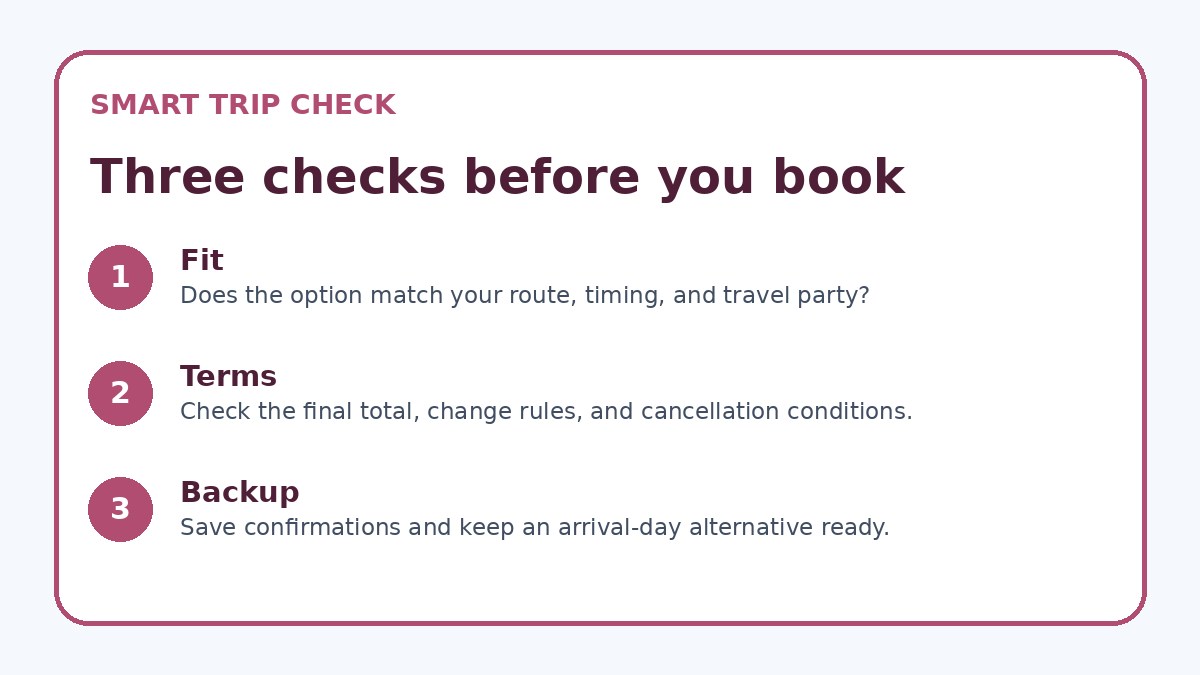
- Compare the total door-to-door cost (fare + bags + transfers + hotel surcharges) across at least three itinerary options before choosing.
Itineraries, connections, and rebooking risks with heavy luggage
When flights involve connections, check whether you’ll need to recheck bags or claim them in transit, and whether minimum connection times are realistic with heavy luggage. Some low-cost carriers require passengers to collect and recheck baggage during transfers even on a single itinerary. Add potential costs for rebooking missed connections, hotel stays during long layovers, or using a luggage storage service if an overnight connection separates flights.
Also consider schedule flexibility: a cheaper ticket with strict change fees is riskier if travel delays will force you to rebook. Verify on the airline’s final booking page what change and cancellation penalties apply, and whether purchased travel protection covers luggage delays or extra bag fees. Sometimes a higher-fare flexible ticket reduces overall expected cost when you factor the chance of change or the value of peace of mind.
Frequently asked questions
Should I always pay for extra baggage when booking or wait to add it later?
Buying added baggage at the time of booking is often cheaper than paying at the airport, but policies differ by airline and fare class. Before deciding, check the airline’s final booking page for advance purchase discounts and the price difference between online pre-purchase and airport rates. If your plans are flexible and you might cancel, factor in cancellation or change penalties that could make a prepaid bag non-refundable. For predictable luggage needs, prepaying gives price certainty and avoids stressful airport surprises.
How can I compare transport options from Incheon or Gimpo airports to my Seoul hotel with large suitcases?
List realistic transport choices — airport express trains, airport buses, taxis, and private transfers — and note practical variables: number of steps, transfers, luggage storage space, and door-to-door time. Estimate cost for each and add any expected tip or surcharge. For trains and buses, consider how easy platforms and station stairs are with large suitcases; for taxis, check whether a larger vehicle is needed. Add the monetary value of extra time or hassle to compare costs on equal terms.
If I pick a cheaper hotel farther from the center to save money, how do I judge whether it’s worth it with extra luggage?
Calculate the added daily or per-trip transport cost and the physical effort of moving luggage during check-in and excursions. Cheaper rooms might force repeated taxi rides or limit access to baggage-friendly transit, eroding savings. Also check whether the hotel offers luggage storage, complimentary bell service, or luggage delivery to another property. If savings are small but the inconvenience or extra taxi fares add up, a more central hotel may be the better overall value.
Final planning note
When you travel to Seoul with extra luggage, the smartest booking choice comes from comparing full door-to-door costs rather than headline fares alone. Build a simple spreadsheet or note that adds round-trip baggage fees, likely airport transfers, and any hotel surcharges to each flight-plus-hotel option. Factor in the non-monetary costs — time, comfort, and rebooking risk — and verify all carrier and hotel rules on their final booking pages before you finish payment. For up-to-date availability and to see multiple options quickly, you can optionally check a site such as Trip.com, but always confirm the final baggage rules, transfer details, and hotel policies on the provider’s own booking confirmation page.
Continue planning
Check current options and final conditions
Use the provider page to confirm live availability, the final total, cancellation terms, and every condition that matters to your trip.
This evergreen planning guide was created with AI-assisted drafting and a structured quality review. It does not display live prices, schedules, availability, visa guidance, or provider rankings. Verify current details before booking. Some links are affiliate links; we may earn a commission at no additional cost to you.