Practical answer up front: for most couples wanting the simplest, lowest-stress journey, a direct Seoul to Taipei flight (if available for your dates) usually minimizes time in transit and the chance of lost bags or missed connections. Connecting routings can be cheaper or open different departure times, but they add transfer complexity, potential delays, and extra baggage handling that can change the vibe of a romantic trip. Before you search, decide whether you prioritize speed and reliability or savings and schedule flexibility — and gather exact travel dates, passenger ages, passport details, and preferred cabin class. That preparation will let you compare quoted total journey time, layover length, transfer airports, and fare conditions precisely. When checking live offers, verify baggage allowances, rebooking/cancellation terms, and whether the carrier sells through a single ticket (protects through-checked bags) or separate segments. You can use Trip.com as one place to compare availability, but always confirm final rules on the airline’s booking page or on the ticketing agent’s terms before paying.
See live routes for your exact travel day
Compare direct and connecting choices with the same baggage and traveler details.
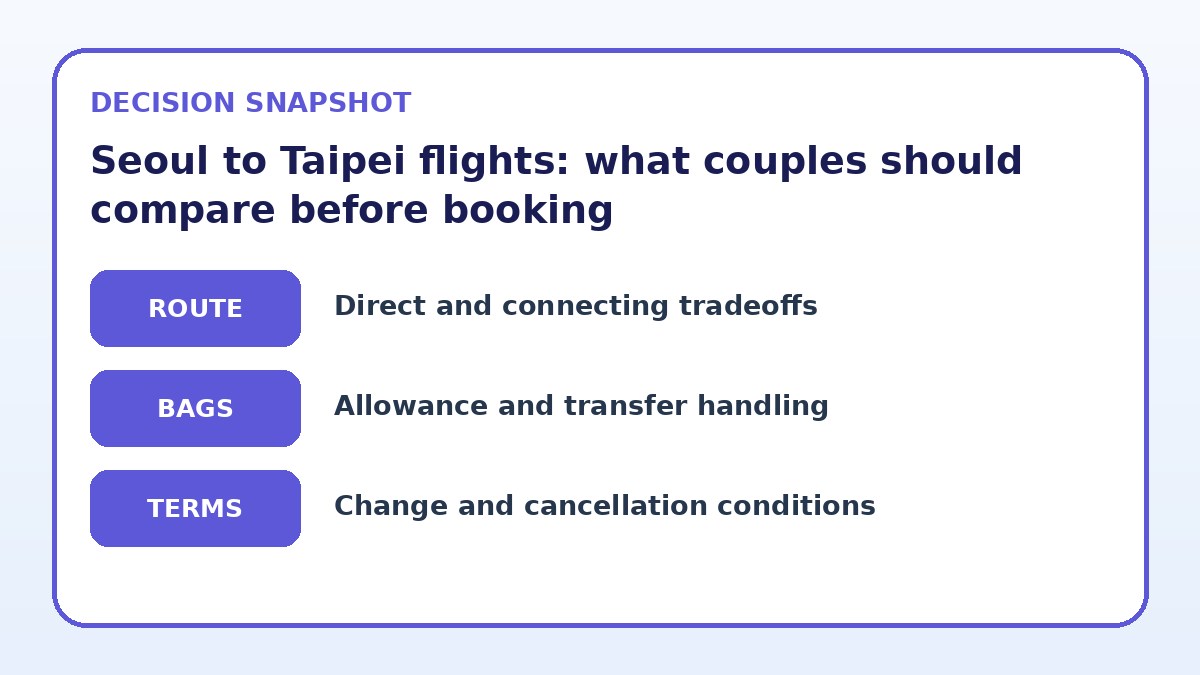
Routing and itinerary choices: how to map your day
Start by visualizing the full door-to-door day. A direct flight narrows the decision to departure time and cabin: you spend less time in airports and more time at your destination. For couples that want to land early to maximize a first afternoon together or prefer a late-night arrival to settle in, direct services simplify planning because there’s a single scheduled takeoff and landing to align with hotel check-in and sightseeing plans.
Connecting itineraries create a multi-leg day with explicit transfer windows and possibly different terminals. If you choose a connection, factor in minimum connection times, the route’s airport layout, and whether you’ll change carriers or re-clear security and immigration. Connections could offer appealing departure options or ferry you between otherwise unavailable time slots, but they require realistic padding for walking between gates, possible recommencement of security checks, and any unexpected delays that could ruin the smooth start you wanted.
Baggage and connection risk: who carries what
Baggage handling is where couples often feel friction. A single-ticket itinerary normally allows bags to be checked through to your final city, reducing the need to collect and re-check luggage during a connection — less physical effort and fewer decisions at awkward hours. If you’re bringing one shared suitcase plus a carry-on, confirm whether the fare includes checked bags, and whether seat assignments and baggage rules differ between the first and second carrier when itineraries use more than one airline.
When flights are separate tickets, you’ll likely collect checked luggage at the connection airport and re-check it, which takes time and coordination. This can be especially inconvenient for couples traveling with infants, people who prefer minimal walking, or those on tight layovers. Verify on the airline or agent booking pages whether the itinerary is issued on one ticket, and look for wording about through-checked baggage and missed-connection protection before you finalize payment.
Compare flight-selection strategies
| Flight strategy | Best for | Risk to check |
|---|---|---|
| Book a single direct ticket when available | Couples prioritizing minimal hassle, shorter total travel time, and reduced baggage handling. | Fewer scheduling options and sometimes higher fares compared with multi-leg itineraries. |
| Choose a single-ticket connecting itinerary | Couples seeking lower fares or specific departure times with airline protection across segments. | Longer travel time and more time in airports, but baggage and delays are usually managed by one carrier. |
| Buy separate tickets for each leg | Travelers maximizing price or building a multi-city plan with independent carriers or low-cost carriers. | No through-check protection; you’re responsible for missed connections and rebooking costs. |
| Mix cabin classes or upgrade one segment | Couples wanting greater comfort for a key overnight leg or arriving refreshed for a special occasion. | Complex fare rules and potentially different amenity levels between segments. |
Recheck the complete itinerary
Confirm airports, connection handling, baggage, and change conditions before deciding.
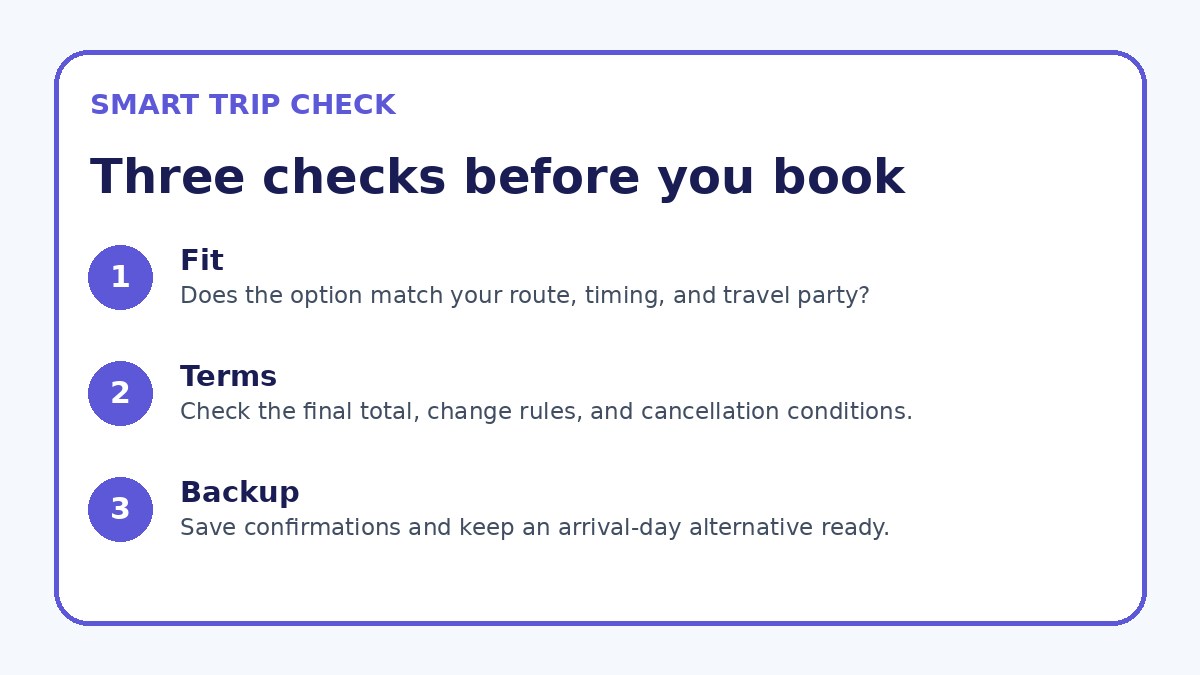
Schedule fit and comfort: align energy levels and plans
Think beyond flight duration and consider how departure and arrival times affect your first and last day together. A short direct hop that lands mid-afternoon might be ideal for a couple who wants to check in early and visit a nearby neighborhood; an overnight departure could preserve a full final day in Seoul. Couples who prefer to avoid red-eye flights or who have mobility concerns should prioritize itineraries with longer layovers for a relaxed transfer, but weigh that relaxation against lost sightseeing time.
Comfort also includes seat choice and in-flight service. If you both value space for conversation or sleep, compare available cabin classes and seat maps for direct versus connecting options. Sometimes a connecting routing offers a wider choice of preferred seats or a chance to upgrade one segment for a similar incremental price; other times it complicates seat parity across carriers. Always verify seat selection rules, fees, and whether meals or extras are included on each provider’s final booking page.
Flight details to verify
- Confirm exact travel dates and both passengers’ full passport names, birthdates, and nationality before searching fares.
- On each fare option, check whether the itinerary is issued on one ticket and whether bags can be checked through to Taipei.
- Read the change, cancellation, and refund rules on the airline or agency booking page and save a copy of the policy.
- Compare total journey time, number of transfers, and minimum connection times rather than only looking at base price.
- Verify seat selection rules, checked-bag allowances, and any extra fees for preferred seats or priority boarding.
- If using an online travel agency, open the airline’s direct booking page too and confirm identical fare conditions there.
Fare conditions and rebooking flexibility: what to confirm
Fare rules determine whether a change or cancellation will be simple or costly. Lower fares often come with strict change penalties and limited refunds, which matters if your trip dates are tentative. For couples planning a honeymoon or important anniversary visit, consider paying a bit more for flexible tickets that allow date changes, free name corrections, or at least a reasonable waiver for irregular operations. Check the fare class code, the change and refund fees, and the policy for involuntary rebooking on the airline’s terms.
Also confirm baggage inclusion, seat assignment policies, and whether the fare is refundable or exchangeable through the booking channel you use. If you book two separate tickets for a connecting itinerary, a delay or cancellation on the first segment may leave you fully responsible for rebooking the onward flight. Look for explicit wording on the provider page about missed-connection assistance, and save screenshots or PDF copies of the booking policy and receipt after purchase.
Flight Guide questions travelers ask
If I find a cheaper connecting itinerary, how do I judge whether the savings are worth the risk?
Start by calculating the true cost of the connection: add any required overnight stays, the value of lost sightseeing hours, and potential rebooking hassles if flights run late. Check whether both segments are on one ticket; a single-ticket connection usually protects you if the first flight is delayed. If the cheaper option requires separate tickets, assess whether you’d be comfortable collecting and re-checking luggage, and whether you have at least the minimum recommended transfer time at the connecting airport. Factor in the emotional cost for both partners — a tight transfer can create stress that outweighs modest savings.
How much layover time should we plan for when traveling together?
Aim for a layover that fits your mobility and comfort level rather than a fixed number. If you prefer a relaxed pace, choose connections that allow time for restroom breaks, a meal, and a calm walk between gates or terminals. For single-ticket connections at well-connected airports, planners often accept shorter connections because airlines manage transfers; for separate tickets or unfamiliar airports, allow significantly more time. Also think about luggage reclaim and security lines — choosing a longer, less stressful layover can make the journey feel more like part of the trip than a rush to the next gate.
What should couples verify on the airline’s booking page before completing payment?
On the airline’s final booking page, confirm passenger names, exact travel dates and times, the fare class code, baggage allowance for each passenger, and seat selection rules. Double-check change and cancellation fees, the carrier’s policy on missed connections, and whether the itinerary is on one ticket. If you have special needs like a bassinet, dietary requests, or mobility assistance, request them there and keep confirmation emails. Finally, save screenshots or print the booking terms and the receipt so you can quickly reference policies if plans change.
Final decision note
For couples deciding between direct and connecting Seoul to Taipei flights, the right choice balances stress tolerance, schedule needs, and budget. Direct tickets win on simplicity and lower baggage risk, which is often the priority for two travelers who want to begin their trip together without friction. Single-ticket connections offer a middle ground with protection across segments, while separate tickets can be economical but require careful planning and more time. Before you pay, assemble passenger details, compare total journey times and fare conditions, and confirm baggage and rebooking terms on the provider’s final page. Doing these checks together makes the booking decision faster and ensures both travelers arrive ready to enjoy Taipei.
Continue planning
Check current options and final conditions
Use the provider page to confirm live availability, the final total, cancellation terms, and every condition that matters to your trip.
This evergreen planning guide was created with AI-assisted drafting and a structured quality review. It does not display live prices, schedules, availability, visa guidance, or provider rankings. Verify current details before booking. Some links are affiliate links; we may earn a commission at no additional cost to you.