If your trip from Bangkok to Chiang Mai is work first and luggage is an unavoidable second, choose the option that balances comfort, transfer effort, and schedule certainty. Practically, decide between a train (room to stow larger bags and fewer security queues), an intercity coach (simple door-to-door terminals and dedicated luggage bays), or flying (fastest transit but extra transfer steps to/from airports). Each raises different friction points: where you drop and pick up bags, how many times you’ll handle them, and how flexible your timing must be. This article helps you weigh terminal fit, luggage transfer friction, and disruption backups so you can pick the end-to-end option that fits a business itinerary. It also explains what to verify on carrier booking pages—baggage allowance, checked-bag check-in deadlines, station-to-hotel transfer options, and policies for oversize items—so you don’t get surprised at departure.
Choose between rail, coach, and air based on terminal fit
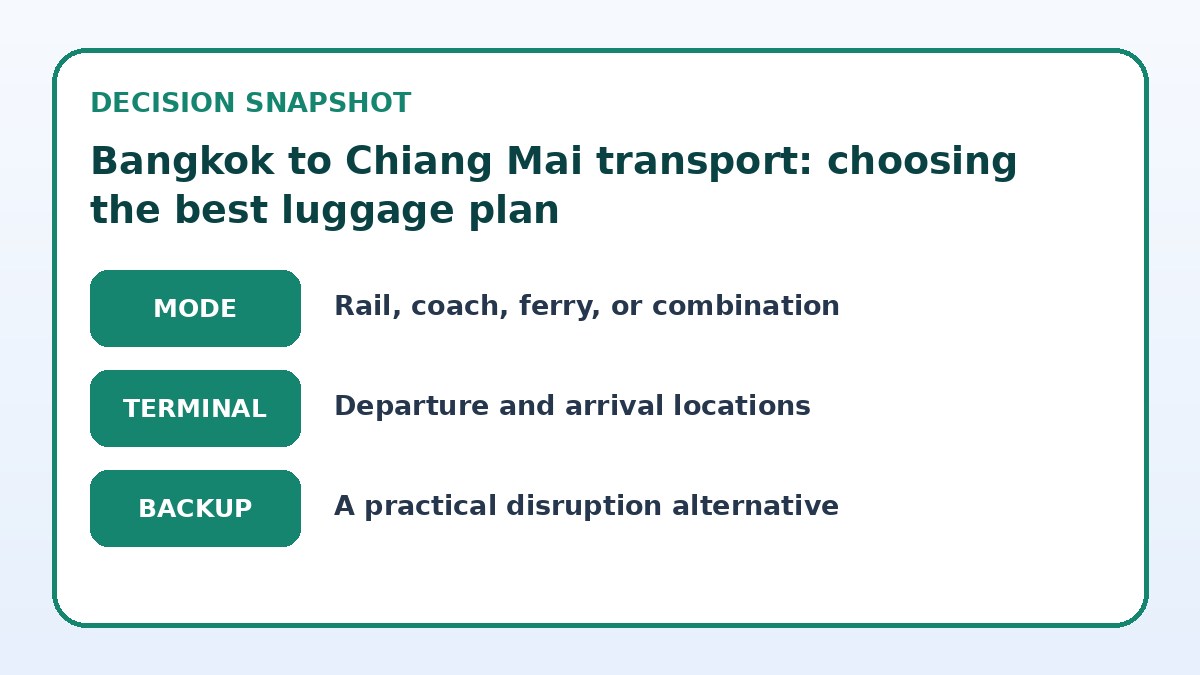
Terminal fit means how well the departure and arrival points match the rest of your day. For a meeting near the city center, trains and some long-distance coaches often use central terminals that reduce taxi time and keep you connected to city neighborhoods and hotels. Airports are logical when your itinerary requires maximum speed, but they add predictable transfer steps—airport to hotel and back—which can cost as much time as the flight itself when you include check-in and luggage handling.
Think about where you’ll start and finish in each city and how many times you want to change vehicles. If your office or hotel is close to a major train station, rail can be a door-to-door winner. If downtown access is poor or a client meeting is near the airport, flying might make sense despite extra luggage handling. When researching options, check carrier pages for terminal addresses, on-site ground transport choices, and whether there are convenient hotel shuttles or ride-share pickup zones.
Choose the end-to-end journey plan
| Journey approach | Best for | Friction to check |
|---|---|---|
| Travel by train with large carry-on and station taxi | Business travelers who want fewer security steps and central station access | Longer journey time than flying and possible limited onboard amenities for working |
| Fly with checked baggage and pre-booked airport transfer | Those prioritizing the fastest travel time between cities | Extra baggage handling and transfer legs increase door-to-door time and complexity |
| Intercity coach with underfloor luggage and downtown terminals | Travelers seeking direct terminal-to-city access with minimal connections | Longer on-road time and physical lifting of bags into bays |
| Mixed plan: fly one way, train or coach the other | Flexible travelers balancing speed with lower luggage handling on one leg | Requires coordinating differing baggage rules and two terminal transfer patterns |
Check live intercity options
Look beyond the ride itself and compare terminals, transfers, luggage, and arrival fit.
Luggage and transfer friction: reduce hands-on time
Map every time you’ll touch your bag from leaving the office to arriving at your Chiang Mai hotel. Trains often allow larger carry-on bags in vestibules or dedicated storage areas and usually mean a single handover at arrival. Airlines require checked baggage procedures and collection at arrival, adding a conveyor wait and potentially an extra taxi trip. Coaches usually have underfloor bays for larger luggage but require lifting into and out of compartments, which means a short but physical transfer each end of the journey.
To reduce friction, pack for staged handling: keep essential meeting items in a slim laptop case or small carry-on you can keep with you, and place bulkier items in a checked or under-bus bag. If you must move between transport modes, aim for options with porter services or hotels that offer meet-and-greet luggage help. Always confirm the size and weight allowances, special handling fees, and where to drop bags on the carrier’s final booking page—these details directly affect how many times you’ll have to carry or supervise your luggage.
Timing flexibility: align travel time with business commitments
Match journey duration and departure windows to your obligations. Flying gives the shortest in-air time but involves margins for check-in and security; trains and coaches involve longer transit but often more predictable boarding processes without long security queues. If you need to be available on arrival—fresh, in a suit, and ready for a meeting—factor in time to freshen up after baggage collection and transfer from the terminal to your meeting location.
Also consider schedule frequency: choose an option with multiple departures so you can shift plans when meetings run long or you must leave early. Some train and coach routes have many daily runs, offering flexible arrival times that reduce stress if a call overruns. When confirming, verify departure frequency, approximate transfer time from terminal to your destination, and whether carriers list minimum check-in or recommended arrival times for baggage so you can build a reliable buffer into your itinerary.
Compare the practical alternatives
Use the final page to confirm what is actually offered on your dates and save a workable fallback.
Intercity travel checklist
- Check baggage size and weight limits and any fees on the carrier’s official booking page before you finalize purchase.
- Identify the exact station or terminal addresses and estimate taxi or ride-share time to your hotel or meeting location.
- Pack a slim, always-with-you bag containing documents, chargers, a spare shirt, and essentials for at least one meeting.
- Reserve an arrival transfer or check hotel shuttle availability to reduce time and handling between terminal and meeting.
- Confirm change and cancellation options for your ticket so you can rebook the same day if disruptions occur.
- Arrange for luggage assistance (porter, hotel hold, or paid delivery) if you have oversized or multiple bags.
Disruption backup: practical contingency planning
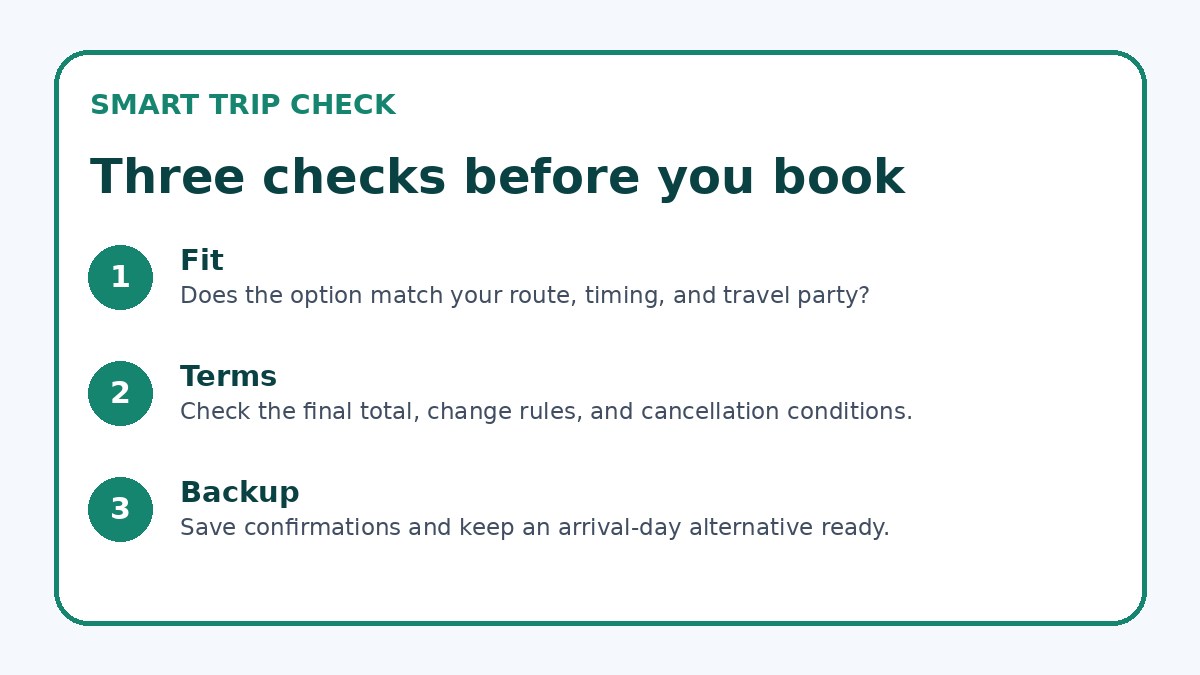
For business travel, a practical backup plan beats optimistic assumptions. Identify alternative later departures on the same route, nearby terminals that have taxis or ride-share access, and a short list of hotels with flexible check-in or luggage hold options. If you’re flying, note later flights and whether you can change on the carrier’s booking page without heavy fees; for train or coach, find the next few departures and whether tickets can be exchanged. Having these alternatives ready reduces panic if delays or cancellations occur.
Also prepare a luggage-specific contingency: a lightweight carry-on with essential meeting kit that you always keep with you, and a clear plan for overnighting if your checked bag gets delayed. Share arrival contingency instructions with your assistant or hotel concierge so they can accept luggage or coordinate last-mile delivery if needed. Finally, consider using a reputable comparison site such as Trip.com to quickly view alternative timings and terms—but always verify the final baggage rules and change policies directly on the carrier’s booking page before relying on an option.
Rail & Intercity Transport questions travelers ask
Is it better to take the train or fly for business with luggage between Bangkok and Chiang Mai?
Both can be right depending on priorities. Take the train if you want fewer security steps, central station arrival, and the convenience of keeping a larger carry-on close at hand. Fly when in-air travel time matters and you have reliable ground transfers booked at each airport. Compare total door-to-door time—including check-in, baggage collection, and terminal transfers—and choose the option that lets you arrive ready for your first engagement.
How can I minimize luggage handling while traveling this route?
Reduce handling by consolidating what you need into one carry-on and one checked or under-bus bag. Use hotel luggage holds or meet-and-greet services to avoid carrying bags before check-in or after check-out. Pre-booked transfers can take bags directly between terminals and hotels, and a lightweight personal bag with essentials keeps you meeting-ready if your main luggage is delayed or stored.
What should I verify on the carrier booking page regarding luggage?
Look for explicit baggage allowances (size, weight, number of pieces), check-in and drop-off deadlines, policies for oversized or fragile items, and any additional handling fees. Also confirm terminal addresses, whether porter services are available at departure or arrival, and the carrier’s change/cancellation rules. If a third-party site shows options, always re-check these practical details on the provider’s own booking page before finalizing.
Final decision note
For business travelers moving between Bangkok and Chiang Mai, the right choice balances terminal fit, luggage friction, and schedule flexibility. Trains and coaches reduce security and centralize arrivals, while flights save transit time but add baggage steps. Prioritize minimizing the number of times you handle bags, confirm baggage rules and transfer logistics on carrier pages, and prepare an alternative departure or a compact emergency kit for meetings. With these checks and a short contingency plan, you’ll minimize interruptions and keep your focus on work rather than on moving luggage.
Continue planning
Check current options and final conditions
Use the provider page to confirm live availability, the final total, cancellation terms, and every condition that matters to your trip.
This evergreen planning guide was created with AI-assisted drafting and a structured quality review. It does not display live prices, schedules, availability, visa guidance, or provider rankings. Verify current details before booking. Some links are affiliate links; we may earn a commission at no additional cost to you.