If you’re traveling from Seoul to Singapore and want the most comfortable long‑haul connection possible, start by deciding whether to prioritize a nonstop flight or a one‑stop itinerary that breaks the trip into manageable segments. For first‑time visitors, comfort depends on seat type, departure time, total journey duration including layovers, and how you’ll handle airport transfers and sleep. Gather options from the airlines’ booking pages, check baggage policies and seat maps, and read the final fare conditions before you pay. Use these concrete checks to shape choices that matter: daytime versus red‑eye departures, longer layovers to reduce stress, or paying for extra legroom. Below are clear decision steps, tradeoffs, and a checklist to make your Seoul to Singapore flights comfortable from booking through arrival.
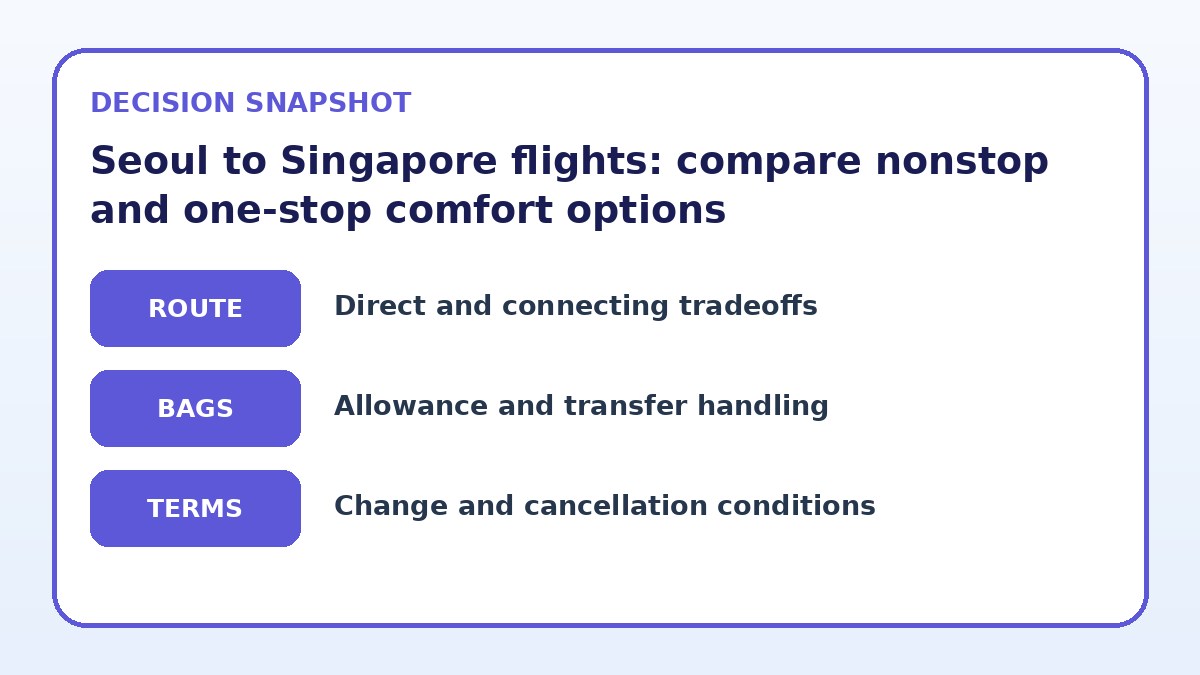
See current options before you compare the details
Availability and final conditions change. Open Trip.com now or keep reading for the practical comparison.
Decide nonstop versus one‑stop for comfort
Nonstop flights minimize time in transit and the stress of connections, which many first‑time travelers prefer. From Seoul to Singapore, a nonstop keeps you on a single aircraft and avoids the hassle of reboarding, extra security checks or terminal transfers. That simplicity is valuable if you dislike rushed layovers or are carrying checked bags that need no re‑check. However nonstop comfort depends on the aircraft type and seat class offered on that routing, so a nonstop in a basic economy seat may feel worse than a two‑segment trip with a premium seat on at least one leg.
A one‑stop itinerary can improve overall comfort if it gives you a daytime break, a chance to stretch, or access to an airport lounge during a long transit. For example, splitting the journey into two seven‑hour flights with a 3–6 hour layover might let you walk, shower in some lounges, and reset your posture before the second leg. The tradeoff is extra complexity — faster connections raise missed‑flight risk and longer total travel time. Weigh what matters more: uninterrupted time onboard or a planned pause to refresh.
Pick departure times and seats to maximize rest
Departure time shapes how you sleep and arrive. Red‑eye flights can help you sleep through much of the trip and arrive in Singapore in the morning with more of the day available, but only if you can actually rest onboard. Daytime departures reduce jet lag surprises and make airport transfers simpler, though you may spend more awake hours cramped in your seat. Consider your normal sleep patterns and whether you fall asleep easily on planes when choosing between an overnight or daytime departure.
Seat selection influences comfort more than the carrier brand for economy passengers. Prioritize seats with extra legroom, bulkhead rows for stretch space, or aisle seats for easier access to stand and walk. If your budget allows, upgrading to premium economy provides noticeably more recline and width without the price jump to business class. Always confirm seat assignments on the airline’s final booking page and note baggage and change rules associated with each fare before you finalize the ticket.
| Approach | Best for | Tradeoff to check |
|---|---|---|
| Nonstop flight | Travelers wanting the shortest total travel time and fewer logistical hassles | May offer less seat comfort if only basic economy options are available |
| One‑stop with long layover | Those who prefer a rest break, lounge access, or to split the journey into shorter segments | Longer overall travel time and more coordination for transfers |
| One‑stop with short connection | Experienced flyers who prioritize price or specific carrier loyalty connections | Higher risk of missed connection and hurried transfers |
| Premium economy upgrade | Passengers wanting significantly more space without full business class cost | Higher ticket cost; amenities vary widely between airlines |
Ready to check the option that fits your plan?
Use your exact dates and traveler details so the provider page can show the current total and conditions.
Manage transfers, lounges and airport time efficiently
If you choose a one‑stop connection, plan the layover so it reduces rather than increases stress. Aim for layovers of at least 90–120 minutes for same‑terminal transfers and 2.5–4 hours if you must change terminals or clear immigration. Check airport maps and the airlines’ minimum connection times on their booking pages. For long layovers, consider purchasing lounge access or using transit hotels to shower and rest. Lounges can provide quiet, food, and power outlets, making the extra cost a comfort multiplier for weary travelers.
For nonstop itineraries, allow plenty of buffer before departure at your origin airport — Seoul’s busy terminals can have long lines at check‑in and security during peak periods. At arrival in Singapore, plan ground transport to your hotel ahead of time; pre‑book a taxi, ride‑hailing pick‑up or airport transfer service to avoid waiting and reduce first‑arrival anxiety. If you have mobility needs, request assistance from the airline on the booking page and confirm arrival procedures, as assistance availability and pickup points vary by terminal.
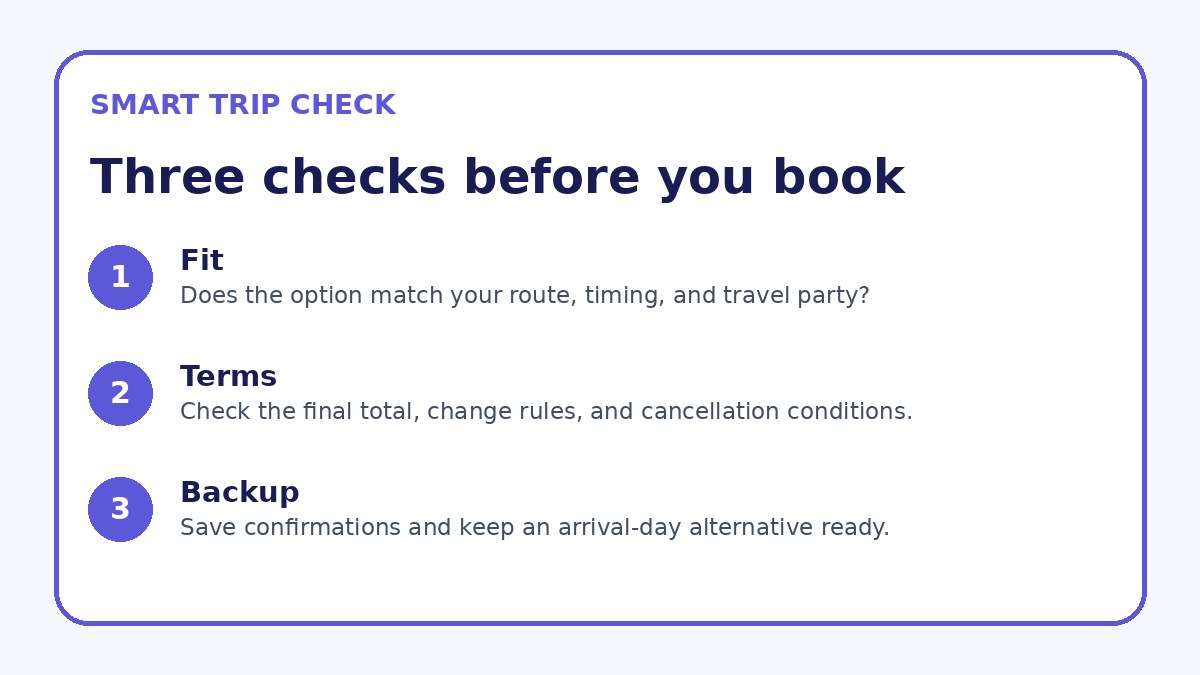
Before you book
- Compare nonstop and one‑stop itineraries and note total door‑to‑door travel time before choosing.
- Check seat maps and pick aisle or extra‑legroom seats; confirm assignment on the airline’s final booking page.
- Verify baggage allowances and fees for all legs on the carrier’s booking confirmation to avoid surprises.
- Plan layover duration based on terminal transfers; allow extra time for immigration or terminal shuttles.
- Consider lounge access or transit hotel options for long layovers and pre‑book if possible.
- Buy travel insurance that covers missed connections and delays and read the policy exclusions carefully.
Budgeting comfort: upgrades, bags and travel insurance
Comfort upgrades range from seat selection fees to premium economy and business class, and each has tradeoffs. Seat fees for extra legroom are often the most cost‑effective comfort upgrade for economy travelers. Premium economy offers a larger, more reclined seat and better service without the full price of business class, but check refundable policies and carry‑on allowances on the airline’s final booking page before you commit. Decide which comforts are non‑negotiable — more space, quieter cabin, better meal service — and allocate budget accordingly.
Don’t overlook baggage strategy and insurance: checked baggage convenience can make a long trip more comfortable if you need extra clothing, medications, or a travel pillow. Verify weight limits and fees before booking to avoid surprises. Travel insurance that covers missed connections and delays can also reduce stress: if a delay forces you into an unexpected overnight stop, coverage can help with hotel and rebooking costs. Confirm what each policy covers on the insurer’s details page before purchasing.
Frequently asked questions
Is it better to fly nonstop from Seoul to Singapore or take a one‑stop connection for my first trip?
For most first‑time visitors, a nonstop flight reduces complexity and the chance of missed connections, making it the simpler, less stressful choice. However, if the nonstop options only offer narrow seats or inconvenient departure times, a planned one‑stop with a comfortable aircraft or a long layover for rest may feel more pleasant. Weigh how well you sleep on planes, whether you need to minimize airport time, and the seat quality offered on each routing. Always confirm seat configuration and final fare rules on the airline’s booking page before you decide.
How much layover time should I allow if I choose a connection between Seoul and Singapore?
If the transfer stays within the same terminal, aim for at least 90–120 minutes to allow deplaning, security re‑screening, and boarding. For terminal changes or if immigration is required during transit, plan 2.5–4 hours to allow for transfer buses, shuttle wait times, and any unexpected delays. If you intend to use a lounge or transit hotel, add extra time to move between facilities. Always check the airline’s minimum connection time and airport terminal map on their official site before booking.
What should I check on an airline’s final booking page to avoid surprises?
On the airline’s final booking page verify seat assignments, baggage allowances and fees, change and refund policies, and any overnight stop rules for connections. Confirm whether you need to re‑check luggage during a layover and where transfers occur between terminals. Check details for lounge access if included, and review assistance options for special needs. If you bought a fare through an online agency, use that confirmation to cross‑check the carrier’s page because seat maps and rules can differ between sellers.
Final planning note
Planning a comfortable Seoul to Singapore flight for your first visit is about clear priorities: minimize transfers if you want simplicity, or split the trip strategically if you need a physical break. Focus on departure timing, seat selection, and realistic layover lengths that match your comfort needs. Always confirm critical details — seat map, baggage rules, terminal information, and change policies — on the airline’s final booking page before paying. If you want a quick comparison of current options, you can optionally check availability on Trip.com, but rely primarily on the carrier’s confirmed information to finalize arrangements. With these steps you’ll reduce travel day stress and arrive in Singapore ready to explore.
Continue planning
Check current options and final conditions
Use the provider page to confirm live availability, the final total, cancellation terms, and every condition that matters to your trip.
This evergreen planning guide was created with AI-assisted drafting and a structured quality review. It does not display live prices, schedules, availability, visa guidance, or provider rankings. Verify current details before booking. Some links are affiliate links; we may earn a commission at no additional cost to you.