For families heading from Seoul to Jeonju, the single most useful planning move is to decide first which mode — rail, coach, private car, or a hybrid — solves your end-to-end door-to-door needs best. Choose by prioritizing where you start in Seoul, the ages and sleep patterns of children, how much luggage and gear you’ll carry, and how much walking you can handle at transfer points. This article gives an actionable, multi-city ground-transport plan: how to match terminals to hotel location, reduce transfer friction with luggage strategy, fit trip timing to nap and meal windows, and build a simple disruption backup that keeps everyone calm. It also explains how to combine modes (for example, a train into a nearby city plus a local bus or taxi to Jeonju) so you can adapt if schedules or station locations make a single-mode plan impractical.
Choosing the right mode: rail, coach, car, or a mix
Begin by weighing the three main tradeoffs for families: door-to-door convenience, luggage and stroller handling, and timing flexibility. Rail trips usually minimize in-vehicle parenting time because kids can stand, move and use bathrooms at stations; rail terminals in Seoul are often accessible from major subway lines, which helps if your family stays in central neighborhoods. Coaches (intercity buses) depart from specific terminals; they can be direct and simple but usually require a taxi or metro ride to the terminal. Driving gives maximum control over stops and timing, which is appealing for families with toddlers or heavy gear, but you must plan for parking, fatigue and route navigation. A mixed plan—train into a nearby city plus a short taxi or regional bus to Jeonju—can combine the low-stress parts of each mode and reduce transfer walks.
Decide whether you value fewer transfers or more flexible departure windows. If your family’s schedule depends on baby naps or a child’s bedtime, prioritize modes and times that align with those windows. If you prefer to avoid big station transfers with strollers and suitcases, a private car drop-off at a hotel in Jeonju might be worth the extra coordination. When comparing options, mark each leg’s terminal address, nearest subway or bus stop, and likely taxi wait times so you can compare total door-to-door duration and effort rather than just in-vehicle travel time.
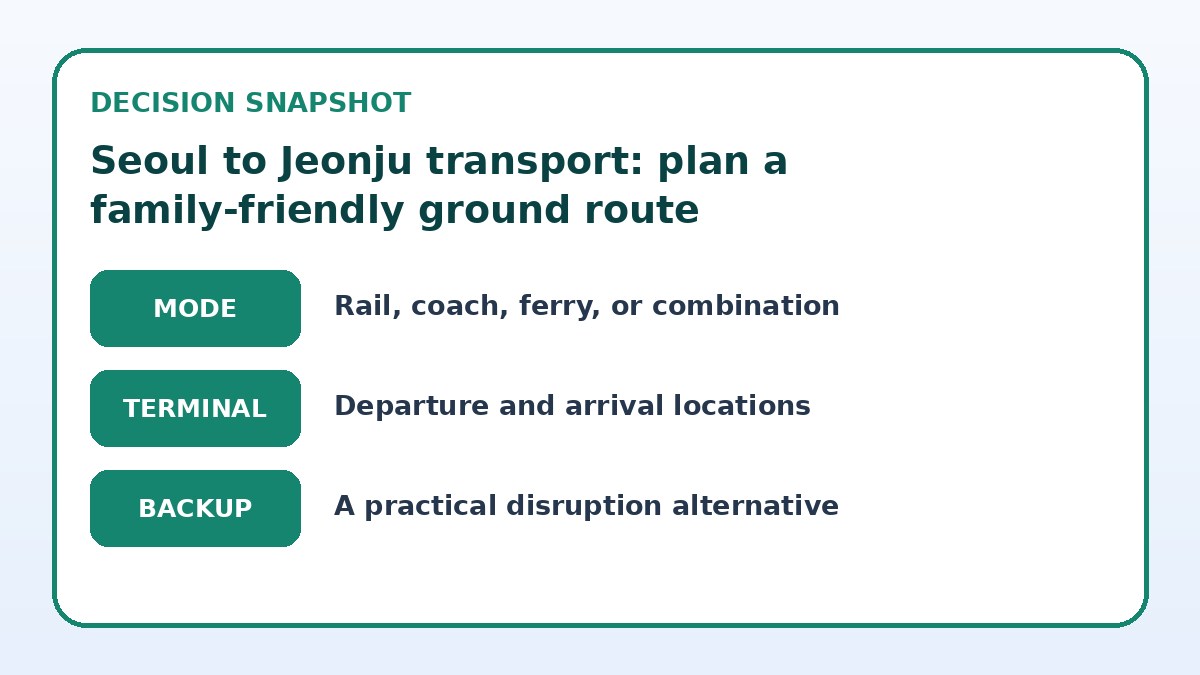
Choose the end-to-end journey plan
| Journey approach | Best for | Friction to check |
|---|---|---|
| All-rail focused plan (Seoul main station to Jeonju by train) | Families who prioritize smooth stations and minimal driving stress | May require a taxi or shuttle at one end and depends on station locations relative to hotels |
| All-coach plan (intercity bus terminals both ends) | Families wanting a simple single-vehicle journey with fixed departures | Terminal transfers and longer walk times can be tiring with lots of luggage or strollers |
| Drive-your-own or rental car door-to-door | Families needing total control over timing, stops and luggage handling | Adult driving fatigue, parking, and route navigation add responsibility and planning tasks |
| Hybrid plan (train or coach plus short taxi/local bus) | Families who want to limit in-car time while keeping last-mile convenience | Requires coordinating different providers and slightly more transfer planning |
Check live intercity options
Look beyond the ride itself and compare terminals, transfers, luggage, and arrival fit.
Terminal fit and transfer friction
For families, the exact terminal and its layout matter as much as the advertised journey time. A train station connected to a subway line and with elevators, family restrooms and wide concourses drastically reduces transfer friction. In contrast, some intercity bus terminals have long walks between platforms and limited elevator access; that matters if you have a stroller or several bags. When you research options, look up station maps and the distance between arrival platforms and taxi ranks or subway entrances. Count steps, note luggage escalators versus elevators, and identify quiet waiting areas where you can regroup with kids.
If you plan to switch modes (for example, rail arrival then regional bus or taxi), build a realistic transfer window into your plan. Allow extra time for ticket validation, restroom breaks and settling kids. A tight, precise connection looks good on paper but can be stressful in practice—especially when you must wrangle kids and luggage. Consider pre-booking taxis or rideshares for the last-mile in Jeonju, or cooperating with hotel shuttles where available, to minimize walking and waiting after a long journey.
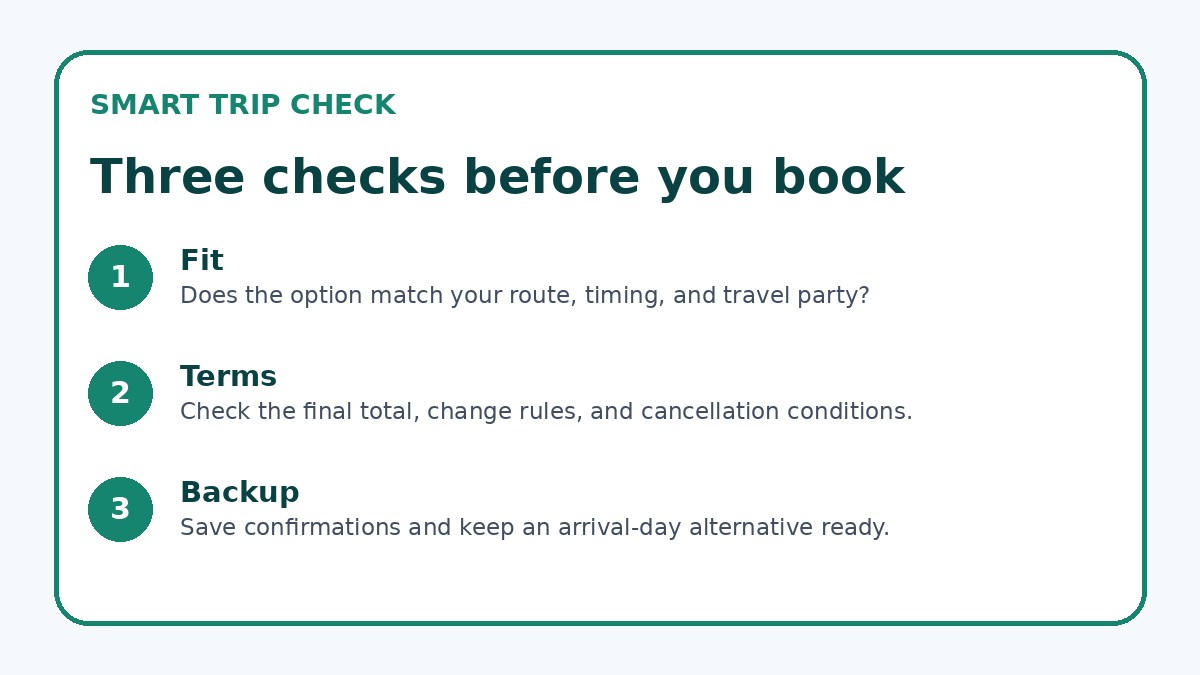
Luggage strategy, timing flexibility and family comfort
Think small: reducing what you bring makes every transfer easier. Use a checklist to decide which items are essential in the carry-on: snacks, medication, a change of clothes, a compact stroller and entertainment. For larger luggage, check whether stations and bus terminals offer left-luggage lockers or if your Jeonju accommodation accepts early luggage drop—these options let you start exploring upon arrival without hauling bags. If you must travel with bulky gear, factor in who will carry what; distribute weight across adults and use wheeled suitcases rather than backpacks for long terminal walks.
Plan departure windows around your family’s rhythm. Mid-morning departures often avoid rush-hour crowds in Seoul and give kids time to wake and snack. Evening travels can work if children sleep easily in transit, but avoid late-night connections that strain backup plans and reduce taxi availability. Build flexibility into your booking where possible: choose tickets or services that allow free or low-cost rescheduling, and aim for one or two slack hours in your itinerary so delays do not cascade into missed connections or stressed children.
Compare the practical alternatives
Use the final page to confirm what is actually offered on your dates and save a workable fallback.
Intercity travel checklist
- Map exact pickup and drop-off addresses and the nearest subway or taxi rank for every leg.
- Confirm elevator, stroller access and family restroom availability at chosen stations or terminals.
- Pack a carry-on with snacks, spare clothes, medications, chargers and a small first-aid kit.
- Identify two alternative departures for each leg and note how to rebook or switch if disrupted.
- Pre-book or screenshot taxi/ride options for last-mile drops to avoid waiting with tired children.
- Arrange luggage drop or locker options at your Jeonju accommodation or station when possible.
Disruption backups and simple contingency plans
Prepare at least one clear, simple backup for each leg of your trip. For example, if your primary plan is a morning train, identify the next two alternative departures and the cost-free or low-fee ways to switch. If buses are your fallback, know the terminal location, opening hours and approximate walk time from a nearby landmark. For driving plans, learn a realistic alternate route and a reliable rest stop sequence. Having concrete fallback choices means you can calmly make a quick decision rather than improvising under stress when children are upset.
Also prepare a communication and regroup plan for your family. Decide on a visible meeting point at stations and bus terminals in case you get separated, and carry a portable charger, printed tickets or confirmation numbers, and a basic first-aid kit. If you rely on apps for booking or navigation, take screenshots or paper copies of critical information—app updates, poor signal or drained batteries can make retrieving bookings harder than anticipated. Finally, establish a simple rule: prioritize the kids’ comfort first—rest, food and warmth—then logistics; this keeps choices humane and practical when disruption occurs.
Rail & Intercity Transport questions travelers ask
What is the most family-friendly way to travel from Seoul to Jeonju door-to-door?
Most families find a combined approach works best: use a comfortable intercity train for the longest leg to reduce driving stress and allow kids to move, then take a short taxi or hotel shuttle for the last mile so you avoid heavy terminal transfers. Prioritize stations with elevators and quick taxi access; if you must use coach services, plan a buffer for walking between platforms and taxis. Verify station maps, elevator locations and taxi ranks on provider pages before booking and consider contacting your Jeonju hotel about a pickup service.
How should I handle luggage and a stroller when transferring between modes?
Limit bulky items and use wheeled suitcases to reduce carrying. Keep a compact, foldable stroller for terminal navigation and a small bag with essentials for kids. Check whether stations offer lockers or left-luggage services and whether your Jeonju accommodation accepts early drop-offs. If a leg requires a bus terminal transfer, allow extra time and consider pre-booking a taxi for the transfer to avoid multiple trips up and down stairs. Always practice folding the stroller once so transfers are quicker on the move.
What simple disruption backup should families build into their Seoul–Jeonju plan?
Choose one clear fallback per leg: the next train or coach departure and an alternative last-mile taxi option. Note provider change policies and have phone screenshots or printed confirmations for alternative bookings. Identify a comfortable waiting spot at each terminal where the family can regroup, and carry at least one portable charger and extra snacks to avoid low-battery or hunger stress. If driving, have a mapped alternate route and planned rest stops; if relying on rail or coach, identify an onward local taxi company or hotel shuttle in Jeonju.
Final decision note
Planning a family-friendly Seoul to Jeonju ground route is about matching transport choices to your family’s daily rhythm and reducing transfer friction. Decide whether you value the predictable comfort of rail, the single-vehicle simplicity of coaches, the flexibility of driving, or a hybrid that splits the journey into easier pieces. Focus on terminal fit—elevators, taxi ranks and luggage options—build timing windows around naps and meals, and prepare explicit backups for each leg. Before you book, verify station layouts, rebooking rules and last-mile options on provider pages; you can use Trip.com or operator sites to compare current availability and conditions, but confirm details directly with the provider for the final booking. With a simple checklist and one or two fallbacks, you’ll keep the trip practical and calm for the whole family.
Continue planning
Check current options and final conditions
Use the provider page to confirm live availability, the final total, cancellation terms, and every condition that matters to your trip.
This evergreen planning guide was created with AI-assisted drafting and a structured quality review. It does not display live prices, schedules, availability, visa guidance, or provider rankings. Verify current details before booking. Some links are affiliate links; we may earn a commission at no additional cost to you.