If you’re planning Dubai to Sydney flights with more than the usual luggage, the practical decision isn’t only about price. It’s about routing that minimizes transfer baggage risk, fare rules that allow added weight affordably, and schedules that give cushion for delayed connections or extra handling. Start by locking your exact travel dates, the number and weight of checked bags, and whether any passengers need special assistance. With those specifics in hand you’ll compare direct versus connecting itineraries, checked-bag fares, and the realistic chance of incurring extra handling time at transit points. This article gives a compact pre-book checklist and the decision criteria to help you choose the flight option that balances cost, convenience, and risk so that heavy, bulky, or excess bags do not derail your plans.
See live routes for your exact travel day
Compare direct and connecting choices with the same baggage and traveler details.
Routing: direct versus connecting and how it affects luggage
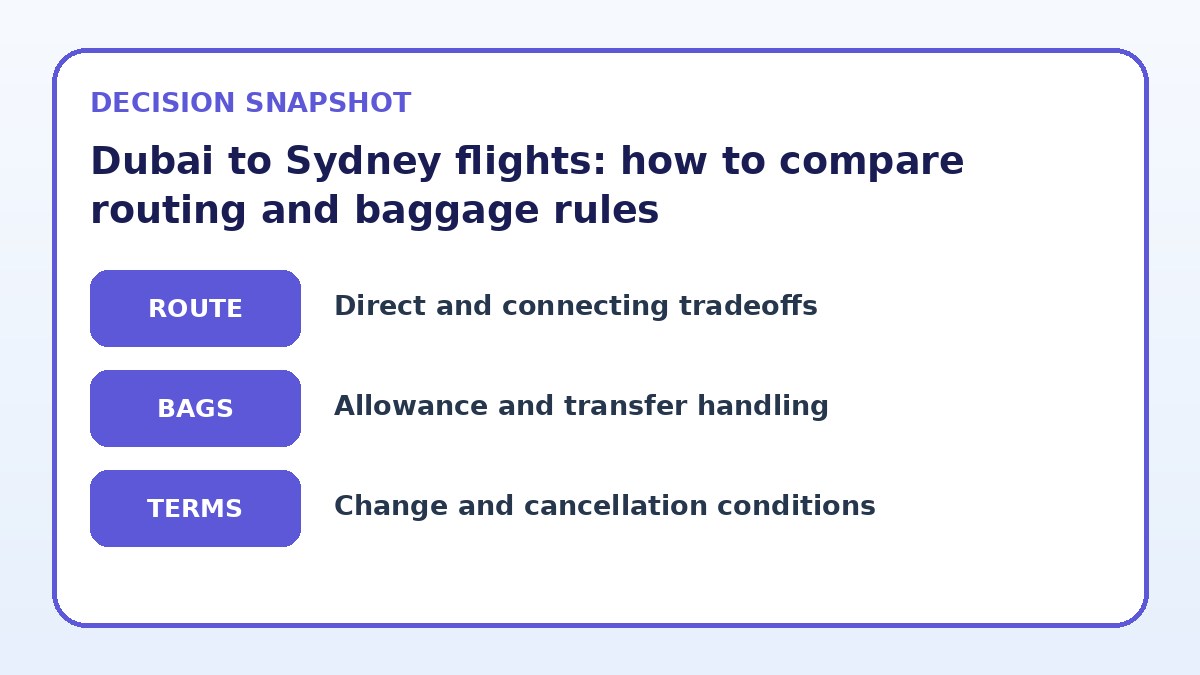
Routing is the first practical tradeoff for travelers with extra luggage on the Dubai to Sydney route. Direct services (if available on your dates) typically reduce the number of times bags are loaded and unloaded, which lowers the chance of mishandling or delayed baggage. However, a direct option may come with higher base fares or stricter booked-bag allowances. When direct flights aren’t available or are prohibitively expensive, compare one-stop itineraries that use major transit hubs known for reliable baggage transfer rather than multiple short hops through smaller airports.
When comparing connecting itineraries, focus on whether your transfer is on the same ticket and whether baggage is checked through to Sydney. Same-ticket transfers generally mean the airline or alliance has responsibility for your bags, but you should verify this on the booking page. Also check whether the transfer airport requires you to collect and re-check baggage (common for some transit points) — that adds time and complexity when you have multiple or oversized pieces.
Baggage rules and connection risks to verify before booking
Baggage allowances vary by fare class and carrier; some fares include one checked bag while others include none. Before booking, prepare the exact piece count, each piece’s weight and dimensions, and whether any items are non-standard (sporting goods, musical instruments, etc.). On the airline’s final booking page, verify the included allowance, the cost for additional pieces or overweight fees, and the maximum permitted size. Check whether an aircraft change or a codeshare partner might apply different baggage rules on parts of your journey.
Connection risk increases if minimum connection times are tight. With extra luggage, you’ll move more slowly through transfer corridors, passport control, security, and re-check counters. Aim for connections that leave ample buffer time — especially if you must change terminals or re-clear immigration. If the itinerary has a tight connection, identify the layover airport’s transfer procedures and whether airlines offer protected connections that cover missed flights and re-routing when bags are delayed.
Compare flight-selection strategies
| Flight strategy | Best for | Risk to check |
|---|---|---|
| Choose direct flights when available | Minimizing handling and transfer risk for multiple or oversized bags | Typically higher base fare or limited schedule choices; confirm baggage allowance before booking |
| Book one-stop itineraries through major hubs | Lower fares while keeping transfer reliability reasonable | Requires careful check of baggage-through-check policy and connection times |
| Select multi-leg itineraries with long layovers | Lower stress with extra time to re-check bags and handle delays | Longer total travel time and potential extra ground costs for lounge or transit services |
| Buy a flexible fare that bundles baggage | Travelers needing predictable costs and easy changes for heavy luggage | Higher upfront price but can reduce unexpected airport surcharges and change fees |
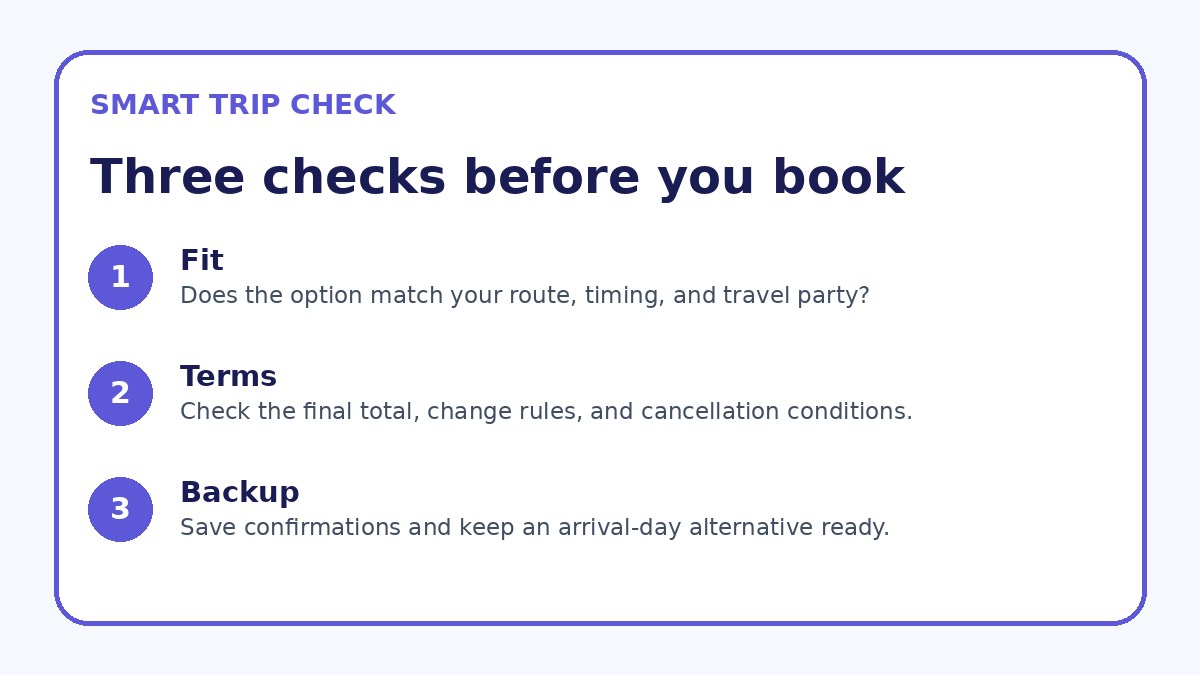
Recheck the complete itinerary
Confirm airports, connection handling, baggage, and change conditions before deciding.
Schedule fit: timing, airport choices, and personal logistics
Schedule fit covers flight times that align with how you travel with heavy bags. Red-eye departures or late-night connections can be tougher when you’re handling bulky suitcases and may coincide with limited transfer services. Daytime flights often provide more predictable ground handling and easier access to assistance desks. Also consider arrival times in Sydney — arriving late at night may complicate ground transport when you have extra luggage, while daytime arrivals generally mean public transport and taxi services are fully available.
Airport choice matters: gates, terminal layouts, and transfer distances affect how manageable your bags will be. If an itinerary includes a long layover at a transit airport with shuttle buses or long walking distances between terminals, plan for the extra time and physical effort. If possible, choose itineraries that minimize terminal changes or that route you through airports with good baggage-handling reputations. Verify terminal and transfer details on airline pages and check airport maps ahead of time.
Flight details to verify
- Confirm exact travel dates, number of passengers, total checked pieces, and per-piece weight and dimensions before searching fares.
- On airline booking pages, verify whether baggage is checked through to Sydney or must be collected and re-checked at the transfer airport.
- Compare total cost: base fare plus official baggage fees for additional pieces and overweight/oversize surcharges shown on the carrier’s final booking page.
- Choose connection itineraries with buffer times longer than the minimum connection time when traveling with extra or bulky baggage.
- Decide whether to pre-purchase extra pieces or overweight allowance during booking (usually cheaper) and add them before final payment.
- Prepare contingency: photograph luggage contents and tags, label bags clearly, and note airline contact and transfer airport baggage procedures.
Fare conditions: changeability, seat selection, and baggage bundling
Fare conditions determine how flexible your booking is if your plans or luggage needs change. Low-cost fares might appear attractive but often charge separately for every checked bag, seat selection, and any changes. Higher fare classes sometimes include a generous baggage allowance and flexible change policies that can save money overall when you travel heavy. Before booking, compare the total out-the-door cost: base fare plus the exact baggage charges and potential penalties for changes.
Look closely at what you can add at booking versus at the airport. Adding extra pieces during initial purchase is usually cheaper than paying airport rates, but confirm the airline’s baggage surcharge table on the booking page. Also check whether seat selection for bulkhead or extra-legroom seats is included or paid — sitting nearer the gate or aisle can speed boarding and deplaning with many bags. Verify the carrier’s refund and rebooking rules so you can adapt if your luggage list or travel dates change.
Flight Guide questions travelers ask
Should I always book directly with the airline when I have extra luggage?
Booking directly with the airline can make it easier to confirm baggage allowances, add extra pieces, and handle changes, but it isn’t always required. If you book through an online agency or an aggregator, ensure the ticket is issued by the operating carrier and that baggage allowances shown match the airline’s official policy. Before paying, open the airline’s final booking page and confirm the allowance, extra-piece costs, and transfer baggage rules. Using Trip.com or another comparison site can help find options, but always verify bag rules on the operating carrier’s page before finalizing.
How much connection time is safe when I’m checking multiple or oversized bags?
There’s no single safe number because airports and transfer procedures differ, but aim for substantially more than the minimum published connection time. Allow extra time for slower check-in, baggage handling, terminal transfers, and possible immigration formalities. If you must change terminals or re-check bags through immigration, build in added hours rather than minutes. Check the airport’s transfer process and whether the airline lists protected connections; if unsure, choose a longer layover or a same-airline routings where baggage handling responsibilities are clearer.
What’s the best way to avoid overweight and oversize fees on this route?
Plan and weigh your bags before booking and again before leaving home to match the carrier’s limits. When possible, consolidate items into fewer standard-sized bags that meet the airline’s size restrictions, or distribute weight across passengers where allowed. If heavy items are unavoidable, compare the cost of pre-purchasing extra piece allowances versus paying overweight fees at the airport; pre-purchase is often cheaper. For irregular items, check if the airline permits special-article booking and what documentation or advance notice is required on the booking page.
Final decision note
Booking Dubai to Sydney flights with extra luggage requires deliberate choices about routing, schedule, and fare conditions. Start by documenting exact travel dates, passenger details, and a precise baggage list. Use that information to compare direct and connecting options, verifying whether baggage will be checked through, the airline’s exact fees for additional pieces or overweight items, and the practical connection buffers at transit airports. Favor itineraries and fare types that reduce handling and provide flexibility when your baggage needs change. Before payment, always re-check the carrier’s final booking page for baggage rules and add any paid allowances you want to lock in.
Continue planning
Check current options and final conditions
Use the provider page to confirm live availability, the final total, cancellation terms, and every condition that matters to your trip.
This evergreen planning guide was created with AI-assisted drafting and a structured quality review. It does not display live prices, schedules, availability, visa guidance, or provider rankings. Verify current details before booking. Some links are affiliate links; we may earn a commission at no additional cost to you.