
If you’re flying from Seoul to Jeju with extra suitcases, the practical move is to plan baggage allowance and airport timing before you buy a ticket. Start by choosing a fare that includes the checked weight or piece count you need, then allow extra time at your departure airport for check-in, potential weight checks, and security. Bring documentation for any fragile or unusual items, and consider whether gate-checking or sending items by courier is a better fit for cost and convenience. On top of that, factor in transit to the airport and possible crowds — both can add unpredictability. This article lays out clear decision points: what to verify on the airline booking page, how to time arrival at the airport from Seoul, packing strategies to reduce delays, and options for excess baggage both pre-purchased and at the airport.
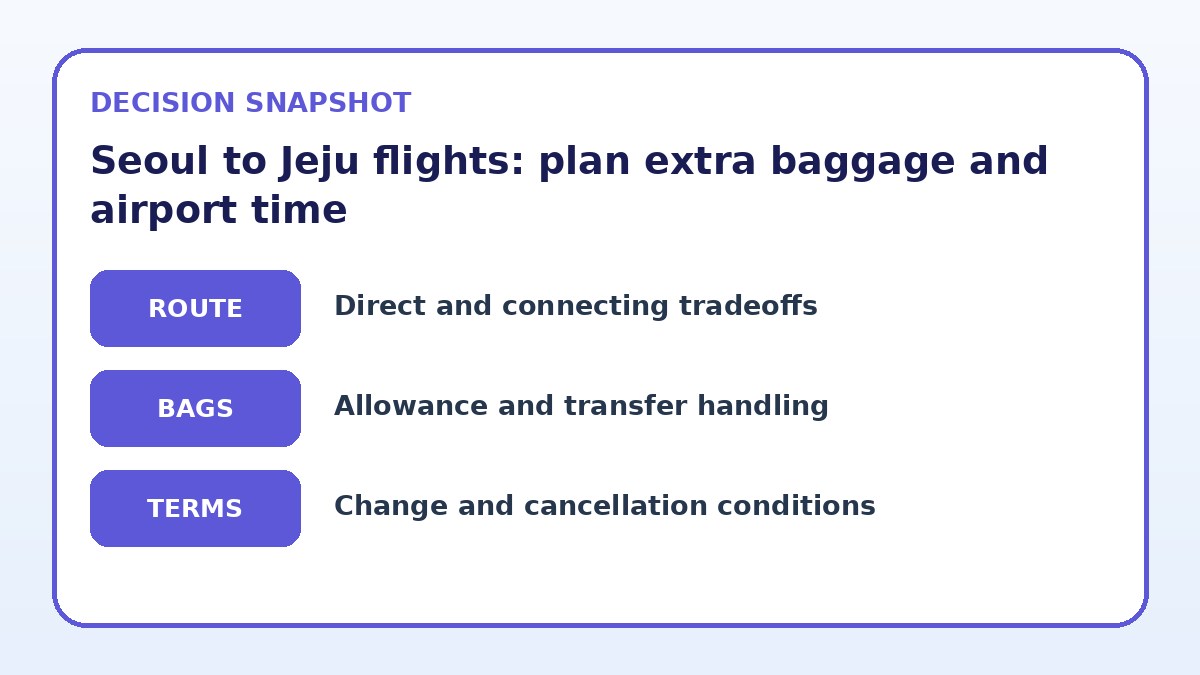
See current options before you compare the details
Availability and final conditions change. Open Trip.com now or keep reading for the practical comparison.
Decide which baggage rule fits your Seoul–Jeju trip
Airlines typically sell fares with different baggage rules: some include a checked allowance, others charge per kilo or per additional piece. For travel between Seoul and Jeju, start by listing what you must bring — clothes, electronics, equipment — and estimate total weight and number of pieces. Then compare that list to the fare descriptions on the airline’s booking page: permitted checked weight, carry-on size and weight, and rules for special items. When provider-specific facts could change, verify the airline’s final baggage allowance, maximum dimensions, and excess-fee structure exactly on the airline’s checkout page before you commit.
If your estimated baggage exceeds the included allowance, decide whether to pre-purchase extra allowance online or accept paying at the airport. Pre-purchased allowance is often simpler and faster at check-in, but not always cheaper — confirm the price on the airline’s site. Also check whether the route offers both direct and connecting options; connecting flights may have different partner-carrier baggage rules or transfer handling that could add time or require re-checking items. Compare direct and connecting itineraries by looking at total door-to-door time and how baggage is treated at each transfer.
Schedule airport time from Seoul with extra luggage
Standard advice about when to arrive at the airport shifts when you have extra luggage. Add time for potential weight checks, repacking if your suitcase is overweight, and administrative steps for oversized items. If you’re leaving from either of Seoul’s airports, factor in travel variability — traffic, public transit delays, and queues at airline counters. For a domestic flight to Jeju, many travelers find that arriving at the airport 90 to 120 minutes before departure gives a comfortable buffer with heavy bags, but your personal buffer should reflect how confident you are in drive or transit times and whether you pre-checked baggage online.
If you pre-purchase an extra allowance online, you may save time but still face a physical weigh-in at the counter. Pack an easily accessible small bag with essentials so you can quickly move items between suitcases if needed. When timing your arrival, consider peak travel windows such as holidays and weekend mornings when check-in lines can grow. Also remember that gate changes or last-minute aircraft swaps can force faster handling of belongings; allow that buffer in your schedule to avoid rushed repacking or missed flights.
| Approach | Best for | Tradeoff to check |
|---|---|---|
| Pre-purchase extra allowance online | Travelers who want predictable fees and a smoother check-in process | May be non-refundable and prices vary by fare class; verify final cost at booking |
| Pay excess at the airport | Those unsure of final pack weight or with last-minute changes | Often slower and potentially more expensive, with longer queues and handling time |
| Use a courier or freight service | Oversized, heavy, or fragile items needing door-to-door handling | Higher total cost and extra coordination, but avoids airport baggage limits |
| Redistribute into carry-on and checked pieces | Travelers with a companion or flexible packing who can rebalance weight | Risk of gate or security rechecks and limits on carry-on sizes and counts |
Ready to check the option that fits your plan?
Use your exact dates and traveler details so the provider page can show the current total and conditions.
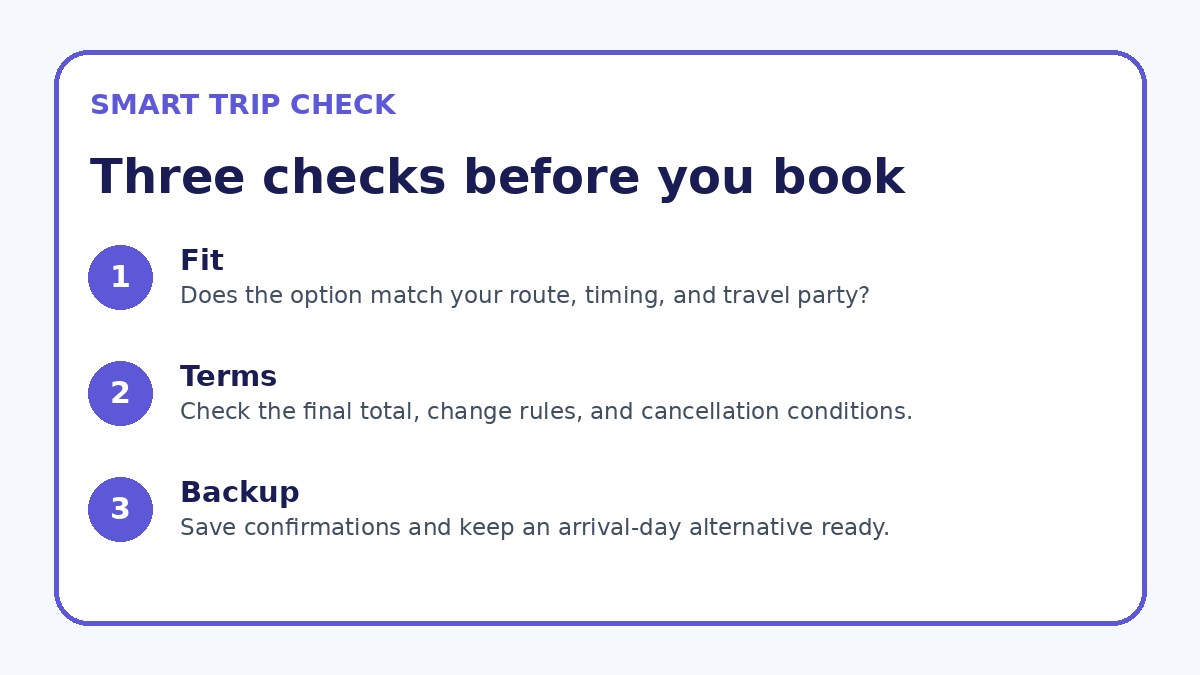
Pack and organize to speed check-in and security
How you pack makes a big difference in both fees and speed. Organize by weight and frequency of use: heavier items near the suitcase base and items you’ll need before departure in a top compartment or carry-on. Keep receipts or documentation for high-value items in a carry-on to avoid delays at security or questions about contents. Use compression bags or modular packing cubes to keep items compact and make it easier to remove things for repacking at the airline counter if a weigh-in demands redistribution.
For fragile or oddly shaped items, use dedicated hard-shell cases or marked protective covers and verify whether they count as checked items or special equipment. Place fragile labels and secure internal padding; if gate agents need to inspect contents, clearly marked cushioning reduces handling time. Finally, tag each bag with your contact details and a distinctive ribbon or strap to spot your luggage quickly on carousel or hand-off points — that small time saving can reduce queueing and stress on arrival in Jeju.
Before you book
- Check the airline’s exact checked baggage weight, piece allowance, and size limits on the booking page before purchasing your ticket.
- Weigh and measure all luggage at home with a reliable scale and tape measure to identify items that exceed airline limits.
- Decide whether to pre-purchase extra baggage allowance online; confirm the final fee on the carrier’s checkout page.
- Label bags clearly with contact information and add a distinctive marker to spot them quickly at arrival.
- Pack an emergency repack kit (small duffel, zip ties, and basic toiletries) to move items if a suitcase is overweight.
- If transporting bulky or fragile items, compare courier or freight quotes and confirm pickup/delivery windows before abandoning airport options.
Excess baggage options and decisions at booking time
When you realize you’ll have excess luggage, you typically have three choices: buy extra allowance in advance, pay for excess at the airport, or arrange an alternative transport method (courier, freight, or specialized shipping). Buying allowance in advance lets you lock in a known policy and may reduce the chance of delays at check-in, but you must confirm the airline’s online price during booking. Paying at the airport gives flexibility but risks higher fees and longer processing times, especially if an agent must manually approve oversized or unusual items.
Courier or freight options may cost more but remove the logistical headache of transporting very heavy or oversized items through crowded airports. These services can also be a strong choice if you have fragile equipment that benefits from door-to-door handling rather than typical baggage systems. Whatever you pick, verify dimensions, declared value policies, and handling limitations on the provider’s final booking or service page. Trip.com can be one comparison point for current availability, but always confirm the final baggage or courier terms directly with the carrier or service provider.
Frequently asked questions
How early should I arrive at the airport in Seoul when I have extra checked baggage?
Arrive earlier than the standard recommendation to handle additional weighing, repacking, or excess-baggage payments. For domestic Seoul-to-Jeju flights, many travelers add an extra 30–60 minutes to their usual buffer when they carry extra luggage, but your exact time should reflect how you travel to the airport, whether you pre-purchased allowance, and whether you expect lines. If you have oversized items needing manual handling or paperwork, add more time. Always confirm check-in counter opening times and recommended arrival timing on the airline’s site before departure.
Can I split extra weight between two passengers to avoid fees?
Splitting weight between travelers is a common tactic but depends on the airline’s rules for per-passenger allowances and carry-on policies. Some carriers allow each passenger a standard checked allowance independent of the other, which can make redistribution legal and useful. However, if redistribution involves carry-on items, confirm cabin baggage size and count limits to avoid gate-checking. Before relying on this approach, verify the exact per-passenger rules on the airline’s booking page so you don’t encounter unexpected charges or a requirement to repack at the counter.
Is it better to pay for extra baggage in advance or at the airport?
Pre-purchasing usually reduces uncertainty: you know the allowance and avoid standing in longer ticket-counter queues. Paying at the airport offers flexibility if you truly can’t predict final weight, but it may be costlier and slower because staff must manually process the excess. Consider your tolerance for risk, cost sensitivity, and whether you can repack at home. Always compare the carrier’s online excess-baggage price to the airport fee on the airline’s final booking page to make an informed decision.
Final planning note
Traveling from Seoul to Jeju with extra luggage is manageable with a few practical decisions: verify baggage allowances when booking, weigh and measure before you leave, and add time at the airport for possible repacking or excess fees. Choose whether to pre-purchase allowance, pay at the counter, or use a courier based on cost, convenience, and the nature of your items. Keep essentials and important documents in a carry-on and prepare a quick repack kit in case you need to redistribute weight. Confirm critical baggage rules and fees on the airline’s final booking page, and use that verified information to set your arrival time and travel plan.
Continue planning
Check current options and final conditions
Use the provider page to confirm live availability, the final total, cancellation terms, and every condition that matters to your trip.
This evergreen planning guide was created with AI-assisted drafting and a structured quality review. It does not display live prices, schedules, availability, visa guidance, or provider rankings. Verify current details before booking. Some links are affiliate links; we may earn a commission at no additional cost to you.