If you're traveling from Seoul to Jeju with children, the most practical choice is usually the shortest, simplest itinerary that reduces transfers and waiting time while keeping flexibility for delays or naps. Start by prioritizing direct flights where available; when a connecting option is necessary, pick connections with at least a 60–90 minute minimum transfer window indoors, predictable transfer paths, and options to rebook if delays occur. Consider departure times that match your child’s sleep schedule and seat types that let a parent sit next to an infant or small child. Before booking, confirm baggage and stroller policies, ask about priority boarding for families, and verify whether the carrier allows seat selection for your party. If you want a single site to compare current schedules, Trip.com can show options, but always check the airline’s final booking page for exact rules and fees.
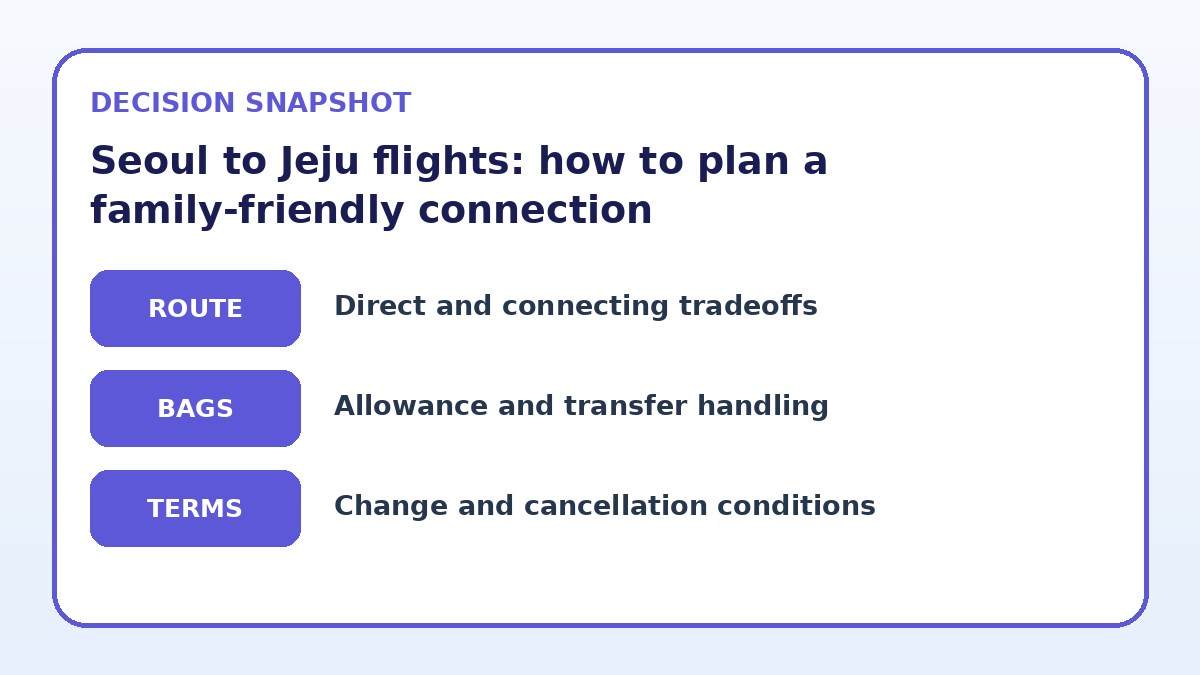
See current options before you compare the details
Availability and final conditions change. Open Trip.com now or keep reading for the practical comparison.
Direct vs connecting: which reduces family stress?
Direct flights generally reduce the number of disruptions: no extra check-ins, fewer opportunities to lose items, and no need to shepherd children between gates. For families, the convenience of boarding once and settling into a single aircraft usually outweighs minor schedule advantages offered by connecting routings. When a nonstop option matches your timeframe, it remains the simplest choice for minimizing transitions and the potential for missed connections, lost luggage, or chaotic gate changes.
However, direct flights might depart at inconvenient times or be fully sold out for preferred seat types, so comparing sensible connections remains important. If you accept a connection, select one with clear signage, indoor paths between gates, and a single terminal transfer to limit walking and the chance of confusion. Always compare total door-to-door time and the number of handoffs; sometimes a well-timed connection can be less tiring than a nonstop at an awkward hour.
Timing and sleep schedules: planning around young children
Pick flight times that mesh with your child’s daily routine—late-morning departures are often easiest for toddlers who have outgrown long morning naps but still tolerate travel. For infants who sleep much of the day, early flights can let you board and rest through most of the journey. Avoid schedules that conflict with usual mealtimes and naps when possible; a cranky child during boarding or a connection can multiply stress and make transfers longer and more complicated.
If a connection is unavoidable, plan for buffer time at each step for feeding, diaper changes, and short play breaks. Look for gates with family rooms or quiet waiting areas and map restrooms and changing tables along your transfer route in advance. Downloading a few familiar apps, snacks, and a small toy in easy reach can turn a potentially difficult 30–60 minute wait into manageable downtime for children of many ages.
| Approach | Best for | Tradeoff to check |
|---|---|---|
| Nonstop flights | Families wanting minimal transfers and quicker door-to-door time | May leave at less convenient times or have limited seat availability for families |
| Short single connection (60–90 min) | Families trading slightly more movement for better departure times | Less margin for delay; requires efficient indoor transfer and clear signage |
| Longer connection (2+ hours) | Families needing buffer time for feeding, stroller handling, or gate changes | Longer total travel time and more time managing luggage and children |
| Mixed-carrier itineraries | Families seeking specific schedules or price/seat combinations | Higher risk of rechecking baggage or unprotected connections between airlines |
Ready to check the option that fits your plan?
Use your exact dates and traveler details so the provider page can show the current total and conditions.
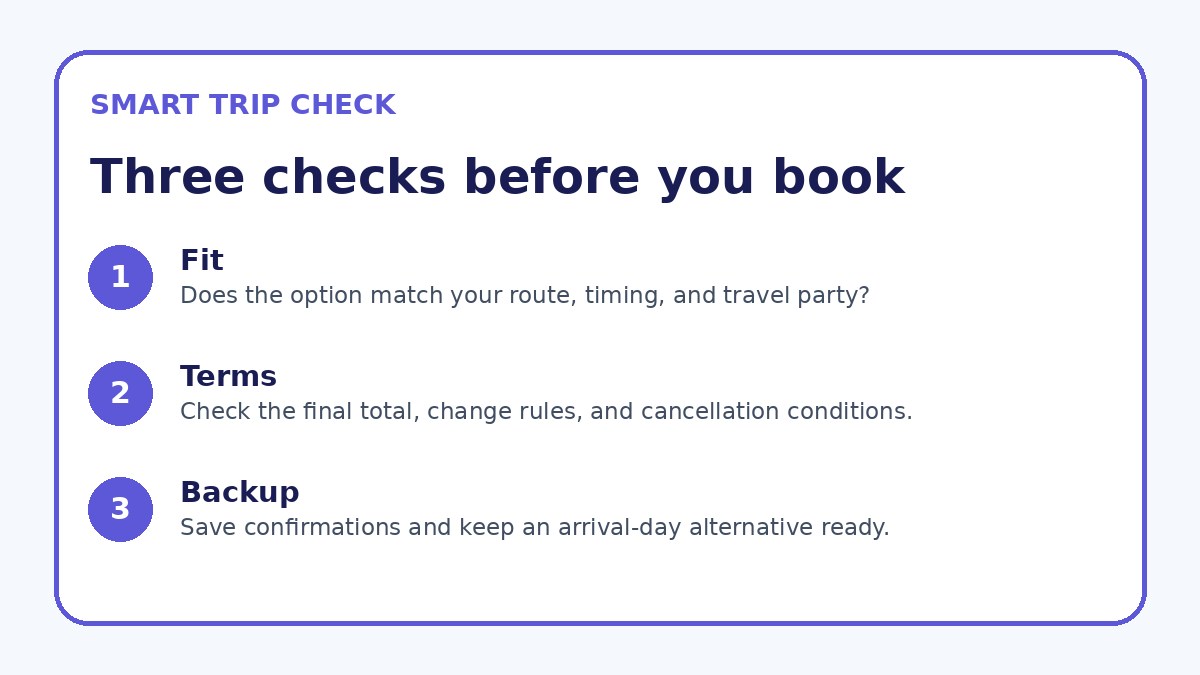
Seats, stroller rules, and baggage: what to verify before booking
Seat assignment is one of the most important practical checks: ensure parents can sit next to infants or small children and confirm whether you need to pay extra to reserve adjoining seats. Bring a car seat if you plan to use it onboard—verify the airline’s certification rules for in-cabin child restraints on the airline’s official policy page. For strollers, many carriers allow gate-checking free of charge, but the exact size, weight limits, and where to drop them vary; check the carrier’s final booking page for specifics.
Also check each airline’s baggage allowance and whether infant or child fares include an extra bag or equipment allowance. If you’re mixing carriers on a connection, verify baggage transfer rules and whether you need to collect and recheck luggage between flights. Where possible, consolidate luggage to reduce handling and bring a compact day bag with essentials for the transfer: medication, snacks, wipes, and a change of clothes for children and a spare shirt for a caregiver.
Before you book
- Confirm whether a nonstop Seoul–Jeju option exists for your travel date and compare total travel time against connection options.
- Verify stroller, car seat, and infant-baggage rules on the airline’s official booking page before purchasing tickets.
- Reserve adjoining seats for parents and children in advance; check whether seat selection is free or requires an extra fee.
- Choose a transfer window of at least 60–90 minutes for single-terminal connections; allow 2+ hours if you must change terminals.
- Pack a carry-on with medications, snacks, wipes, extra clothing, chargers, and comfort items within easy reach for the whole family.
- Save the airline’s customer-service contact and your booking reference on your phone and in a printed copy for quick rebooking if needed.
Managing delays, rebooking, and airport facilities
Delays are part of travel, so build contingency into your plan: choose fares or add-ons that allow free or low-cost changes, and know the carrier’s rebooking policy for family travel. If a scheduled connection is tight, select a fare that includes protection or flexible change options, or consider buying the same airline’s through-ticket when possible to get protected connections. Make a note of the airline’s customer-service options for families and how to request assistance at the transfer airport.
Identify airport facilities that help with children—family restrooms, nursing rooms, play areas, and kid-friendly dining—before you travel. At busy airports, priority boarding for families can let you stow items and settle youngsters without the gate rush. Finally, keep digital copies of booking references and the airline’s customer-support number handy; if you need to rebook due to a delay, having information immediately available expedites the process.
Frequently asked questions
Should I bring a car seat on a Seoul to Jeju flight for an infant?
Bringing a car seat can increase safety and comfort on board, but rules vary by airline. Check the airline’s policy on approved child restraints on its official booking page, including size and certification requirements. Some carriers allow car seats to be used in a purchased seat for the infant; others may permit only lap infants without a dedicated seat. If you plan to use a car seat, confirm whether it’s allowed in your cabin class and whether a separate ticket for the child is required.
How much transfer time should I allow when connecting through Seoul airports?
For family travel, aim to allow at least 60–90 minutes for single-terminal transfers to give time for deplaning, bathroom or feeding breaks, and regrouping. If your connection requires changing terminals, collecting luggage, or passing security again, plan 2 hours or more. Don’t forget to factor in time for stroller gate-checking and retrieving items. Check terminal maps and gate-change policies ahead of travel so you can plan an efficient route between flights.
What are the best times to fly from Seoul to Jeju with children?
The best time depends on your child’s routine: late-morning departures often suit toddlers who can stay alert before an afternoon nap, while early-morning flights can work well for infants who sleep through travel. Avoid peak tiredness windows—late afternoon for many young children—unless you know an evening flight aligns with bedtime and will be calm. When choosing, balance airport congestion and transfer complexity with your family’s sleep and feeding schedule.
Final planning note
Planning a comfortable Seoul to Jeju trip for a family is about reducing friction: fewer transfers, sensible timing, and confirming the little but critical details like strollers, car-seat rules, and seat assignments. Start by checking nonstop options and then compare sensible connection windows, weighing the benefits of convenience against the security of extra buffer time. Always verify policies on the airline’s final booking page—baggage allowances, infant fares, and equipment rules change often. Prepare a prioritized day bag, map your transfer path in advance, and keep contact details handy. With a few deliberate checks and a family-focused itinerary, you’ll greatly reduce on-the-ground stress and have a smoother journey.
Continue planning
Check current options and final conditions
Use the provider page to confirm live availability, the final total, cancellation terms, and every condition that matters to your trip.
This evergreen planning guide was created with AI-assisted drafting and a structured quality review. It does not display live prices, schedules, availability, visa guidance, or provider rankings. Verify current details before booking. Some links are affiliate links; we may earn a commission at no additional cost to you.