Practical answer first: for most couples wanting a balance of speed, comfort and convenience, a high-speed or express train to the Busan/Daegu area followed by a regional connection to Gyeongju is the typical choice; a direct express coach is the simplest single-ticket alternative; driving gives freedom for stops; and ferry-based options only make sense as part of a multi-day coastal itinerary. Which option is right depends on how you weigh travel time versus flexibility, luggage and mobility needs, desire for scenery or stops en route, and whether you prefer a single-seat journey or don’t mind one or two connections.
This article compares the four practical approaches — train (with transfers), long-distance coach, driving, and combining ferries or local trains — from a couple’s perspective. I’ll summarize tradeoffs, decision criteria, and what to verify at booking so you can pick the option that fits your travel style and schedule without being surprised at departure time.
See current options before you compare the details
Availability and final conditions change. Open Trip.com now or keep reading for the practical comparison.
Train-first: speed, comfort, and simple transfers
Trains are the natural starting point for couples who prioritize comfort and speed. In practical planning, this usually means taking a high-speed or express service from Seoul to a major hub near Gyeongju — commonly the Busan or Daegu corridor — then transferring to a regional train or local bus for the final leg. The onboard environment is typically quieter than coaches, with dedicated seating, more legroom, and consistent schedules. For couples who want to relax together, read, or work en route, the train offers a less stressful travel rhythm than driving and fewer stops than a scenic route.
When choosing the train route, compare total door-to-door time including transfer waits, not just the fast segment. Check platform transfer distances at the hub and how easy it is to move between lines with luggage. If staying overnight in Gyeongju or nearby, plan connections that arrive at a reasonable hour and verify the final regional service timetable on the provider’s booking page. If you value window seating or specific carriage types, confirm seat assignments when you book.
Coach/express bus: simplicity and single-ticket convenience
Coaches appeal to couples who want a straightforward single-leg journey from Seoul to Gyeongju without transfers during the trip. Many long-distance coach services operate between metropolitan Seoul and regional cities, stopping at major intercity terminals. The main advantage for couples is a single boarding and the simplicity of a single ticket, which reduces the small frictions of transfers and timetable coordination. Buses can also depart from convenient city terminals, which may be closer to your Seoul accommodation than a large train station.
Tradeoffs include potentially longer journey times and less space to move around compared with trains. If either partner is prone to motion sickness, check seat layout and choose front or middle seats where motion is least. Also verify luggage allowances and whether the coach stops en route for restroom breaks or refreshment options. Always confirm the coach’s drop-off point in Gyeongju so you can plan the final short transfer to your hotel or attractions.
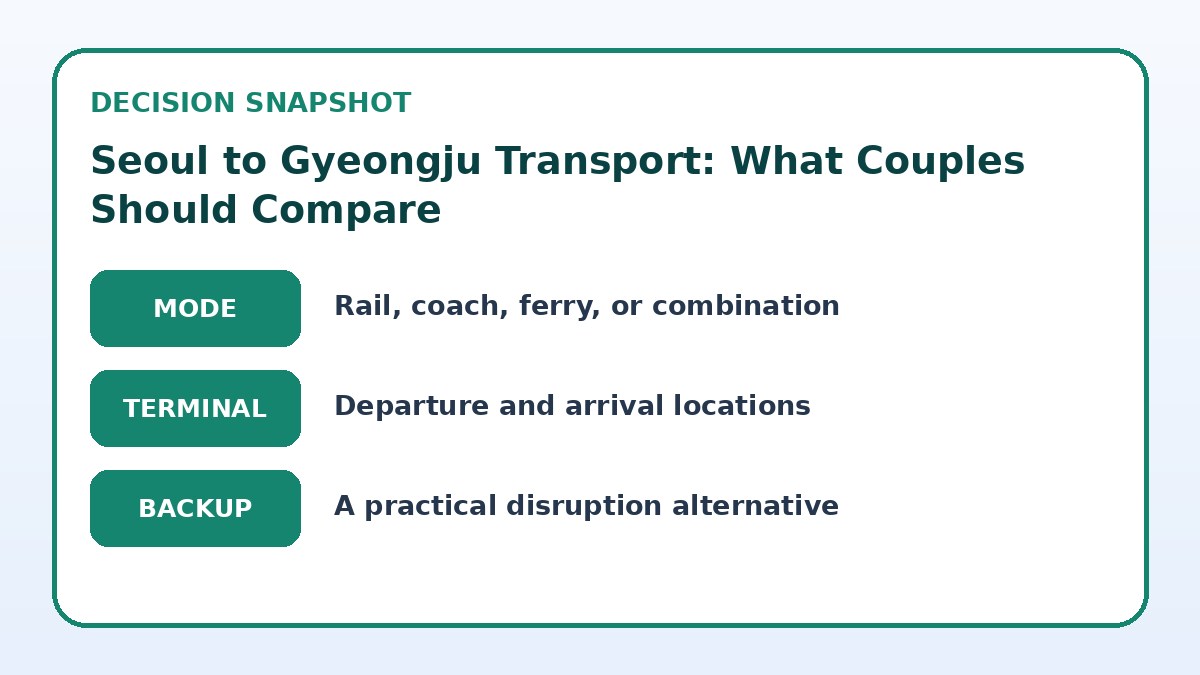
| Approach | Best for | Tradeoff to check |
|---|---|---|
| Train + regional transfer | Couples wanting fast, comfortable travel with minimal driving and predictable schedules. | May require a transfer and careful timing for the final regional leg. |
| Direct express coach | Couples seeking a single-ticket, single-boarding journey with fewer transfers. | Often slower than trains and offers less room to move during the trip. |
| Rent a car | Couples wanting privacy, flexible stops, and exploration off the main route. | You must manage parking, tolls, navigation, and potentially unfamiliar driving rules. |
| Ferry + land connections | Couples prioritizing coastal scenery and a relaxed, itinerary-driven experience. | Adds travel time and schedule constraints; best as part of a multi-day plan. |
Ready to check the option that fits your plan?
Use your exact dates and traveler details so the provider page can show the current total and conditions.
Driving: privacy, side trips, and flexible pacing
Renting a car gives couples the most flexibility and privacy. If your plan includes offbeat archaeological sites, coastal detours, or rural guesthouses, driving allows you to set the pace and stop as you like. It’s also a comfortable option for couples traveling with bulky luggage or equipment, because you control the space and can store items in the trunk. For couples who enjoy a road-trip vibe, splitting driving time or alternating navigation duties can make the journey itself part of the vacation.
Consider practical tradeoffs: parking in busy areas, fuel, toll costs, and local driving rules. Narrow streets near historic sites or in small towns may be less forgiving than city motorways. Before booking a car, check automatic vs. manual availability, insurance inclusions, fuel policy, and whether the rental contract allows driving between regions. Verify parking options at your Gyeongju accommodation and at any specific temples or museums you plan to visit.
Before you book
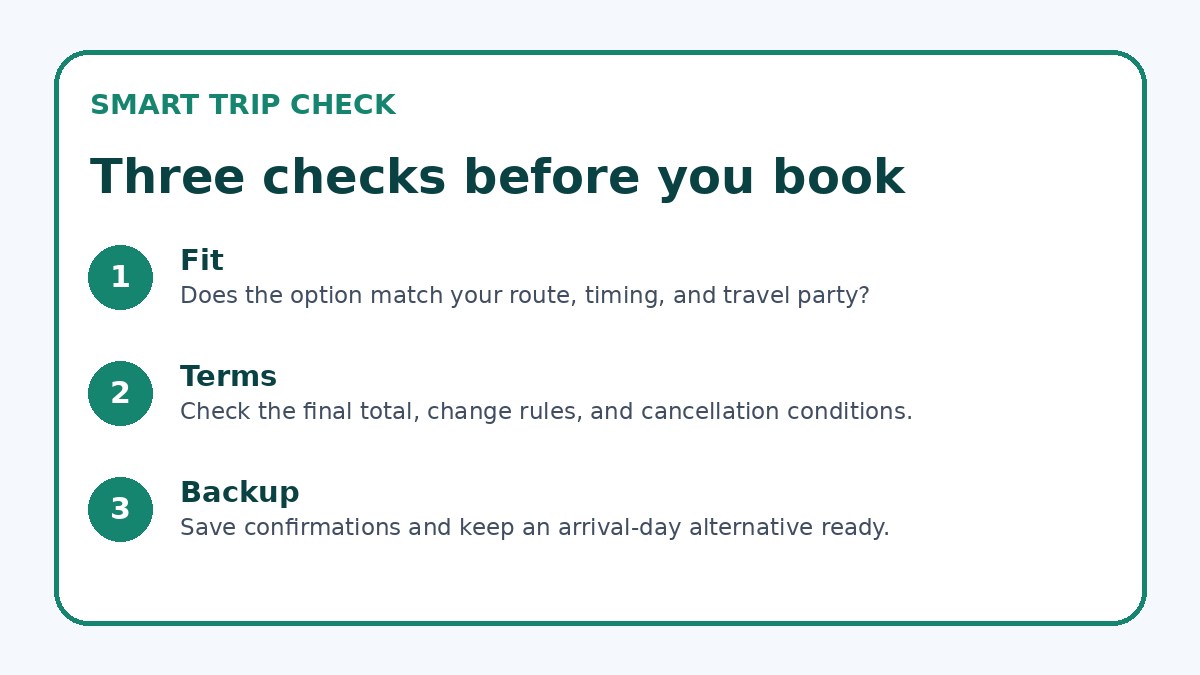
- Decide whether you prefer single-leg convenience (coach) or faster segmented travel (train plus transfer).
- Check final connection timetables and platform/terminal transfer logistics on the provider's booking page.
- Confirm luggage allowances and seat assignment options for trains and coaches before buying tickets.
- If renting a car, verify insurance coverage, fuel policy, and parking availability at your Gyeongju hotel.
- For ferry-inclusive routes, confirm seasonal schedules, boarding rules, and connections to local transit.
- Plan arrival time in Gyeongju to match opening hours of any sites you want to visit on the first day.
Ferries and mixed coastal routes: scenic but itinerary-driven
Ferry options are relevant for couples who want to mix coastal scenery into the trip or travel between islands and peninsulas on the way to Gyeongju. These routes are more itinerary-driven than practical shortcuts; a ferry adds a different pace and seaside views but also more complicated connections, scheduling constraints, and potentially longer overall travel time. Couples who savor sea air, sunsets, and a slower pace may find a ferry segment worthwhile as part of a multi-day journey rather than a same-day transfer.
If you consider ferries, map the whole chain of transfers — train or bus links to the ferry terminal, ferry timetable frequency, and onward transit to Gyeongju. Seasonal schedules and limited daily departures can create long waits, so plan buffer time or an overnight stop where necessary. Check the ferry operator’s booking page for vehicle restrictions, luggage rules, and boarding procedures, and confirm how the ferry connects with the nearest train or bus to reach Gyeongju efficiently.
Frequently asked questions
Is there a direct train from Seoul to Gyeongju and should couples look for it?
Direct long-distance services to Gyeongju itself are limited; most high-speed or express options take you to larger hubs like Busan or Daegu, requiring a regional transfer. Couples should compare total journey time and the ease of the transfer rather than focusing only on a single direct option. When exploring schedules, check whether a direct service exists on your intended travel date, whether it requires seat reservations, and the platform layout at the transfer hub on the provider’s booking page to avoid long, stressful connections.
What should couples consider about luggage and comfort when choosing between train and coach?
Trains generally offer more space to move, more comfortable seats for two, and typically allow a smoother on-board experience for reading and relaxing. Coaches may have limited overhead space and smaller seats, making long journeys less comfortable for taller travelers or those with bulky luggage. For either option, review luggage allowance policies, whether you can reserve adjacent seats, and if there are accessible restrooms and power outlets. Confirm these details on the carrier’s site prior to booking to prevent surprises at departure.
How do we decide whether to rent a car or rely on public transport for a couple’s itinerary?
Choose a rental if you value spontaneity, private time together, and the ability to reach rural or off-route attractions easily. Public transport is better when you prefer to relax during travel, avoid parking hassles, and rely on high-frequency services between major stations. Compare estimated driving distances, parking availability, local driving norms, and whether your planned Gyeongju lodgings provide secure parking. If you do rent, confirm the rental company’s policy on cross-regional travel and what documentation you need before collecting the car.
Final planning note
For most couples, starting with a train to a nearby hub and a short regional connection to Gyeongju strikes the best balance of speed, comfort, and ease — but the right choice depends on how you want to spend the travel time. If you want single-ticket simplicity and fewer transfers, an express coach can be ideal. If freedom to explore en route matters more than a quick arrival, rent a car and plan side stops. Ferry additions work best when scenic coastal travel is a goal rather than a time-saving shortcut. Before booking, verify final timetables, transfer logistics, luggage rules, and parking or vehicle policies on the provider’s booking page or a comparison site such as Trip.com so your travel day runs smoothly.
Continue planning
Check current options and final conditions
Use the provider page to confirm live availability, the final total, cancellation terms, and every condition that matters to your trip.
This evergreen planning guide was created with AI-assisted drafting and a structured quality review. It does not display live prices, schedules, availability, visa guidance, or provider rankings. Verify current details before booking. Some links are affiliate links; we may earn a commission at no additional cost to you.