If you're visiting South Korea for the first time and need to travel from Seoul to Busan while visiting other towns along the way, you'll want a clear multi-city ground-transport plan before you book accommodation. Start by deciding whether you prefer speed, scenic stops, or lower cost: that determines whether intercity trains, express buses, or a rental car makes the most sense. Pick a core hub (Seoul, Daegu, Busan or a coastal town) and plan each overnight so you’re not trying to cram long daytime transfers between attractions. This article gives a practical route-building approach: how to line up legs, check schedules and seat types, compare ticketing flexibility, and choose where to sleep to match your pace. It also explains tradeoffs and exact checks to run on provider booking pages so you can finalize a reliable itinerary.
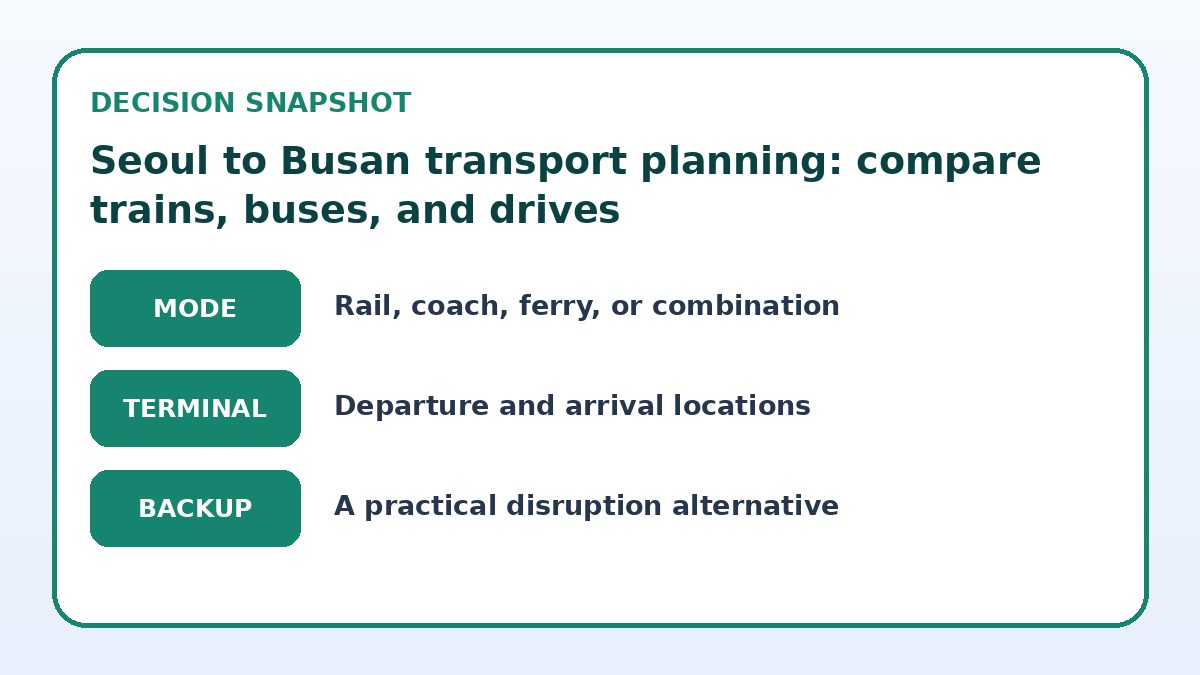
See current options before you compare the details
Availability and final conditions change. Open Trip.com now or keep reading for the practical comparison.
Choose a travel spine: fast, scenic, or flexible
Start by defining the spine of your trip: a fast spine uses express trains or direct high-speed services between Seoul and Busan, minimizing transit time so you can maximize days in destinations. A scenic spine favors slower regional trains, local express buses, or driving along the coast to see towns and landscapes between cities. A flexible spine prioritizes having the option to change dates or swap stops, which pushes you toward refundable fares, monthly or multi-ride passes, or renting a car with flexible return points.
Your spine choice immediately narrows practical overnight locations. If speed is key, fewer overnight stops make sense—perhaps a single night in Busan after arrival. If you want scenery, plan 2–3 stops such as small coastal towns or historic cities spaced to keep daytime travel under four hours. For flexibility, build slack days into the middle of your plan and book refundable or changeable transport legs so you can shift plans without losing deposits.
Map legs and compare mode tradeoffs
Lay out each travel leg in sequence and evaluate options for that segment—train, express bus, or car. For each leg, compare door-to-door considerations: station or terminal location relative to where you’ll sleep, transfer complexity with luggage, departure frequency, and seat comfort. Trains often offer a balance of speed and comfort with easy city-center stations; buses can serve smaller towns directly and may be cheaper; cars provide the most flexibility for side trips and remote stops but add navigation and parking tasks.
When comparing on provider pages, verify exact departure and arrival stations, platform access, luggage allowances, and the fare rules for exchanges and refunds. If a direct service is available, weigh whether a faster non-stop leg justifies skipping intermediate towns. If only connecting services exist for a given day, compare total door-to-door time and connection buffers to reduce missed connections. Trip.com can be used as one comparison tool for live availability, but always verify final fare rules on the operator’s official booking page.
| Approach | Best for | Tradeoff to check |
|---|---|---|
| Fast spine (high-speed trains) | Travelers prioritizing speed and city time | Fewer stops en route and potentially less scenic exposure to smaller towns |
| Scenic spine (regional trains, driving) | Travelers who want on-route sights and flexible exploration | Longer total travel time and more planning for parking or transfers |
| Flexible spine (refundable fares, car hire) | Travelers who may change plans or need variable schedules | Potentially higher costs and more complex booking management |
| Budget spine (express buses, shared transport) | Cost-conscious travelers prioritizing value | Reduced comfort on long legs and fixed departure times |
Ready to check the option that fits your plan?
Use your exact dates and traveler details so the provider page can show the current total and conditions.
Where to stay and how to time overnight stops
Pick accommodation with arrival and departure convenience in mind. For cities, choose places near the main train or bus station if you have an early departure; if you prefer nightlife or dining options, central neighborhoods make more sense even if they add a short transfer to the station. In smaller towns, prioritize lodgings that offer straightforward pickup or directions—hostels and guesthouses sometimes provide local check-in notes that simplify a late arrival.
Time your travel so most transfers happen during daylight when you can navigate stations and local transit more easily. Avoid planning tight same-day transfers after long sightseeing days; instead, end on an evening that leaves the next morning free to travel. If you will pick up and drop off a rental car, check exact pickup and drop-off hours and whether after-hours return is supported on the provider page; a mismatch here can force an unwanted taxi or night stop.
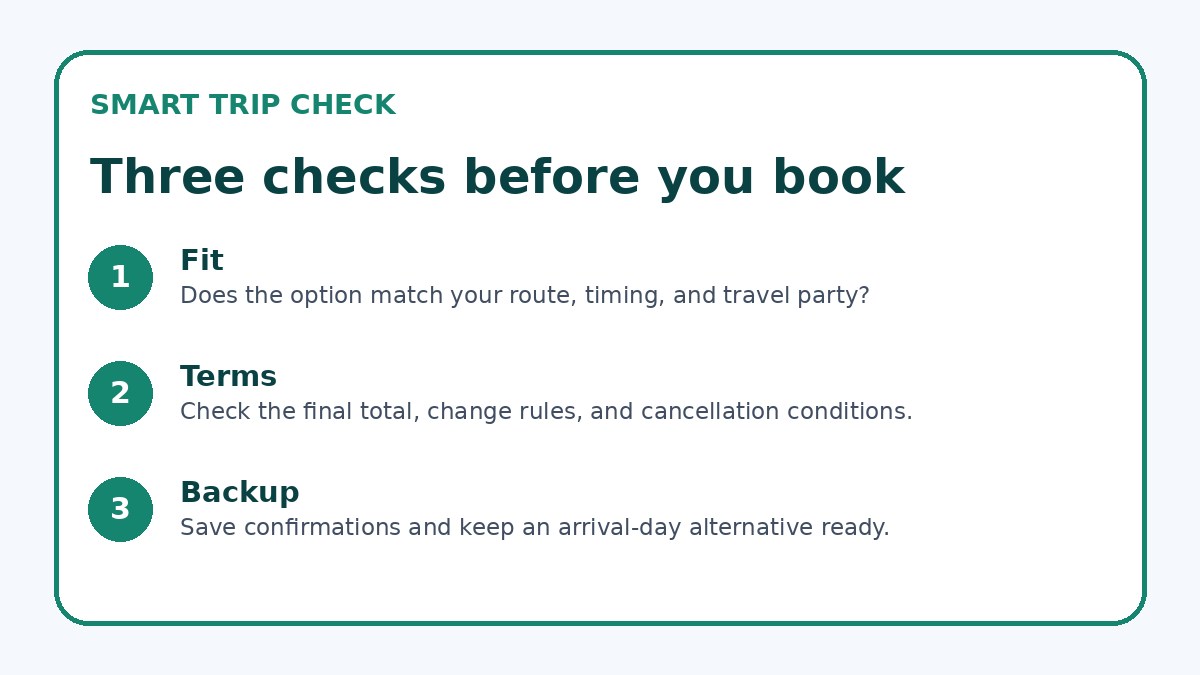
Before you book
- Confirm exact departure and arrival station names and addresses for every leg and save them in your itinerary app.
- Check fare rules: refundable vs non-refundable, change fees, and whether seats are reserved or open seating.
- Verify luggage allowances and whether oversized items require advance notification or separate booking.
- Confirm pickup and drop-off windows for rental cars, including after-hours procedures if you plan late returns.
- Note local transit connections from stations to your accommodations and add estimated transfer times to the plan.
- Save provider contact numbers and a screenshot of each confirmation to handle day-of changes or missed connections.
Practical booking checks and on-the-ground tips
Before you click confirm, run a checklist for each leg: confirm the precise station or stop name, boarding platform or meeting point instructions, luggage rules, seat reservations if necessary, and cancellation or change fees. If you’ll use seasonally altered services—such as special weekend or holiday timetables—verify schedules for your exact travel dates on the operator’s site. For trains and buses, note whether seat reservations are optional or mandatory and whether your ticket is e-ticket or paper.
On the ground, arrive at terminals with time to spare: at least 20–30 minutes for buses and a bit more for major train stations during busy periods. Keep digital and printed copies of confirmations, a portable power bank for device navigation, and a small lockable bag for valuables on transit. Finally, learn a few transit-related phrases in Korean or have a translation app ready; station staff often help international travelers, but a short local phrase can speed communication.
Frequently asked questions
Should I prioritize trains or buses for a first trip from Seoul to Busan with stops?
Prioritizing trains makes sense if you value predictable schedules, comfort, and direct city-center access—high-speed or regional trains reduce door-to-door time. Buses are useful for reaching towns that lack frequent train service and can be cheaper, but they may add travel time and require knowing terminal locations. For a multi-stop itinerary, combine trains for main city-to-city legs and buses or local transport for smaller towns to strike a balance between convenience and reach.
Is renting a car recommended for a Seoul to Busan multi-city plan?
Renting a car offers the most flexibility for exploring off-the-beaten-path spots and coastal drives, making it a strong choice if you want scenic detours and control over timing. However, driving adds responsibilities: navigation, tolls, parking, and understanding road rules. If you rent, compare one-way drop-off policies, verify insurance coverage, and plan for urban parking in Seoul and Busan. If you prefer not to drive, well-developed train and bus networks can still support a varied multi-stop route.
How do I handle seat reservations and timetable changes for multi-leg ground travel?
Treat each leg as its own mini-booking exercise: reserve seats when required or if you want guaranteed spots on popular times, and leave buffer time between connections. For seasonal or holiday travel, check operator timetables for your exact dates because schedules can differ from regular weekdays. Use official operator booking pages to confirm exchange and refund policies, and consider buying a flexible ticket or travel insurance if you anticipate date changes. Keep confirmations accessible both digitally and in print for day-of travel.
Final planning note
Building a Seoul to Busan multi-city ground-transport plan starts with a clear travel spine—fast, scenic, or flexible—and then maps each leg to an appropriate mode. Plan overnight stops to limit exhausting same-day transfers, compare seat and luggage rules on provider pages, and decide where flexibility is worth paying for. Use trains for predictable city-to-city moves, buses or cars for reaching smaller places, and always verify pickup/drop rules and schedule details on the operator’s final booking page before paying. With a backbone plan, practical checklists, and a little buffer time, you can enjoy a smoother first-time trip across Korea’s varied landscapes.
Continue planning
Check current options and final conditions
Use the provider page to confirm live availability, the final total, cancellation terms, and every condition that matters to your trip.
This evergreen planning guide was created with AI-assisted drafting and a structured quality review. It does not display live prices, schedules, availability, visa guidance, or provider rankings. Verify current details before booking. Some links are affiliate links; we may earn a commission at no additional cost to you.