Practical answer up front: for couples making the Seoul to Busan trip with a long‑haul connection, prioritize a single through‑ticket on one itinerary when possible, choose connection windows of at least 90–120 minutes, and pick a fare class that includes checked baggage and protective change/cancellation terms. That combination reduces the risk of lost bags, missed connections and surprise fees while giving you both flexibility to adjust plans together. If a single through‑ticket isn’t available, book consecutive tickets only when you can comfortably cover recheck time, and prefer terminals or airports with quick transfer options. Before you search live fares, have exact travel dates, passport names, seat preferences and baggage needs ready—this saves time and avoids fare class confusion at checkout.
See live routes for your exact travel day
Compare direct and connecting choices with the same baggage and traveler details.
Routing: direct versus connecting and why it matters for couples
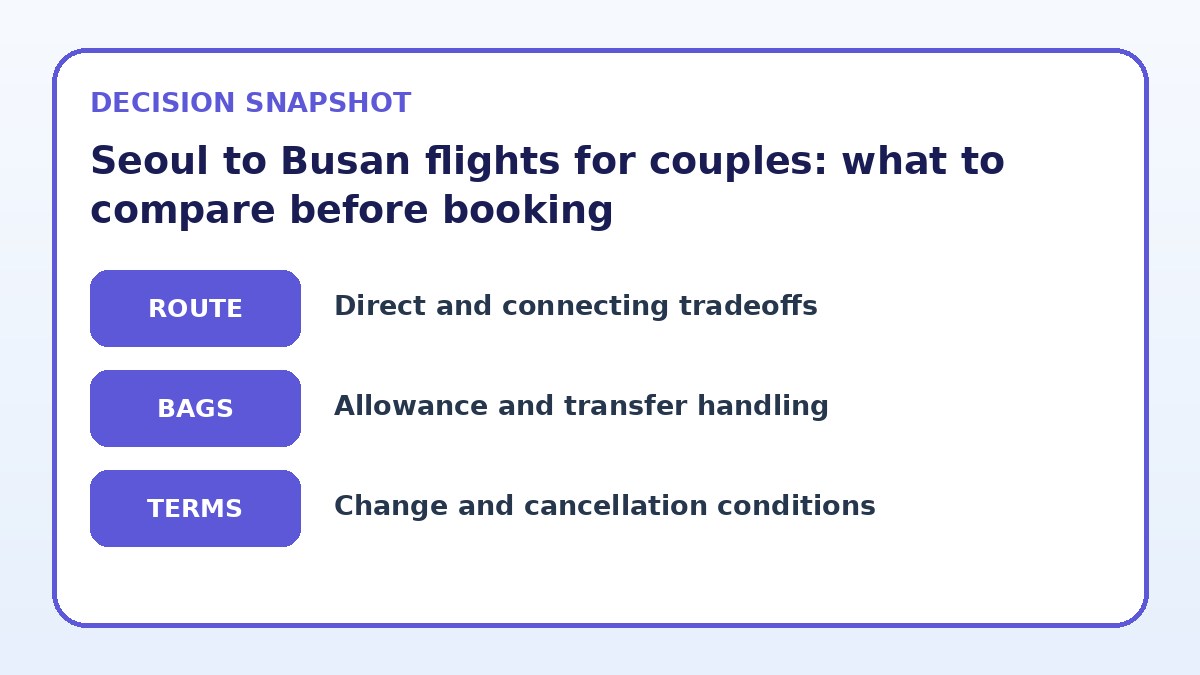
On the Seoul to Busan route you’ll usually compare direct services with options that route you through another city or airport. For couples, the core decision is whether to prioritize time or predictability. A direct option avoids transfer stress and keeps you together, but sometimes a connection on a single itinerary allows better seat availability or fare conditions. When evaluating routing, inspect whether the connection is on a single ticket and whether both segments are marketed together—single‑ticket connections shift the carrier responsibility for missed connections and checked baggage handling to the operating carrier(s).
If using a connecting itinerary, consider the physical logistics: are you changing terminals, moving between airports, or rechecking bags? Couples should prefer routings that minimize separate lines and repetitive security procedures so you can navigate them as a team. Also plan seating: reserve adjacent seats on both segments if possible so neither of you is isolated during the transfer. Finally, check the carrier’s published minimum connection time as a baseline, then add a margin for airport layout, peak hours, and any mobility or luggage needs you both have.
Baggage and connection risk: protect your checked luggage and time
Baggage handling is the main operational risk on connecting itineraries. If your booking is a single through‑ticket, checked bags are usually tagged to the final destination, reducing the chance you’ll need to collect and recheck them. For couples, that saves time and coordination during a transfer. If you’re forced to buy separate tickets, plan as if you will need to claim and recheck baggage—factor that time into your connection window and budget for possible baggage fees on the second carrier. Always confirm baggage allowances, size limits, and whether a fare includes at least one checked bag per person before completing payment.
Carry‑on packing can be your safety net: keep essentials for both travelers in carry‑ons—medication, a change of clothes, documents, chargers, and basic toiletries—to bridge any delay or loss. Photograph your bags and label them both externally and internally with your contact details; couples can add a unique tag or color to quickly spot each other’s luggage. Before booking, check the carrier’s instructions on interline baggage transfers and whether the airline accepts responsibility for missed connections due to delays on the first leg—these terms appear on the final booking page and are decisive for risk tolerance.
Compare flight-selection strategies
| Flight strategy | Best for | Risk to check |
|---|---|---|
| Single through‑ticket with included checked baggage | Couples who want lower connection risk and coordinated rebooking on delays | Often higher base fare but reduces baggage recheck and transfer stress |
| Separate consecutive tickets with tight timing | Couples prioritizing lowest fare and willing to accept recheck responsibilities | Higher risk of missed connections; you handle baggage claim and recheck |
| Flexible fare with change privileges but higher price | Couples needing adaptability due to uncertain dates or events | Pay more upfront for peace of mind and simpler changes later |
| Longer layover with lounge access or airport hotel | Couples who value comfort and downtime between segments | Increases travel time and potential incidental costs during layover |
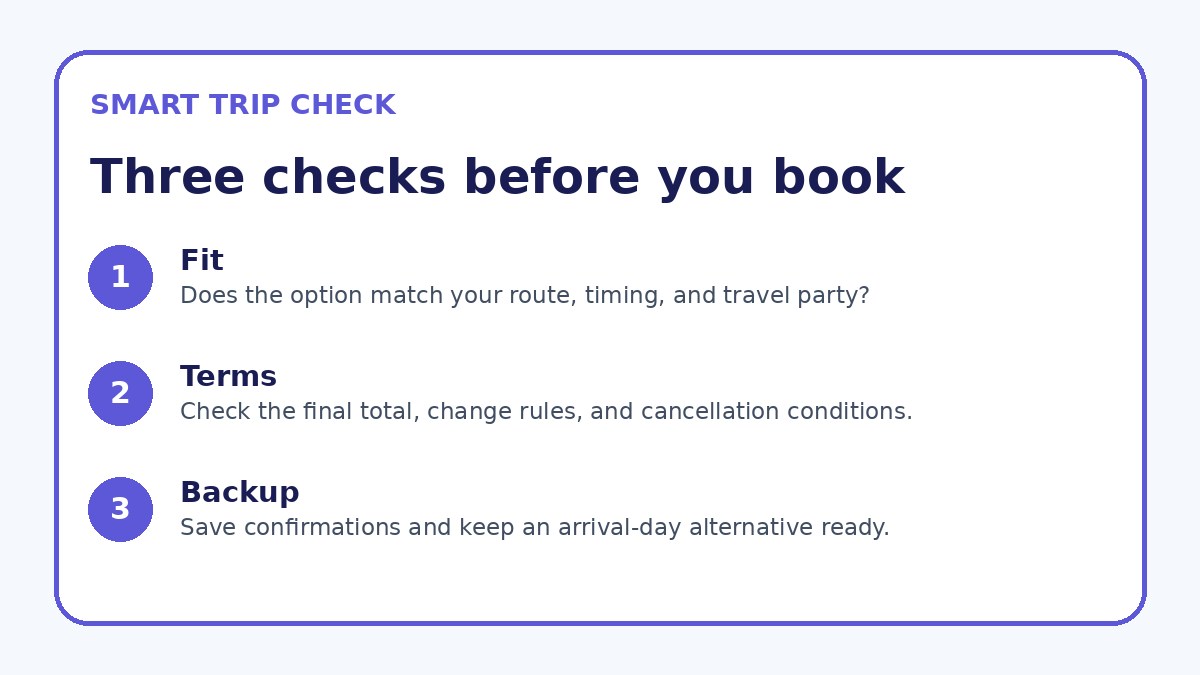
Recheck the complete itinerary
Confirm airports, connection handling, baggage, and change conditions before deciding.
Schedule fit: choose connection windows and departure times that suit your pace
Match the itinerary to how you travel together. If you and your partner value rest over speed, pick later morning departures or early evening flights that allow a relaxed airport arrival, lounge time, and coordinated boarding. For couples who prefer to maximize daytime on arrival, an early departure with a short, well‑buffered connection may be preferable. When comparing schedules, look at total door‑to‑door time but also break down time at each transfer—longer layovers might offer comfort if you plan lounge access or a sit‑down meal together.
Factor in ground transport and check‑in norms. If a connection requires changing airports, add transit time plus buffer for traffic and security; if you’re using a single airport, verify the distance between arrival and departure gates. Couples traveling with mobility concerns, infants, or extra bags should err on the side of longer connections. Review whether check‑in counters or kiosks open early enough for your departure, and confirm both of you have matching travel documents and meet any carrier requirements to avoid last‑minute surprises at the gate.
Flight details to verify
- Gather exact travel dates and both travelers’ passport names and numbers before searching fares.
- Decide if a single booking is essential; prioritize through‑tickets when possible to protect bags and connections.
- Compare fare rules on the carrier’s final booking page—confirm change, cancellation, and baggage inclusion details.
- Reserve adjacent seats for every segment and print or save boarding passes for both travelers.
- Plan a realistic connection buffer (at least 90–120 minutes) and add extra time if changing airports or rechecking luggage.
- Pack a shared carry‑on with essentials for two: documents, medications, chargers, and a change of clothes each.
Fare conditions: changeability, baggage inclusion and fee transparency
Fare rules determine how easily you can adapt your trip together. Compare refundable versus non‑refundable fares, but pay closer attention to change fees, rebooking policies, and whether fare bundles include checked baggage and seat assignments. For couples, a modestly pricier flexible fare can be valuable: it lets you change dates without complex reissue rules and keeps you from splitting itineraries under stress. When comparing options, expand the fare details on the final booking page and look for explicit language on transfers, partner airlines, and whether the carrier will rebook you on the next available flight if your inbound leg is delayed.
Also check seat assignment policies: confirm you can book adjacent seats for all segments on the same reservation. Some low‑cost fares reserve seating for an extra fee that varies by segment; factor that into the total cost. If you anticipate schedule changes, ensure the fare’s change policy applies to both travelers and all segments. Always verify the final price breakdown before payment so you and your partner know exactly what is included, any optional add‑ons available, and which fees would apply if you need to cancel or alter the itinerary.
Flight Guide questions travelers ask
Should couples always book a single through‑ticket instead of separate tickets?
Not always. A single through‑ticket reduces the risk of missed connections and keeps checked bags tagged to the final destination, which is often worth the extra cost for couples who want ease and fewer logistics. However, if a single itinerary is unavailable or prohibitively expensive, separate tickets can be fine when you allow generous transfer time, are prepared to claim and recheck bags, and accept the responsibility for any missed onward flights. Evaluate the total time, potential baggage handling, and whether you both can absorb the risk if delays occur.
How much connection time do couples really need between flights?
Aim for at least 90–120 minutes for same‑airport domestic connections that don’t require immigration or baggage reclaims; add more if you must change terminals, pass through immigration, or transfer between airports. If you travel with checked luggage on separate tickets, allocate extra time to claim and recheck bags. Also consider whether you want time to visit a lounge, eat, or rest—couples who value comfort should add a buffer beyond the minimum to reduce stress and allow for unplanned delays.
What fare features matter most for couples booking Seoul to Busan flights with connections?
Prioritize fares that include checked baggage and allow seat selection for both travelers, and verify the carrier’s change and cancellation policies. A fare with flexible change terms can save both of you stress if plans shift. Also check interline and partner transfer rules if your itinerary uses multiple carriers: the final booking page should state who is responsible for rebooking and baggage on missed connections. Confirm all these details before payment so you and your partner know exactly what protections and obligations apply.
Final decision note
For couples planning Seoul to Busan flights with a long‑haul connection, the practical approach is to secure a single through‑ticket that includes checked baggage and reasonable change terms whenever possible, then pick connection windows that match your comfort level. If separate tickets are the only option, add generous transfer buffers and plan to recheck bags; pack carry‑on essentials to reduce the impact of delays. Before you search, have traveler names, dates, seat preferences and baggage needs ready. Finally, read the carrier’s final booking page closely—confirm baggage handling, change policies, and who is responsible for rebooking so you can travel together with confidence.
Continue planning
Check current options and final conditions
Use the provider page to confirm live availability, the final total, cancellation terms, and every condition that matters to your trip.
This evergreen planning guide was created with AI-assisted drafting and a structured quality review. It does not display live prices, schedules, availability, visa guidance, or provider rankings. Verify current details before booking. Some links are affiliate links; we may earn a commission at no additional cost to you.