Practical answer: if you have extra luggage, prioritize flights that include the checked baggage you need in the base fare or let you add the exact allowance before purchase; then compare route flexibility, connection risk, and total door-to-door travel time rather than simply the headline fare. For Seoul to Bali travelers, that tradeoff is the core decision: a cheaper itinerary with tight connections or separate-ticket segments may save money but raises the chance of lost bags and missed connections. Conversely, a slightly higher fare that bundles adequate checked baggage and offers protected connections reduces stress and the risk of unexpected fees at transfer points. Before searching live options, gather travel dates, number and weight of checked bags, traveler ages, and acceptable connection times so you can apply the checklist below efficiently.
See live routes for your exact travel day
Compare direct and connecting choices with the same baggage and traveler details.
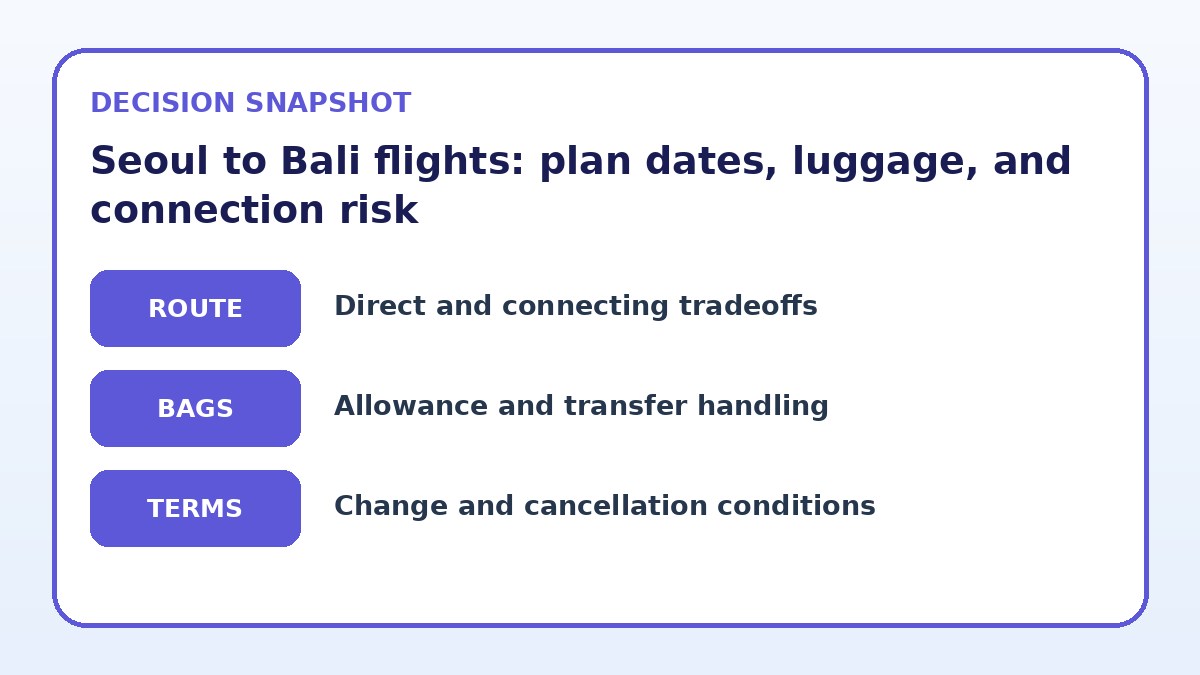
Routing: direct versus connecting options
Start by mapping the routings available for your exact dates: direct, single-connection, or multi-stop itineraries. Direct or single-connection routes reduce the number of times your luggage is handled, lowering the chance of mishandling. If direct flights are offered for your dates, check whether checked baggage is included in the fare category you’re considering; sometimes a direct fare with a smaller baggage allowance can cost nearly as much as a connecting fare that includes more allowance, so compare the all-in total.
When connections are necessary, prioritize single layovers with planned minimum connection times that comfortably absorb delays and baggage transfer. Note airport layout: a long transfer walk or inter-terminal bus increases stress and the chance of missed connections when re-checking luggage is required. If you must connect, choose itineraries with the same carrier or within the same alliance to improve the chance that bags are interlined and protected if a delay occurs.
Baggage and connection risk: what to verify
List how much luggage you will carry — number of checked pieces, weight per piece, and carry-on items — and use those totals when comparing fares. Don’t assume baggage rules are uniform: verify on the airline’s booking page whether your selected fare includes the checked pieces you need, what the carry-on limits are, and the exact charges for additional or overweight pieces. Also check whether any connecting carrier requires re-checking luggage during transit; that detail often appears in the booking conditions or the itinerary notes.
Assess connection risk by checking minimum connection times shown by the carrier and adding a buffer for baggage transfer. If a transfer requires passing immigration and re-checking bags, treat that itinerary as higher risk. Where providers vary, prefer itineraries that explicitly state interline baggage handling or protected connections; if that language isn’t clear, contact the airline or use an OTA such as Trip.com to confirm how baggage will be handled before you book.
Compare flight-selection strategies
| Flight strategy | Best for | Risk to check |
|---|---|---|
| Direct or single-carrier itinerary with included baggage | Travelers who want fewer luggage-handling events and predictable baggage coverage | May cost more upfront than low-fare, multi-stop options but reduces transfer risk and paperwork |
| Lowest-fare multi-stop itinerary without included baggage | Price-sensitive travelers willing to manage separate luggage fees and transfer complexity | Higher risk of baggage delays, extra charges for add-ons, and potential need for terminal transfers |
| Separate tickets for each segment to mix carriers | Flexible itineraries or complex routings where no single-carrier option exists | No protected connections; you bear the risk if an earlier leg is delayed and causes missed onward flights |
| Flexible or refundable fare with higher baggage allowance | Travelers prioritizing stress-free travel and willingness to pay for change flexibility | Higher fare but greater protection for changes, cancellations, and added baggage needs |
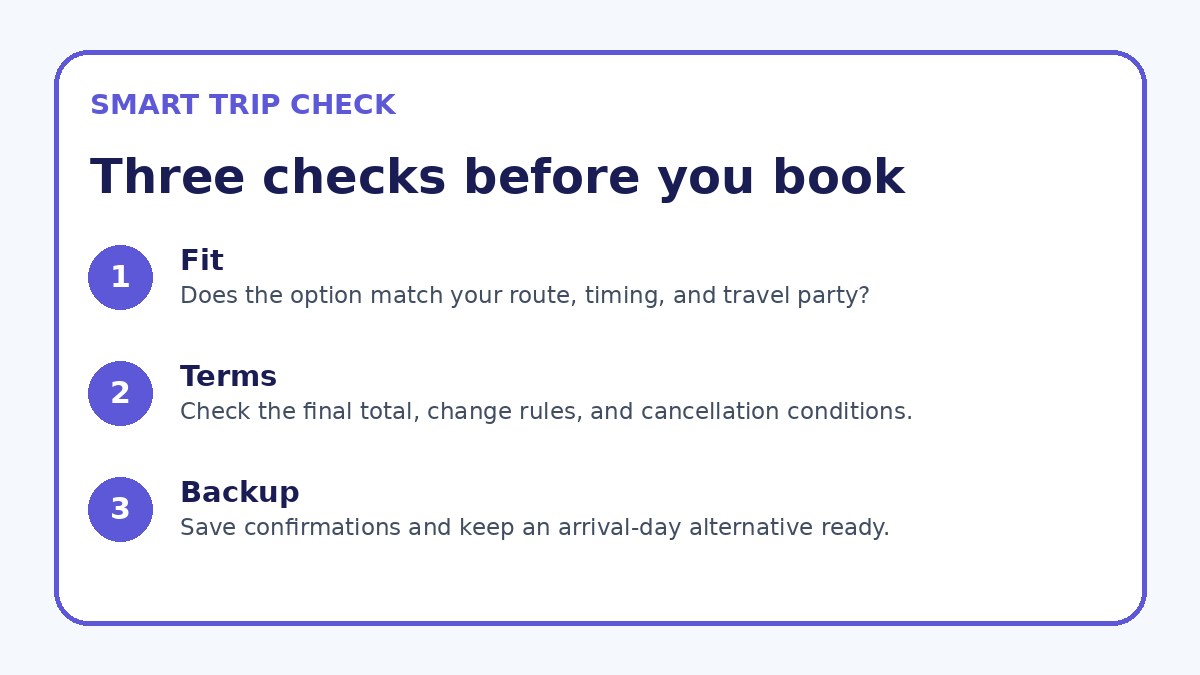
Recheck the complete itinerary
Confirm airports, connection handling, baggage, and change conditions before deciding.
Schedule fit and door-to-door planning
Match flight times to your ground logistics: chosen Seoul airport (Incheon vs Gimpo), transit time to the Seoul airport, and arrival airport in Bali (check which terminal and transfer options). Early morning or late-night connections can increase overnight layovers and the need for additional baggage handling, while daytime connections might expose you to peak-hour delays. Consider your tolerance for longer airport waits versus the convenience of fewer transfers — sometimes a slightly longer single-leg day flight reduces baggage-handling events compared with a quicker but multi-stop itinerary.
Include customs and potential quarantine time in Bali in your door-to-door calculation if you expect inspections or if you must collect and re-check baggage. For multi-traveler groups, factor in the time it takes to reunite after immigration and baggage reclaim. Make contingency plans for delayed flights: pick connections with official minimums well above the published minimum connection time if you’re traveling with heavy or fragile luggage.
Flight details to verify
- Confirm exact travel dates, Seoul departure airport, Bali arrival airport, and the number/weight of checked bags for every traveler before searching fares.
- Compare the all-in total: base fare plus any baggage, seat selection, and transfer fees — ensure these charges are visible on the booking page prior to payment.
- Check whether the itinerary is issued on a single ticket and whether carriers on connecting legs list interline baggage handling or protected connections.
- Verify minimum connection times and whether transfers require passing immigration and re-checking baggage; add a 60–90 minute buffer for heavy luggage or unfamiliar airports.
- If choosing separate tickets, build contingency time and buy travel insurance or flexible fares to cover missed connections and potential rebooking costs.
- Before finalizing purchase, screenshot or save the fare conditions and baggage policy page; call the operating carrier to confirm baggage handling if the website language is unclear.
Fare conditions and booking verification steps
Before committing, read the full fare conditions on the provider’s final booking page: baggage allowance (pieces and weight), change and cancellation fees, upgrade rules, and whether the fare is refundable. Pay special attention to how many free checked pieces are included and whether seat selection is charged separately; seat policies affect which cabin you’ll be in and whether large carry-ons can be accommodated in overhead bins. If a cheaper fare requires buying baggage add-ons during or after purchase, compare the bundled higher fare to the base fare plus add-on price.
Verify transfer protection and interline agreements if your itinerary uses more than one carrier. Confirm refund and rebooking policies for missed connections and whether the airline guarantees baggage transfer for your ticket. Where the booking channel is not the operating carrier, verify these conditions again on the operating carrier’s website or contact them directly. Use Trip.com or the airline site to compare but always confirm final baggage rules and connection guarantees on the provider’s own booking page before payment.
Flight Guide questions travelers ask
Should I prioritize included baggage or the cheapest headline fare when flying Seoul to Bali with extra luggage?
If you have extra luggage, prioritize a fare that includes the checked pieces you need. The cheapest headline fare can become more expensive once you add paid baggage, overweight fees, and the cost or hassle of re-checking bags during connections. An included-baggage fare often reduces unknowns: fewer payment steps, clearer allowance limits, and less chance of being surprised at the airport. Always calculate the all-in price (fare plus baggage and seat fees) and compare that to slightly higher bundled fares before booking.
How much connection time should I allow when traveling with large or fragile luggage?
Allow significantly more time than the airport’s published minimum when you have large or fragile items. Aim for connections that give you extra buffer to collect and re-check bags, clear passport control if needed, and move between terminals. If a transfer requires immigration, customs, or an inter-terminal transfer bus, add at least an hour to your standard buffer. When in doubt, choose itineraries with single-carrier protections or longer layovers to avoid racing to make a tight connection with valuable luggage.
If I buy tickets on different carriers for each leg, how can I protect my luggage and myself from missed connections?
When you book separate tickets, protection depends entirely on your margin for delays: there’s no automatic interline baggage transfer or rebooking. To reduce risk, allow generous transfer times, avoid overnight tight connections, and consider shipping especially valuable items by courier. Purchasing flexible fares or travel insurance that covers missed connections can provide reimbursement for rebooking costs. Also factor in time for baggage reclaim and re-checking; confirm baggage rules for each carrier so you know whether transit requires collecting luggage.
Final decision note
Booking Seoul to Bali flights when you have extra luggage is a balancing act between price, convenience, and risk. Make a short list of acceptable routings, then run through the checklist: confirm exact dates and airports, count your baggage, compare bundled fares versus add-on costs, and verify connection protections on the operating carrier’s final booking page. Prioritize itineraries that minimize luggage transfers and that state interline baggage handling for connecting segments. Use clear verification steps—screenshots, saved fare condition pages, and direct carrier confirmation—so you can book confidently. If you prefer, compare live options on a reputable OTA such as Trip.com, but always verify baggage and protection rules on the airline’s own site before payment.
Continue planning
Check current options and final conditions
Use the provider page to confirm live availability, the final total, cancellation terms, and every condition that matters to your trip.
This evergreen planning guide was created with AI-assisted drafting and a structured quality review. It does not display live prices, schedules, availability, visa guidance, or provider rankings. Verify current details before booking. Some links are affiliate links; we may earn a commission at no additional cost to you.