If your trip to Seoul is focused on meetings, site visits, or short bursts of work between appointments, the core decision is simple: pick the hotel that saves you the most time or the one that helps you recharge. For many business travelers the best compromise is to prioritize a location within easy transit or taxi distance to most meetings, then upgrade to a slightly larger room or a quieter floor. If your schedule includes late-night work, client dinners across different districts, or early starts, location becomes more valuable. Conversely, if you have a long on-site day, frequent in-room video calls, or need solid sleep after long flights, room comfort should take precedence. Below you’ll find concrete tradeoffs and decision criteria to help you compare Seoul hotels, plus a practical checklist to use while booking.
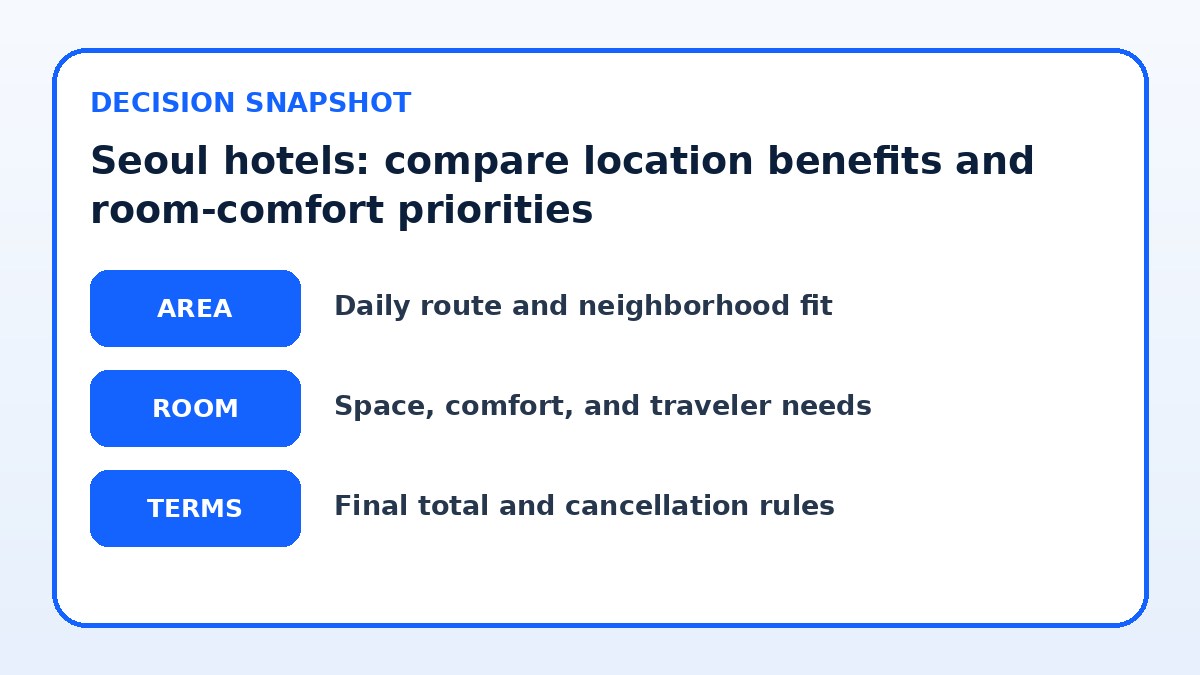
See current options before you compare the details
Availability and final conditions change. Open Trip.com now or keep reading for the practical comparison.
Start with a practical map of your itinerary
Before browsing options, plot each meeting, interview, or event on a simple map or list grouped by district: Gangnam, Yeouido, Jongno, Myeongdong, or near Gimpo/Incheon transit hubs. Count how many engagements fall into each area and note time-sensitive appointments (early starts or late finishes). This helps you quantify how much commute time you’d accept and whether you’d rather spend minutes saved on travel or invest that margin in a more comfortable room further out.
Next, overlay transport choices: subway lines, major arterial roads, and likely taxi routes. Seoul’s subway is fast and predictable for many corridors, while taxis are more direct but can be slower during rush hours. If your plan includes late-night returns, check how late nearby subway stations run and whether taxis will be a reliable option. Use this combined view to create a shortlist of neighborhoods that minimize daily friction.
When to prioritize location over room comfort
Choose location-first when your schedule has many short meetings in different areas, when you’ll be traveling between client sites, or if the first engagement each day is time-sensitive. Saving 20–40 minutes each way can preserve energy, reduce the risk of late arrivals, and allow windows for prep or debrief. Staying centrally or next to major subway transfers reduces reliance on taxis and helps you react if a meeting runs long or is moved at short notice.
Location-first choices don’t mean sacrificing all comfort — you can still seek a quiet room, good Wi‑Fi, and a decent workspace. Expect smaller floorplans and potentially less in-room privacy in highly central hotels, however. If the neighborhood has many options, prioritize hotels with flexible check-in policies and business facilities so you can use lounges or day rooms if needed; confirm those policies on the hotel’s booking page or by calling the property.
| Approach | Best for | Tradeoff to check |
|---|---|---|
| Location-first | Packed schedules across multiple districts and time-sensitive meetings. | Often smaller rooms and more street noise; comfort may be limited for long in-room work sessions. |
| Comfort-first | Long remote-working days, frequent video calls, and jet-lag recovery. | Longer commutes to meetings and potential dependence on taxis during peak traffic. |
| Hybrid: central area + upgraded room | Balanced needs where travel and in-room productivity are both important. | Higher cost than budget options and requires careful neighborhood selection. |
| Split stay (two hotels) | Complex itineraries with distinct clusters of meetings in different parts of Seoul. | Extra packing and transfer logistics; useful only for longer trips where benefits outweigh inconvenience. |
Ready to check the option that fits your plan?
Use your exact dates and traveler details so the provider page can show the current total and conditions.

When to prioritize room comfort over being centrally located
Prioritize room comfort when you need reliable sleep, private space for calls, or long blocks of focused work. If your schedule contains full days on-site but lighter travel, a quieter room in a well-insulated building will improve productivity and recovery. Look for rooms with a dedicated work desk, good lighting, blackout curtains, and generous soundproofing — features that matter for long stretches of in-room work and video conferencing.
Comfort-first choices often mean staying a little farther from the busiest districts or a short taxi/subway ride from your main meetings. That tradeoff is worthwhile if you’re doing extended remote work, facing jet lag, or need consistent, high-quality Wi‑Fi. When choosing a comfort-focused hotel, verify room size or category, the presence of a proper desk, and the property’s Wi‑Fi policy on the booking page to ensure it meets your business needs.
Before you book
- Map all meeting addresses and mark the district with the most appointments to identify your primary hotel area.
- Check the nearest subway line and station walking time; note last train times and typical taxi availability for late returns.
- Confirm room details: desk, chair, outlet placement, blackout curtains, and whether a quiet room or upper floor is available.
- Ask the hotel how Wi‑Fi is provided (complimentary vs. paid) and whether bandwidth is sufficient for multiple video calls.
- Compare commute time vs. room comfort by estimating two schedules: one staying central, one staying comfortable farther out.
- Before booking, verify cancellation policies, early-check-in/late-check-out options, and any extra fees on the property’s official booking page.
Find the best middle ground: hybrid strategies
If your itinerary mixes clustered meetings with occasional distant appointments, a hybrid approach often works best. Stay in a well-connected neighborhood that balances direct subway access and short taxi rides to multiple districts, then upgrade to a higher room category for better soundproofing and desk space. Many business travelers pick neighborhoods like Gangnam, near Yeoksam or Samseong for southern Seoul access, or near Seodaemun/Jongno for central access — but choose based on your mapped needs rather than reputation alone.
Other hybrid tactics include booking an upper-floor room to reduce street noise, adding a flexible cancellation policy so you can pivot if meetings change, and confirming in-room amenities (desk, outlets, secure Wi‑Fi) before finalizing. If you might need quiet daytime spaces, check whether the hotel offers business lounges, meeting rooms, or day-use options you can reserve separately; always verify availability and fees on the hotel’s final booking page.
Frequently asked questions
How do I decide between Gangnam and Jongno for a business stay in Seoul?
Start by locating where most of your meetings will be. Gangnam covers many corporate offices and conference venues in southern Seoul, while Jongno (central/northern Seoul) is closer to government offices, historic districts, and some financial institutions. If your appointments are split, prioritize whichever district contains morning or time-critical meetings. Then check transit connections: Gangnam is well served by several subway lines and arterial roads, but trips across the river can take longer during rush hour. Use your map to compare typical travel times rather than relying on neighborhood reputation alone.
Is it worth paying more for a business suite or larger room?
Paying extra makes sense when you’ll spend many working hours in your room, need space for confidential calls, or want a separate seating area for client meetings. A larger room or suite usually provides a better desk, more outlets, and clearer separation between sleep and work areas, which helps maintain focus and rest. If your schedule involves only short overnight stays and most work happens at client sites or co-working spaces, the premium may not be necessary. Always verify the specific room layout and amenities on the hotel’s booking page before committing.
How reliable is Wi‑Fi in Seoul business hotels, and what should I confirm?
Wi‑Fi quality varies by property and room type. Ask the hotel whether Wi‑Fi is complimentary or charged, whether speeds are sufficient for HD video calls, and if there are bandwidth policies during peak hours. If uninterrupted connectivity is critical, request a test or ask whether wired Ethernet is available in the room. For backup, check mobile network coverage in the area and consider a local data SIM or portable hotspot as a contingency. Confirm these technical details directly with the hotel before booking to avoid surprises.
Final planning note
Choosing between location and room comfort for Seoul hotels is fundamentally about which friction costs you most: time on the road or reduced productivity and rest. Map your week, quantify how much commute time you can tolerate, and then use those constraints to shortlist neighborhoods. Where possible, look for a hybrid solution — a central area with an upgraded room or a hotel offering business facilities and quiet floors. Verify room specifications, Wi‑Fi arrangements, and cancellation terms on the hotel’s booking page before confirming. If you want a quick availability check, you may compare options on Trip.com, but always double-check property details directly to ensure they meet your business needs.
Continue planning
Check current options and final conditions
Use the provider page to confirm live availability, the final total, cancellation terms, and every condition that matters to your trip.
This evergreen planning guide was created with AI-assisted drafting and a structured quality review. It does not display live prices, schedules, availability, visa guidance, or provider rankings. Verify current details before booking. Some links are affiliate links; we may earn a commission at no additional cost to you.