If you and your partner are weighing whether to drive in Seoul, start by asking what driving will add to your plans. For many couples, a rental is worth it when you want day trips outside the city — like coastal drives or countryside temples — or when your itinerary includes multiple neighborhoods with limited time. If you plan to stay mostly inside central Seoul, public transit, taxis and occasional rideshares usually beat the hassle of city pickup and parking. This article gives a practical recommendation up front, then lays out the tradeoffs between airport pickup and downtown pickup, explains how insurance and pickups work in Korea, flags return friction, and offers a non-driving plan so you can book with confidence.

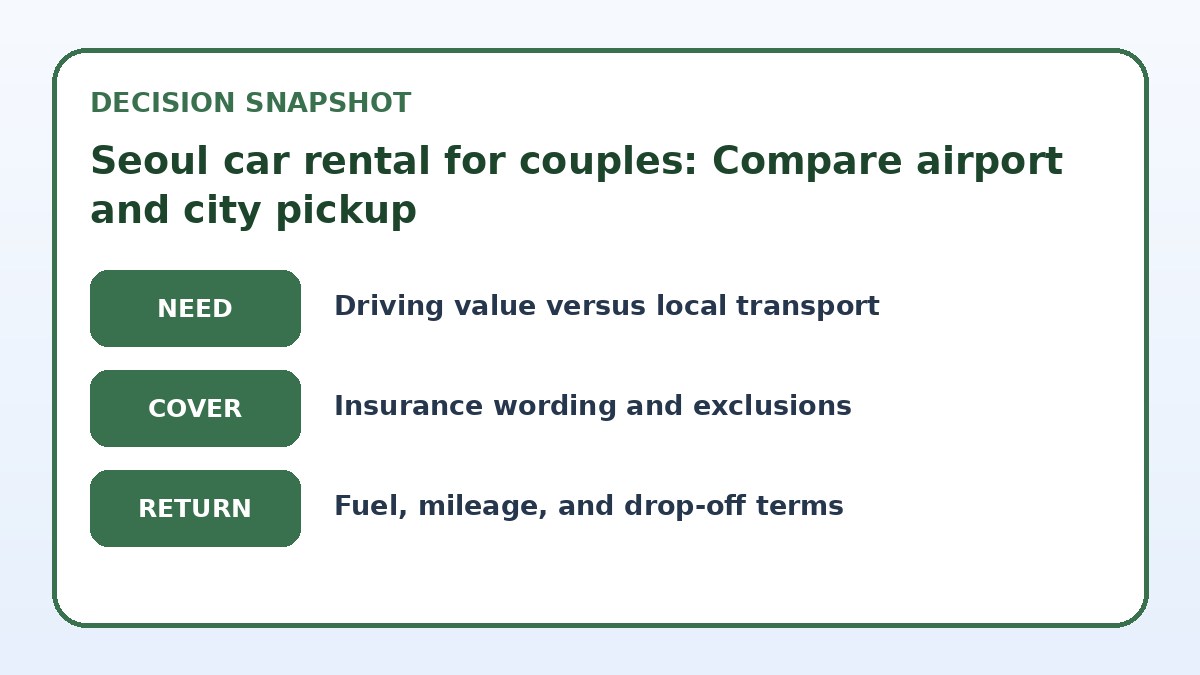
Decide whether driving actually improves your couple’s Seoul trip
Start by listing the places you both must visit and how flexible you want to be. If your priority is inner-city experiences—palaces, hanok neighborhoods, gallery crawls, fine dining and nightlife—the Seoul metro and taxis usually make more sense: stations drop you next to attractions, you avoid parking searches, and you reduce stress for the driver. Conversely, if one or two full-day excursions beyond Seoul are essential—coastal drives, national parks, or rural villages with limited public transit—a rental unlocks scenic routes and timetables that trains and buses can’t match.
Consider pace and sharing of driving duties. Couples who prefer relaxed daylight driving will enjoy a car for scenic stops and flexible meal timing. But if both of you want to drink, nap, or read while the other drives, factor in rotation and fatigue. Also weigh luggage and infant or child seat needs; a car simplifies those logistics. Make a simple map of your top 6–8 stops and mark whether each is served conveniently by public transit; that visual will often settle the drive-or-not question quickly.
Decide whether driving earns its place
| Mobility strategy | Best for | Cost or friction to check |
|---|---|---|
| Airport pickup and drop at the same airport | Couples arriving with luggage and planning an immediate road trip or a route that ends at the airport | Less transfer friction at arrival and departure, but may involve airport pickup counters and higher out-of-city rates |
| City pickup near your hotel with city drop-off | Couples who want a local start, to test the car in town, or plan mostly evening and inner-city activity | Easier access from hotel but potentially harder parking, inspections, and limited office hours for returns |
| One-way airport-to-city or city-to-airport rental | Couples planning a linear route that starts or ends in the city while flying in or out from the airport | Convenient routing, but verify one-way fees and the rental’s allowed drop-off locations on the booking page |
| Skip driving: public transit, taxis and occasional private drivers | Couples focused on central Seoul attractions who want lower stress and no parking or insurance worries | Highly convenient in the city but reduces flexibility for remote day trips unless you book tours or regional trains |
Check live rental choices only after the route test
Use the exact driver, dates, pickup point, and return plan to compare current conditions.
Route value, pickup and return friction for airport vs city pickup
Airport pickup favors couples arriving with luggage or leaving Seoul directly for a road trip. Major airports usually offer straightforward car desks and immediate highway access, removing the need to navigate city traffic on arrival. For returns, dropping the car at the same airport eases last-minute timing, though you should confirm the rental company’s airport drop-off procedures and terminal shuttle details. If you plan a loop that ends at the airport, this option reduces transfers and gives you a buffer before your flight.
City pickup reduces initial transfers from your hotel and lets you test the vehicle in familiar streets before committing to long drives. However, downtown pickup often comes with more friction: smaller offices, limited parking for inspection, and the need to know the city’s parking rules and garage options. Returns in the city can be timed to coincide with dinner or late activities but may require arranging shuttle service back to your hotel if drop-off hours are limited. Always verify pickup and return windows, after-hours drop-off fees, and exact office location on the rental confirmation page.
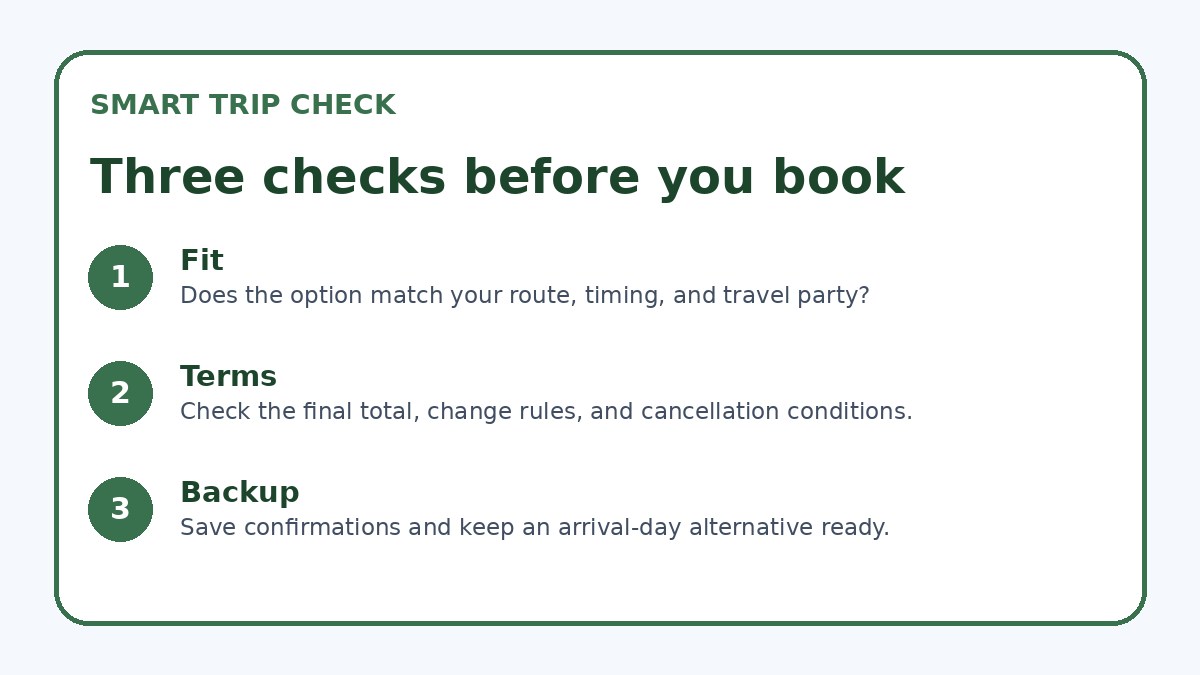
Compare the full rental conditions
Confirm insurance wording, exclusions, deposit, fuel, mileage, and return terms on the final page.
Insurance wording and what to check before booking
Insurance naming and coverage levels can be confusing; read the final booking page carefully and look for these specific items: liability limits for third parties, collision damage waiver (CDW) or loss damage waiver (LDW) terms, deductibles or excess amounts, and whether theft protection is included. Note if waivers are optional add-ons sold at the desk and what they do not cover—common exclusions include loss from using unregistered roads, driving violations, or unauthorized drivers. Confirm whether the policy allows multiple drivers without extra fees and whether it includes roadside assistance.
For couples, check whether the rental requires each driver to present a license and whether an International Driving Permit is needed for your nationality. If you plan border crossings (for example, to Jeju; note: ferry or flight requirements apply), verify cross-border and island restrictions explicitly. When in doubt, take screenshots or save PDFs of the insurer’s terms on the booking page; these are the documents you’ll rely on if damage, a ticket, or a claim arises.
Car rental terms to verify
- Map your top 6–8 destinations and mark which are served directly by metro or intercity rail before deciding to rent.
- Confirm required driver documentation on the rental booking page: driver’s license, International Driving Permit if needed, and passport.
- Read the insurer’s final terms for deductible, CDW/LDW details, what is excluded, and whether roadside assistance is included.
- Check pickup and drop-off office addresses, operating hours, after-hours policies, and any shuttle requirements on the confirmation page.
- Verify parking options and likely costs for your hotel and planned stops; note any times when street parking is restricted.
- If planning a one-way rental, confirm allowed drop locations and one-way fees on the provider’s final booking page before booking.
Non-driving fallback and easy alternatives for couples
If you decide not to drive, build a relaxed plan that leans on Seoul’s strengths: the subway, buses, taxis, and frequent intercity express buses and trains for day trips. For nearby excursions, research direct express buses or regional trains that reach coastal towns or national parks without multiple transfers. Taxis and app-based ride services can fill gaps—short taxi rides are economical for late nights or transfer legs where carrying luggage is inconvenient.
Combine transit with curated day tours for longer-day destinations where a private driver might otherwise seem necessary. Look for small-group or private guides who handle local navigation and parking, allowing you to sit back together and enjoy scenery without the driver’s responsibilities. If you want flexibility but want to avoid full-time driving, consider a one-way car rental just for the day trip out of town and return to Seoul by public transit or an evening express train.
Car Rental & Road Trip questions travelers ask
Is driving in Seoul difficult for visitors who don’t speak Korean?
Driving in Seoul can be manageable but depends on your comfort with signage, navigation apps, and local traffic styles. Major roads and highways have English signage, but smaller streets, parking entrances and some service signs may be only in Korean. Use a reliable GPS app that supports English and offline maps, and pre-download the route. Expect heavy traffic during weekday rush hours; if you plan to drive, schedule departures outside peak times. Also verify whether your rental includes an English-language map or navigation unit and check the insurer’s rules about using toll roads.
How do I decide whether to pick up at the airport or in the city?
Base the decision on where you’ll be immediately after arrival and whether you have heavy luggage. If you land and plan to drive out of Seoul the same day, airport pickup usually saves a transfer. If you want to settle into a hotel and explore nearby neighborhoods first, city pickup reduces the burden of hauling suitcases on public transit. Compare pickup desk hours, after-hours fees, and whether the specific office charges additional urban surcharges on the rental provider’s final booking page before you book.
What insurance items should couples double-check together?
Couples should check these items together: the deductible or excess amount, whether collision and theft protection are included or optional, liability limits for third-party injury or damage, and whether roadside assistance and additional driver coverage are part of the policy. Also verify exclusions—such as driving on unpaved roads, off-limits areas, or underage driver restrictions. Keep screenshots or a PDF of the insurer’s terms from the booking page; these are the authoritative reference if you need to file a claim or discuss coverage with the rental desk.
Final decision note
For most couples, the decision to rent in Seoul comes down to itinerary shape. If your plan includes substantial out-of-city day trips or immediate highway departures, airport pickup delivers convenience and fewer transfers. If you prefer to begin your time in a hotel neighborhood, test the car, and handle city logistics first, downtown pickup may suit you—accepting the tradeoffs of parking and office hours. If your stay is mainly central Seoul, skip the rental and use transit, taxis and targeted tours instead. Whichever option you choose, confirm pickup/drop-off locations, insurance specifics, driver requirements and any one-way or after-hours fees on the rental’s final booking page before you book.
Continue planning
Check current options and final conditions
Use the provider page to confirm live availability, the final total, cancellation terms, and every condition that matters to your trip.
This evergreen planning guide was created with AI-assisted drafting and a structured quality review. It does not display live prices, schedules, availability, visa guidance, or provider rankings. Verify current details before booking. Some links are affiliate links; we may earn a commission at no additional cost to you.