If you’re flying from San Francisco to Vancouver for the first time, the practical choice is to prioritize flight length, connection quality, and airport comfort over chasing marginal savings. For many travelers a nonstop flight (if available on your dates) is the simplest option: shorter travel time, one security pass, and fewer chances for missed connections. If you must connect, pick a single overnight- or same-day connection with a reputable carrier, allow generous layover time in a comfortable terminal, and choose seats that match your comfort needs. This article focuses on the decisions that make a long-haul connection feel manageable: how to compare direct versus connecting itineraries, what to check about airports and terminals, how to select seats and layovers for rest, and the specific checks to run on the airline’s booking page before you finalize your ticket. Use these steps to arrive rested and ready to enjoy Vancouver.
See current options before you compare the details
Availability and final conditions change. Open Trip.com now or keep reading for the practical comparison.
Direct versus connecting: how to weigh the tradeoffs
Nonstop flights normally win on simplicity: fewer touchpoints, no intermediate customs processing, and usually a shorter door-to-door time. For first-time visitors the predictability of a straight flight reduces stress — you won’t need to navigate a second terminal, re-clear security, or worry about a tight transfer. However, nonstops might be less frequent, depart at inconvenient times, or be priced differently. When evaluating nonstops, check departure and arrival times against your plans in Vancouver, and verify which terminal the flight uses in San Francisco so you can plan your airport arrival and ground transport accordingly.
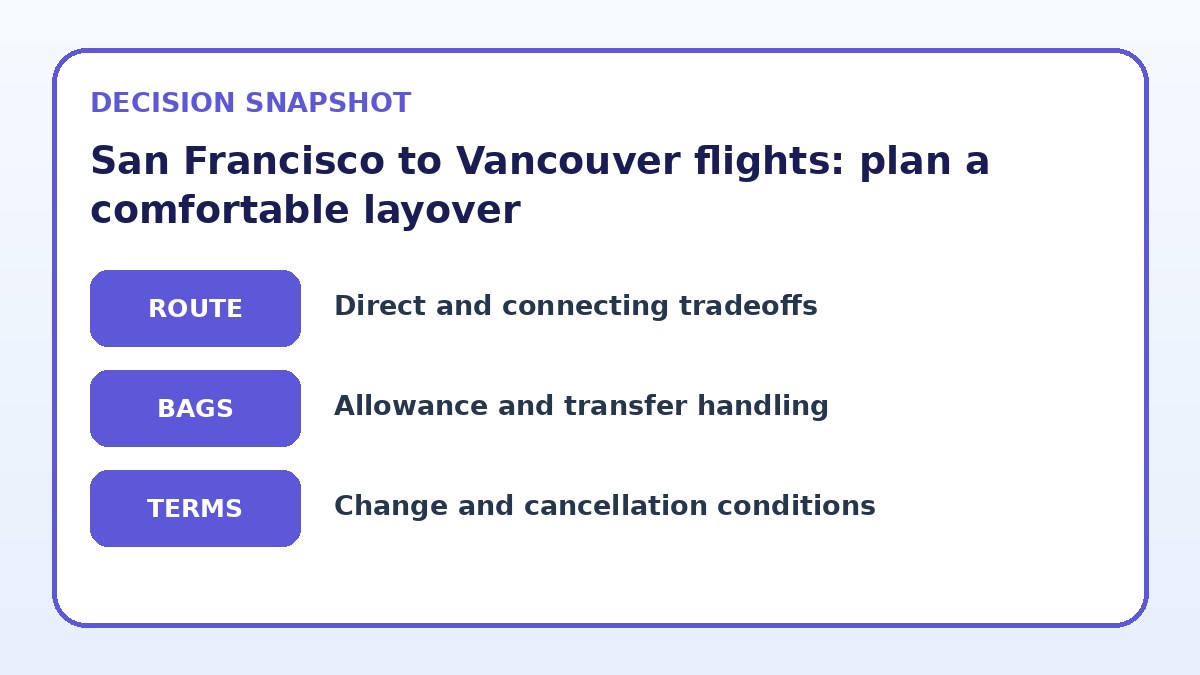
Connecting itineraries add complexity but can improve schedule flexibility and sometimes reduce travel time depending on available routes. If you choose a connection, prefer single-ticket itineraries and a single carrier or partner airlines to keep through-checking of luggage and protection for missed connections intact. Allow extra layover time for immigration or customs steps, especially when connections require changing terminals at large airports. Finally, review the transfer process on the airline’s booking page — confirm whether you must collect and re-check bags, whether you need to clear immigration, and whether the connection involves an overnight stop that requires a fresh check-in.
Choosing layover length and timing for comfort
A comfortable layover balances risk against fatigue: too short and you risk missing your onward flight; too long and you spend unnecessary hours in an airport. For domestic or short international connections in the same terminal, a 90–120 minute window is typically safe; when the transfer involves customs, terminal changes, or smaller carriers, aim higher. If your itinerary includes an overnight layover, plan where you will rest and check the airport’s options for lounges or nearby hotels. Consider your body clock — a later arrival with an overnight in a hotel may allow for a full night’s sleep, reducing travel weariness more than a long airport layover.
Time of day affects comfort more than many travelers expect. Flights that depart late morning or early afternoon from San Francisco align well with typical sleep patterns and daylight arrival in Vancouver; late-night departures may push you into jet-lag territory if you need to stay awake on landing. Check the local time of arrival and how it meshes with your first-day plans: arriving early gives you more flexibility to check into accommodation and explore, while late arrivals may necessitate immediate rest. Finally, verify on the airline’s booking page what minimum connection times they recognize between specific flights — that information can help you avoid fragile itineraries.
| Approach | Best for | Tradeoff to check |
|---|---|---|
| Nonstop flight | Travelers who value shortest total travel time and minimal transfer risk | May be less flexible on schedule and sometimes costlier or less frequent |
| Single-carrier connecting flight | Travelers wanting protection if flights are delayed and simpler baggage handling | Requires a longer layover than a nonstop and may involve terminal navigation |
| Multi-carrier connection on separate tickets | Those seeking lower costs or unusual routing options | Higher risk for missed connections and baggage not automatically transferred |
| Overnight stopover | Travelers who prefer a full rest period between long flights | Adds total travel days and requires arranging accommodation and ground transfers |
Ready to check the option that fits your plan?
Use your exact dates and traveler details so the provider page can show the current total and conditions.
Seat selection, cabin class, and on-board comfort
Your seat choice can change how a long-haul connection feels. Window seats are better for sleeping and controlling light; aisle seats are easier for stretching and visiting the restroom without disturbing neighbors. If your itinerary includes an extended leg, consider upgrading to extra-legroom seats or a higher cabin for more recline and better sleep. Also check if the aircraft has power outlets or USB ports and the availability of inflight entertainment, which can improve comfort during the flight and layover downtime. On the booking page, verify exact seat maps and whether selected seats are refundable or changeable.
For those with mobility needs or prone to deep vein issues, aim for seats that allow periodic movement — aisle seats near bulkheads often provide slightly more space. If you’re traveling with carry-on baggage only and plan to reboard quickly during a short connection, store essentials within easy reach. If your connection requires clearing customs and rechecking luggage, packing a small day bag with a change of clothes, toiletries, and medications makes an overnight or long layover far more manageable. Confirm baggage transfer policies when booking to avoid surprises at the airport.
Before you book
- Confirm whether your preferred itinerary is nonstop or requires a connection, and note both departure and arrival terminals on the airline’s booking page.
- Verify baggage transfer policy on the carrier’s final booking page to know whether you must collect and recheck luggage during the connection.
- Choose a layover duration that reflects terminal changes, expected immigration/customs procedures, and your personal comfort threshold.
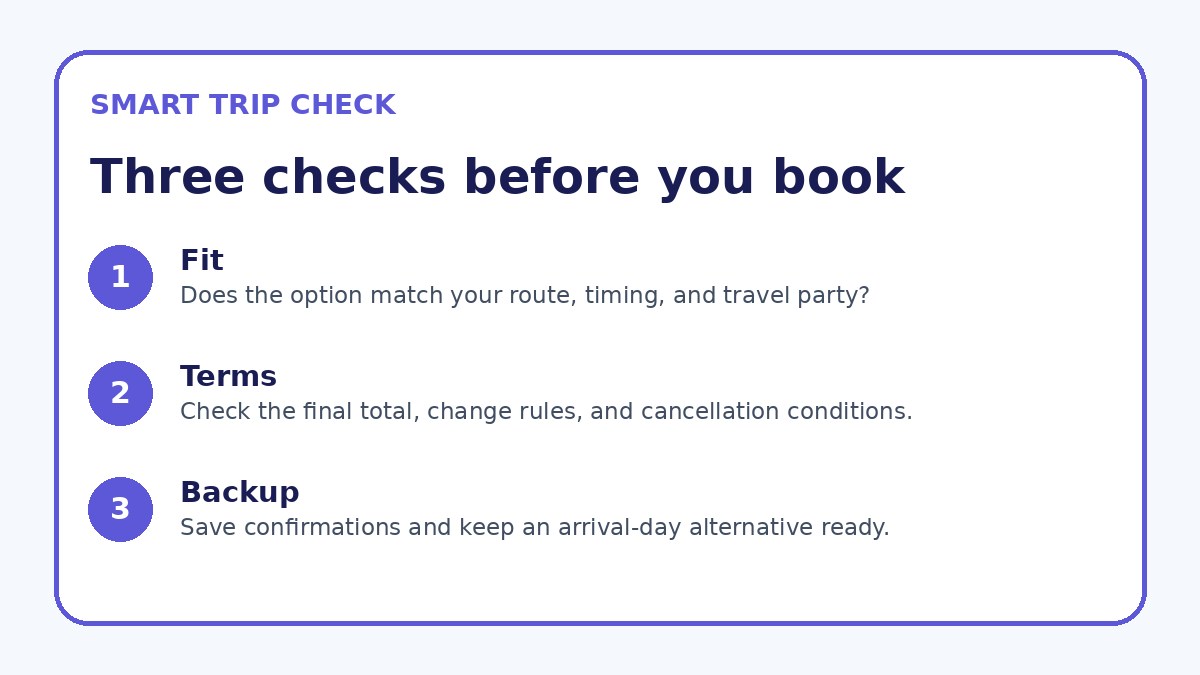
- Select seats that support sleep and mobility needs, and double-check the seat map and change/cancellation rules before paying.
- If lounge access matters, confirm eligibility and lounge location relative to your arrival or transfer gate.
- Plan ground transport at both ends: find the recommended pick-up/drop-off points and estimated transfer methods from the terminals.
Airport logistics: what to check before you book
San Francisco International (SFO) and Vancouver International (YVR) have different terminal layouts and transfer procedures — factor those into your itinerary. Before you finalize a ticket, verify the departing terminal at SFO and the arrival terminal at YVR on the airline’s booking page; terminals can change and that affects transfer time and ground transport choices. If you plan to connect through a third airport, look up the transfer map for that airport and check whether you need to clear immigration, change terminals, or collect baggage. These operational details determine realistic minimum connection times and whether an overnight buffer is necessary.
Also check airport amenities that matter for comfort during a long connection: lounges, quiet zones, sleep pods, family rooms, and available food options. If you rely on lounge access, confirm whether your ticket, credit card, or a paid day pass grants entry and whether the lounge is in the correct terminal for your connection. For ground transport to and from SFO and YVR, confirm the available options (public transit, ride-hail, taxis) and where the pick-up points are relative to terminals. Trip.com can be a place to compare current availability and conditions, but always verify final booking details on the carrier’s and airport’s official pages.
Frequently asked questions
Should I always pick a nonstop from San Francisco to Vancouver if one is available?
Not always, but nonstops are generally the simplest choice for first-time visitors because they reduce touchpoints and transfer risk. Still, consider departure and arrival times, total travel day logistics, and how the nonstop fits your schedule; sometimes a well-timed connection with a longer but easier layover can be a better match for your sleep cycle or meeting plans. Before booking, check the airline’s terminal information and baggage policy — those operational details determine how convenient the nonstop will actually be for your itinerary.
How much layover time should I allow if my itinerary includes clearing customs or changing terminals?
Allow substantially more time than the minimum connection if customs, immigration, or a terminal change is involved. For first-time visitors, a buffer of at least two to three hours reduces stress and provides time for unexpected lines or delays. If you must collect and re-check luggage, or if the connection is at a large airport with long transfer distances, err on the higher side. Confirm the airline’s recommended minimum connection time on their booking page and add personal padding based on how familiar you are with airport navigation.
What should I verify on the airline’s booking page before finalizing a ticket?
Check exact departure and arrival terminals, baggage transfer rules, whether your flights are on a single ticket, and the carrier’s rebooking policy for missed connections. Also look at seat maps, any change or cancellation fees, and whether you qualify for lounge access or priority boarding. If the booking involves partner airlines, confirm which party handles baggage and who you contact in case of irregular operations. These specifics on the carrier’s final page are the authoritative source for operational details that affect your comfort and contingency planning.
Final planning note
A comfortable San Francisco to Vancouver trip starts with realistic priorities: minimize transfer points if you value simplicity, or choose a protected connection and sensible layover time if you need schedule flexibility. Seat choice, baggage rules, and terminal logistics shape how restful and predictable the journey will feel, so read the airline’s booking details carefully and add personal padding to minimum connection times. Use the checklist items here to confirm terminals, baggage handling, lounge access, and seat maps before you purchase. With a few deliberate choices about timing, layovers, and on-board comfort, you can turn a potentially stressful long-haul connection into a manageable, even restful, part of your trip to Vancouver.
Continue planning
Check current options and final conditions
Use the provider page to confirm live availability, the final total, cancellation terms, and every condition that matters to your trip.
This evergreen planning guide was created with AI-assisted drafting and a structured quality review. It does not display live prices, schedules, availability, visa guidance, or provider rankings. Verify current details before booking. Some links are affiliate links; we may earn a commission at no additional cost to you.