
If you’re planning a first-time family trip to Rome, pick a hotel that cuts walking strain, limits daily transfers, and gives easy access to major sights. For most families that means choosing a central neighborhood — like the historic core, Prati, or near Termini station — and prioritizing a room or apartment with extra space, an en-suite bathroom, and simple kitchenette or breakfast options. Balance is key: central spots save sightseeing time but can be noisier, while quieter residential areas may require more transit. This guide gives a short practical answer up front — how to choose — then breaks down the tradeoffs, family-friendly hotel features to compare, and exactly what to verify on the booking page before you complete a reservation.
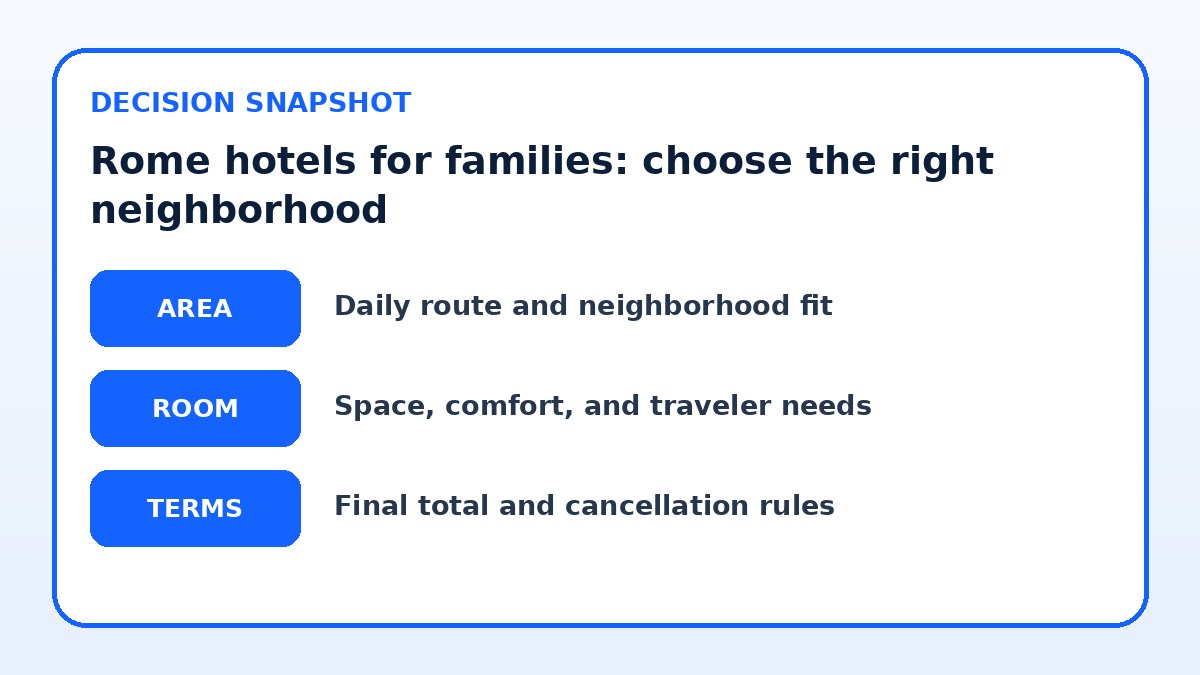
See current options before you compare the details
Availability and final conditions change. Open Trip.com now or keep reading for the practical comparison.
Choose the neighborhood that fits your family’s rhythm
Rome’s city center is compact enough that a central base saves time, but every neighborhood has a different rhythm. The historic center (Centro Storico) puts you within walking distance of the Pantheon and Piazza Navona, which is great for short walking loops and spontaneous gelato breaks. Prati is quieter and closer to the Vatican, with wider sidewalks and family-oriented restaurants. Termini is extremely convenient for train and bus connections and can shorten travel to day trips, though parts of the station area are busier and more utilitarian.
Think about daily routines: if your kids nap in the afternoon, a quieter street or an internal courtyard room will be worth prioritizing. If you prefer walking between sights rather than transferring on public transport, put distance to key attractions on your checklist. Factor in how often you’ll use public transport or taxis; even a 10–20 minute difference between neighborhoods accumulates over a week. Match the neighborhood to your children’s energy levels and your tolerance for evening noise and late dinners.
Room types and hotel features families actually use
When evaluating Rome hotels for families, focus on usable space and practical facilities rather than just room category names. A larger junior suite or an apartment-style room with a small kitchenette lets you handle early breakfasts, late snacks, and simple reheating without hunting for a restaurant. Interconnecting rooms are invaluable for families of four or more, offering privacy while keeping children close. Confirm bed configurations: twin beds, sofa beds, and rollaway options vary by property and may affect sleep quality for everyone.
Practical hotel features make a big difference: elevators that reach all floors, in-house laundry or same-building laundromats, luggage storage for early arrivals or late departures, and on-site breakfast or flexible breakfast hours. Ask whether cribs or cots are available and if there are any size limits. Also check how the property handles strollers — are there steps into the lobby, narrow corridors, or reliable porter service? These are the sorts of operational details that can turn a tiring day into a manageable one.
| Approach | Best for | Tradeoff to check |
|---|---|---|
| Central historic core (Pantheon, Navona) | Maximizing sightseeing on foot and quick access to major monuments | More foot traffic, less space, and potentially higher noise in the evenings |
| Prati and Vatican area | Quieter streets, family restaurants, and easy Vatican access | Slightly farther from some eastern attractions and fewer ancient Roman ruins within walking distance |
| Termini and Castro Pretorio | Convenient train and bus links for arrivals and day trips | Busier, more functional neighborhood feeling; pick a property on a calm side street |
| Residential neighborhoods (Trastevere outskirts, Nomentano) | A local ambiance, lower noise at night, and more apartment-style stays | Longer daily commutes to central sights and possible extra transit with children |
Ready to check the option that fits your plan?
Use your exact dates and traveler details so the provider page can show the current total and conditions.

Access and transit: make arriving and moving around easy
Rome’s central attractions are walkable in parts, but families often rely on a mix of walking, buses, metro, and taxis. If you’re arriving by train or planning train day trips, staying near Termini reduces transfers and simplifies luggage handling. For Vatican-centered itineraries, Prati or Borgo minimizes transit to St. Peter’s. Always factor in the distance from the nearest metro stop and how accessible the route is with a stroller; some metro stations have long staircases or limited elevators.
For airport transfers, confirm whether the hotel offers shuttles, or check official taxi ranks and train/coach connections on the provider’s booking page. Nighttime returns after late dinners are easier from well-lit, busy areas with reliable taxi access. Compare walking times to main squares and the nearest transport nodes on a map rather than relying solely on advertised distances — a three-block walk with steep cobbles and steps feels longer when you’re carrying a sleeping child.
Before you book
- Confirm the exact room type, bed arrangement, and square footage on the hotel’s official booking page before reserving.
- Ask the hotel directly about elevator access, stroller-friendly entrances, and any steps between the street and lobby.
- Request written confirmation of crib availability, any fees for extra guests, and the hotel’s breakfast hours and format.
- Check recent guest notes for reports on noise, lift reliability, and how the hotel handled families with young children.
- Map walking times from the hotel to your top three planned sights, factoring in stroller routes and potential steps.
- Verify luggage storage policy and arrival/departure flexibility so you can store bags if you arrive before check-in.
What to verify on the booking page and questions to ask
Before you complete a reservation, verify the exact room layout, bed configuration, and whether the listing photos match the booked room type. Many booking pages include details about whether a room has an internal window, a balcony, or direct street access — all of which matter with kids. Confirm cancellation terms, the hotel's policy on extra guests or children, and whether charges apply for cribs, rollaway beds, or additional cleaning so you aren’t surprised at checkout.
Also check for updated notes on accessibility, elevator availability, and any ongoing renovation work that could affect noise or services. If the page is unclear, contact the property directly and request written confirmation of the details that matter to you, such as early check-in, late luggage hold, and breakfast hours. As you compare options, you can consult Trip.com or other booking platforms for current availability, but always verify operational specifics on the hotel’s official page or by direct message to the property.
Frequently asked questions
Which Rome neighborhoods are safest and most convenient for families?
Safety in Rome varies by block more than by neighborhood; choose well-lit, busy streets near key attractions for convenience. Centro Storico, Prati, and parts of Trastevere are popular for families because they are walkable, full of daytime activity, and close to restaurants. Termini offers transport convenience but requires you to pick a hotel on a calmer side street. Check recent guest feedback for reports on street activity at night, and confirm taxi rank locations and public transport options on the hotel’s booking page.
Is it better to stay in a hotel or an apartment with children?
Both have merits: hotels often provide daily cleaning, breakfast, and on-site help for logistics, while apartments give more living space, kitchen facilities, and flexibility for meals and naps. For short stays with small children, a hotel with larger family rooms and breakfast can reduce daily chores. For longer stays, an apartment or aparthotel with kitchenette and separate sleeping areas may be more comfortable. Whatever you choose, verify bedding configurations, laundry access, and building accessibility before booking.
How to manage transportation with a stroller or young children in Rome?
Rome’s cobbles and steps make some routes challenging with a stroller. Choose a base with nearby metro or bus stops that list elevator access, and prefer streets with wider sidewalks. Many historic areas have uneven paving and steps up to attractions; a lightweight folding stroller is easier for transfers. Confirm elevator availability and stair-free paths with the hotel, plan a mix of walking and short taxi rides for tired children, and always allow extra time to reach sights so you don’t rush.
Final planning note
For a successful first family trip to Rome, start by picking a neighborhood that matches your daily rhythm: close to sights if you want lots of walking, quieter areas if you need afternoons for naps. Prioritize room layouts with usable space, interconnecting options if needed, and practical services like breakfast, luggage storage, and easy access for strollers. Before you book, verify operational details — bed configuration, elevator access, crib availability, and any extra fees — on the hotel’s official booking page or by contacting the property directly. You can compare availability on platforms such as Trip.com, but always confirm the specific features and policies that matter to your family before committing.
Continue planning
Check current options and final conditions
Use the provider page to confirm live availability, the final total, cancellation terms, and every condition that matters to your trip.
This evergreen planning guide was created with AI-assisted drafting and a structured quality review. It does not display live prices, schedules, availability, visa guidance, or provider rankings. Verify current details before booking. Some links are affiliate links; we may earn a commission at no additional cost to you.