
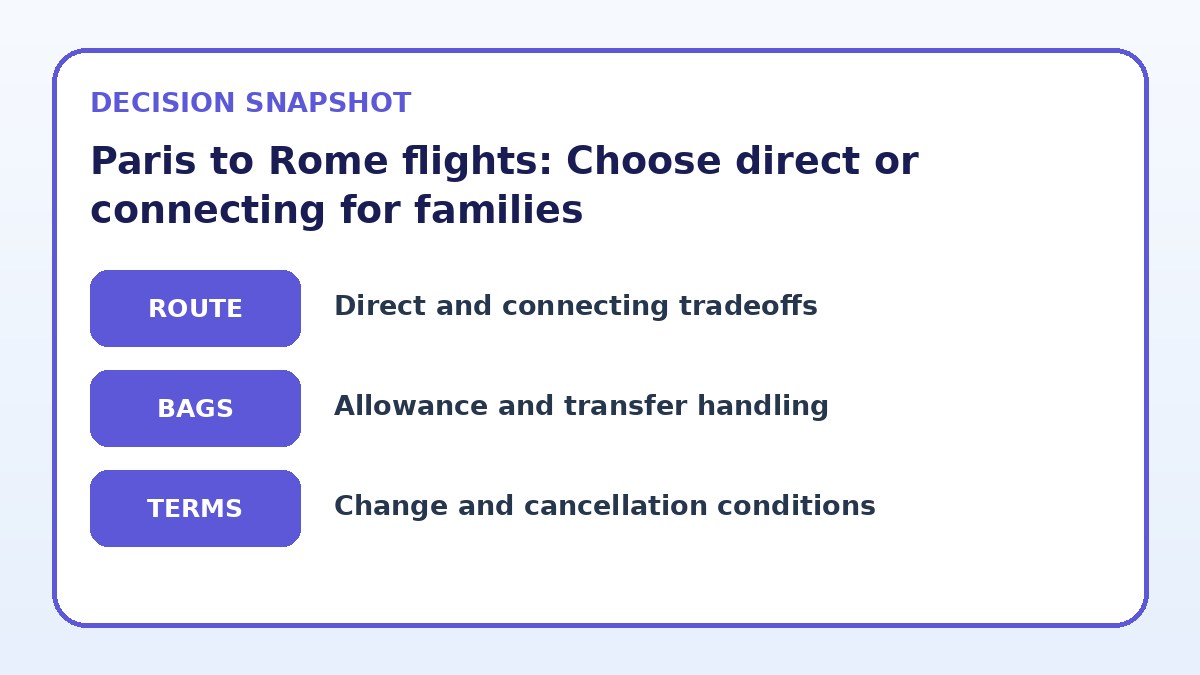
If your family values simplicity, a direct Paris to Rome flight will usually save time and reduce the number of touchpoints during travel; if you prioritize lower fares, more schedule choices, or a stop that breaks up the trip, a connecting itinerary can make sense. Decide by listing what matters most for your children’s ages, any mobility or stroller needs, and how much buffer you want for delays. This guide helps you weigh seat and baggage rules, transfer logistics, airport terminal layouts, and day-of stress; it also explains exactly what to verify on the carrier’s booking page before you pay. Read on to compare the family-friendly tradeoffs and to get a practical checklist that keeps the decision focused and realistic.
See current options before you compare the details
Availability and final conditions change. Open Trip.com now or keep reading for the practical comparison.
Time, hassle and the family rhythm
For families, travel time is more than minutes in the air — it includes the time to get to airports, security lines, boarding, deplaning and any transfers. A direct route minimizes these stages, which helps if you have toddlers who need a predictable routine or older children who struggle with interruptions. Think about the full door-to-door journey and whether a single flight fits your child’s nap or sleep schedule. If a direct flight allows you to travel during a child’s sleep window, the day can be smoother even if the flight duration is similar to a routed alternative.
Connecting itineraries add at least one extra set of steps: disembarking, finding gates, possibly changing terminals, and re-clearing security in some airports. These handoffs can be tiring and stressful, especially with luggage, car seats, or baby gear to manage. On the other hand, a planned stopover can be an opportunity to break a long journey into two manageable segments and let children move, stretch, and reset between flights. Balance the extra logistical work of a connection against the potential benefit of splitting travel time into child-friendly segments.
Cost, seat choice and baggage rules
A primary reason families consider connecting flights is price flexibility and a wider selection of departure times; connecting options sometimes let you mix and match carriers or fare types. But price alone shouldn’t lead the decision — check how each itinerary handles carry-ons, checked bags, and special items like strollers or car seats. Low-cost carriers and some economy fares restrict seat selection and charge for checked bags; that can add surprise costs that reduce the initial savings of a connecting itinerary. Always add the total cost for the whole family, including fees for luggage and seat reservations, before comparing final totals.
Seat choice matters for families. A direct flight may offer easier options to secure a row or adjacent seats when booking through one carrier, whereas connecting flights involving multiple airlines can complicate seat guarantees and may force you to check in separately. If reserving bassinets, bulkhead seats, or specific rows is important, verify availability on the operating carrier’s booking page — not just an aggregator — and confirm whether seats are held for infants or require payment. Where policies differ between segments, plan for the least favorable terms to avoid surprises at the airport.
| Approach | Best for | Tradeoff to check |
|---|---|---|
| Direct flights | Families prioritizing simplicity, fewer transfers, and lower on-the-day stress. | Fewer scheduling options and sometimes higher upfront fares or limited departure times. |
| One short connecting stop | Families wanting a break in travel or more schedule/fare flexibility without long layovers. | Adds a transfer step and a higher risk of tight connections or extra walking between gates. |
| Long layover with a planned break | Families who prefer to split travel across days or explore a second city briefly. | Increases total travel time, requires planning for luggage storage, and may add accommodation costs. |
| Separate tickets on different carriers | Travelers seeking the lowest fares and willing to manage baggage and recheck logistics themselves. | Higher personal responsibility for missed connections and no automatic rebooking protection. |
Ready to check the option that fits your plan?
Use your exact dates and traveler details so the provider page can show the current total and conditions.
Connections, terminals and transfer logistics
When you consider connecting routes, examine the airports involved and the minimum connection times they realistically allow. Some airport transfers involve long walks, shuttle rides, or a second security checkpoint — all of which can turn a nominally short layover into a rushed scramble. For families, look for connections that leave you at least 90 minutes for an international-to-international transfer if you must change terminals or re-check bags, and longer if you have a stroller or mobility needs. If the itinerary requires an airport change (rare but sometimes possible), treat it as a multi-hour transfer and plan accordingly.
Verify exactly which airline operates each flight segment and whether both segments are in the same reservation. A through-ticket normally protects you if the first leg is delayed, but separate tickets can leave you responsible for missed connections and for collecting and re-checking baggage. On the booking page, check whether the transfer is considered an ‘interline’ or ‘codeshare’ connection and whether any airport transfers are required between terminals. If transferring within the same terminal, look up terminal maps and estimated walk times to judge whether the connection is family-friendly.
Before you book
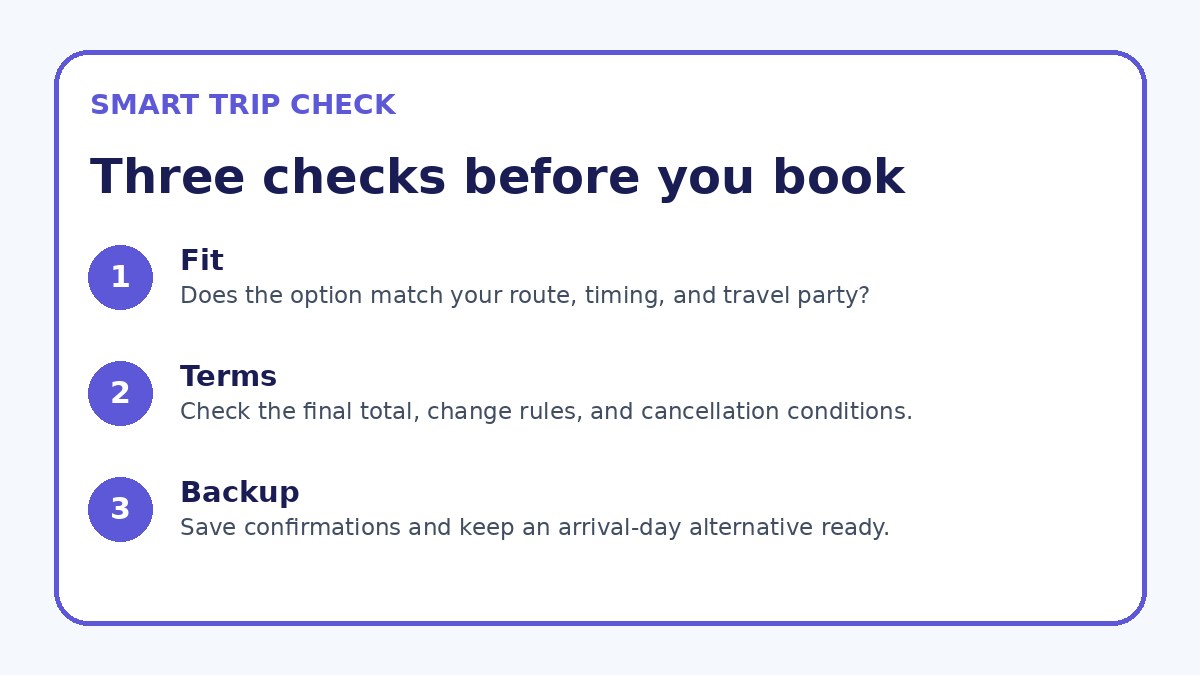
- Confirm which carrier operates each leg and whether the itinerary is a single reservation or multiple separate tickets before booking.
- Add up total family costs by including checked-bag fees, seat-selection charges, stroller policies, and infant/family service fees.
- Check minimum connection times, terminal layouts, and whether transfers require re-clearing security at each airport.
- Verify seat availability (adjacent seats, bulkhead, or bassinets) directly on the operating airline’s official booking page.
- Plan realistic layover buffer time: prefer extra minutes if you have strollers, mobility needs, or very young children.
- Decide on travel insurance or flexible tickets and confirm refund/change rules and rebooking support on the carrier’s policy page.
Safety, contingencies and travel-day stress
Families should plan for what happens when things go wrong: delays, cancellations, or a child falling ill. Direct flights reduce the number of legs that can be disrupted, lowering the chance you’ll need to rebook mid-trip. For a connecting itinerary, research the booking protection: does the airline automatically rebook you onto the next available flight, or will you be responsible for new tickets? Before finalizing any purchase, read the carrier’s rebooking, refund, and delay compensation policies on the official booking page so you understand how flexible your ticket is and what support you can expect at the airport.
Consider practical airport-day helpers: priority boarding for families, stroller gate-check policies, early boarding for children, and availability of family restrooms and play areas. These services differ by carrier and by airport; verify them in advance so you can pack and time your arrival appropriately. Finally, factor in how much patience your children have for waiting and transitions — that personal tolerance often decides whether a slightly cheaper connecting itinerary is worth the hassle compared with a simpler direct flight.
Frequently asked questions
Is a direct flight always better for families traveling between Paris and Rome?
Not always. Direct flights reduce transfers and the number of potential disruption points, which often suits families with small children or limited patience for airports. However, a connecting flight might offer a more convenient departure time, lower fare, or the chance to break a long day into shorter segments. Make the choice by comparing the whole door-to-door journey, total family costs (including luggage and seat fees), and how well each option matches your children’s routines and stamina.
How much connection time should I allow when traveling with kids?
Allow more time than you think you need. For international-to-international connections with family gear, a 90–120 minute buffer is often more realistic than the minimum connection time shown in search results. Longer buffers reduce stress for stroller gate-checks, bathroom breaks, passport checks where applicable, and unexpected delays. Check terminal maps and any required shuttle times, and remember that different airlines or separate tickets may require additional time to collect and re-check baggage.
What should I verify on the airline booking page before committing to a family itinerary?
On the carrier’s official booking page verify the operating carrier for each segment, baggage allowances (including fees for checked bags and strollers), seat selection options and costs, family boarding policies, and the ticket’s change and refund rules. If you’re booking connecting flights through different carriers, confirm whether the reservation is protected as a single ticket or if you’ll need to manage rebooking separately. Also check whether special services like bassinets or wheelchair assistance must be reserved in advance and whether there are age-based seating rules.
Final planning note
Choosing between direct and connecting Paris to Rome flights for your family comes down to balancing time, cost and stress tolerance. Direct flights simplify the airport experience and reduce exposure to disruptions, while connecting options can offer lower prices and greater schedule flexibility or a purposeful break between flights. Use the checklist above to verify operating carriers, seat rules, baggage policies and connection logistics on the airline’s booking page before you finalize anything. If you want a quick cross-check of current options, Trip.com can be used as a comparison tool, but always confirm final terms and protections directly with the carrier on their official site.
Continue planning
Check current options and final conditions
Use the provider page to confirm live availability, the final total, cancellation terms, and every condition that matters to your trip.
This evergreen planning guide was created with AI-assisted drafting and a structured quality review. It does not display live prices, schedules, availability, visa guidance, or provider rankings. Verify current details before booking. Some links are affiliate links; we may earn a commission at no additional cost to you.