Practical answer up front: if your family needs breathing room for changing plans, prioritize ticket flexibility—refundable or exchangeable fares and easy name/seat changes—over small savings on non-refundable deals. For families, the cost of swapping a date or adding a seat can outweigh any initial fare discount. Start by comparing fully refundable or partially flexible fares, look for included seat reservations and explicit family or child policies, and check what happens to connecting tickets if one leg is missed. When provider-specific conditions matter—cancellation windows, change fees, or whether children travel free—verify those exact terms on the booking page before payment. You can use Trip.com to compare current availability and conditions, but always confirm the supplier’s final terms on their site during checkout.
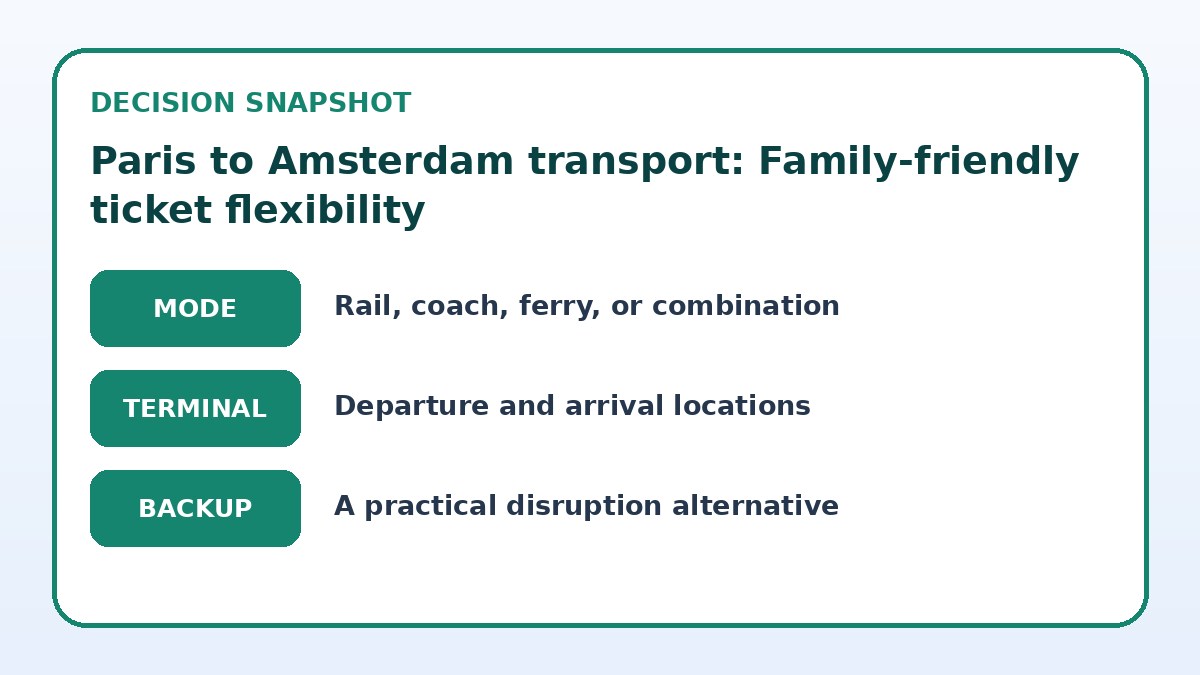
See current options before you compare the details
Availability and final conditions change. Open Trip.com now or keep reading for the practical comparison.
What flexibility really means for family travel
Flexibility often bundles several different features: the right to change dates, the ability to refund or partially refund a ticket, the option to swap passengers or adjust seats, and the supplier’s policy for missed connections. For families, the most valuable aspects are usually free or low-cost date changes within a reasonable window, straightforward refunds if illness forces cancellation, and clear rules about children’s fares. Some low-cost or deeply discounted fares are rigid—no changes, no refunds—while higher-tier tickets include one or more free modifications. Understanding which elements matter most to your group will make it easier to pick the right ticket rather than simply chasing the lowest headline price.
Another practical point: flexibility can be operational as well as contractual. Trains can offer reserved family compartments, flexible ticket classes that permit standing-by on earlier services, or open-dated tickets valid across multiple departures. On routes with international borders, ticket protection for missed onward services is important; a single through-ticket usually offers better protection than two separate bookings. Always confirm whether a flexible ticket still requires seat reservations (sometimes at an extra cost) and how changes are processed—online, at the station, or only by phone—because logistical friction can undermine the value of a theoretically flexible fare.
Comparing ticket types and what to check
Start by grouping ticket offers into a few categories: fully refundable/exchangeable fares, semi-flexible fares with change fees, and non-refundable restrictive fares. For families, pay attention to child fare definitions (age cutoffs), whether infants need a paid seat, and how many children may travel free or discounted with a paying adult. Also check seat reservation requirements. Some flexible fares include reservations for the whole family; others allow changes but still require paid reservations to guarantee adjacent seats. If guaranteed adjacent seating is essential, verify that the booking flow lets you reserve seats for all passengers on the same reservation.
Next, parse the timeline and financial details: how long before departure can you get a refund, what percentage is refundable, and what are the flat or percentage change fees? Watch for non-obvious charges such as administrative fees, reissue costs, or differences in fare class when changing to a higher-priced service. International travel may add passport checks or border formalities that affect connections—confirm whether the operator rebooks you automatically on the next service in case of missed connections or if you must buy a new ticket. When in doubt, print or save the exact policy text from the booking page; policy wording is what counts at the time of change or cancellation.
| Approach | Best for | Tradeoff to check |
|---|---|---|
| Fully refundable tickets | Families who prioritize schedule freedom and minimal stress if plans change. | Higher upfront cost compared with restrictive fares; still check seat reservation rules. |
| Semi-flexible/change-fee fares | Families wanting a middle ground—lower price with limited, paid changes. | Change fees and time windows can make last-minute switches expensive or complex. |
| Non-refundable/budget fares | Families with fixed plans who prioritize the lowest possible fare. | Little to no recourse for cancellations or missed connections; additional fees likely for seats. |
| Through-ticket with protected connections | Families making multi-leg journeys who value automatic rebooking on delays. | May cost more than separate tickets but reduces risk and logistical burden at transfers. |
Ready to check the option that fits your plan?
Use your exact dates and traveler details so the provider page can show the current total and conditions.
Direct versus connecting options: family tradeoffs
Direct services are often simpler for families: no transfers, less luggage handling, and a lower chance of a missed connection disrupting the whole trip. However, direct trains or buses that offer these conveniences may be sold as limited flexible fare classes or run only at particular times. If a direct service offers only restrictive fares, compare whether a slightly cheaper flexible ticket with a connection is the calmer choice. When assessing connections, consider minimum transfer times, the need to change stations in a city, and whether you must collect and recheck luggage—each of those can turn a cheap connection into a stressful ordeal for parents and children.
When evaluating connecting itineraries, check whether the tickets are sold as a single through-ticket or multiple separate tickets. A through-ticket typically provides protection: the operator rebooks you on the next service if an earlier leg is delayed. Separate tickets leave you exposed to missing the onward leg with no refund. For families, the value of rebooking protection often exceeds the small premium for a through-ticket, especially when transfers are tight or when traveling with toddlers, grandparents, or a lot of luggage. Always verify the protection terms on the operator’s final booking page.
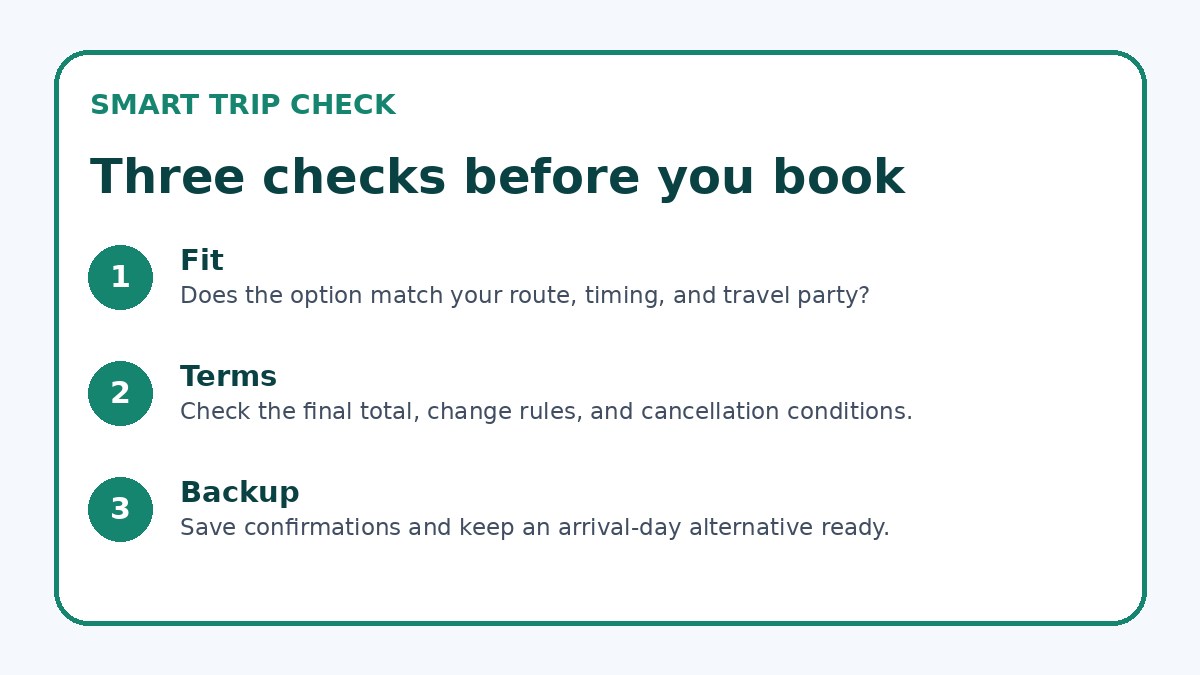
Before you book
- Confirm each passenger’s legal age and enter it correctly in the booking to apply child discounts and avoid later corrections.
- Compare fare rules on the operator’s final booking page: refund windows, exact change fees, and whether fees are per passenger or per booking.
- Reserve adjacent seats for the whole family during booking or immediately afterward; note any extra fee and reservation deadline.
- If the itinerary has connections, verify whether you can buy a single through-ticket that protects onward travel or you must purchase separate tickets.
- Save screenshots or PDFs of the fare rules and booking confirmation to accelerate refunds or changes if plans shift.
- Check luggage and stroller policies—how many items are included, any charges, and whether you must reclaim and re-check baggage on connections.
Practical booking tips and day-of-travel considerations
When you book, use a single reservation for the whole family whenever possible to simplify changes and seat assignments. Enter each passenger’s correct age and any discount codes for children before payment; correcting age or passenger details later can be a hassle or incur fees. If you need guaranteed adjacent seats, book early and pay for seat reservations if the fare doesn’t include them. For families that value flexibility but are budget-conscious, consider buying mid-tier flexible fares for the lead passenger and cheaper refundable or exchangeable fares for dependents if the operator allows mixed-class bookings on one reservation.
On travel day, leave ample transfer time, especially when switching between different operators or stations. Carry documentation you might need for refunds or changes—booking receipts, passenger IDs, and any medical certificates if you later claim a refund for illness. If a delay threatens to break a connection, contact the operator immediately; on a through-ticket they may rebook you, while on separate tickets you will likely need to purchase a new fare. Finally, keep a screenshot or PDF of the provider’s fare rules and the payment confirmation; when disputes arise, this saved evidence speeds resolution.
Frequently asked questions
Should I buy flexible tickets for every family member or only for the lead passenger?
There’s no one-size-fits-all rule. Buying flexible fares for every passenger gives maximum simplicity when changing or refunding specific tickets, but it increases cost. An alternative is to buy a fully flexible fare for the lead traveler who will manage changes and cheaper fares for others if the operator allows mixing classes on one reservation. Consider who is most likely to need changes—if a child’s health is a concern, refundable coverage for that child’s ticket may be worth it. Always verify on the booking page whether mixed fare classes are permitted and how changes or refunds are applied to multi-passenger reservations.
How do seat reservations affect flexibility for families on trains?
Seat reservations are separate from fare flexibility. A flexible fare may still require paid seat reservations to guarantee adjacent seating, especially on busy routes. If the fare includes seat reservations, you get both flexibility and peace of mind; if not, you may change the ticket but still face limited seat availability. When adjacent seating is important, book early and pay for reservations if necessary. On the provider’s final booking page check whether seat allocations can be changed without fees and whether reservations are refundable if you cancel the ticket.
If my journey has a connection and one leg is delayed, what protections does a through-ticket offer?
A through-ticket typically means the operator treats the itinerary as a single contract and will rebook you on the next suitable service if an earlier delay causes a missed connection. This can save families from buying a new onward ticket and reduces stress during disruptions. Separate tickets do not usually offer this protection—if you miss the second leg, you may have to purchase another ticket. Because policies vary, check the exact wording on the operator’s booking page about rebooking, automatic protection, and any required minimum connection times before finalizing your purchase.
Final planning note
Families deciding how to travel Paris to Amsterdam should balance cost against the real value of flexibility: the ability to change dates, get refunds, and keep seats together often matters more than a small upfront saving. Assess your tolerance for risk—illness, delays, or changed plans—and pick the ticket category that aligns with that risk profile. For multi-leg journeys, prefer through-tickets with protected connections if you want less hassle. Before you pay, read and save the exact fare rules on the provider’s booking page so you know the refund window, change fees, and seat-reservation policy. Use comparison sites like Trip.com to survey options, but rely on the operator’s final terms at checkout.
Continue planning
Check current options and final conditions
Use the provider page to confirm live availability, the final total, cancellation terms, and every condition that matters to your trip.
This evergreen planning guide was created with AI-assisted drafting and a structured quality review. It does not display live prices, schedules, availability, visa guidance, or provider rankings. Verify current details before booking. Some links are affiliate links; we may earn a commission at no additional cost to you.