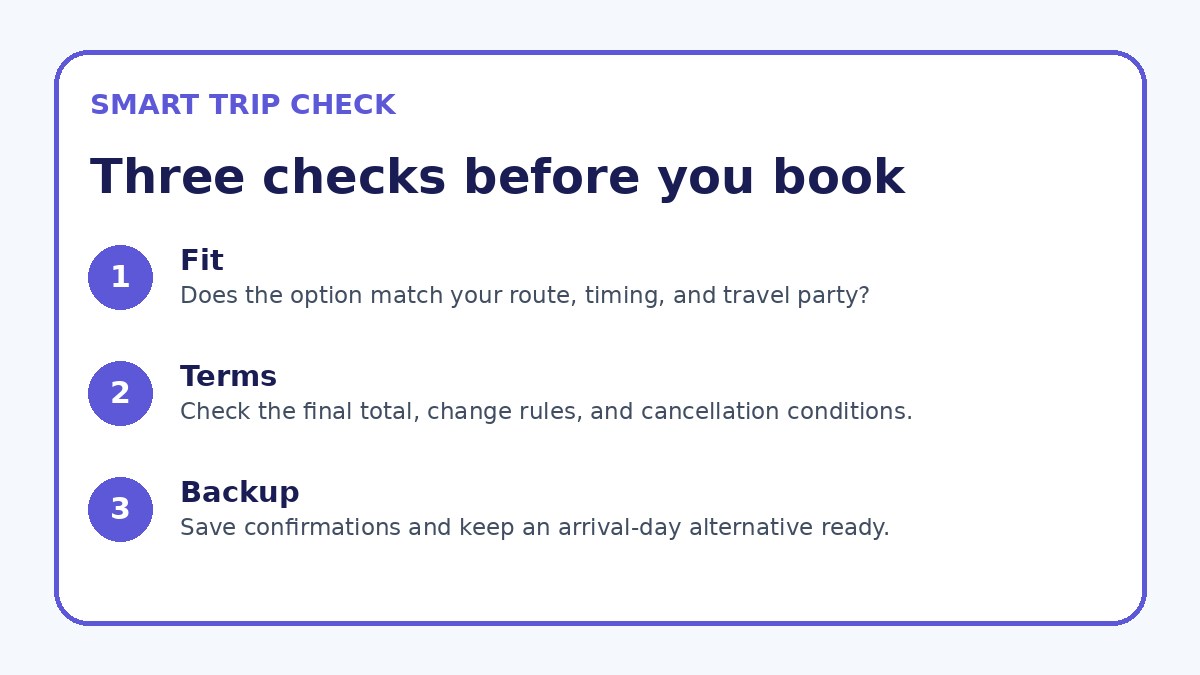
For business travelers, the right Dubai to Sydney flights balance schedule certainty with flexible change and cancellation rules. Practically: pick the fare and routing that fit how fixed your meeting dates are, and verify the exact rules before you pay. Start by deciding whether you need same-day change options, refundable tickets, or simply a low-cost fare with paid reissue. Then check connection risk, baggage protections, and whether an airline or fare family allows free name changes or credits for future travel. Many carriers now offer layered protections — basic waivers, paid flexible fares, and separate change-credit policies — but the wording varies. Before confirming any booking, have your travel dates, company policy on refunds and rebookings, and traveler frequent-flier details ready; then compare the provider’s final booking page and the fare rules PDF to avoid surprises.
See live routes for your exact travel day
Compare direct and connecting choices with the same baggage and traveler details.
Routing: direct versus connecting for business reliability
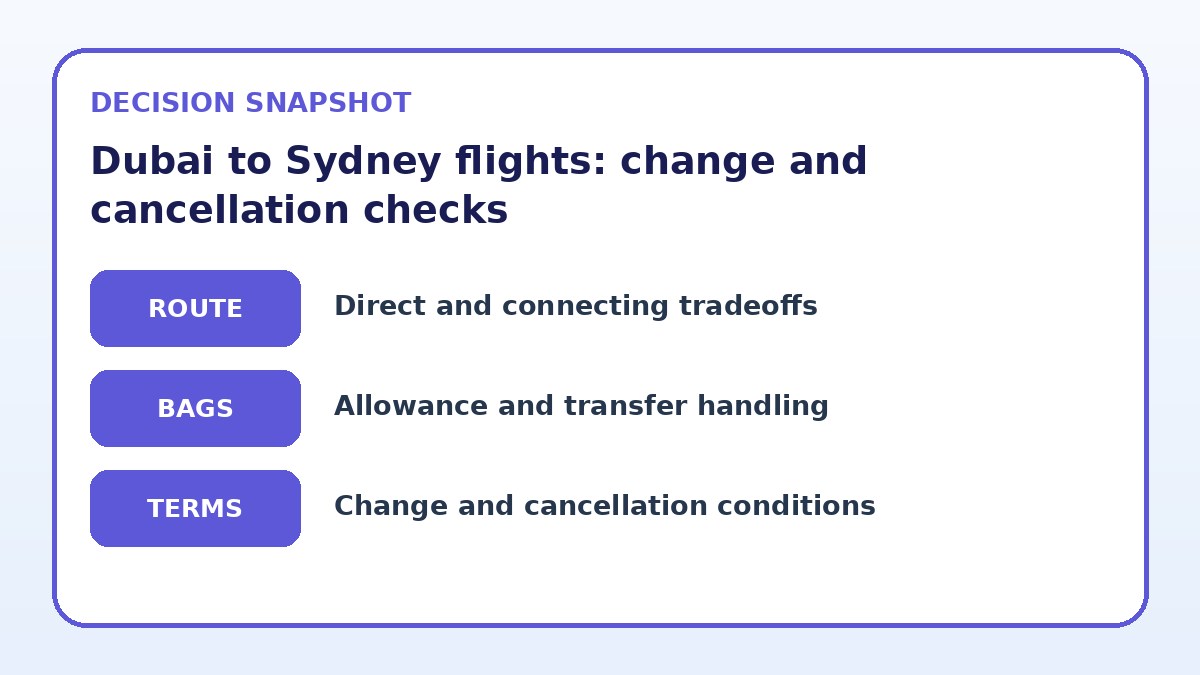
Routing choices most directly affect schedule reliability and how changes are handled. Direct service, when available, reduces the number of contracts and handling points: you deal with one carrier for changes, refunds, and baggage handling. Connecting itineraries may offer more competitive fares and additional time-slot choices but introduce transfer risk — missed connections can trigger rebooking rules that differ by carrier and whether segments were sold on the same ticket. For business travel, weigh the value of arriving without a connection against the flexibility of more frequent departure windows.
When comparing routing options, check who issues the ticket and whether the carrier accepts responsibility for missed connections on a single-ticket itinerary. If you must book two separate tickets to save money, understand that each carrier’s change and cancellation conditions apply independently and that protection for missed connections is minimal unless you purchase explicit insurance or add protection during booking. For scheduled meetings, a slightly higher fare on a single-carrier route can save hours and negotiable headache if a change is needed.
Baggage and connection risk: what to verify in the rules
Business travelers often travel with equipment or priority baggage; baggage allowances and liability for delayed or lost items are specified in the fare rules. Verify whether the fare includes checked baggage and whether connecting carriers on codeshare itineraries honor the same allowance. Also confirm how baggage claims work when segments are on multiple tickets: you may need to collect and re-check bags during the connection, increasing the risk of delays and missed onward flights.
Connection risk extends to recoverability after irregular operations. Read the carrier’s policy for re-accommodation after missed connections, and check whether the airline provides alternative flights on partner carriers under the original ticket. If your company expects same-day alternatives or guaranteed airport assistance, verify these commitments on the booking page or by calling the carrier. If the rules are ambiguous, consider a fare that explicitly promises flexible rebooking or purchase a change-protection add-on if available.
Compare flight-selection strategies
| Flight strategy | Best for | Risk to check |
|---|---|---|
| Buy a refundable business fare | Travelers with fixed, high-stakes meetings who need maximum flexibility. | Higher base fare but straightforward refunds and fewer restrictions during last-minute cancellations. |
| Purchase a flexible (change-waiver) economy fare | Frequent short-notice changes where you want lower cost than refundable fares. | Lower price than refundable but still costs more; change windows and credit rules may vary by carrier. |
| Choose the cheapest non-refundable fare with paid changes | Travelers with fairly stable dates and tightly controlled travel budgets. | Lowest fare but potentially large change fees and complicated refund/credit conditions. |
| Book a connecting itinerary to save time or money | Travelers who prioritize departure/arrival times or limited seat availability. | Potentially more complex change handling and higher connection risk unless ticketed on one carrier. |
Recheck the complete itinerary
Confirm airports, connection handling, baggage, and change conditions before deciding.
Schedule fit: timing, windows, and business priorities
Match flight times to the business priorities for your trip. If meetings can be moved with notice, a cheaper fare with paid changes might be acceptable; if dates are fixed or you must be present for a time-critical event, prioritize fares that allow easy changes or full refunds. Also consider arrival times and the risk of missing the first day’s commitments due to delays. Early-morning departures from Dubai or red-eye options may save calendar time but can increase fatigue and reduce margin for rebooking if a delay occurs.
When assessing schedule fit, calculate company-permitted check-in and meeting buffers, time zone adjustments, and whether same-day return options exist for urgent trips. Note that some business travelers prefer slightly higher fares with more forgiving change windows to avoid scrambling. Confirm on the airline’s final booking page how soon before departure changes or cancellations must be made to qualify for reduced fees or credits, and whether fees scale with how close to departure the change is requested.
Flight details to verify
- Confirm the exact travel dates, traveler full name as per passport, and frequent-flyer number before searching fares.
- Open the airline’s fare rules PDF and read the change, cancellation, and refund sections line-by-line for your selected fare.
- Verify baggage allowance and whether connecting carriers honor a single checked-bag transfer on your itinerary.
- Check who issued the ticket (airline vs. agency) and confirm the refund handling process and contact point for claims.
- Note the deadline for fee-free changes or for avoiding cancellation penalties on the booking page and calendar it.
- If booking separate tickets, buy connection protection or insurance that explicitly covers missed connections and rebooking costs.
Fare conditions: refunds, credits, and corporate rules
Fare conditions determine what happens if your plans change. Refundable fares typically give the greatest operational freedom but are more expensive; non-refundable fares may offer travel credits or significant change fees. Look specifically for whether changes permit reissue with only a fare difference, whether cancellations produce airline credit or a true monetary refund, and whether taxes or third-party fees are refundable. Corporate credit card and company travel-policy requirements may also dictate whether you book refundable or flexible tickets.
Always open the detailed fare rules and the carrier’s cancellation/change policy on the booking page before paying. Confirm who handles refunds for tickets sold through third parties or travel agencies, and whether fare bundles or fare families alter change fees and baggage allowances. If the information is unclear, contact the airline or your corporate travel manager. You can optionally compare live options on platforms such as Trip.com, but verify every detail on the airline’s final booking page and the fare rules document supplied at purchase.
Flight Guide questions travelers ask
Can I get a full refund if my business meeting is canceled last minute?
Refund eligibility depends entirely on the fare conditions for the ticket you bought. Refundable fares generally allow full refunds, though some taxes or third-party fees may have different rules. Non-refundable tickets often provide travel credits instead of cash refunds, and carriers may apply cancellation fees. If a change waiver or exceptional policy applies (for example, operational disruptions), the airline will state this on the booking page. Always read the refund clause in the fare rules PDF and keep proof of any corporate travel authorization that may influence the outcome.
How do I handle a missed connection on a multi-leg Dubai to Sydney trip?
If all segments are on the same ticket, the issuing carrier typically bears responsibility to rebook you on the next available flight, subject to its policy, though rebooking options may include partner carriers. If your legs are on separate tickets, each carrier treats the missed segment independently and will not automatically rebook you. Before booking, verify the airline’s missed-connection policy, whether it offers protection or accommodation, and whether your fare includes assisted reaccommodation. Consider buying through a single carrier or adding connection-protection insurance for critical business trips.
What should my company’s travel policy require for Dubai to Sydney business trips?
A practical corporate travel policy should specify acceptable fare families (refundable, flexible, or lowest fare), approval thresholds for refundable fares, and documentation required for refunds or credits. It should require travelers to record booking details, fare rules screenshots or PDFs, and the ticketing carrier contact information. The policy should also state whether travel insurance or paid change protection is allowed and who approves the extra cost. Finally, require travelers to confirm on the booking page who handles refunds and to keep receipts for any fees incurred during rebooking.
Final decision note
Choosing Dubai to Sydney flights for business travel is an exercise in aligning schedule risk tolerance with fare terms. If date certainty is high, a lower-cost fare with a clear change fee may be acceptable; if meetings are mission-critical, prioritize refundable or explicitly flexible fares even if the base fare is higher. Always examine routing for connection exposure, read the fare rules PDF for change and refund mechanics, and verify baggage and re-accommodation policies on the airline’s final booking page. Prepare exact traveler details and company policy before searching, and consider single-carrier itineraries or purchased protection when stakes are high.
Continue planning
Check current options and final conditions
Use the provider page to confirm live availability, the final total, cancellation terms, and every condition that matters to your trip.
This evergreen planning guide was created with AI-assisted drafting and a structured quality review. It does not display live prices, schedules, availability, visa guidance, or provider rankings. Verify current details before booking. Some links are affiliate links; we may earn a commission at no additional cost to you.