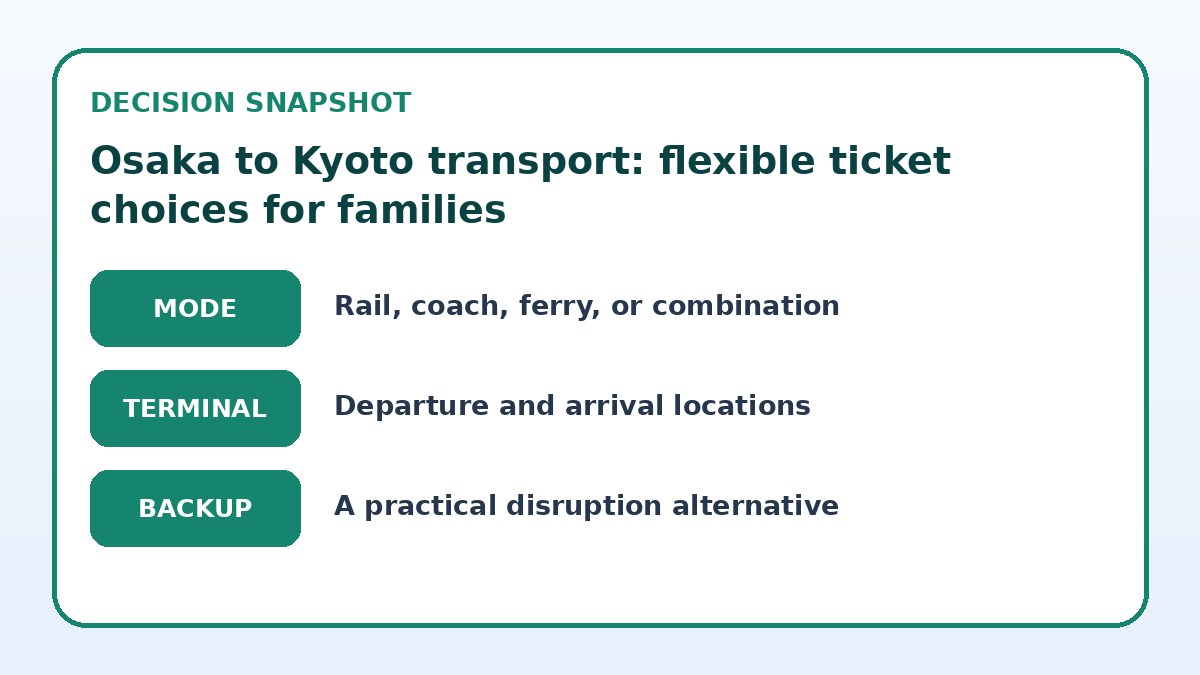
If you’re traveling from Osaka to Kyoto with children, the practical question is simple: do you want the cheapest nonrefundable ticket or a flexible fare that lets you adjust plans without drama? For families, flexibility often beats a small fare saving because punctuality, tired kids, or last-minute itinerary changes can make rigid tickets costly in time and stress. This guide helps you compare ticket types by how they handle cancellations, seat reservations, transfers with luggage, group discounts, and refunds. I’ll lay out tradeoffs and decision criteria so you can choose a ticket that fits your family’s tolerance for risk, need for fixed seats, and likelihood of schedule changes. Check provider pages for up-to-date rules on refunds, change fees, and seat reservation deadlines before you finalize any booking.
Understand the ticket types and what flexibility means
Ticket options between Osaka and Kyoto typically range from fully flexible fares to strict, nonrefundable bargains. A fully flexible ticket normally allows changes or cancellations with either no fee or a small administrative charge, while restricted fares can limit changes to certain windows or carry higher change fees. For families, flexible tickets often include the option to change the departure time on the same day or later, which reduces the chance of buying a new ticket when plans shift. When evaluating flexibility, read the provider’s exact change and cancellation rules so you know whether children’s tickets follow the same policy as adults.
Also look at seat reservation policies tied to each fare. Some fares include a reserved seat number and allow you to pick seats together at booking; others may only let you reserve seats for an extra fee or on a first-come basis. Being able to reserve contiguous seats matters more with toddlers, elderly relatives, or when traveling with strollers and extra baggage. If a family ticket option exists, check whether it locks in the party size and whether changing group composition (for example, adding a grandparent or a child) will trigger fees or require a new booking.
When flexibility pays off for families
Flexibility is particularly valuable when your schedule is tentative: delayed flights into Osaka, a sick child, or a museum visit that runs long can all make strict tickets expensive. With a flexible fare, you can shift to the next train without repurchasing tickets—sometimes just paying a small difference—so fewer tantrums and fewer stressful runs between platforms. Flexible tickets can also include easier refund processing, which matters if you need to cancel an entire day of plans. If your family values low-stress travel over saving a small amount, the mental cost of rigid fares usually outweighs the financial savings.
Families who travel during peak times—weekends, holidays, or school breaks—also gain from flexibility because busy trains fill early and reserving seats becomes essential. If you have infants who need a bassinet space, or you’re carrying larger luggage or a foldable stroller, the ability to change to a less crowded departure can be a game changer. Flexibility can also be useful if you plan multiple stops in Kyoto and want the ability to adjust return tickets without penalties. Always verify on the provider’s booking page whether same-day swaps are allowed and how seat changes are handled.
| Approach | Best for | Tradeoff to check |
|---|---|---|
| Flexible refundable fares | Families needing the freedom to change plans or cancel with minimal hassle | Higher upfront cost but fewer penalties and less stress if plans shift |
| Reserved-seat standard fares | Families who want guaranteed seats together without maximum flexibility | Moderate price; changes allowed but often with fees and time limits |
| Nonrefundable discounted fares | Groups with fixed schedules who prioritize saving on fare cost | Lowest ticket price but change or cancellation usually costly or impossible |
| Pay-as-you-go or unreserved boarding | Flexible, light-travel families comfortable with standing or splitting seats | Cheaper and flexible day-to-day but seats together are not guaranteed |

When to pick a cheaper, less flexible option
If your family’s schedule is locked—say you have a theater booking, a reservation, or a timed entry at an attraction—it may make sense to choose a nonrefundable or restricted ticket to save money, provided everyone is healthy and the party size is fixed. These fares are best when you can accept the risk of change because they typically cost less upfront. However, calculate the worst-case cost: if one small change forces you to rebuy multiple tickets, the initial savings evaporate. For older children or groups used to sticking to plans, a cheaper ticket can be a smart choice.
Also consider total trip logistics: if you travel light, can handle standing on a busy service, and the trip time is short, the inconvenience of an inflexible ticket is smaller. Yet with families, hidden costs may appear—replacement tickets, seat assignment fees, or time spent managing a problem at a busy station. Before booking, check the provider’s final payment and change pages to confirm whether group seating, child fares, and baggage allowances are the same across fare classes, and whether any extra fees apply for seat reservations.
Before you book
- Confirm whether your chosen fare includes reserved seats together for your family and how to select them at booking.
- Verify change and cancellation fees for your exact ticket class on the provider’s final booking page before paying.
- Check child and infant fare rules, including age cutoffs and whether lap infants require separate paperwork.
- Assess luggage and stroller policies for your fare class—note any carriage space rules or fees for larger items.
- Compare total cost after including seat reservation fees, change penalties, and any compulsory service charges.
- Download or screenshot booking conditions and tickets to your phone so you can show them to staff if plans change.
How to compare options practically before you book
Make a side-by-side comparison for your exact travel times and party size. Note penalties for same-day changes, whether refunds are allowed and how they’re processed, seat reservation rules, and whether infant or child fares exist. If you plan to travel with a stroller or bulky luggage, confirm whether the fare includes priority boarding or carriage space; if not, factor potential hassles into your decision. Use official provider pages to verify the policies, and consider using a comparison site such as Trip.com to check current availability—then confirm any policy detail on the provider’s booking page before you finalize.
Decide which three questions matter most to your family—cost, guaranteed seats together, or changeability—and let the answers guide your choice. If children’s nap schedules or connecting transport are uncertain, prioritize flexible fares or seat reservations. If you need to stick to a strict budget, verify the total cost after seat fees and penalties. Finally, if you do buy a restricted ticket, consider adding travel insurance that covers missed connections or medical issues, and keep printed or screenshot copies of booking conditions in case you need them while traveling.
Frequently asked questions
Can I reserve seats together for a family on Osaka to Kyoto trains?
Many operators allow seat reservations so families can sit together, but the policy depends on the fare type and availability. Some fare classes include seat reservations in the ticket price, while others require an extra fee or only allow reservations closer to departure. If sitting together is essential, choose a fare that includes reservations or purchase the reservation at booking. Always confirm on the provider’s booking page how seats are allocated, whether you can select specific seats, and if a block of contiguous seats is guaranteed for your party size.
What happens if my child gets sick and we need to cancel?
Cancellation and refund rules depend entirely on the fare class you bought. Fully flexible fares typically allow refunds or changes with a small fee, while nonrefundable fares may not return money or may give only a voucher. If you anticipate illness as a realistic risk, opt for refundable or changeable tickets, or check whether travel insurance covers cancellations for sickness. Before booking, verify on the provider’s final booking page what documentation is required for refunds and how long refunds or credits take to process.
Should I buy the cheapest ticket or pay more for flexibility?
That comes down to your family’s risk tolerance and the likelihood of plan changes. If your itinerary and party size are fixed and you’re confident of schedules, a cheaper ticket may make sense. But for unpredictable travel with children—or when connections are tight—spending more for flexibility reduces the chance of needing costly last-minute purchases. Compare the possible cost of a forced change (replacing tickets, seat fees, missed reservations) with the extra you’d pay for a flexible fare. Always check the provider’s specific change and refund rules before you commit.
Final planning note
For family travel between Osaka and Kyoto, ticket flexibility frequently matters more than a small fare saving. Flexible and reserved-seat fares offer peace of mind—guaranteed seating together, simpler changes, and clearer refund processing—which reduces stress when children, connections, or schedules are unpredictable. Restricted fares can work when your plans are fixed and everyone in your party is reliable, but run the risk of expensive changes or uncomfortable journeys. Before you book, compare the total cost including seat fees and change penalties, verify specific policies on the provider’s booking page, and pick the option that balances cost with the smooth experience your family needs.
Continue planning
Check current options and final conditions
Use the provider page to confirm live availability, the final total, cancellation terms, and every condition that matters to your trip.
This evergreen planning guide was created with AI-assisted drafting and a structured quality review. It does not display live prices, schedules, availability, visa guidance, or provider rankings. Verify current details before booking. Some links are affiliate links; we may earn a commission at no additional cost to you.