If you’re a solo traveler moving between Osaka and Hiroshima and luggage is part of the equation, focus first on how much you want to carry, how mobile you want to be at each stop, and whether you prefer speed or simplicity. For most people the main choices are: bring bags on public transport, use luggage forwarding services, or pick a combination—carry a day bag and send the rest ahead. Decide before you book whether station layout, transfers, and last-mile walking will be comfortable with your suitcase. This article explains the practical tradeoffs, what to check on provider pages before you buy, and how to compare direct and connecting options so you can pick the approach that fits your energy, schedule, and comfort level.
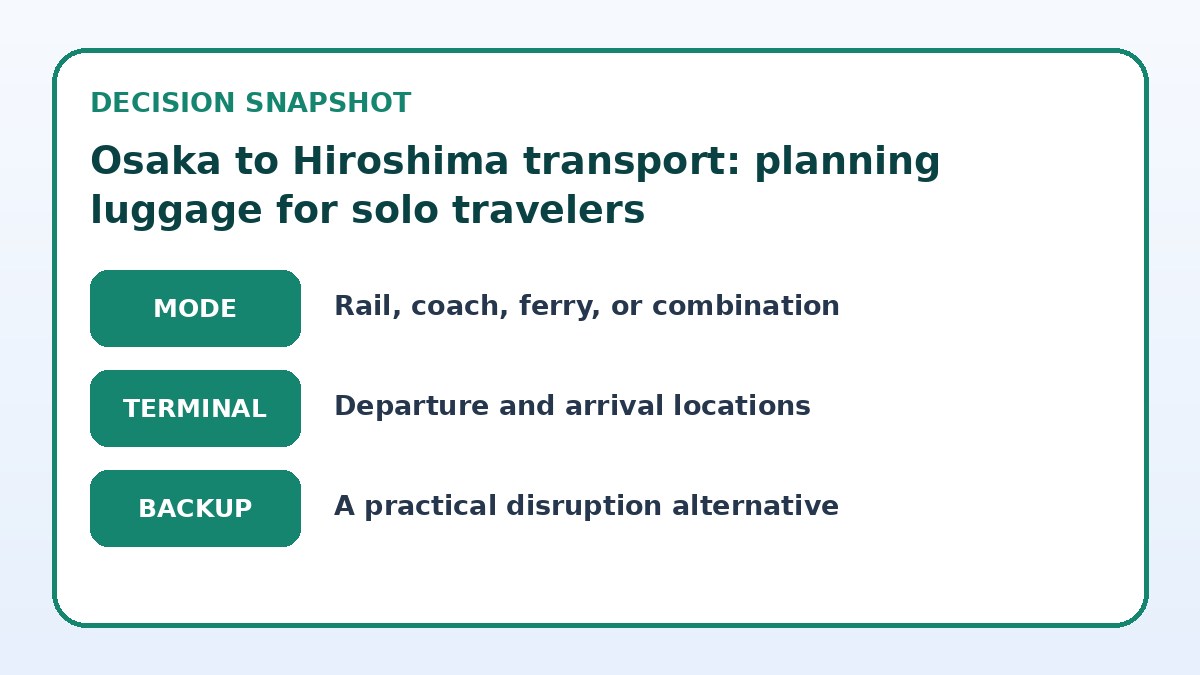
See current options before you compare the details
Availability and final conditions change. Open Trip.com now or keep reading for the practical comparison.
Choosing between speed and convenience
When deciding how to travel from Osaka to Hiroshima with luggage, weigh time against convenience. Faster rail options minimize time spent on the move but often mean navigating busy stations, narrow train aisles, and limited on-board storage—especially for larger suitcases. If you prioritize arrival time and fewer changes, choose the simplest rail itinerary with the fewest transfers and make sure your luggage fits into the train’s designated spaces or overhead racks. Remember that “fast” usually requires more physical handling of bags at boarding and when changing platforms.
If convenience is more important than travel time, consider slower trains, highway buses, or a hybrid plan that combines a cheaper connection with luggage-forwarding. Slower services often have more generous storage or luggage bays, and buses sometimes allow larger suitcases in underfloor compartments, making them a better choice if you prefer not to lift bags onto racks. For solo travelers who will be walking between accommodations and stations, factor in the distance and terrain — a shorter total travel time might feel harder than a longer ride with less baggage hassle.
Luggage-forwarding and when it makes sense
Luggage-forwarding services (takkyubin-style) offer a hands-free option: you drop your larger bag at a collection point and pick it up at your Hiroshima hotel or a nearby delivery point. This is particularly useful when you have an early check-in or want to sightsee unencumbered before arrival. Use forwarding if you have one large suitcase plus a small day bag, or if you expect to navigate stairs, crowded transfers, or long station corridors that would be tiring with heavy luggage.
Before choosing forwarding, verify the provider’s size and weight limits, drop-off cut-off times, delivery windows, and destination coverage on the provider’s final booking page. Some services won’t deliver to certain guesthouses, rural addresses, or attractions, so confirm where you can collect your bag. Keep valuable, fragile, or indispensable items in your carry-on; forwarding is convenient but not suited for passports, medication, electronics you need en route, or items you cannot replace quickly.
| Approach | Best for | Tradeoff to check |
|---|---|---|
| Bring all luggage on the train/bus | Travelers who want full control and immediate access to belongings | Requires lifting, storing in limited spaces, and managing bags through transfers and stations |
| Use luggage-forwarding and carry a day pack | Solo travelers who prefer hands-free sightseeing and minimal station hassle | Requires planning for drop-off/pick-up windows and leaving items with a third party |
| Combine a small wheeled bag with a backpack | Those who need moderate capacity but expect stairs or uneven surfaces | More items to manage; shoulder strain possible if terrain is rough |
| Choose slower bus services with underfloor storage | Budget-conscious travelers okay with longer transit and simple luggage handling | Longer travel time and potentially tighter schedules for last-mile pickup |
Ready to check the option that fits your plan?
Use your exact dates and traveler details so the provider page can show the current total and conditions.
Packing and luggage types for solo travel
Select luggage that matches how you’ll move. A wheeled suitcase is comfortable on flat station concourses but cumbersome if you must climb stairs or walk cobbled streets. A backpack or duffel with quality straps and hip support can make last-mile transfers easier and keeps your hands free. Consider a hybrid: a small to medium wheeled bag for primary items and a compact daypack for essentials you’ll carry while exploring. Measure your luggage so you can judge whether it will fit in train luggage areas or bus compartments.
Pack with agility in mind: use packing cubes to separate clothes, compressible toiletry kits, and a small folding tote for daily purchases. Put documents and a phone charger in an easy-access external pocket. For solo travelers, always have a minimal emergency kit (basic first aid, a power bank, and photocopies of key documents) in your carry bag. If you’ll forward luggage, make a checklist of items to keep with you and items to send so you’re never missing something essential on arrival.
Before you book
- Measure and weigh each bag; verify size and weight limits on the carrier or luggage-forwarding provider’s official booking page.
- Decide what you must carry (documents, medication, electronics) and pack those in an easily accessible daypack.
- If using forwarding, confirm pick-up/drop-off locations, cut-off times, and delivery windows with the provider before drop-off.
- Check your accommodation’s policies to ensure they accept delivered luggage and know where to collect it if they do.
- Plan transfers between stations and accommodations on foot or public transport; map walking distances and note stairs or elevators.
- Prepare contact info (phone, accommodation address in local script) to include with forwarded luggage and in your carry-on.
Practical checks and booking steps
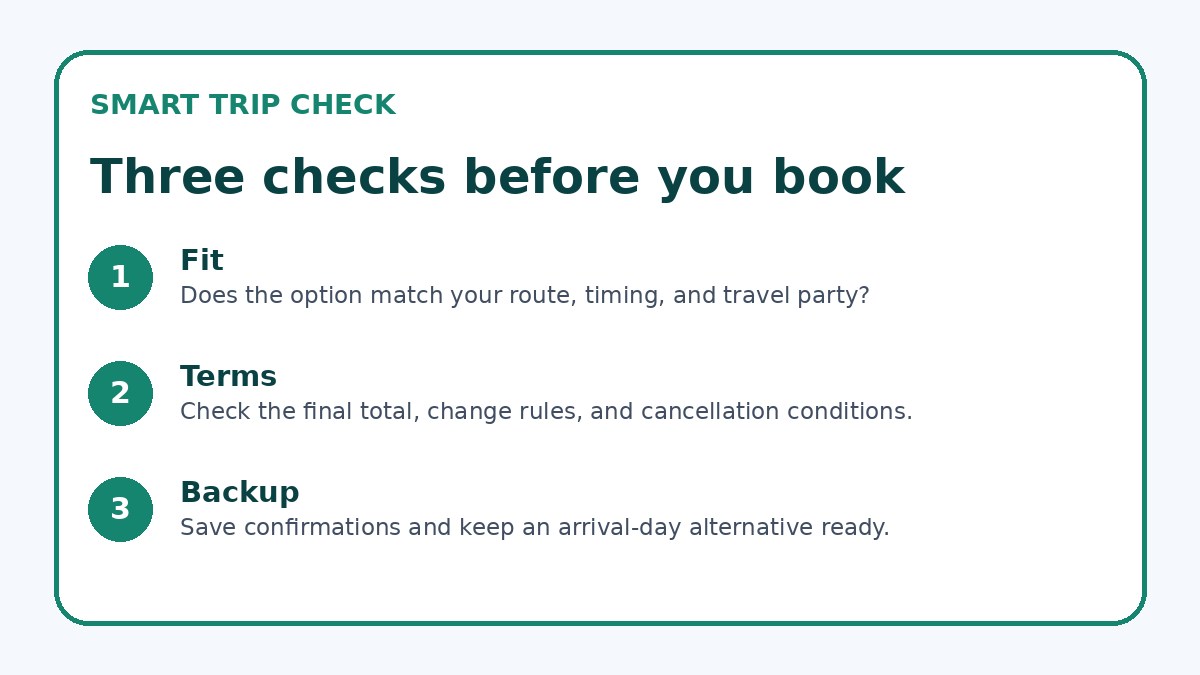
Before you book, compare itineraries for direct vs connecting options and test how each option handles luggage. If a provider’s booking page lists luggage allowances, storage rules, or carriage restrictions, use that information to eliminate unsuitable choices. For services that allow pre-reserved luggage spaces, finalize that during booking; if reservations are not possible, prepare an alternate plan like forwarding. If you want to use a delivery service, confirm pick-up and drop-off locations and operating days on the provider’s website.
Also check your accommodation’s ability to receive forwarded bags and whether they can hold luggage outside check-in hours. If you plan to pick up luggage at a station delivery counter, verify hours of operation and exact location ahead of travel. Use comparison tools such as Trip.com to check current availability and conditions, but always confirm essential baggage policies on the carrier’s or forwarding provider’s official page before committing.
Frequently asked questions
Can I bring a large suitcase on trains between Osaka and Hiroshima?
In most cases you can bring a large suitcase on trains, but storage space varies by service and carriage type. Some faster services have marked luggage areas or overhead racks that fit medium suitcases, while certain cars may have less space. If you expect crowded conditions or need to change trains, a large suitcase can be awkward to manage. Before you travel, check the carrier’s luggage guidance on its official booking page to confirm restrictions, and consider whether reserving a seat or using forwarding would suit you better.
How reliable are luggage-forwarding services for solo travelers?
Luggage-forwarding services are widely used and generally reliable for standard suitcases when you follow size and timing rules, but they require planning. They work best when you drop off bags within the provider’s time windows and the delivery address accepts incoming parcels. Keep valuables and immediate-need items with you because delivery can be delayed or miss specific pickup times. Always verify the provider’s delivery guarantees, covered areas, and any exclusions on the provider’s official page before relying on the service for time-sensitive items.
If I choose a bus instead of a train, how should I pack?
If you opt for a bus with underfloor luggage bays, pack so heavy items are secured and balanced in your main suitcase, and keep essentials in a small carry bag on board. Label your bags clearly and bring a lightweight daypack for items you’ll need during the journey or when you step off. Buses may have stricter limits on fragile items and sometimes require that valuables stay with you, so check the bus operator’s baggage rules on their booking page. For solo travelers, ensure the handling required at stops is manageable for you.
Final planning note
Traveling from Osaka to Hiroshima with luggage as a solo traveler is primarily a question of how much handling you want to do versus how much you value flexibility and speed. If you want the shortest transit time and don’t mind managing your bags, plan a direct rail option and pack to fit onboard storage. If you’d rather be hands-free for sightseeing or find station transfers difficult, forward larger items and carry a daypack. Always confirm luggage allowances, delivery rules, and station or hotel pickup details on the official booking pages before you commit. With the right preparation, you can choose a travel approach that keeps you mobile, comfortable, and focused on the trip rather than the bags.
Continue planning
Check current options and final conditions
Use the provider page to confirm live availability, the final total, cancellation terms, and every condition that matters to your trip.
This evergreen planning guide was created with AI-assisted drafting and a structured quality review. It does not display live prices, schedules, availability, visa guidance, or provider rankings. Verify current details before booking. Some links are affiliate links; we may earn a commission at no additional cost to you.