If you’re traveling to New York City with extra luggage, price alerts can save time and point you to useful offers — but they can also prompt rushed decisions that cost you on baggage, convenience, or comfort. The practical approach: set alerts tuned to fare classes and baggage policies, combine them with a short decision checklist, and give yourself a fixed window (for example, 24–72 hours) to verify the full cost and conditions before booking. That prevents impulse buys while keeping you responsive to real opportunities.
This guide shows how to create effective alerts, what to check on the provider’s final booking page (baggage rules, seat selection, change/cancellation terms, and total out-the-door price), and how to compare options for arriving with extra bags in different New York City neighborhoods. It focuses on choices and tradeoffs so you can book when an alert truly fits your luggage needs and travel priorities.
See current options before you compare the details
Availability and final conditions change. Open Trip.com now or keep reading for the practical comparison.
Design alerts around luggage needs, not just price
Traditional price alerts focus only on the numeric fare or nightly rate. For travelers carrying extra luggage, that’s only half the story. Instead, create alerts with filters that reflect baggage-inclusive options: set alerts for Fare Class A vs B if the booking platform supports it, or add notes to your alert that flag results requiring one or two checked bags. For hotels, track room types that offer included amenities that matter when you have bulky bags — for example, elevator access, early check-in availability, or luggage storage options.
When an alert fires, treat the notification as a starting point for verification rather than a call to buy. Use the alert details to open the provider’s booking page and confirm baggage allowances, ancillaries, and any required seat or bed reservations. If the booking path shows optional baggage fees or unclear terms, either discard the alert or seek alternatives that explicitly list luggage allowances to avoid unwelcome additional costs after checkout.
Stop impulse buys with a brief verification routine
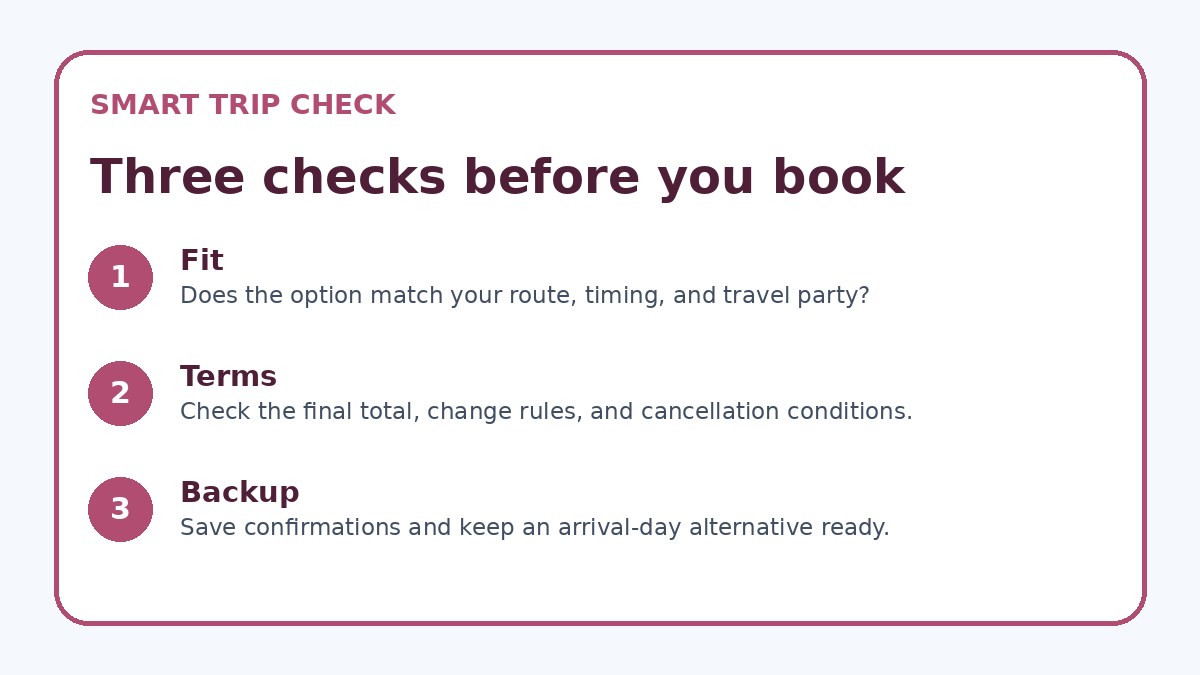
Impulse booking often stems from a fear of missing out. Combat that by using a simple verification routine you follow every time an alert looks promising. Start with the booking page: identify the fare or room type code, locate the baggage allowance or room facility descriptions, and check change and cancellation terms. Next, estimate total ‘out-the-door’ cost by adding likely baggage fees, seat selection, or local transport for oversized bags. Record these numbers in a single line so you can compare offers quickly and objectively.
Include logistics in your routine. Confirm arrival options that handle bulky luggage — from airport-to-city transfer choices to hotel luggage handling policies. If you’ll be using public transit, verify whether the first/last mile will be manageable with heavy bags; where it won’t, price a taxi or rideshare option into the total. This routine takes ten minutes but prevents the common trap of booking a cheap headline fare that becomes expensive and inconvenient once luggage and transfers are included.
| Approach | Best for | Tradeoff to check |
|---|---|---|
| Lowest headline fare alert | Travelers prioritizing ticket cost above all else | May omit baggage fees and transfer costs, increasing final spend and luggage hassle |
| Baggage-inclusive fare alert | Travelers who need checked allowances and clear luggage rules | Often shows higher upfront prices but reduces surprise fees and handling stress |
| Flexible/refundable alert | Those likely to change dates or routes due to luggage logistics | Higher cost or stricter advance-booking requirements compared with nonrefundable deals |
| Neighborhood-filtered hotel alert | Travelers who want easy access and luggage-friendly buildings | May lead to paying more for convenience such as elevators and nearby transport |
Ready to check the option that fits your plan?
Use your exact dates and traveler details so the provider page can show the current total and conditions.
Compare direct versus connecting choices for heavy bags
Direct travel options simplify moving with extra luggage because you avoid rechecking bags, long connection sprints, or missed transfers. However, direct routes or direct trains sometimes appear at a higher headline price. When an alert arrives, compare the true door-to-door cost and stress: calculate extra baggage charges on connecting itineraries, the time and physical effort for transfers, and the likelihood of needing assistance or paid baggage protection. A modestly higher price for a direct journey can be worth it if it reduces time handling bags or the risk of missed connections.
If you’re considering a connecting option because it shows a lower fare, verify connection windows and transfer complexity on the provider’s final pages. Look for minimum connection times that match your luggage needs and read the airline or rail carrier’s checked-bag and transfer policies carefully. If the booking site lists ambiguous transfer rules, call the carrier to confirm how checked bags are handled through connections so you’re not surprised at the airport or station.
Before you book
- When an alert fires, open the provider’s booking page and copy the exact fare or room type code into your notes for later verification.
- Add likely baggage fees, seat or bed selection fees, and transport costs to calculate the total out-the-door price before deciding.
- Confirm elevator or luggage storage availability with the hotel (ask the property directly if the booking page is unclear).
- Check change and cancellation policies on the carrier’s final booking page and screenshot or save confirmation text for records.
- Estimate transfer logistics from arrival point to accommodation, including whether public transit, shuttle, or taxi is required for bulky bags.
- Wait a predetermined window (for example, 24–72 hours) before booking unless the alert explicitly matches your baggage-inclusive criteria.
Use alerts to time flexibility, not just to chase the lowest rate
Price alerts can be used strategically to increase flexibility rather than solely to chase the cheapest ticket. For example, set separate alerts for refundable or changeable fares and for nonrefundable deals; treat each alert category differently according to how important flexibility is when traveling with large or valuable luggage. If your luggage increases the chance you’ll need to change plans — say, because you’ll ship items or coordinate pickups — prioritize alerts that notify you about flexible fare classes and refundable hotel rooms.
Also consider alerts for neighborhood and transport choices, not only for flights or hotels. For some travelers, a slightly higher hotel rate in Midtown with easy luggage handling and elevator access is preferable to a cheaper room in a walkup building. Use alerts that include neighborhood filters so you can measure the tradeoff between price and practical ease of moving bulky bags around the city. Remember to verify the final booking page for transfer options, luggage storage, and elevator/lift access before confirming.
Frequently asked questions
How should I set price alerts to avoid missing baggage-inclusive deals?
Set multiple alerts with clear goals: one for the cheapest headline fares, one filtered for fare classes or tickets that include checked baggage, and one for refundable or changeable rates. If your alert tool allows custom notes or filters, tag alerts with ‘1 checked bag’ or ‘baggage included’ so you can quickly separate relevant results. When an alert arrives, verify the booking page’s fare code and baggage terms rather than assuming the alert’s label covers all fees. Trip.com can be used as one place to compare availability, but always confirm baggage specifics on the carrier or hotel’s final page.
What are the most important baggage-related items to verify before booking?
On the final booking page, check the exact checked-bag allowance (number, weight, and dimensions), whether seat selection is required and charged, and whether transfers or connections will require rechecking bags. Also verify the accommodation’s elevator access, early/late check-in rules, and whether they offer luggage storage. If the booking page does not clearly state these items, contact the airline, rail operator, or property directly to confirm before you purchase.
If I get an alert for a much lower fare, how do I decide whether to buy it quickly?
Don’t rely on price alone. Use your verification routine: calculate the all-in cost including baggage and transfers, confirm luggage policies and connection handling, and check change/cancellation flexibility. If the all-in numbers still beat alternatives and the fare or room type explicitly covers your baggage needs, buy. If the alert lacks clear baggage details or forces inconvenient transfers, it’s safer to wait or seek a different alert that lists luggage-friendly terms.
Final planning note
Price alerts are powerful for New York City travel, but for travelers with extra luggage they must be tuned and managed. Rather than chasing every low headline price, set multiple alerts for baggage-inclusive and flexible options, use a short verification routine when alerts fire, and compare door-to-door costs and logistics, not just the fare. This approach reduces last-minute stress, avoids surprise fees, and helps you choose travel and accommodation options that handle heavy or bulky bags gracefully. Keep a consistent booking checklist, verify critical baggage and transfer details on the provider’s final pages, and treat alerts as prompts to confirm — not commands to buy.
Continue planning
Check current options and final conditions
Use the provider page to confirm live availability, the final total, cancellation terms, and every condition that matters to your trip.
This evergreen planning guide was created with AI-assisted drafting and a structured quality review. It does not display live prices, schedules, availability, visa guidance, or provider rankings. Verify current details before booking. Some links are affiliate links; we may earn a commission at no additional cost to you.