
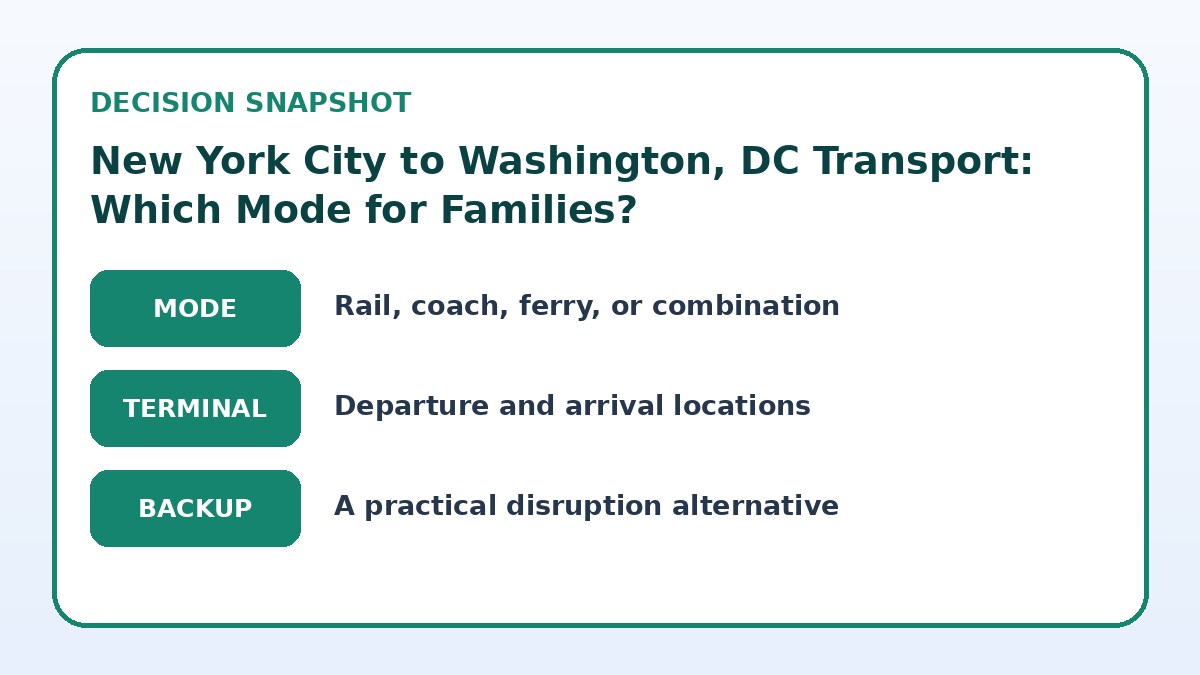
Families traveling between New York City and Washington, DC face more choices than simply picking a train. Amtrak trains, intercity coaches, driving, and seasonal water or private-boat options each offer distinct tradeoffs in cost, convenience, luggage, and child-friendliness. This guide gives a short practical recommendation up front, then explains the decision criteria parents use most: door-to-door time, stroller and car-seat handling, seat comfort, schedules that match nap and sleep times, and the ease of last-mile transfers in both cities. Use the quick checklist to prepare for booking and the comparison section to weigh options for different family priorities—young children, infants, older kids, or multi-generation trips. Finally, you’ll find what to check on provider pages before you buy, including seating policies, luggage limits, and whether you need a separate seat for a car seat.
See current options before you compare the details
Availability and final conditions change. Open Trip.com now or keep reading for the practical comparison.
Why the transport choice matters for families
Traveling with children changes what matters on a route: predictable travel time, the ability to get up and walk, safe and simple car-seat handling, and straightforward transfers top many parents’ lists. For infant or toddler travelers, avoiding multiple transfers is often worth paying more, while families with school-age children may prioritize cost or on-board Wi-Fi and power outlets for screens. Also factor in luggage—the more bags and gear you carry, the more valuable a vehicle with rear storage or a seat with extra space becomes.
Comfort is not only about seat padding. Families value toilets that are easy to access, space for strollers or folded gear, and a calm environment for naps. Consider arrival station location: a downtown rail terminal can cut taxi and subway time, while a coach or airport stop outside the city may add a local transfer. Finally, routines matter—pick a departure time that aligns with your children’s naps or bedtimes to reduce stress during the journey.
Train travel: pros, practical tips, and what to confirm
Trains typically offer roomy seats, places to walk, restrooms, and family-friendly amenities that make them attractive for families. They also usually arrive and depart from central stations, reducing local transfer time. When considering a train, look at direct versus connecting services—each connection adds handling of luggage and child equipment. Book seats together, and if you bring a car seat, check seat and aisle widths to ensure it fits; some providers require a separate ticket or a purchased seat for car seats, so verify the policy before booking.
Before you finalize a train booking, confirm baggage allowances, stroller policies, and whether there are family or quiet cars. Also check whether food and drink options are available on board or in the station—having snacks for kids can be a trip-saver. Use the provider’s final booking page to verify cancellations, change fees, and seat selection options. Trip.com can be a helpful place to compare current availability, but always cross-check with the operator’s official pages for final rules and guarantees.
| Approach | Best for | Tradeoff to check |
|---|---|---|
| Direct train | Families wanting predictable travel time and space to move | Typically higher fare than coach and requires seat-policy checks for car seats |
| Intercity coach | Budget-focused families comfortable with curbside or off-downtown stops | Longer door-to-door time and potentially tighter seats and luggage rules |
| Driving | Families needing flexibility, lots of gear, or multiple stops | Must manage traffic, parking, and driving fatigue yourself |
| Ferry/private boat | Families seeking a scenic supplement or short recreational leg | Limited schedules, extra transfers, and variable capacity for luggage |
Ready to check the option that fits your plan?
Use your exact dates and traveler details so the provider page can show the current total and conditions.
Coach and bus: where they work for families
Modern intercity coaches often provide low-cost, direct service between New York City and Washington, DC and may include onboard restrooms, power outlets, and reclining seats. Coaches can be very economical for families, especially when you can travel with more carry-on items and avoid checked-luggage hassles. However, coach stops are sometimes at terminals outside downtown cores or at curbside locations, so include the cost and time of a local transfer when comparing total door-to-door time.
When booking a coach, verify seat spacing, restroom access, and luggage policies—some carriers charge for extra bags or have limits on large items like full-sized strollers. If you’re traveling with a car seat, check the carrier’s requirement for securing it (many coaches do not have anchor points). Also confirm whether tickets are refundable or changeable; for families, a flexible booking policy often justifies a slightly higher fare. Factor in seasonal road congestion that can affect journey times compared with rail.
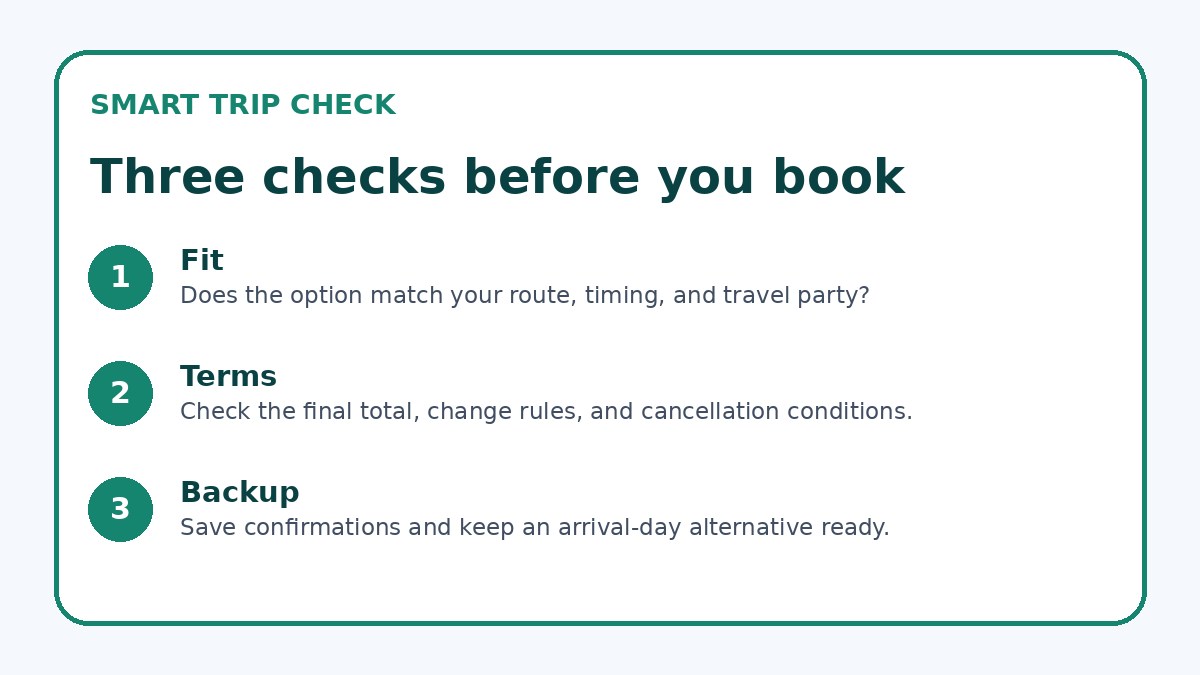
Before you book
- Compare total door-to-door time, not just in-vehicle travel time, when choosing among train, coach, or driving.
- Confirm seat and car-seat policies on the operator’s official booking page and whether a separate child ticket or seat is required.
- Check luggage and stroller allowances, including any per-piece size/weight rules and extra-bag fees before you book.
- Plan local transfers at each end: public transit connections, taxi/ride-hail pickup locations, and approximate transfer times.
- Reserve seats together and choose boarding that minimizes carrying bulky items up stairs or long platforms.
- Pack a small bag with snacks, medications, wet wipes, and a change of clothes and keep it accessible during the trip.
Driving and ferry/boat options: flexibility vs extra logistics
Driving gives families full control over schedule, stops, and what you bring. You can time breaks around naps, carry more gear without luggage fees, and handle multiple child seats in familiar setups. However, driving demands a plan for potential traffic, tolls, and parking at your destination. Split driving shifts for long legs, scout parking options near your destination ahead of time, and plan for rest stops. Don’t forget to confirm car-seat laws in both states and ensure properly installed seats for safety.
Ferry or boat travel between parts of the Northeast corridor is limited and often seasonal or recreational; such services can add charm but also more transfers and timing constraints. For families, a boat might be a worthwhile addition to a longer multi-modal trip rather than the main transport mode. If you consider charter or private-boat transfers, verify capacity, safety equipment for children, cancellation terms, and how you’ll get between the docks and your accommodations at both ends.
Frequently asked questions
Is the train faster than driving between New York City and Washington, DC for a family?
Speed depends on starting and ending points, departure time, and traffic. Trains often match or beat driving during peak traffic because they use dedicated right-of-way and arrive downtown. But if your family departs from a suburban home or needs to stop frequently, driving could be faster door-to-door. Compare realistic door-to-door times—including transfer, parking, and security steps—rather than just scheduled in-vehicle duration. Also consider how comfortable each option will be for your children during that travel window.
Can I bring a stroller or car seat on trains and coaches?
Many trains and coaches permit strollers and car seats but have different rules about storage and whether a car seat must be secured to a purchased seat. Some operators allow small folded strollers as carry-on but require larger ones to be checked at the luggage area. Because policies change, always check the operator’s official booking page for exact stroller dimensions allowed, required folding procedures, and any fees. If using a car seat, verify if the carrier allows it on board and whether it needs its own ticketed seat.
What should families verify on a provider page before booking?
Before you buy, verify seat selection options, cancellation and change policies, luggage and stroller rules, and whether restrooms and power outlets are available. If traveling with infants or car seats, check child-ticketing rules and whether you must reserve a specific seat type. Also confirm where the vehicle departs and arrives in each city and how far those points are from your accommodations. Use official provider pages for these details, and consult Trip.com or similar comparison sites only to cross-check availability—not as the sole source for rules.
Final planning note
Choosing how to travel from New York City to Washington, DC with children is a balance of time, cost, and convenience. For most families prioritizing simplicity and comfort, a direct train that reduces transfers and offers space to move is the best single choice. Budget-minded families willing to trade a little convenience for lower fares might prefer coaches, while driving is ideal when you need flexibility and carry-on freedom. Ferry or boat options are usually supplementary. Whatever you pick, confirm seat and baggage rules on the operator’s booking page, plan transfers, and pack a family-ready carry bag to smooth the journey.
Continue planning
Check current options and final conditions
Use the provider page to confirm live availability, the final total, cancellation terms, and every condition that matters to your trip.
This evergreen planning guide was created with AI-assisted drafting and a structured quality review. It does not display live prices, schedules, availability, visa guidance, or provider rankings. Verify current details before booking. Some links are affiliate links; we may earn a commission at no additional cost to you.