
If you’re traveling solo from New York City to Washington, DC with luggage, the simplest practical choice often balances door-to-door time, luggage handling, and cost. For one or two medium bags and a carry-on, direct intercity trains typically offer the easiest handling—dedicated luggage areas, level boarding at major stations, and room to move. Buses and rideshares can be cheaper but require more attention to luggage size, curb space, and crowded terminals. Flights introduce security and checked-bag procedures that add time and effort. This guide lays out how to compare each option given what you’re carrying, what you’ll do on arrival, and how comfortable you want transfers to be. Read the quick points first, then use the sections to match a travel style to your luggage and solo-travel priorities.
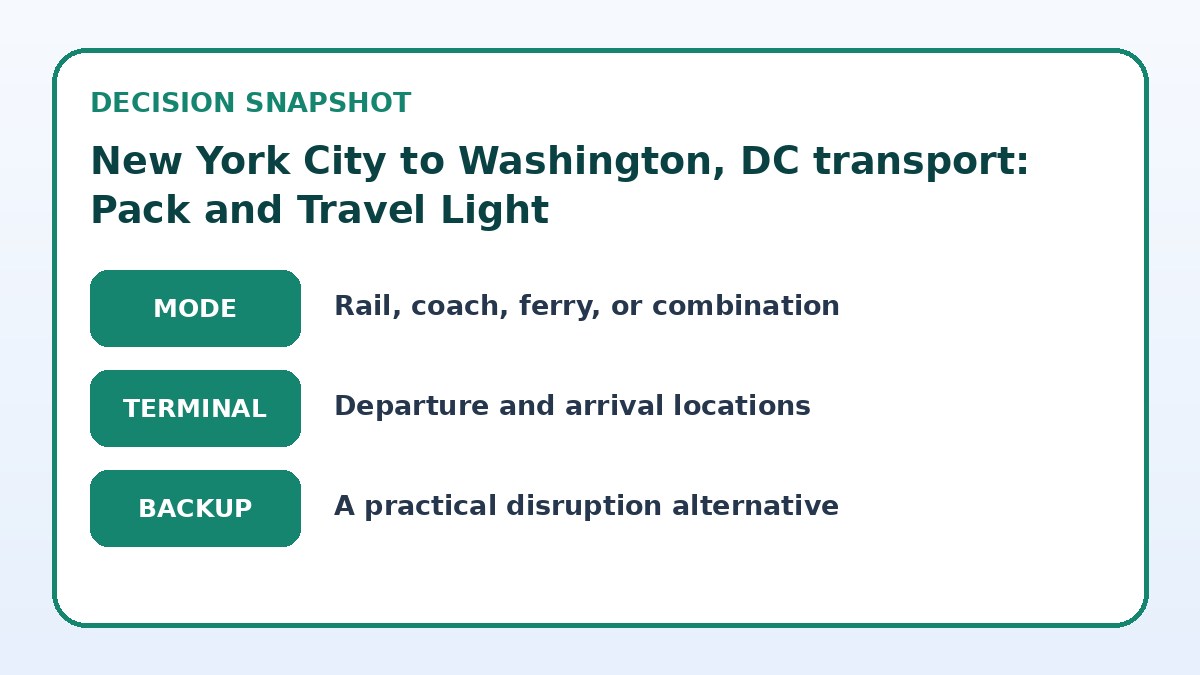
See current options before you compare the details
Availability and final conditions change. Open Trip.com now or keep reading for the practical comparison.
Train travel: easy handling and predictable transfers
Trains between New York City and Washington, DC generally simplify luggage logistics for solo travelers because stations are built for walk-on boarding and have defined platforms and waiting areas. Many intercity trains allow you to bring suitcases into the seating area or place them on overhead racks and designated luggage spots, reducing repeated lifts and the risk of lost items. Level boarding at major terminals and relatively short walking distances from trains to taxis, rideshares, or local transit make trains especially convenient when you have medium-sized luggage or a wheeled bag plus a backpack.
When comparing train options, check whether a particular service enforces size or quantity limits, whether reservations are needed for certain cars, and whether station layouts require stairs or elevators for transfers. Verify baggage rules and any onboard storage photos on the provider’s booking page before you buy. If you plan to continue onward by local transit in Washington, DC, pick arrival stations with easy Metro or bus connections to minimize dragging bags over long distances or up multiple flights of stairs.
Coach and bus lines: budget-friendly with packing tradeoffs
Intercity buses often have the most departure options and competitive fares, but luggage handling happens out of your sight; loading and unloading under the coach means you rely on staff and have less immediate access to belongings during stops. Buses can be a strong option for solo travelers with small to medium suitcases that fit the undercarriage compartments and roll easily. If your bag is odd-shaped, very heavy, or you value constant access to medications or electronics, bus travel may require an additional carry-on stowed in the cabin.
Before committing to a coach, measure your bags and confirm the operator’s size and weight policies on the booking page. Note where buses stop in both cities — some curbside terminals are far from subway lines or have limited waiting facilities — and plan for the last-mile from the curb to your lodging. If you’re traveling at night or want guaranteed space beside your seat for a carry-on, check whether a bus company offers overhead storage claims and how strictly attendants enforce limits.
| Approach | Best for | Tradeoff to check |
|---|---|---|
| Direct train | Solo travelers with medium luggage who want simple station transfers and minimal handling. | Higher fare than some buses and fixed departure times; check luggage policies and station access at booking. |
| Coach bus | Budget-sensitive solo travelers with standard-sized suitcases who can trust curbside handling. | Luggage is stored out of sight; stops and terminal locations may add walking or local transit time. |
| Rideshare / private car | Door-to-door comfort when you have multiple or heavy bags and want minimal transfers. | Cost varies widely and trunk capacity is limited; confirm vehicle size and fees before booking. |
| Flight | Travelers prioritizing short airtime but with light carry-on or fast airport transfers. | Security, check-in, and baggage claim add steps; verify bag allowances and total door-to-door time. |
Ready to check the option that fits your plan?
Use your exact dates and traveler details so the provider page can show the current total and conditions.
Rideshare and private car: door-to-door with capacity limits
Rideshare services and private cars remove station hassles by taking you directly from your origin to your destination, which is appealing when you have multiple bags or awkward luggage. For solo travelers, a large rideshare or a small car service can be worth the extra cost if your accommodations or schedule make transfers painful. However, trunks have finite capacity; a single large suitcase plus a week’s worth of luggage may not fit with passengers, or may require a second vehicle. Also factor in potential city-to-city surge pricing and variable pickup locations.
If you plan a long-distance rideshare or an intercity car hire, confirm vehicle size and trunk space before booking and be clear with drivers about the number and size of bags. For private car services, verify whether tolls, bridge fees, or driver waiting times are included and whether the provider will handle loading and unloading. If you’ll cross state lines or need a driver to wait for you while you check into a hotel, confirm these details explicitly on the booking page.
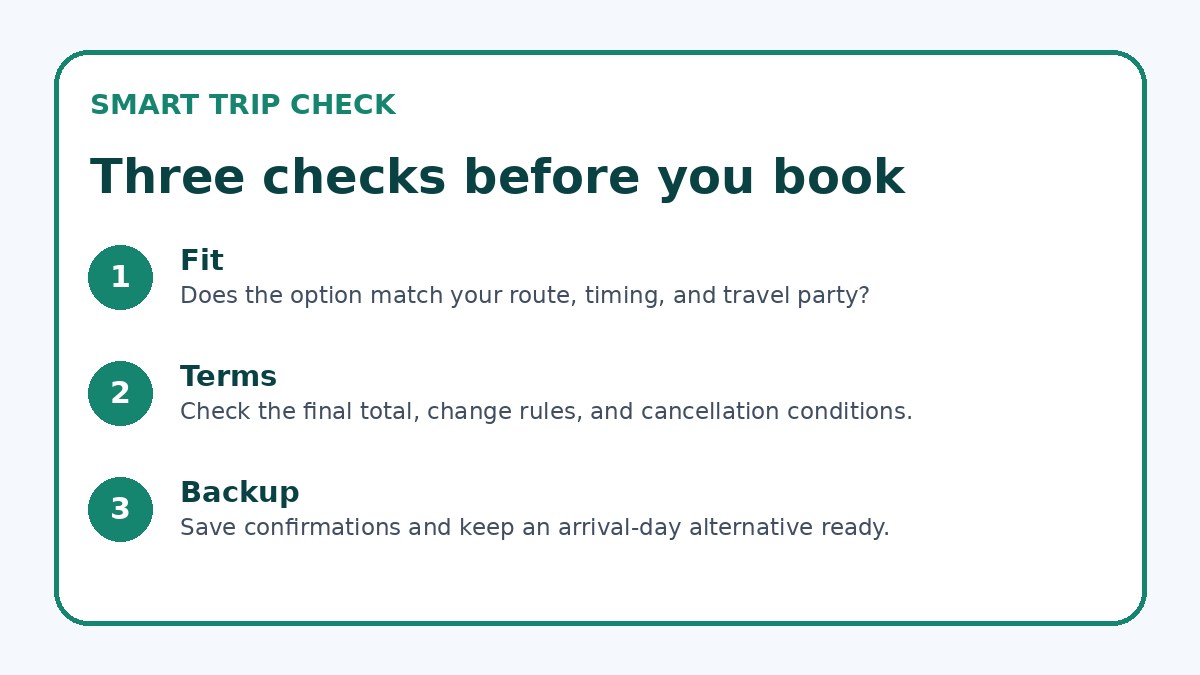
Before you book
- Measure your suitcases and compare dimensions to each carrier’s posted size limits on their booking page before purchasing tickets.
- Decide whether you need immediate access to medications or valuables during transit and plan to keep those items in a personal carry-on.
- If using trains or buses, choose arrival and departure stations closest to your lodging to cut last-mile walking with luggage.
- For rideshares or private cars, request vehicle type and confirm trunk space or extra-vehicle options before confirming pickup.
- If flying, check exact carry-on and checked-bag rules, plus recommended airport arrival times, on the airline’s final booking page.
- Prepare luggage aids—small wheeled bag, lightweight backpack, and a luggage strap or ID tag—to ease transfers and reduce loss risk.
Flying: fastest air time but more luggage steps
Flights between the New York City area and Washington, DC offer short airborne time, but the door-to-door process adds security screening, check-in, and baggage claim steps that can negate in-air speed—especially for solo travelers with checked bags. Carry-on only can speed things up if your bag meets airline dimensions and you’re comfortable with overhead bin lifting. Remember that airports are spread out; factor in extra transfers to and from terminals when comparing total journey time against ground options.
Before booking a flight, check the airline’s carry-on and checked-bag allowances on the provider’s booking page and read how they define size and weight. Compare total travel time including travel to the airport, recommended arrival times, security lines, and baggage claim. If you have a tight schedule or heavy luggage, compare a train or private car’s door-to-door time to the flight’s posted duration plus pre- and post-flight transfers to see which option really saves you time and effort.
Frequently asked questions
How do I choose between train and bus when traveling with large suitcases?
Start by measuring your suitcase(s) and comparing those dimensions to the posted allowances for trains and buses on their booking pages. Trains usually provide more room inside cars and may permit cabin-level storage or designated luggage areas, which makes handling large wheeled suitcases easier for solo travelers. Buses store luggage under the coach, so consider whether you’re comfortable surrendering immediate access to bags during stops. Also compare station or terminal proximity to your start and end points—if a bus stop is farther from your lodging, the extra transfer could outweigh a lower fare.
Can I carry everything as carry-on to avoid checking bags on flights or trains?
That depends on your packing style and carrier limits. Airlines and some train services define carry-on size and weight strictly; bringing only carry-on avoids baggage claim but requires compact packing and possibly heavier lifting into overhead compartments. For solo travelers, pack essentials—documents, medications, electronics—in a small daypack you can keep with you, and test whether your wheels and handles fit carrier overhead or storage spaces. Always verify exact dimensions and any extra fees on the provider’s booking page to ensure your bags will be accepted as carry-on.
What are smart luggage strategies for moving between terminals or stations with a lot of bags?
Limit bags to what you can comfortably manage alone—typically one checked-size wheeled suitcase and a personal backpack or duffel. Use luggage with spinner wheels and a telescoping handle to reduce strain. Ship bulky items ahead if the contents aren’t needed en route. If transfers involve stairs or uneven sidewalks, pack light and prioritize shoulder-accessible items. Finally, arrive a little earlier to stations or pickup points so you can negotiate loading and stowage without rushing; confirm any porter or assistance services on the provider’s booking page if you need help.
Final planning note
Choosing how to travel from New York City to Washington, DC with luggage as a solo traveler comes down to balancing convenience, control, and cost. Direct trains tend to minimize handling and simplify station transfers, coaches save money but add unseen luggage handling, rideshares give the easiest door-to-door option if you confirm vehicle capacity, and flights trade in-air speed for extra security and baggage steps. Before you book, measure bags, list non-negotiable items you must keep on your person, and review each provider’s baggage and transfer details on their booking page. For a quick availability check across options, you can use Trip.com or the carriers’ own sites, but always verify final rules and the exact journey itinerary where you book.
Continue planning
Check current options and final conditions
Use the provider page to confirm live availability, the final total, cancellation terms, and every condition that matters to your trip.
This evergreen planning guide was created with AI-assisted drafting and a structured quality review. It does not display live prices, schedules, availability, visa guidance, or provider rankings. Verify current details before booking. Some links are affiliate links; we may earn a commission at no additional cost to you.