If you're traveling solo from New York City to Los Angeles, the two most friction points you can control are baggage and airport time. Decide first whether you want to travel carry-on only or check bags, then plan when to leave for the airport based on your chosen terminals, the time of day, and whether you need to check a bag or drop it at curbside. Carrying only a well-packed carry-on usually shaves an hour or more from your door-to-gate timeline; checking bags adds wait time at drop, possible lines at security, and baggage-claim at the other end. This guide helps you pick the most efficient approach for your priorities—speed, convenience, or comfort—explaining tradeoffs, verification steps to take on airline pages, and what to compare between direct and connecting flights before you book.
Choose carry-on only vs checked bags
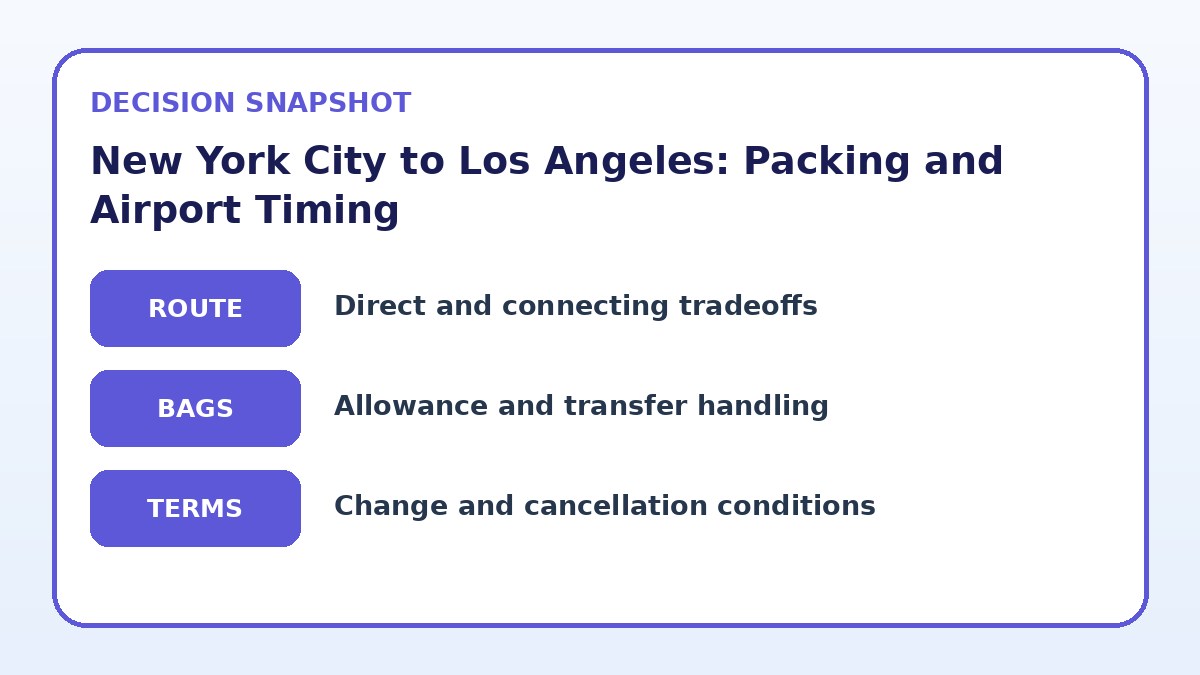
Decide what matters more: speed through the airport or having more luggage with you. Carry-on only travelers avoid check-in counters and wait times at baggage claim; they typically head straight to security and can exit the destination airport immediately after deplaning. That convenience comes with packing limits—strict size rules, liquid restrictions, and the need to consolidate toiletries, shoes, and layers. If you plan to bring duty-free bottles or bulky items, or if your trip requires multiple outfit options, checked bags may be more practical despite the extra steps.
If you lean toward checking luggage, factor those steps into your schedule. Many airlines now offer online check-in and home or kiosk printing of bag tags to speed drop-off, but you still must allow time for the bag-drop queue and potential weight checks. Bring a small carry-on with essentials—a change of clothes, medications, and chargers—in case your checked bag is delayed. Finally, verify the baggage policy on the airline’s final booking page to confirm fees, size, and weight limits and whether baggage is guaranteed to be transferred on connecting itineraries.
Timing your arrival at New York airports
Which New York airport you use affects how early to arrive. JFK, Newark, and LaGuardia each have different distances from Manhattan, different security queue patterns, and varying terminal layouts. For carry-on only on domestic flights, many solo travelers aim to arrive 75–90 minutes before departure; for checked bags, add at least 30–45 minutes for drop-off. If you’re traveling during rush hours, holiday periods, or bad weather, add extra buffer time for traffic, longer security lines, and slower curbside operations.
Also consider pre-security needs: enrollment in TSA PreCheck or CLEAR will change how early you must arrive—verify eligibility and any enrollment requirements well before travel. Factor in how you’ll get to the airport: rideshares and taxis can be efficient but face surge pricing and traffic; public transit or airport shuttles avoid traffic but require schedule checks. Always check the airline’s recommended arrival time on the booking confirmation page and match it with your chosen airport’s current advisories before you leave.
| Approach | Best for | Tradeoff to check |
|---|---|---|
| Carry-on only | Solo travelers prioritizing speed and minimal airport time | Tighter packing, no checked items, strict adherence to size and liquid rules |
| Checked bag with self-tagging or curbside drop | Travelers needing more clothing or bulky items who want to reduce check-in stress | Adds drop-off time before security and wait at baggage claim after arrival |
| Early arrival buffer (3+ hours) | Those who want maximum margin for traffic, long lines, or airport services | More waiting time in terminals and potential fatigue before flight |
| TSA PreCheck/CLEAR and priority boarding | Frequent flyers or anyone wanting faster security and reliable overhead space | Requires enrollment or fee; ensure the known-traveler number is on your booking |
Streamline security and boarding
Prepare for security at home to reduce delays: place laptops and liquids in accessible compartments, wear shoes that are easy to remove, and avoid oversized metal items. If you have TSA PreCheck, keep the card or travel confirmation handy and verify that the airline has your known-traveler number attached to the reservation. If you expect long lines, consider earlier arrival or a lounge day pass if amenities will help you stay productive rather than stressing in crowded public areas.
Boarding strategies matter for comfort and timing. Decide whether you want early boarding to secure overhead space (helpful with larger carry-ons) or to board later and sit near the rear for quicker exit in Los Angeles. Review the airline’s boarding group policies on the final booking page—some carriers allow paid priority boarding that can be worth the fee if overhead bin space is a priority. For solo travelers, a focused boarding plan reduces gate anxiety and helps you settle into the flight faster.
Before you book
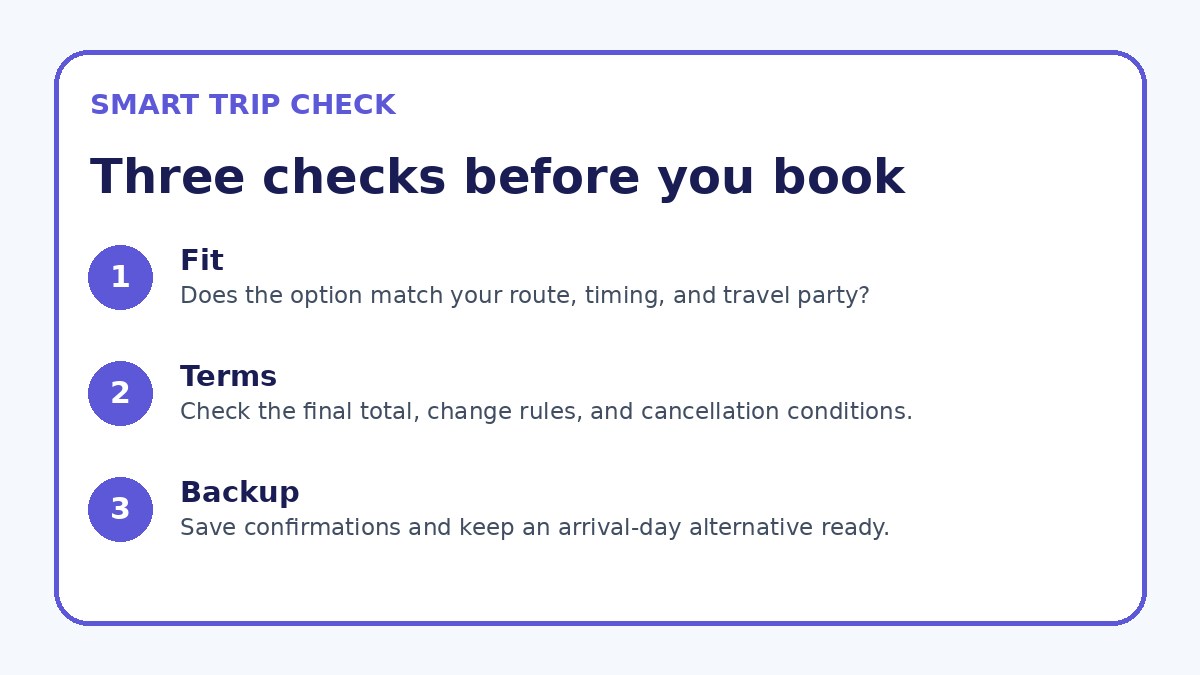
- Decide if you will fly carry-on only or check bags, then confirm allowed dimensions and weight on the airline’s final booking page.
- If checking bags, reserve an early curbside or self-tagging drop option where offered and screenshot baggage rules and cutoffs.
- Enroll in or confirm TSA PreCheck or CLEAR on the reservation if available, and add the known-traveler number before check-in.
- Pack a compact personal item with essentials—medication, chargers, a change of clothes—so you’re covered if checked luggage is delayed.
- Plan your airport transfer to NYC by checking traffic patterns and transit schedules for your departure time and leave extra buffer.
- Before you go, check the airline’s boarding group, carry-on policies, and the airport’s security advisory on the final booking or airport page.
Arrival in Los Angeles: retrieving baggage and onward travel
If you arrive with only a carry-on, you’ll usually leave the terminal faster and avoid baggage-claim waits, which is helpful when you have onward plans in LA. If you checked luggage, check the arrival terminal and the typical distance from the gate to baggage claim—some LA terminals require lengthy walks or shuttle rides. Expect additional time for immigration only on international connecting flights; domestic NYC–LA itineraries typically bypass that but still require patience at busy carousels.
Plan onward transport in advance. LA’s traffic and the spread-out airport layout mean rideshares and taxis may take longer to reach your final destination than the flight time suggests. Pre-booked shuttles, a rental car reservation, or a transit plan can save waiting time. Verify baggage fees, oversized bag handling, and any curbside pickup policies on the airline and airport pages before travel to avoid surprises at arrival.
Frequently asked questions
How early should a solo traveler arrive at JFK, LaGuardia, or Newark for a NYC to Los Angeles flight?
Arrival time depends on whether you are checking bags and on the time of day. For carry-on only on a domestic NYC–LA flight, most solo travelers find 75–90 minutes sufficient; if checking luggage, add 30–45 minutes for drop-off. During busy travel periods, early mornings, or bad weather, build more buffer. Also confirm the airline’s recommended arrival time and any terminal-specific guidance on the airline’s final booking page before you depart for the airport.
Is it worth paying for priority boarding or checking a bag for a solo traveler on this route?
Priority boarding can be valuable if securing overhead bin space is essential to you—especially with a larger carry-on. Paying to check a bag makes sense when you need extra clothing or equipment that won’t fit into cabin limits or when you prefer to travel without hauling a roller bag. Weigh the cost against time saved: checked bags add drop-off and baggage-claim time, while priority boarding reduces carry-on stress. Verify boarding options and bag fees on the airline’s booking page to calculate real value for your trip.
How should I handle a connecting flight between New York and Los Angeles?
If your itinerary includes a connection, compare total transfer time, terminal changes, and whether the airline tags baggage through to Los Angeles. Short layovers can be risky if you must recheck luggage or change terminals; longer layovers add total travel time. When booking, look for minimum connection times provided by the airline and verify on the airline’s final booking page how bags are handled and what assistance exists for tight transfers. For solo travelers, aim for a connection that allows at least 60–90 minutes if a terminal change or baggage recheck is needed.
Final planning note
Solo travel between New York City and Los Angeles is straightforward if you choose the right baggage approach and build sensible airport-time buffers. Carry-on only offers the speediest door-to-door experience but requires disciplined packing and checking airline size and liquid restrictions. Checked baggage offers freedom to pack more but requires additional time for drop-off and claim. Use known-traveler programs, verify baggage and boarding policies on the airline’s final booking page, and plan airport transfers to match your departure time. Check current schedules and availability on comparison sites like Trip.com if helpful, then confirm every detail with the carrier before you book to avoid surprises.
Continue planning
Check current options and final conditions
Use the provider page to confirm live availability, the final total, cancellation terms, and every condition that matters to your trip.
This evergreen planning guide was created with AI-assisted drafting and a structured quality review. It does not display live prices, schedules, availability, visa guidance, or provider rankings. Verify current details before booking. Some links are affiliate links; we may earn a commission at no additional cost to you.