
If you’re traveling from New York City to Washington, DC with suitcases or multiple bags, the practical choice depends on how much you have, how mobile you want to be, and how comfortable you are lifting and storing luggage. For many first-time visitors, intercity train service blends door-to-door ease with generous onboard luggage allowances and quick station access, while buses and private cars edge in on price and drop-off flexibility. This guide lays out the main transport choices and real-world luggage tradeoffs so you can book with confidence: what to pack, how to move between stations and terminals, where to check dimensions and baggage policies before buying, and how to minimize strain during transfers.
Choosing between train, bus, and car when you have luggage
Start by matching your luggage profile—number, size, and weight—against each transport mode. Trains usually offer the most straightforward experience for rolling bags: stations such as major city terminals are centrally located, platforms are level with entrances, and onboard storage areas allow suitcases to stay with you. That reduces the number of times you have to lift heavier items. However, arriving at or departing from busy stations can mean negotiating crowds, stairs, or elevators; if you have many large bags, plan extra time to move them through ticket halls and security checkpoints.
Buses often advertise lower fares and may accept larger checked pieces in underfloor bays, which reduces what you carry through terminals. The tradeoff is you hand luggage to the operator at boarding and may wait for retrieval at the end point, which adds uncertainty and potential delay. Driving—or using a rideshare—lets you load directly into a trunk and avoid transfers entirely, ideal for irregular schedules or very bulky items. Yet curbside pickups, traffic, and parking considerations can complicate the final stretch; if you drive, ensure your chosen pickup/drop-off spot is legal and easy to access with luggage.
Packing and luggage choices that simplify the trip
Opt for rolling suitcases with durable wheels and comfortable handles; they reduce strain and move quicker across terminals than duffels. A medium-sized checked bag plus a compact carry-on or backpack is a versatile setup: check the big suitcase if the carrier permits checked luggage, but keep essentials—medications, documents, a change of clothes—in your personal item so you can navigate unexpected delays or baggage issues. Use lightweight packing cubes to compress clothes and keep items organized; they speed up transfers and make it easier to locate things at brief stops.
Consider protective add-ons: a luggage strap or durable cover helps when bags are handled in cargo bays, and a TSA-style lock secures contents while in transit. Label both inside and outside of each bag with your contact information. If you’re using multiple transport modes (for example, train to bus, or car to train), pack items you’ll need during transfers at the top of your bag in an external pocket. Finally, test your luggage at home—lift it, wheel it across different surfaces, and load it into a car trunk—to spot problems before you travel.
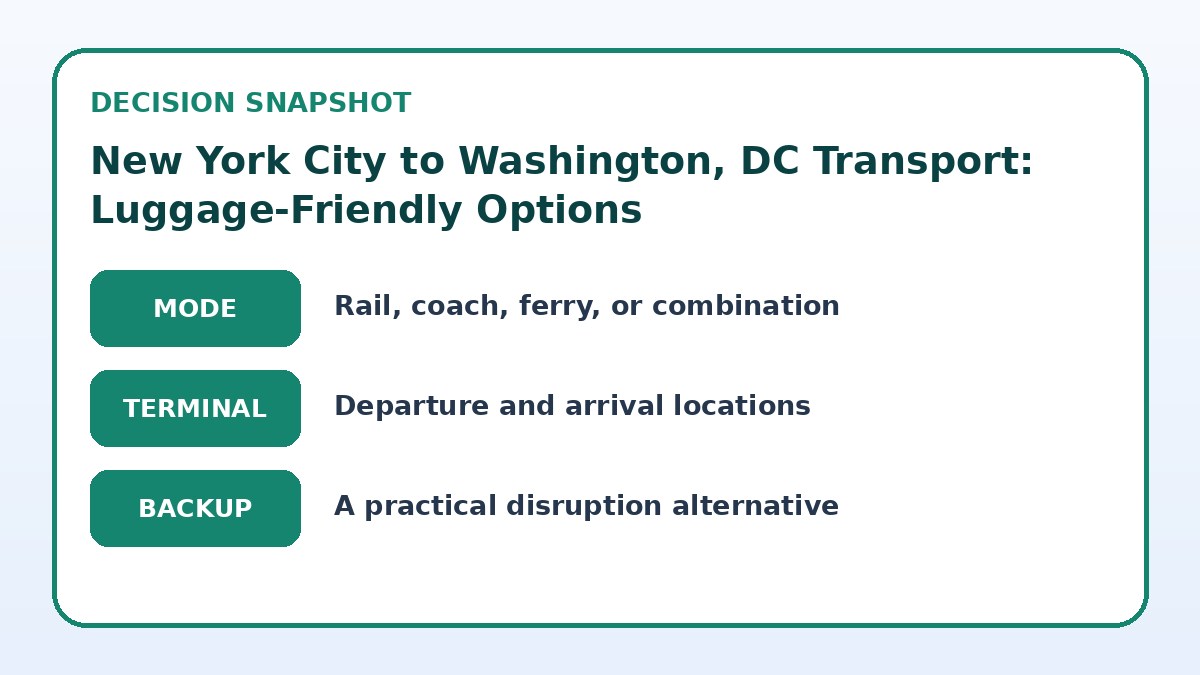
| Approach | Best for | Tradeoff to check |
|---|---|---|
| Intercity train | Travelers with 1–2 large suitcases who want central station access and onboard storage. | May require carrying through busy stations and checking specific baggage dimensions on the booking page. |
| Intercity bus | Budget-conscious travelers with heavy items willing to check bags in underfloor bays. | You hand luggage to staff and may face longer waits and limited control over handling. |
| Rideshare or private car | Groups or travelers with many bulky items needing door-to-door convenience. | You manage trunk space and curbside logistics; traffic and parking can add time and stress. |
| Combined modes (train + rideshare) | Flexible travelers balancing central arrival with last-mile door-to-door service. | Requires planning transfer routes and timing; double-check luggage policies for each leg. |
Station access, transfers, and last-mile logistics
Plan how you’ll get to and from major terminals. New York and Washington each have several central stations and terminals, and your choice determines the easiest neighborhood access. For trains, look for stations that have level boarding, elevators, or escalators close to platform entrances; stations with baggage carts can be helpful, though availability varies. For buses, confirm the curb or terminal location since some stops are on busy streets that require a short walk with luggage to reach a cab or rideshare pickup spot. Allocate extra time if you expect rush-hour crowds or limited elevator access.
If you’ll be changing modes—say, a commuter train to a long-distance train or a bus to a subway—map the transfer route in advance and note any stairs. When scheduling rideshares, factor in waiting time for the driver and specify curbside pickup points to avoid long carries. If you plan to leave luggage at a hotel or storage facility upon arrival, check their drop-off policies and hours; some hotels allow early luggage drop but others require payment or hold limits. Wherever possible, confirm accessibility features and baggage assistance options on the provider’s booking or station page.
Before you book
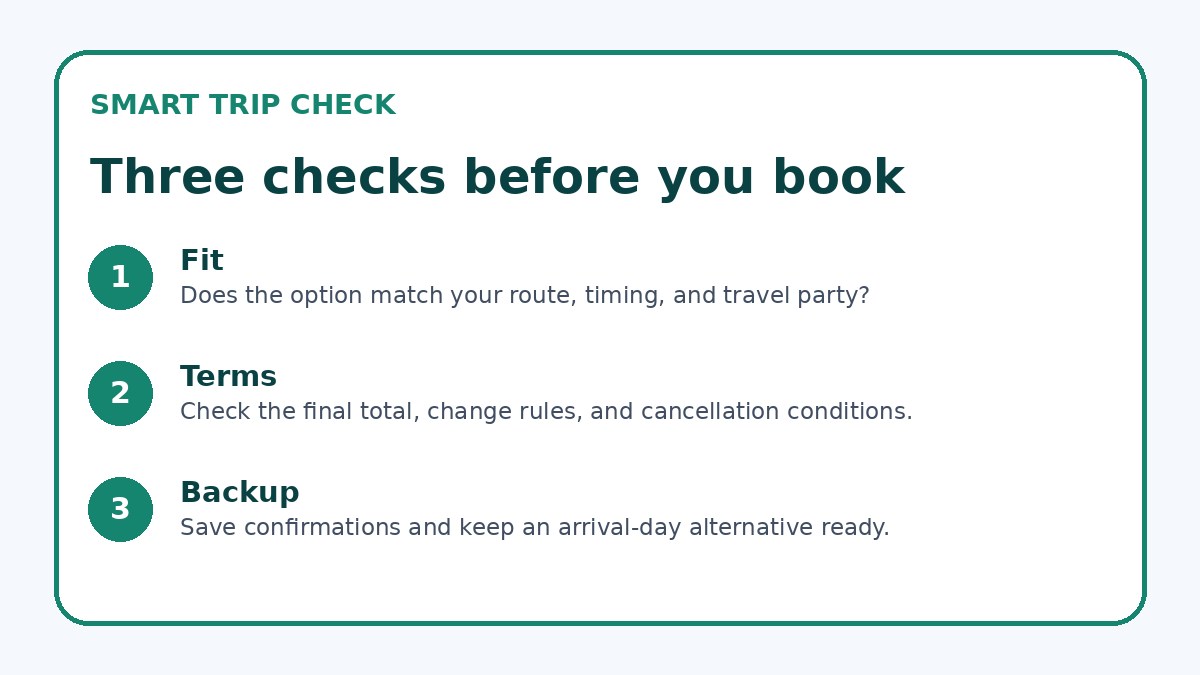
- Measure and weigh each bag; note dimensions and weight to compare with carrier baggage rules before booking.
- Pack a carry-on with essentials—documents, medications, electronics, and a change of clothes—for any checked-bag contingencies.
- Confirm the exact baggage allowance and fees on the carrier’s final booking page, not just summary search results.
- Plan your arrival and departure routes to terminals, allowing extra time for elevators, stairs, and crowded walkways.
- Label every bag externally and internally with your name and a contact number in case luggage is delayed or misplaced.
- If mobility or heavy lifting is a concern, request assistance from the carrier or station staff in advance.
What to verify on booking pages and at terminals
Before you buy, read the exact baggage rules listed on the carrier’s final booking page: permitted dimensions, number of included bags, fees for checked or oversized items, carry-on size limits, and whether items must be stowed in overhead bins or under seats. Don’t assume different routes or fare classes have the same allowance—rules can vary by service type or ticket. Also check whether the carrier offers assistance for heavy bags, whether reservations for luggage are needed, and what the policy is for transfers and unclaimed items.
At terminals, watch for signs indicating baggage claim, oversized baggage counters, and elevator locations. If you need help, locate staff or customer service desks and ask about luggage carts, porter options, or accessible routes; staff can also confirm boarding procedures for passengers with oversized items. If using a third-party comparison site such as Trip.com to view schedules and availability, still click through to the carrier’s official booking page to confirm baggage terms and any last-minute requirements before finalizing your purchase.
Frequently asked questions
Is it easier to bring large suitcases on the train or the bus between New York City and Washington, DC?
Trains tend to be easier for large suitcases because stations are centrally located and trains usually allow you to keep luggage with you on board, often in racks or designated storage areas. Buses may accept larger items in underfloor bays, which reduces the weight you carry but means you surrender direct control and wait for retrieval at the destination. The practical choice depends on whether you prefer keeping bags with you during the trip (train) or minimizing what you carry at terminals (bus). Always confirm the exact baggage allowances and any size restrictions on the carrier’s booking page before you buy tickets.
How do I handle transfers if my trip includes multiple transport modes with luggage?
Plan each transfer step in detail: map walking routes between platforms and terminals, note elevator and escalator locations, and identify spots for curbside pickups. Pack frequently needed items in an accessible pocket so you don’t rummage through checked bags during short transfers. Factor in extra time to move luggage, especially during peak hours or when stations are crowded. Where possible, choose pickup and drop-off points with minimal stairs and clear signage, and confirm any required assistance with the carrier or station staff before travel.
Can I bring sports equipment or oddly shaped items on these routes?
Policies for oversized or unusual items vary by carrier and service type. Some trains and buses permit items like collapsible bicycles, skis, or musical instruments if they meet size and packaging requirements; others may require advance notice or a special reservation and possibly a fee. Before booking, read the carrier’s equipment rules on the final booking page and contact customer service to confirm whether your item is allowed and whether it needs to be checked, boxed, or stowed in a particular area.
Final planning note
For first-time visitors moving between New York City and Washington, DC with luggage, the best option balances control, convenience, and how much handling you’re willing to do. Trains generally simplify the journey for typical suitcases, while buses and cars create tradeoffs between cost, control, and handling. The single most useful habit is to verify baggage allowances and transfer details on the carrier’s booking page before you finalize plans. Pack smartly, label everything, and give yourself extra time at terminals—small preparations remove most of the stress around luggage management on this well-traveled corridor.
Continue planning
Check current options and final conditions
Use the provider page to confirm live availability, the final total, cancellation terms, and every condition that matters to your trip.
This evergreen planning guide was created with AI-assisted drafting and a structured quality review. It does not display live prices, schedules, availability, visa guidance, or provider rankings. Verify current details before booking. Some links are affiliate links; we may earn a commission at no additional cost to you.