If you need to travel from New York City to Boston for work, focus first on one practical question: what time-critical tradeoffs will affect productivity on your travel day? Decide whether you must prioritize a guaranteed arrival time, the ability to work en route, or the lowest number of transfer points. For most business trips the simplest starting point is to pick the mode—train, plane, or car—and then tailor departure times, luggage, and meeting buffers around that choice. In the paragraphs below I’ll give concrete checks and a quick decision framework so you can book with confidence. Before you finalize any purchase, confirm schedules, baggage rules, seat availability, and cancellation policies on the provider’s final booking page; Trip.com is one place to compare current availability if you want a secondary check.
See current options before you compare the details
Availability and final conditions change. Open Trip.com now or keep reading for the practical comparison.
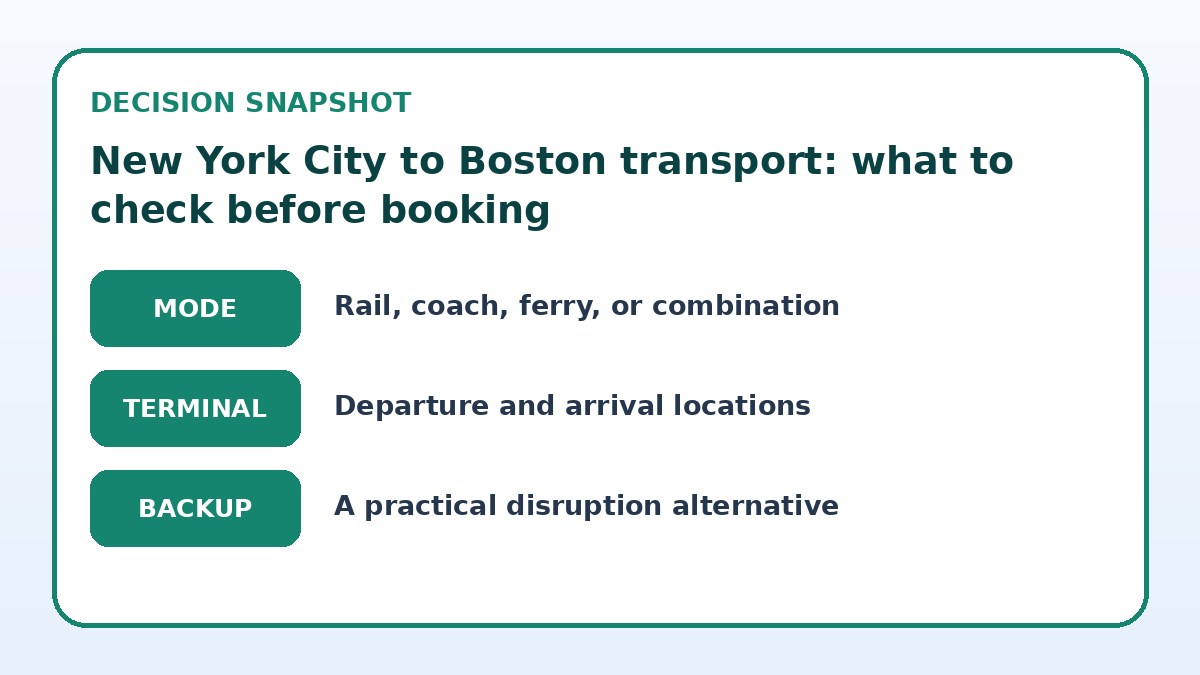
Pick the right mode for your priority—time, focus, or flexibility
Start by ranking what matters most on the travel day. If you need to be in downtown Boston at a fixed time and want to be productive between origin and destination, trains often offer the best mix of predictable arrival points and space to work. If the absolute shortest door-to-door time matters and airports are convenient for both ends, air can be faster on certain schedules, though you must add security, check-in, and transfer time. If flexibility or multiple stops en route matter—client visits, equipment transport, or last-minute schedule changes—driving or hiring a car service gives control but increases risk from traffic and parking.
When comparing options, estimate door-to-door time rather than only in-vehicle duration, and think about how you’ll use the travel time. Can you take phone calls discreetly? Will you need a laptop and stable power? If you must present immediately after arrival, prioritize options that minimize transit unpredictability and give you time to freshen up. Remember not to assume direct service; check whether your chosen train or flight is nonstop or requires connections, and compare total elapsed time and the number of transfers for each itinerary.
Timing, schedule buffers, and what to verify before booking
Once you’ve selected a mode, set realistic arrival and departure buffers. For rail, allow time to get to the station, find your track, stow luggage, and reach a taxi or rideshare after arrival. For air travel, build in extra time for security lines and airport transfers—especially if you travel during morning or evening peaks. For driving, add contingency for regular congestion corridors between New York City and Boston and plan stops for driver changes or quick meetings. Always add a cushion for unexpected delays so you don’t miss a critical meeting if something goes wrong.
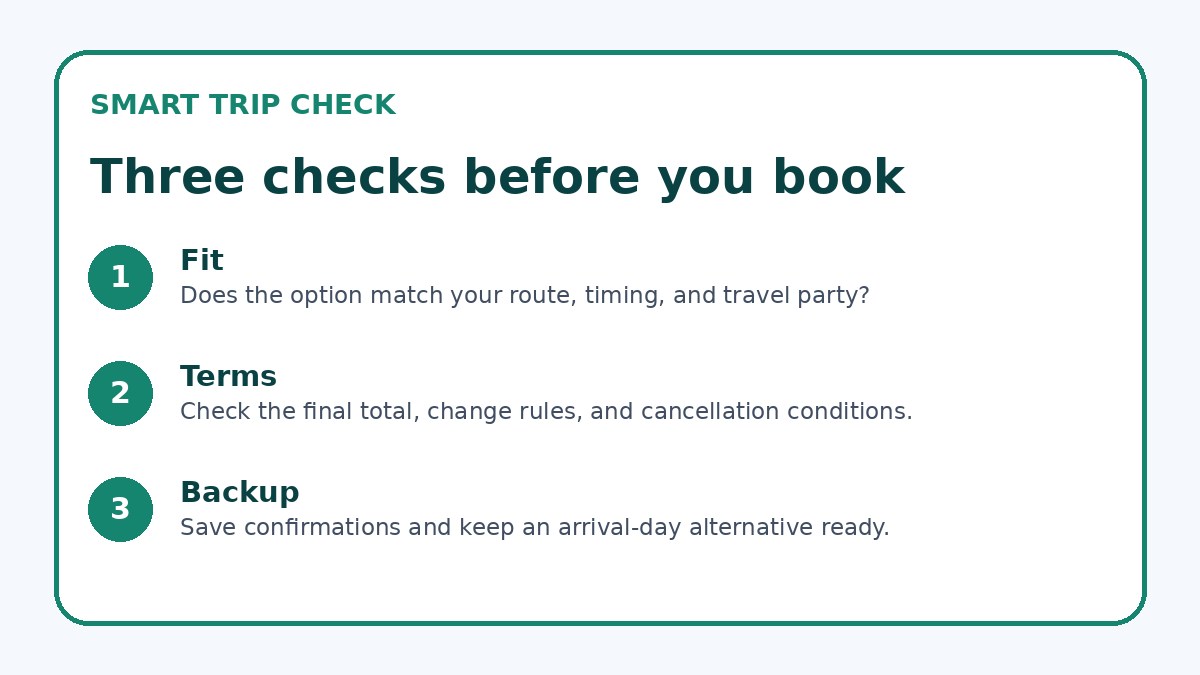
Before you click Book, verify key provider details on the final booking page: exact departure and arrival locations, baggage allowances and fees, change and cancellation policies, Wi-Fi and power availability if you intend to work, and seating options like quiet cars or extra legroom. If you need to expense the trip, capture fare class or booking references and any corporate discounts. If you use third-party aggregators to compare options, confirm those specifics on the actual provider site or your corporate travel portal before committing.
| Approach | Best for | Tradeoff to check |
|---|---|---|
| Train (downtown arrival) | Working en route, predictable station-to-station timing | May be slightly longer door-to-door time and reliant on seat availability |
| Air (fastest potential travel time) | When airports are convenient and total travel time beats alternatives | Adds security and transfer time; more vulnerable to weather delays |
| Drive or car service | Flexible schedules, multiple stops, or off-downtown destinations | Traffic unpredictability and parking or congestion costs |
| Hybrid (park-and-ride or rail-to-car) | Combining speed and flexibility for specific itineraries | Requires coordinating multiple bookings and buffers between legs |
Ready to check the option that fits your plan?
Use your exact dates and traveler details so the provider page can show the current total and conditions.
Packing, workspace, and in-transit productivity tips
Pack with the travel day in mind: a compact, organized bag with a laptop, portable charger, noise-reducing earbuds, a paper notebook, and any presentation materials. Keep important documents and boarding passes in an easily accessible spot, and save digital copies to your phone or cloud so you can reprint or re-download if needed. For short trains or flights, a commuter briefcase or backpack that fits under the seat speeds boarding and reduces wait time for luggage claim. If your work requires a professional appearance on arrival, carry a wrinkle-resistant outfit or a travel steamer-sized solution to freshen up quickly.
Plan your in-transit work flow. Reserve time for deep work only where you can reliably focus—on quieter trains or in a private car—while using airports or busy stations for quick administrative tasks. Use offline copies of files in case Wi-Fi is unreliable, and set phone to Do Not Disturb during concentrated work blocks. If you expect to join calls, check microphone quality and background noise; schedule calls in a private meeting room or wait until you are at the destination if confidentiality or audio quality is critical.
Before you book
- Confirm exact departure and arrival locations and whether service is nonstop or requires connections.
- Check baggage rules, carry-on allowances, and any fees on the provider’s final booking page.
- Build arrival and departure buffers that reflect door-to-door time, not only in-vehicle time.
- Save digital copies of tickets, ID, and meeting materials to your phone or secure cloud.
- Pack a compact charger kit, noise-cancelling earbuds, and a small toiletry or outfit touch-up kit.
- Verify Wi-Fi, power availability, and quiet-car rules if you plan to work during transit.
Ground logistics in New York City and Boston to save time
Factor in the local leg of the journey on both ends. In New York City, transit options to major train stations and airports include subways, commuter rail, taxis, and app-based car services—choose the one that best matches your timing and luggage needs. In Boston, consider whether your appointment is in the financial district, Cambridge, or another neighborhood; different arrival points will change your last-mile time significantly. If you have a meeting right after arrival, choose the arrival station or airport closest to your first appointment to shave off unnecessary transfers.
If you plan to use a car service or rental, confirm pickup/drop-off rules, meeting points, and parking options at your destination. For corporate billing, save account numbers and corporate codes in advance. If you’ll be taking public transit at either end, preload transit cards or mobile tickets to avoid queues. Finally, know where to freshen up—station lounges, business centers, or airport club access can let you change clothes, check email on a stable connection, and arrive at meetings calm and ready.
Frequently asked questions
Is the train usually the best option for business travelers between New York City and Boston?
Trains are often a strong choice for business travelers because they offer downtown-to-downtown service and a better environment for working than airports or highways. They let you use travel time for focused work or calls where policy permits and usually reduce the stress of airport transfers. However, whether the train is the best option depends on your schedule, meeting locations, luggage, and need for guaranteed punctuality. Before booking, compare total door-to-door time, onboard amenities, and seat availability on the provider’s booking page to see if rail fits your specific priorities.
How much buffer should I schedule before an important meeting after arrival?
Aim for a buffer that covers local transfers, unexpected delays, and a brief time to regroup—typically 45 to 90 minutes depending on mode and distance from arrival point to meeting location. If you arrive at a downtown station by train, a shorter buffer may suffice. If you fly into an airport, add extra time for baggage claim and ground transit. For high-stakes meetings, err on the side of extra time and book earlier travel; confirm transit options and real-time traffic or transit conditions close to departure to adjust if needed.
What should I verify about tickets and bookings before finalizing corporate travel?
On the provider’s final booking page, confirm departure and arrival stations or airports, exact times, baggage allowances, fare class, seat selection, and change/cancellation policies. Capture booking references and any corporate discount or billing codes required for expense reporting. If you rely on third-party sites to compare options, always double-check those specifics on the operator’s own site or through your corporate travel platform before purchase. If you need lounge access or other business services, verify eligibility and how to access them ahead of time.
Final planning note
Preparing for a New York City to Boston travel day as a business traveler means deciding first what you can’t compromise—arrival time, the ability to work en route, or schedule flexibility—and then aligning mode, timing, and packing to that priority. Use the checklist to confirm provider-specific details on booking pages and build realistic buffers for the local legs of the trip. If you make the choice deliberate and pack for productivity, the travel segment can become reliable working time rather than stress. For quick availability comparisons, you can check aggregators like Trip.com but always verify final schedules, baggage rules, and cancellation terms on the operator’s booking page before you commit.
Continue planning
Check current options and final conditions
Use the provider page to confirm live availability, the final total, cancellation terms, and every condition that matters to your trip.
This evergreen planning guide was created with AI-assisted drafting and a structured quality review. It does not display live prices, schedules, availability, visa guidance, or provider rankings. Verify current details before booking. Some links are affiliate links; we may earn a commission at no additional cost to you.