
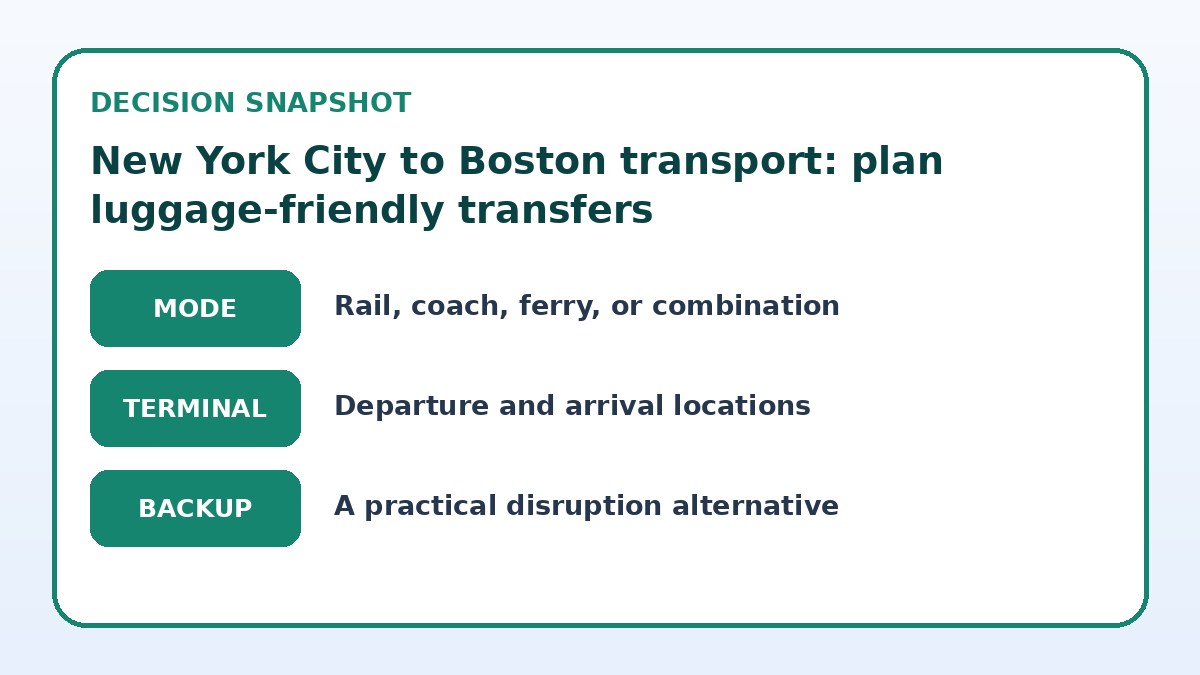
If you're traveling between New York City and Boston with extra luggage, the decision you make about stations and terminals will shape the whole trip: where to catch your train or bus, how long transfers take, and whether carrying everything yourself is realistic. For most travelers with bulky or multiple bags, prioritize routes that minimize transfers and platform stairs, choose departure and arrival points with elevator and baggage-cart availability, and confirm luggage policies with your carrier before you book. Balance convenience against cost and schedule flexibility—sometimes a short taxi or rideshare at each end saves hours and physical strain. Use the opening paragraphs to decide which station layout and transfer mode suit your load and mobility, then read on for tradeoffs, packing and verification steps, and a checklist to finalize plans.
See current options before you compare the details
Availability and final conditions change. Open Trip.com now or keep reading for the practical comparison.
Pick the right stations and terminals
New York City and Boston each have several arrival and departure points used by trains and intercity buses. When you have extra luggage, prefer major terminals where staff, escalators, elevators, and clear signage are more likely. In larger terminals, short-term curbside drop-offs and designated rideshare zones simplify a heavy handoff: you can unload near the entrance and ask the driver to help with bags. Smaller terminals or remote bus stops may lack elevators, ramps, or baggage storage, which forces repeated lifting and longer walks — details that matter when every bag weighs more.
Compare the practical layout of each option rather than focusing solely on schedule or fare. Look at map views and station floor plans to estimate door-to-platform distances and whether baggage carts or luggage ramps are shown. If a service offers checked baggage handling, that can remove the need to carry everything between modes; if not, you may prefer a slightly longer but direct route that avoids transfers. Before booking, check the terminal’s current passenger guidance and the provider’s notes on accessibility and luggage handling to avoid surprises at departure.
Transfer methods: taxi, rideshare, shuttle, or public transit
With heavy luggage, a single door-to-door transfer (taxi or rideshare) often beats cheaper but multiple-transfer public transit. Taxis and rideshares let you load at curbside and ride directly between terminal and station; drivers can typically help with bags, and you avoid stairs and long platform walks. Airport-style shuttles and private car services add comfort and may be pre-bookable for larger loads, but require check-in and sometimes meeting points. Compare these ground options by total time from terminal door to your next vehicle, not just cost.
Public transit and intermodal transfers can be practical if you plan and pack for it: wheeled, compact luggage; quick elevator access; and extra transfer time. If you take subway or local bus connections, confirm elevator reliability and whether the connecting stops have lift access. Folding or collapsible luggage and a small carry bag for essentials make public transit manageable, but the physical burden increases with each transfer. Decide how many transfers you are willing to perform yourself before opting for public transit over a paid car option.
| Approach | Best for | Tradeoff to check |
|---|---|---|
| Direct door-to-door car (taxi/rideshare) | Travelers with very heavy or multiple bags who need minimal handling | Higher cost but lowest physical strain and fewest transfers |
| Intercity train between major terminals | Those who want fewer transfers with some platform walking and potential checked baggage | Depends on terminal layout; may require short curb or elevator transfers |
| Intercity bus with terminal stops | Budget-conscious travelers with manageable wheeled luggage | Often more stops and potential stair or curb handling at smaller stations |
| Public transit connections (subway + commuter rail) | Travelers minimizing cost who can handle transfers and rely on elevators | More transfers, possible elevator outages, and heavier physical effort |
Ready to check the option that fits your plan?
Use your exact dates and traveler details so the provider page can show the current total and conditions.
Packing and luggage handling strategies
When moving between busy terminals, how you pack and move luggage matters as much as which vehicle you choose. Use one primary wheeled suitcase plus a smaller bag that you can sling over a shoulder or secure to the main case. Distribute heavy items low in the main bag and keep essential documents, medications, valuables, and a change of clothes in your carry-on. If you anticipate stairs or crowded platforms, a luggage strap or strong handle wrap can make lifting quicker and safer.
Consider bringing small, practical tools: a lightweight folding cart if you expect long walks, luggage straps to bundle multiple bags, and simple protective covers for rain. If you have oversized items or sports equipment, contact the transport provider to learn whether they accept checked oversized luggage or if you must handle it yourself. Finally, practice a realistic transfer in your mind—visualize curb to platform movements and estimate how many hands you’ll need to lift bags safely into a vehicle or onto a rack.
Before you book
- Check the carrier’s luggage policy on the final booking page for size, weight and checked baggage options before you commit.
- Review station and terminal maps to confirm elevator/escalator locations and estimated walking distances from curb to platform.
- Arrange a door-to-door ground transfer (taxi, rideshare, or shuttle) if you have oversized or multiple bags to avoid repeated lifting.
- Pack essentials and valuables in a small carry bag you can access without opening your main suitcase during transfers.
- Reserve extra connection time between services to allow for elevator waits, bag loading, and potential pickup zone changes.
- If you rely on public transit, check local elevator status pages or call station customer service the day before travel.
What to verify before booking and the tradeoffs
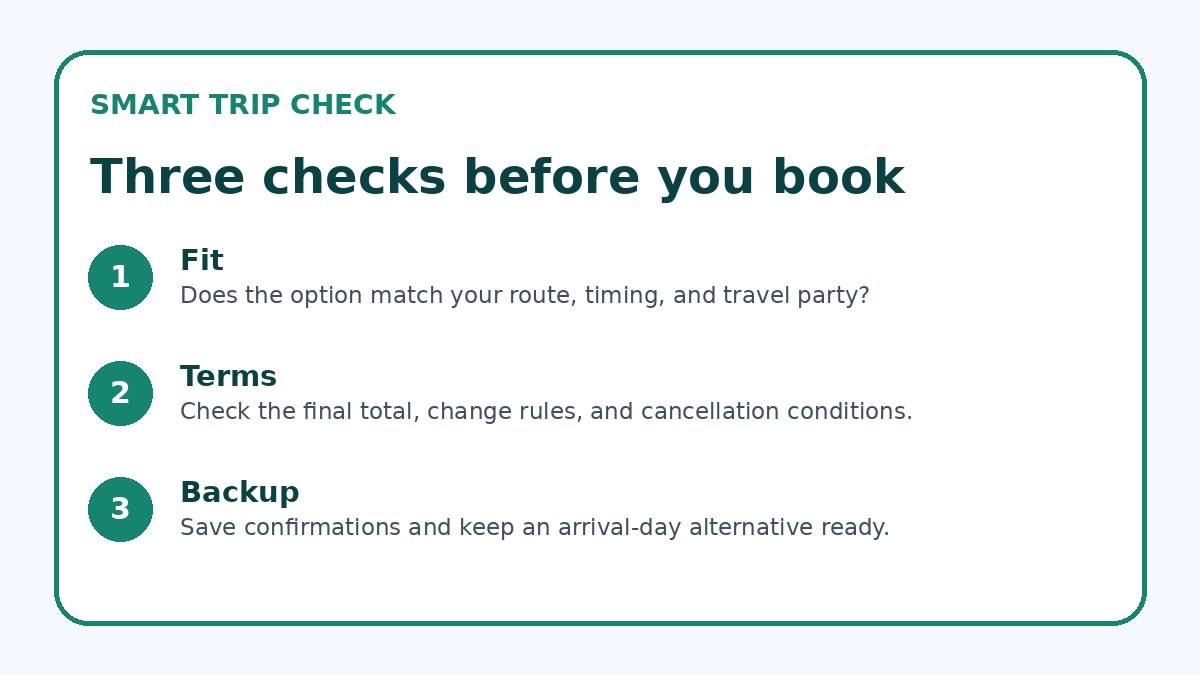
Before purchasing tickets, verify three key things: the carrier’s luggage policy (including dimensions and checked baggage options), terminal maps showing elevator/escalator locations, and ground-transport pickup/drop-off procedures. Because policies and terminal layouts can change, read the final booking page and the carrier’s official support pages for up-to-date luggage allowances and instructions on where drivers will wait. Trip.com can be useful to compare current availability and conditions, but always confirm provider-specific facts on the carrier’s site or customer service channel.
Tradeoffs are inevitable: the most comfortable transfer option (private car or direct service) will usually cost more but reduces physical strain and transfer complexity. Cheaper public-transit routes may save money but require more time, elevator access, and confidence carrying bags. Choose based on three criteria: how heavy or bulky your luggage is, how many transfers you can comfortably manage, and whether saving money is worth the extra physical effort. Make contingency plans for elevator outages, crowded platforms, or delayed ground transport.
Frequently asked questions
Can I check luggage on intercity trains between New York City and Boston?
Some intercity train services offer checked baggage or hold storage, while others expect all luggage to remain with passengers. Because these policies can change and differ by carrier and specific service, check the carrier’s official baggage rules on the booking confirmation page. If checked service exists, verify drop-off and claim locations at both departure and arrival terminals, any size limits, and required arrival times for dropping off bags. If no checked option exists, plan a single direct ground transfer or pack to carry your luggage comfortably.
What’s the easiest way to transfer between terminals with heavy luggage?
A door-to-door car service—taxi, rideshare, or private shuttle—generally offers the easiest transfer when you have heavy luggage because it minimizes walking and platform lifts. Drivers typically load at curbside and deliver you directly to the next terminal entrance or curbside pickup, reducing the number of times you must lift your bags. If you choose public transport to save money, pick routes with elevator access and build extra time into your schedule; otherwise, book a car for the least physical strain.
How much transfer time should I plan when I have extra bags?
Allow more buffer than typical guidance: add time for curbside loading, elevator waits, and carrying bags across platforms. For a single direct ride between terminals, build in extra 10–20 minutes for loading and elevator access. For public-transit connections, add at least 20–45 minutes to accommodate transfers and potential elevator outages. These are planning suggestions—check the carrier’s recommended arrival time, real-time elevator information for stations you’ll use, and make decisions based on your mobility, luggage count, and confidence handling loads.
Final planning note
Traveling between New York City and Boston with extra luggage is a solvable logistics problem when you focus on station layouts, transfer modes, and luggage rules. Prioritize routes that reduce the number of transfers and avoid stairs; if necessary, pay for a door-to-door car to protect your time and strength. Confirm luggage policies and terminal access on the carrier’s final booking page, and create a contingency plan for elevator outages or pickup-zone changes. With the checklist and comparisons above, you can pick the transfer approach that fits your luggage, budget, and tolerance for physical effort—then travel with far less stress.
Continue planning
Check current options and final conditions
Use the provider page to confirm live availability, the final total, cancellation terms, and every condition that matters to your trip.
This evergreen planning guide was created with AI-assisted drafting and a structured quality review. It does not display live prices, schedules, availability, visa guidance, or provider rankings. Verify current details before booking. Some links are affiliate links; we may earn a commission at no additional cost to you.