Short answer: for most couples planning a typical Mexico City visit, lean on public transport and occasional taxis/ride-hailing; rent a car only if you plan day trips outside the metropolitan area, have mobility needs, or value perfect schedule control. Mexico City’s rapid transit, buses, and a dense urban layout make moving between central neighborhoods straightforward, while traffic, parking scarcity, and restricted driving zones complicate point-to-point car travel. That said, a rental becomes attractive when your itinerary includes Puebla, Teotihuacán, Valle de Bravo, or flexible countryside explorations, or when you prefer private door-to-door comfort. This guide compares practical tradeoffs—time, cost, convenience, comfort, safety, and romance—so couples can choose the travel mode that fits their pace, budget, and mood.
See current options before you compare the details
Availability and final conditions change. Open Trip.com now or keep reading for the practical comparison.
Time and convenience: getting around daily
Public transport in Mexico City—metros, buses, light rail, and frequent ride-hailing options—tends to be faster across many central neighborhoods because it uses dedicated routes, avoids searching for parking, and is not slowed by the time spent finding a parking spot. For couples, this often means less stress moving between museums, restaurants, and plazas; you’ll spend more time enjoying destinations rather than circling for parking. If your day centers on a single neighborhood or a short list of central sites, walking plus transit usually offers the best combination of speed and spontaneity without the responsibility of operating a vehicle.
Driving gives you door-to-door control but requires allowances for congestion, narrow streets in older districts, and time to find secure parking—often a scarce and expensive commodity in central areas. For early mornings or late nights when public transit options shrink or feel less comfortable, a car can restore flexibility. Still, factor in the time lost to city traffic and the occasional need to detour around restricted or pedestrian-only zones; these can make short cross-city drives slower than public transport. Couples should weigh whether private convenience outweighs predictable time spent navigating and parking.
Cost and budgeting: what to compare
Compare the baseline costs of a rental—daily rate, insurance, fuel, parking, and possible tolls—against the combined expense of transit fares, ride-hailing rides, and occasional taxis. For short stays concentrated in the central city, public transport plus a few ride-hails will usually be cheaper and more predictable than the cumulative total of rental-related fees, especially once parking and insurance are included. Remember that many costs are variable and depend on the type of vehicle you choose, how often you drive, and whether you pay for hotel parking.
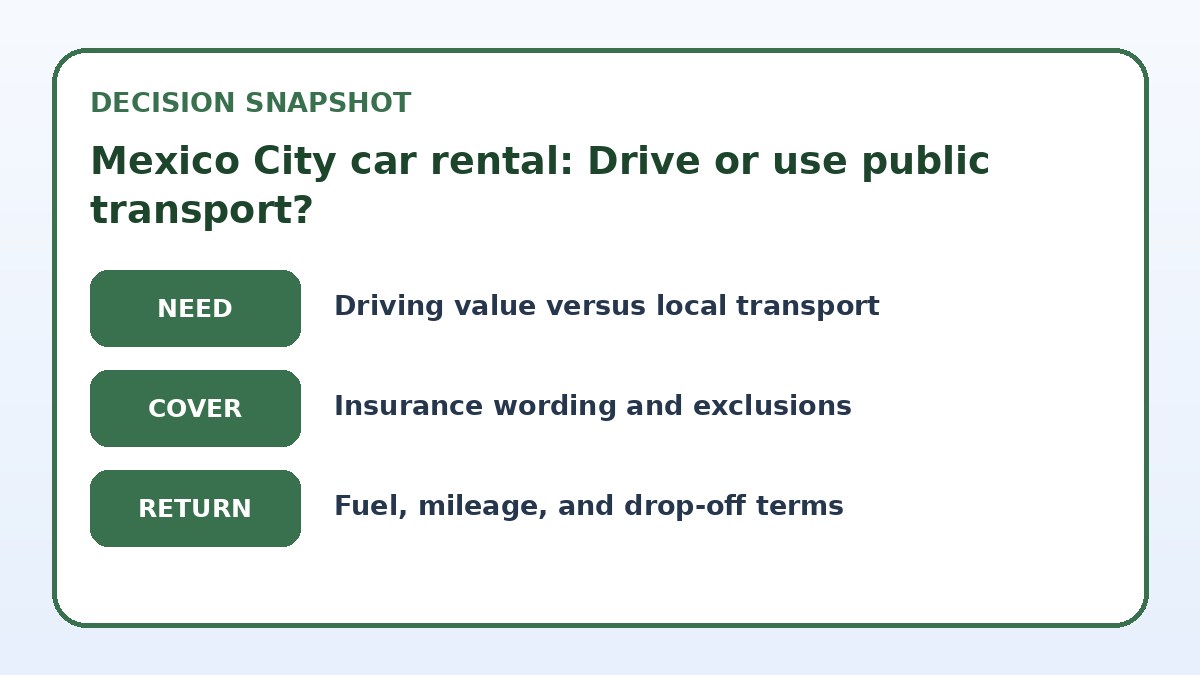
When evaluating a rental, read the provider’s final booking page for exact insurance terms, fuel policy, mileage limits, and fuel deposits—these details can significantly change the effective cost. For public transport, calculate an estimate based on expected daily journeys and factor in occasional higher-cost rides at night. If you plan one or two big day trips, compare the total cost of point-to-point transport options plus local tours to the full cost of a multi-day rental; sometimes a short-term rental or a private day tour is more economical and less stressful than managing a car for the whole stay.
| Approach | Best for | Tradeoff to check |
|---|---|---|
| Public transport and ride-hailing | Couples staying in central neighborhoods with a city-focused itinerary. | Less privacy and limited late-night options compared with a private car. |
| Short-term rental for day trips | Couples planning multiple excursions outside the city during their stay. | Higher per-day cost and extra time spent parking and navigating urban traffic. |
| Full rental for the whole stay | Couples who prioritize independence, luggage convenience, and rural exploration. | More responsibility, potential parking constraints, and urban driving stress. |
| Combined approach (transit + occasional rental) | Couples seeking flexibility: urban mobility by transit and a car for select days. | Requires extra planning to coordinate pick-up/drop-off and may increase logistics. |
Ready to check the option that fits your plan?
Use your exact dates and traveler details so the provider page can show the current total and conditions.

Safety, comfort, and relationship dynamics
For couples, comfort and perceived safety are personal but important. Mexico City’s public transport is efficient but can be crowded at peak times; pick non-peak travel windows when possible and prefer taxis or ride-hailing late at night. Sharing close quarters on packed transit can feel rushed if you want a leisurely, romantic pace; conversely, it offers a chance to experience local life. If one partner prefers to avoid driving in dense urban traffic, relying on transit sidesteps the stress and lets both relax and enjoy time together.
A car can feel intimate and private—useful for carrying luggage, changing outfits, or playing your own music on longer drives—but it also places one partner in charge of navigation and traffic stress. Rotate driving duties if both can drive confidently, or consider hiring a driver for day trips so both can enjoy the scenery. Whatever you choose, discuss expectations ahead of time: who will navigate, who will handle parking decisions, and how you’ll split transport costs to prevent small tensions from affecting the trip mood.
Before you book
- Map your daily itinerary and mark which destinations are within central neighborhoods versus outside the metro area.
- Confirm whether your accommodation includes secure on-site parking and read the hotel’s parking terms on the booking page.
- If renting, review the provider’s final booking page for insurance options, fuel policy, mileage limits, and any additional driver fees.
- Estimate total transport costs for both options: multiply expected transit/ride-hailing rides and compare to the rental’s all-inclusive daily cost.
- Decide on evening mobility: plan ride-hailing or hotel transfer options for late nights rather than assuming public transit is available.
- Discuss driving duties and navigation responsibilities with your partner to avoid stress during congested city driving.
Where to stay and when a rental makes sense
Neighborhood choice strongly affects the decision. Central areas—historic center, Condesa, Roma, Polanco, and nearby cultural districts—are best explored on foot and by transit; staying in these zones typically reduces the need for a car because many attractions cluster close together. If your accommodation provides reliable transit connections and you plan to dine and sightsee within those neighborhoods, you’ll save hassle and money by skipping the rental. For couples who prefer boutique walks, café mornings, and evening strolls, public transport supports a relaxed urban rhythm.
If your itinerary includes frequent trips to outlying attractions, wineries, archaeological sites, or rural retreats, a rental becomes more attractive for scheduling flexibility and convenience. Also consider hotel parking availability and cost—some quieter or suburban properties include parking that makes a rental practical without extra hassle. Before booking a car, verify whether your chosen hotel has secure parking on the final booking page and whether it charges for overnight parking; these are provider-specific details that can swing the decision one way or the other.
Frequently asked questions
Is driving in Mexico City difficult for visitors?
Driving in Mexico City can be challenging because of heavy traffic, unfamiliar signage, and restricted or pedestrian-only areas in some historic neighborhoods. Visitors should be comfortable with urban driving, using GPS that accounts for real-time routing, and scanning parking options before arrival. If you’re not confident, consider using ride-hailing, taxis, or public transit for city travel and reserve a rental only for specific day trips. For rentals, check the provider’s rules about crossing state lines or restricted zones on the final booking page.
Can couples rely on ride-hailing instead of renting a car?
Yes—ride-hailing services offer flexible, door-to-door transport that removes the need to navigate or park, making them a strong choice for couples who want occasional private trips without the commitment of a rental. They are particularly useful for evenings, airport transfers, or when carrying luggage between locations. For frequent day trips outside the city, ride-hailing may be expensive compared with renting, so compare likely ride counts to a rental’s all-day cost. Verify pickup options at your accommodation and any meet-up instructions on the ride-hailing app before travel.
How should we choose where to stay if undecided about renting a car?
If you prefer public transport, choose central neighborhoods with strong transit connections and a dense cluster of attractions and restaurants to minimize the need for a vehicle. If you anticipate many day trips or value private space, pick a hotel with reliable on-site parking or easy access to highways and intercity routes. When booking, read accommodation details and the property’s transportation and parking information on the official listing or booking page. Consider a compromise: stay central for most nights and book a short rental only for the days you plan to explore outside the metro.
Final planning note
For most couples visiting Mexico City, public transport combined with occasional ride-hailing offers the best balance of convenience, cost, and low stress for city-focused itineraries. A rental car shines when your plans include repeated day trips beyond the metropolitan area, when you need private space for gear or mobility reasons, or when staying in outlying neighborhoods with limited transit access. Make the decision by mapping your daily destinations, checking hotel parking details, and comparing the rental provider’s final booking conditions against an estimated total for transit and ride-hailing. If uncertain, a hybrid approach—using transit in the city and renting for selected days—often delivers the flexibility to enjoy both urban life and nearby escapes without committing to one mode for the entire trip. For current availability and comparisons, you can optionally check Trip.com as one place to review rental options and transit connections.
Continue planning
Check current options and final conditions
Use the provider page to confirm live availability, the final total, cancellation terms, and every condition that matters to your trip.
This evergreen planning guide was created with AI-assisted drafting and a structured quality review. It does not display live prices, schedules, availability, visa guidance, or provider rankings. Verify current details before booking. Some links are affiliate links; we may earn a commission at no additional cost to you.