Practical short answer: if you have more than one large suitcase, fragile items, or irregular luggage (sports gear, musical instruments), a private transfer or rideshare with a roomy vehicle usually saves stress and awkward lifts. If you travel light apart from one or two checked bags, Melbourne’s public options can be cheaper and surprisingly efficient, provided you can handle stairs, busy trams, or timed connections. Before you commit, compare door-to-door convenience, number of bags allowed, walking distance to stops, and how much carrying you’ll do at each end. Also verify vehicle size rules, luggage limits, and meeting-point details on the provider’s booking page—those specifics change often. Use this guide to weigh speed, cost, and physical effort so you choose the transfer that fits your luggage and mobility needs.
See current options before you compare the details
Availability and final conditions change. Open Trip.com now or keep reading for the practical comparison.
Deciding quickly: who needs private transfers?
Private transfers are most useful when your luggage mix makes public travel impractical. Think multiple large suitcases, items that require protective handling, or equipment that won’t fit into a taxi boot. Choose a private option if you value a guaranteed vehicle that meets your exact needs—flat-floor loading for cases, a van for bike boxes, or a people-mover for family groups. A single door-to-door service also reduces the amount of lifting and walking you’ll do between terminals, baggage claim, and accommodation.
Before booking, don’t assume every private transfer is identical. Operators set passenger and luggage limits differently and may charge extra for oversized pieces. Always check the final booking page for the provider’s vehicle dimensions, how many suitcases count as ‘standard’, whether drivers help with loading, and the precise pickup point at Melbourne’s terminals. If you want a dedicated driver who meets you curbside, verify the meet-and-greet service and where the driver will wait, since airport pickup rules are specific and often updated.
When public transport is the sensible choice
Melbourne’s public network can handle most traveller luggage if you plan ahead. Trains and SkyBus-style services link the airport with central areas and offer easy, frequent departures; trams and buses cover many inner suburbs. Public options are best when you travel light, can lift and wheel your bags short distances, and expect traffic delays to make car-based transfers slower. They also help avoid surge fares and occasional taxi queues at peak times.
Consider the physical steps involved: some tram stops, train stations, and interchanges have stairs, lifts, or ramps that may be crowded or slow. Compare how many transfers are needed, the distance between stops and your accommodation, and whether luggage ramps or luggage space is typically available. Check operator pages for real-time disruption alerts and platform access notes; if you have mobility needs, verify elevator availability or consider a private option instead.
| Approach | Best for | Tradeoff to check |
|---|---|---|
| Private door-to-door transfer | Travelers with multiple large or fragile items, groups, or mobility needs | Higher cost but minimal carrying and direct pickup; check vehicle size and luggage policy before booking |
| Taxi or rideshare | Small groups with normal-sized suitcases who want flexible pickup times | Good balance of convenience and cost; vehicle boot space varies and surge pricing can apply |
| Express airport bus or dedicated shuttle | Single travelers with standard luggage seeking predictable schedules to central areas | Lower cost and scheduled services; may require short walk or transfer to final destination |
| Public trains and trams | Budget-minded travelers with carryable bags comfortable with transfers and stairs | Cheapest regular option but can be crowded and involve multiple changes and walking |
Ready to check the option that fits your plan?
Use your exact dates and traveler details so the provider page can show the current total and conditions.
Tradeoffs: cost, time, and effort
Cost vs convenience is the central tradeoff. Private transfers and taxis convert your time and physical effort into price: less walking, carrying, and waiting. If you value flexibility or have unpredictable arrival times, a private booking that waits for your flight may feel worth the premium. However, on a budget and with manageable luggage, public transport often wins on price and predictability—trains and express airport buses run to timetables, and you avoid driver waiting charges or long roadside queues.
Time considerations matter too. A direct private transfer can be faster door-to-door when public routes require multiple changes or long walks. Conversely, in peak traffic a high-occupancy vehicle might take longer than a simple train or dedicated airport bus. Compare estimated door-to-door travel time (not just in-vehicle time), routes, and likely traffic conditions for your arrival window. For any timing-sensitive choices, check live schedules and possible delays on the provider’s booking page before booking.
Before you book
- Count and photograph each piece of luggage; note unusual dimensions to confirm with providers.
- Check the provider’s stated luggage allowance and vehicle type on the booking page before payment.
- Confirm exact airport pickup point and meeting instructions for your terminal on the reservation.
- Estimate door-to-door time including walks, lifts, and transfers, not just in-vehicle time.
- If traveling with fragile or oversized items, ask the provider about handling procedures and insurance options.
- Have a backup plan (local taxi app or public route) in case your booked vehicle is delayed or cancelled.
Practical booking checks and last-minute planning
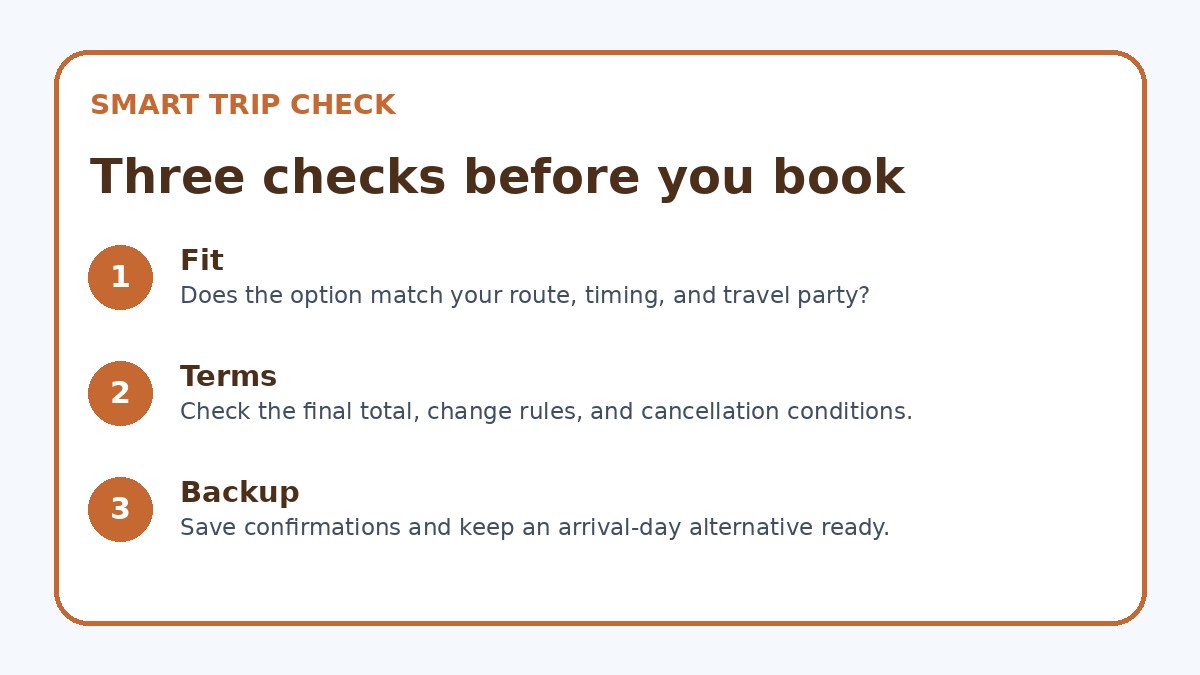
Always confirm a handful of things before you book: the explicit luggage allowance (number and size of bags), where the pickup and drop-off points are at the airport and your accommodation, cancellation or amendment policies, and how the driver or operator handles flight delays. For public services, verify exact stop names, any required ticket types, and the walking distance to your lodging. When provider-specific facts could change, check the final booking page—this is where up-to-date pickup instructions and vehicle details will appear.
If you want to compare options quickly, look at estimated door-to-door travel time, number of bag-handling steps, and how many people will travel with you. Consider booking a private vehicle for special-occasion travel, fragile items, or early-morning/late-night arrivals. For routine arrivals with standard baggage, test a public option on a less critical trip to gauge how easy the routes and transfers feel. Trip.com is one place to compare current availability and service details, but always confirm policies on each provider’s own page.
Frequently asked questions
Can I bring oversized sports equipment or a bike on Melbourne public transport?
Many forms of Melbourne public transport accept standard-sized luggage, but oversized equipment can be awkward on trains and trams, especially at peak times. Policies and space vary by operator and service; some routes or times may discourage large items. Before relying on public transport, check the operator’s own guidance and any special rules for bicycles, surfboards, or boxed bikes. If the gear is valuable or difficult to manoeuvre, a private transfer often reduces handling and fits a vehicle to your equipment size.
How do I decide between a taxi, rideshare, or booked private transfer with lots of bags?
Start by counting bags and measuring anything oversized. For a single family or group with 2–4 suitcases, a taxi or rideshare may suffice if the driver’s vehicle has a large boot; confirm when you book or request a larger vehicle. For larger groups, fragile items, or many suitcases, pre-book a private transfer specifying vehicle type. Always check the provider’s luggage policy, pickup logistics at Melbourne airport, and whether drivers assist with loading—these details appear on the final booking page and eliminate most surprises.
What should I do if my flight is delayed and I’ve booked a timed transfer?
First, check the transfer operator’s flight-check policy on your booking confirmation; many private services monitor arrival times and adjust pickup automatically, but rules differ. Contact the operator through the number or messaging option on the booking page to confirm updated arrival and pickup details. If the operator does not monitor flights, allow buffer time when you book, or switch to a flexible taxi or rideshare on arrival. Keep a copy of your booking confirmation and pickup instructions handy to show airport staff or drivers if needed.
Final planning note
Choosing the right Melbourne airport transfer for extra luggage comes down to balancing convenience, cost, and the physical effort you’re willing to accept. Private transfers and pre-booked larger vehicles cut carrying and tight connections, which matters for families, fragile items, and oversized gear. Public transport or scheduled airport buses work well when your bag count is modest and you prefer lower cost over door-to-door service. Before you make a reservation, verify luggage limits, pickup points, and handling policies on the provider’s booking page. That final check ensures your chosen transfer meets your luggage needs and keeps arrival stress to a minimum.
Continue planning
Check current options and final conditions
Use the provider page to confirm live availability, the final total, cancellation terms, and every condition that matters to your trip.
This evergreen planning guide was created with AI-assisted drafting and a structured quality review. It does not display live prices, schedules, availability, visa guidance, or provider rankings. Verify current details before booking. Some links are affiliate links; we may earn a commission at no additional cost to you.