
Practical answer first: for most solo travelers moving luggage between Los Angeles and San Francisco, choose the transport mode that fits your luggage size, comfort tolerance, and timing. Driving gives door-to-door control of bulky suitcases and gear; bus and coach services are cheapest for standard checked bags but vary in carry-on rules; trains offer more relaxed space and the ability to keep a bag near your seat; flights save time but add security and carry restrictions. Before you book, decide whether you want to keep bags with you, check them, or ship them ahead. That decision changes which option is simplest and least stressful. Below I break down how each mode handles luggage, what to verify on provider pages, and a checklist you can use before you commit to a ticket.
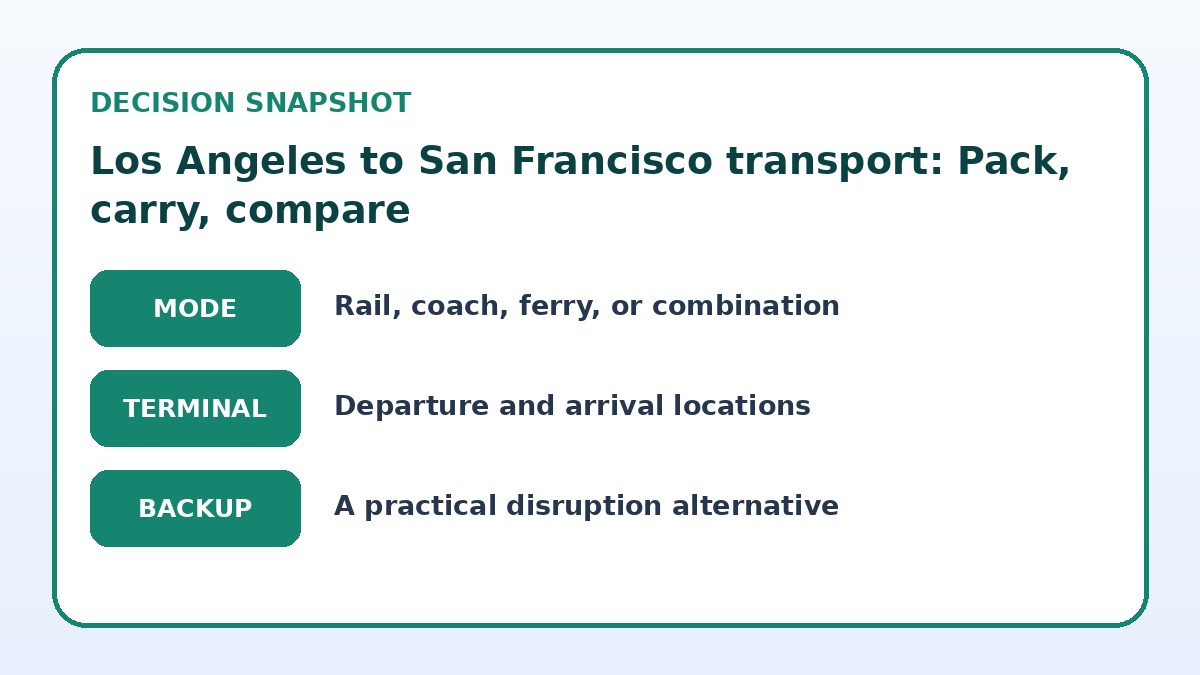
See current options before you compare the details
Availability and final conditions change. Open Trip.com now or keep reading for the practical comparison.
Drive or rideshare: control, flexibility, and luggage space
Driving yourself or hiring a private rideshare gives the most control over luggage. You can pack the trunk, adjust stops, and keep fragile gear nearby. For solo travelers this is often the easiest choice when you have multiple large suitcases, sports equipment, or photographic gear that needs careful handling. The tradeoff is responsibility: you manage loading, security, and any tolls or parking decisions at both ends. If choosing a rental car, compare vehicle classes to ensure suitcases fit comfortably together with a person and carry-on items.
If you prefer not to drive, private shuttle or rideshare services can still provide door-to-door convenience but check vehicle size options when booking. Some services list trunk space or let you request a larger vehicle for an extra fee. When planning pickups and drop-offs, factor in time to load and secure bags: tight urban pickups may lengthen the trip. Verify baggage rules, whether a return surcharge applies for oversized items, and cancellation/changes on the provider’s booking page before confirming.
Trains and intercity rail: balance of space and comfort
Intercity trains typically offer more room to stow carry-on luggage than airplanes, and some provide designated luggage racks or areas near seats. For solo travelers, trains can be especially attractive if you want to keep a bag within sight; smaller roller bags easily fit on overhead racks or at your feet. However, larger trunks may require lifting to racks or storing in vestibules; be realistic about whether you can manage lifting by yourself. When assessing train travel, check the exact baggage allowances and dimensions published by the operator, and look for services that allow on-board assistance or luggage storage at stations if needed.
Timing and station logistics matter: central stations may require stairs or elevators to platforms, so confirm accessibility for heavy bags. If a train itinerary includes transfers, ask whether luggage needs to be reloaded or if there’s enough time between connections. Compare direct vs connecting routes carefully—direct services reduce the number of times you must move bags. Always verify baggage restrictions, policies on unattended bags, and whether there are luggage storage facilities at departure or arrival stations on the operator’s final booking page.
| Approach | Best for | Tradeoff to check |
|---|---|---|
| Drive or rideshare | Large or fragile luggage, full control, door-to-door trips | You handle loading/unloading and drive time; parking and city pickup logistics can add complexity |
| Train | Comfortable seats, moderate luggage, ability to keep bags nearby | May require lifting bags to racks and planning around station accessibility and transfers |
| Bus/Coach | Budget-conscious travelers with standard-sized suitcases | Carrier baggage rules vary; loading bays and multiple stops can complicate handling |
| Flight | Fastest travel time when minimizing ground hours | Strict carry-on limits and checked-bag processing; extra handling increases risk and time at airports |
Ready to check the option that fits your plan?
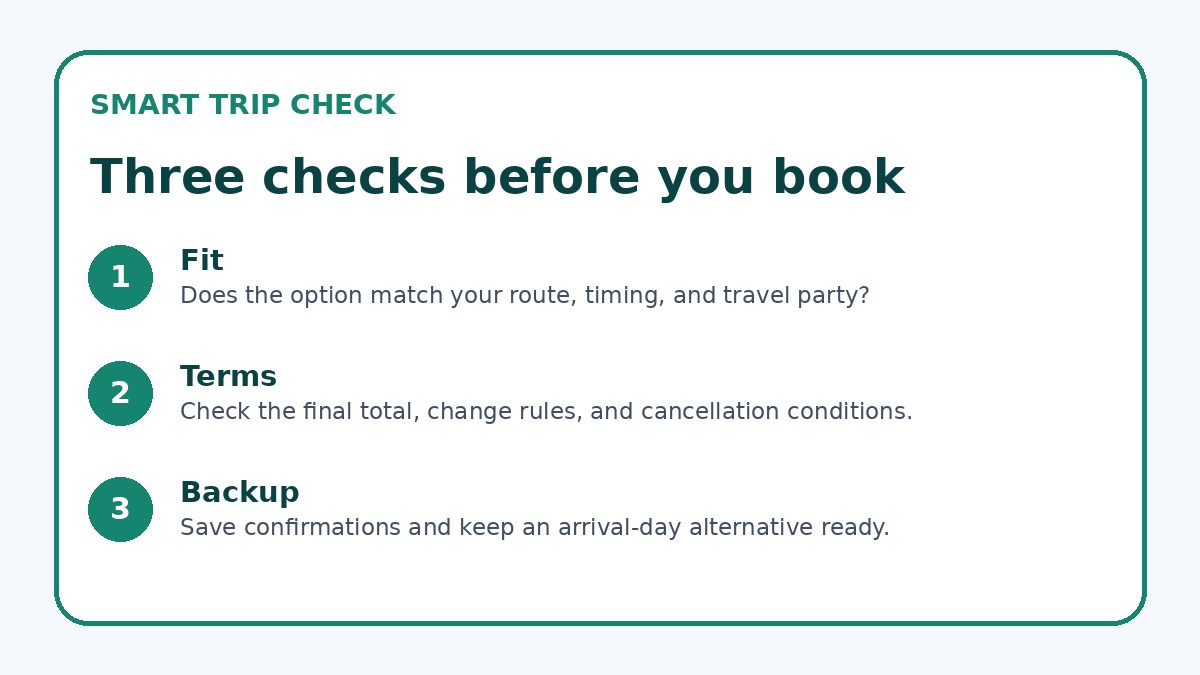
Use your exact dates and traveler details so the provider page can show the current total and conditions.
Buses and coaches: economical but variable baggage rules
Long-distance buses and coaches tend to be the most economical scheduled option, and many have underfloor bays for checked luggage plus overhead racks for carry-ons. Solo travelers with one or two medium suitcases often find buses straightforward, but baggage allowances, size limits, and the number of free items vary by carrier. Some low-cost intermediate services strictly limit dimensions or charge per extra bag. Before booking, measure your luggage and compare the operator’s published baggage policy; if anything is unclear, use customer service channels to confirm how many pieces are permitted and how bulky items are handled.
Buses also involve loading and unloading at terminals or curbside stops, which may require assistance if you have heavy bags. Consider whether you’ll be comfortable waiting at transfer points or navigating multiple stops with luggage. If durability and security are concerns, bring a sturdy lock and use tamper-evident straps. For high-value or fragile items, shipping or transporting in a personal vehicle may be safer; check the carrier’s liability and claims process on their booking page when making your decision.
Before you book
- Measure and weigh each suitcase; write dimensions and weight on a note saved to your phone before booking.
- Photograph contents and the outside of each bag for insurance and claims, storing images in cloud backup.
- Check the provider’s final booking page for exact baggage dimensions, piece limits, and fees before purchase.
- Decide whether to ship oversized items ahead and compare transit windows to your arrival timing.
- Pack a compact day bag with essentials and valuables you will keep with you during transit and security checks.
- Label bags clearly with both destination and return contact details and use a unique strap or tag to identify them quickly.
Flights: fastest with the strictest luggage rules
Flying is the fastest way between Los Angeles and San Francisco but comes with the most rigid luggage restrictions compared with ground options. Airlines enforce carry-on dimensions, number of allowed personal items, and checked-bag procedures; security screening also affects what you can carry on board. For a solo traveler deciding to fly, prioritize packing a compact, carry-on-compliant suitcase if you want to avoid checked-bag processing and the waiting time at baggage claim. If you must check a large bag, plan for pickup and possible delays and verify the airline’s claims process for damaged luggage.
When comparing flight itineraries, don't assume direct service—some routings may connect and increase handling events for your bags. If booking, review the airline’s baggage size and weight limits, fees for checked or oversized items, and any special handling options for sports or musical equipment on their final booking page. Consider the total door-to-door time including airport transfers, security lines, and baggage claim: sometimes a faster scheduled travel time is offset by airport processing, which affects how attractive flying is when you have a lot to carry.
Frequently asked questions
Can I take multiple suitcases on trains or buses between Los Angeles and San Francisco?
Policies differ by operator. Many trains allow luggage of reasonable size and quantity stored on racks or at your seat, while buses usually permit one or two pieces in the undercarriage and a carry-on overhead. For multiple large suitcases, confirm the number of free pieces and maximum dimensions on the carrier’s booking page. If you plan to transfer between services, account for each transfer’s rules and whether you’ll be able to carry or lift bags by yourself between platforms or stops.
Should I ship bulky or fragile gear instead of carrying it as luggage?
Shipping can be a good option for oversized, heavy, or fragile items if timing allows and you prefer to travel hands-free. Compare shipping transit windows to your arrival date and the cost against extra baggage fees or hiring a larger vehicle. Use a reputable courier with tracking and insurance for valuable items, and confirm delivery locations and time slots. If you ship, plan a backup for essential items you can’t afford to lose en route and keep tracking details handy in case of delays.
What should solo travelers pack to make moving luggage easier?
Prioritize collapsible and lightweight luggage, and use packing cubes to distribute weight evenly between bags. Bring a compact, comfortable wheeled suitcase plus a daypack with essentials and valuables. Add luggage straps or a bright tag for quick identification, and a small, sturdy lock for security when needed. Consider a folding luggage cart or strap if you anticipate repeated transfers; verify that items like carts are allowed on trains or buses. Finally, keep an emergency kit—snacks, water, phone charger, and basic toiletries—in your carry-on so short delays remain manageable.
Final planning note
Choosing how to travel from Los Angeles to San Francisco with luggage comes down to three questions: how much luggage you have, how mobile you feel lifting and moving it alone, and how flexible your schedule is. Driving or rideshares give unmatched control for bulky items; trains strike a balance of comfort and accessible storage; buses save money but require diligence on baggage limits; flights compress travel time but enforce the strictest rules. Before booking, measure your bags, read the provider’s baggage policy on their final booking page, and decide whether shipping any items ahead is worthwhile. If you want a quick comparison of current schedules and availability, you can check Trip.com as one source, but always verify baggage rules and final terms with the chosen carrier before purchase.
Continue planning
Check current options and final conditions
Use the provider page to confirm live availability, the final total, cancellation terms, and every condition that matters to your trip.
This evergreen planning guide was created with AI-assisted drafting and a structured quality review. It does not display live prices, schedules, availability, visa guidance, or provider rankings. Verify current details before booking. Some links are affiliate links; we may earn a commission at no additional cost to you.