Practical answer up front: if you’re flying Los Angeles to Las Vegas with extra luggage, pick a flight option that minimizes handling and time on the ground even if the fare is a little higher. Prioritize nonstop flights if available and affordable, confirm the airline’s checked-bag size/weight and carry-on policy, and add extra time at the departing Los Angeles airport for bag drop, security, and potential lane congestion. If you must connect, choose an itinerary with a single, reasonably long minimum connection time, ideally at an airport where you won’t need to re-check bags through security. Before you search live fares, gather exact travel dates, the number and size/weight of bags, traveler ages, and any assistance needs—this makes comparing fees and schedules accurate and quick.

See live routes for your exact travel day
Compare direct and connecting choices with the same baggage and traveler details.
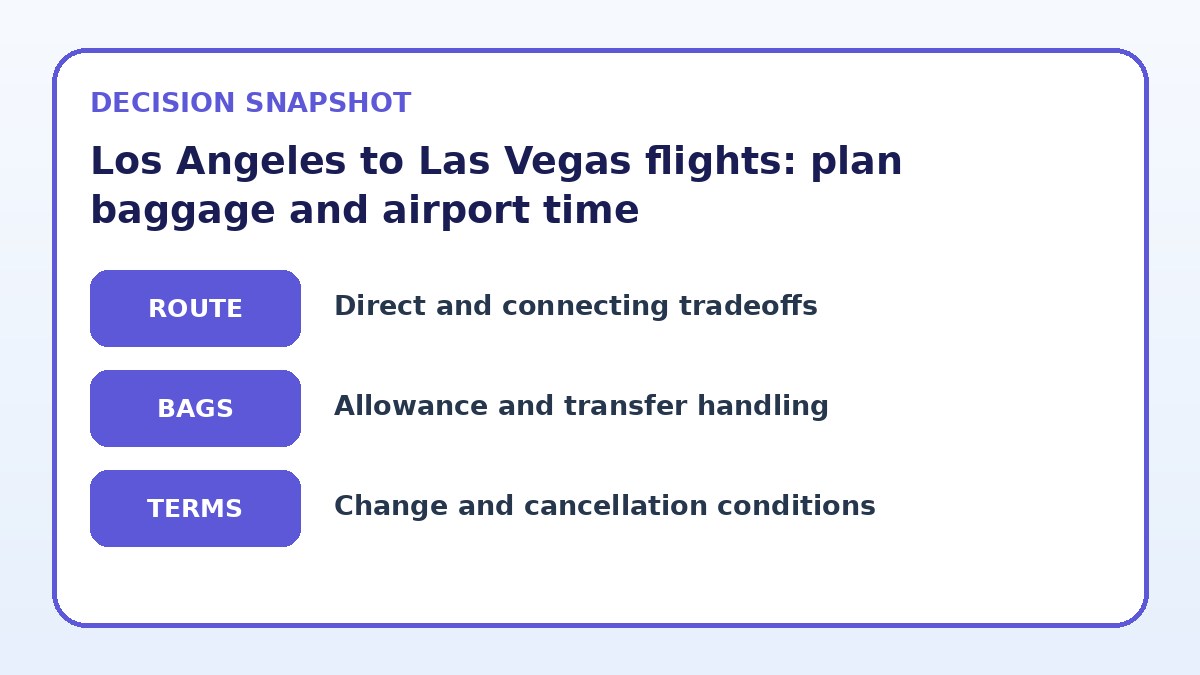
Routing: direct versus connecting for heavy baggage
The clearest routing choice for travelers with extra luggage is a nonstop flight from Los Angeles to Las Vegas whenever one is available at a sensible fare. Nonstops cut out extra handling, reduce the number of times your bags pass through conveyor systems and staff, and eliminate the need to re-check luggage at a connection point. For many travelers carrying extra suitcases, bulky gear, or anything fragile, reducing transfers lowers the risk of damage and lost items. Nonstop service also simplifies timing because you only deal with departure time and arrival procedures rather than the complexities of multiple legs.
Connecting itineraries can still make sense when nonstop options are limited or much more expensive, but they introduce risk and time costs you must manage. If you consider a connection, check whether the airline offers protected connections and automatic bag transfer; if not, you may need to collect and re-check baggage, which requires more time and patience. Choose connections at airports with straightforward layouts and single-terminal transfers when possible. Always compare total door-to-door time, not just flight duration—longer layovers and terminal changes can erode any perceived savings for travelers with many or heavy bags.
Baggage and connection risk: rules to verify before booking
Before you finalize any booking, gather the precise details about your luggage and verify the carrier’s baggage rules on the final booking page and airline website. Confirm the number of checked pieces allowed, permitted weight per piece, and the maximum linear dimensions for each suitcase. Overweight and oversize fees can be substantially higher than standard checked-bag fees; these vary not only by carrier but by fare class and route, so the published baggage allowance in a search summary may be incomplete. Also verify whether sports equipment or specialized items require advance notice, special booking codes, or separate handling fees.
For connections, find out how the airline handles bag transfer and whether you must exit security and re-check luggage if changing between terminals or carriers. If you’re booking separate tickets for segments, your bags will likely not be transferred automatically, increasing the time you need at the airport and the risk of missed connections. If you use airport luggage services (e.g., oversized-bag check desks or early bag drop), confirm availability and cut-off times. The final booking page and the airline’s baggage policy are the authoritative sources for fees, size limits, and procedures—print or screenshot those pages for reference on travel day.
Compare flight-selection strategies
| Flight strategy | Best for | Risk to check |
|---|---|---|
| Nonstop flight with included checked bags | Travelers prioritizing simplicity and low handling risk for multiple bags. | Often higher base fare but fewer handling steps and less chance of delays or re-checking. |
| Nonstop basic fare, pay-per-bag | Travelers able to travel light on some trips but with a few paid checked items. | Lower ticket price but add-on baggage fees and possible overweight charges at checkout or gate. |
| Connecting flight with guaranteed through-checked baggage | Those who must save on fares but prefer luggage transferred automatically. | Potentially lower fares with longer travel time and higher exposure to delay cascades. |
| Separate tickets or mixed-carrier itinerary | Travelers chasing the lowest possible fare and willing to manage bags between flights. | Highest risk of needing to collect and re-check luggage, and requires larger connection buffers. |
Recheck the complete itinerary
Confirm airports, connection handling, baggage, and change conditions before deciding.
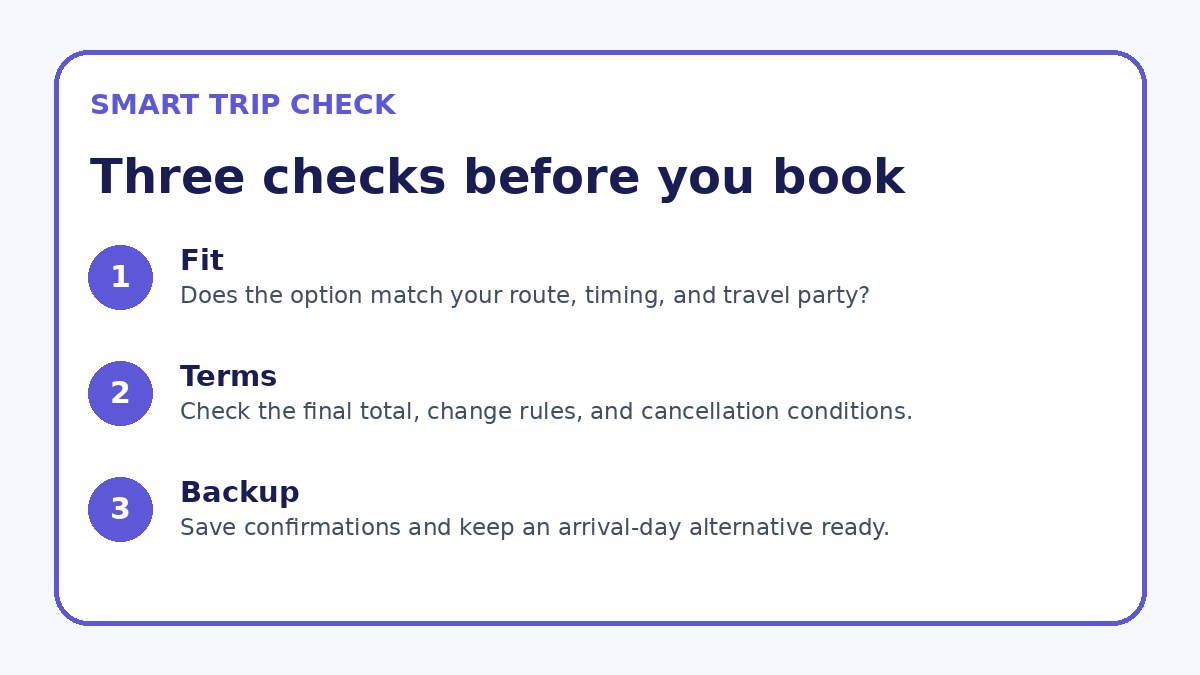
Schedule fit: how much airport time to allow in Los Angeles
Los Angeles airports can be busy and spread across multiple terminals, so plan extra time for check-in, bag drop, and security. For travelers with additional luggage allow at least 90 to 120 minutes before domestic departures when checked-bag handling is required, particularly during peak travel windows. If you need special assistance, oversized bag handling, or must visit an airline counter to tag nonstandard items, add more buffer. Remember that early morning and late afternoon/evening peak periods can produce longer lines at security and bag drop; plan your arrival based on the time of day and terminal serving your flight.
If you’re connecting in another airport, choose a schedule with a thoughtful buffer specific to whether bags transfer automatically. For through-checked bags, a shorter connection window may be acceptable; for self-transfer or re-checking, plan at least two to three hours depending on terminal layout and shuttle times. Always check the airline’s stated minimum connection time and then add a conservative margin—flight delays at the origin or long security lines can quickly eliminate tight buffers. Build in time to confirm gate locations and any terminal transfers, and avoid back-to-back tight itineraries when carrying many or bulky bags.
Flight details to verify
- Write down exact travel dates, number of travelers, and the count/weight/dimensions of every bag before searching fares.
- On the airline’s final booking page, verify allowed checked pieces, weight limits, oversize rules, and exact fees for additional or overweight bags.
- Choose nonstop service if handling risk and total travel time are more important than the lowest possible fare.
- If booking a connection, confirm whether bags transfer automatically and add at least 60–120 minutes to the airline’s minimum connection time.
- Purchase checked-bag allowances online in advance when possible to avoid higher airport or gate fees.
- Prepare a printed or screenshot copy of baggage policy pages and your ticket confirmation to show at check-in if disputes arise.
Fare conditions: balancing cost, flexibility, and baggage needs
When comparing fares, read the fine print on what each ticket includes for baggage and changes. Lower fare classes sometimes exclude even a single checked bag or impose strict size and weight limits; a “cheaper” ticket can become more expensive after adding two or more checked items and overweight fees. If your luggage needs are fixed—several full-sized suitcases or unusually heavy items—factor the full baggage cost into the fare comparison. Flexibility also matters: if your travel dates or times might change, a slightly higher fare with better change or cancellation terms and a defined baggage bundle can be worth it.
Some travelers choose a higher fare class primarily for included baggage and flexibility; others prefer to pay per bag and accept a tighter schedule. When reviewing options, verify refundability, change fees, and how baggage fees are applied at purchase versus at the airport. Also confirm whether add-on baggage purchases can be made in advance online at a lower rate; many carriers allow prepaid bags at reduced fees compared with airport rates. Whatever you decide, have exact traveler details and bag counts ready before you complete the purchase to avoid unwanted surprises at the airport.
Flight Guide questions travelers ask
How early should I arrive at Los Angeles airport when I have extra checked bags?
Plan to arrive earlier than usual when you have extra checked bags. For domestic Los Angeles departures, aim for 90 to 120 minutes before departure as a baseline; add time if you expect oversized-bag handling, need counter assistance, or travel during peak periods. If you require special services—wheelchair assistance, unaccompanied minors, or bulky-item tagging—contact the airline ahead of time and add additional buffer. The airline’s check-in and bag-drop cut-off times are binding, so verify those on the airline’s page and allow margin for long lines or traffic to the airport.
Can I avoid oversized or overweight fees when flying with bulky items to Las Vegas?
To reduce the chance of oversized or overweight fees, measure and weigh each item before you go and compare those measurements to the airline’s posted rules on the booking confirmation page. If an item exceeds limits, consider shipping it ahead, splitting contents between bags to meet weight limits, or paying for a higher fare class that includes larger allowances. Some airports offer early-bag drop or cargo services—check whether those options exist and their deadlines. Ultimately, the carrier’s final booking page and baggage policy list the authoritative fee thresholds you must observe.
If my Los Angeles flight is delayed and I miss a connection, what happens to my checked bags?
If you’re on a single itinerary with a single carrier or a partner arrangement, airlines usually take responsibility for re-routing you and your through-checked bags, but exact procedures vary by carrier and fare type. If you booked separate tickets, you are typically responsible for collecting and re-checking bags and for any missed connections. Check the carrier’s minimum connection policy and change protections before booking. On travel day, keep baggage receipts and confirmation codes handy, and confirm the airline’s rebooking and baggage transfer procedures at the ticket counter if a delay threatens your connection.
Final decision note
Planning Los Angeles to Las Vegas flights when you have extra luggage is about reducing handling steps and giving yourself time. Start by deciding whether a nonstop option is worth the higher fare for your circumstances; if you must connect, choose an itinerary with automatic baggage transfer or a comfortably long layover. Always verify baggage inclusions, weight and size limits, and fees on the airline’s final booking page before you commit. Arrive early at the Los Angeles departure airport, prepay bags when available, and carry proof of baggage rules and confirmations. With those steps you’ll lower stress, reduce risk to your luggage, and have clearer expectations on travel day.
Continue planning
Check current options and final conditions
Use the provider page to confirm live availability, the final total, cancellation terms, and every condition that matters to your trip.
This evergreen planning guide was created with AI-assisted drafting and a structured quality review. It does not display live prices, schedules, availability, visa guidance, or provider rankings. Verify current details before booking. Some links are affiliate links; we may earn a commission at no additional cost to you.