If you’re travelling London to Paris with extra luggage, start at Heathrow or Gatwick if airport facilities and simpler transfers with large bags matter most; choose Stansted or Luton to save on airport-to-city distance if you prioritise cheaper fares and don’t mind extra handling. The practical answer depends on how you value luggage handling, ground transfers, and the type of flight (direct or connecting). For many travellers with bulky or multiple bags, fewer changes and better on-site services make Heathrow or Gatwick more convenient even if transfer times vary. Below I explain the tradeoffs, the decision criteria you should compare when booking, and how to pick flights and ground options to move heavy bags with the least stress. Verify baggage rules, connection details, and check-in/transfer options on airline and airport pages before you finalize any booking.
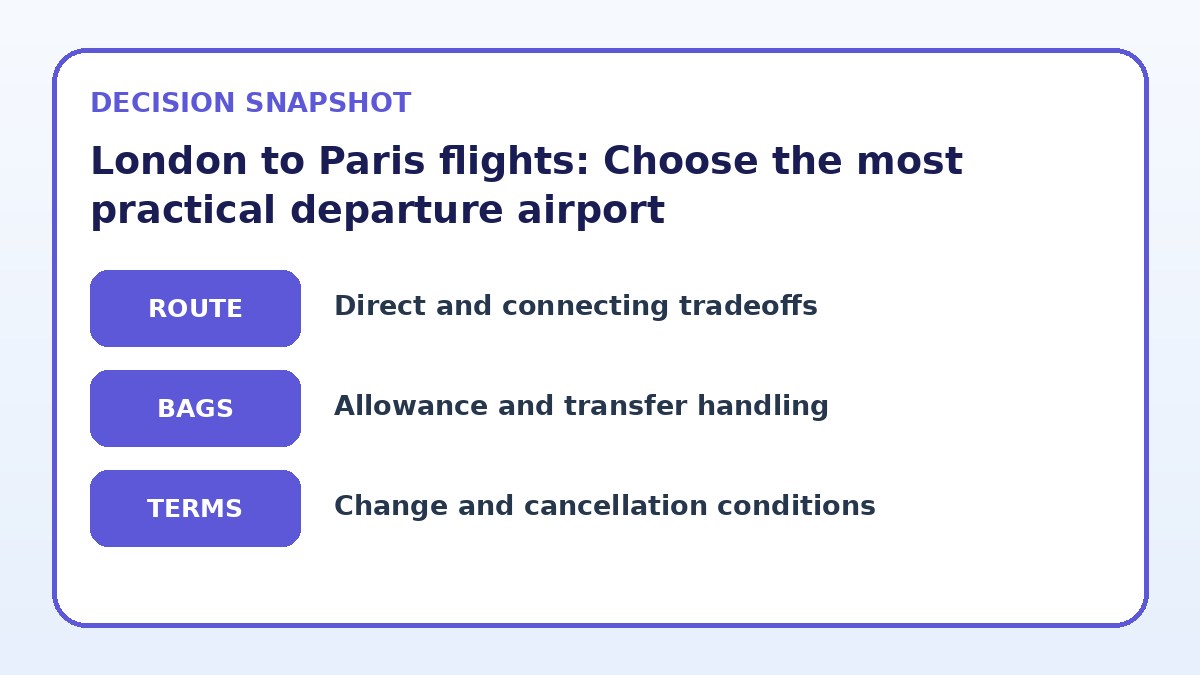
See current options before you compare the details
Availability and final conditions change. Open Trip.com now or keep reading for the practical comparison.
Practical recommendation up front
For travellers whose priority is reducing strain and complexity when carrying extra luggage, the most practical London departures are Heathrow and Gatwick. Both airports host the largest range of scheduled carriers and airport services, meaning you’re more likely to find direct flights, staffed check-in desks, luggage assistance, and more frequent train or coach departures that accept heavy bags. Choosing one of these airports lowers the number of times bags need to be moved by passengers and contractors, and it typically means fewer short, awkward transfers between transport modes that are unpleasant with bulky cases.
That said, the right choice still depends on your specific starting point in London, how much time you have, and whether you prefer paid porter services or self-handling. If your priority is minimizing out-of-pocket travel time to the airport from central or southwest London, Gatwick can be more convenient; if you need the widest choice of carriers and frequent services connecting to Heathrow Express or tube lines, Heathrow will often be easier. Use these simple priorities—directness of the air route, ground transfer complexity, and available baggage assistance—to make the immediate decision.
How airport features affect travellers with extra luggage
Airport layout and services matter more when you have large or numerous bags. Wide undercover walkways, short terminal-to-platform transfers, lifts and moving walkways, staffed kerbside assistance, and baggage trolleys reduce physical effort. Heathrow’s terminals are designed with high volumes in mind and generally provide more staffed services and luggage handling options; Gatwick’s terminals are compact and have good train access, which can make the trip smoother. In contrast, some regional low-cost airports place check-in desks a long way from public transport or have bus transfers to remote car parks, which adds handling and time.
You should also consider how baggage is handled by carriers and transfer processes. Flights that require changing aircraft or rechecking bags increase the number of times luggage must be moved off conveyors and between vehicles. Where possible, prefer single-carrier itineraries or explicitly confirmed through-checked baggage on connecting tickets. Finally, confirm whether the airport or your airline offers porter services, oversized-luggage counters, or meet-and-assist options—those services are worth their cost when you’re dealing with large items or many suitcases.
| Approach | Best for | Tradeoff to check |
|---|---|---|
| Choose Heathrow | Travelers prioritising terminal services, direct flights, and robust assistance for heavy or oversized baggage | Potentially longer tube or cross-terminal walks depending on terminal; distances inside the airport can be sizable |
| Choose Gatwick | Those starting in south or southwest London who want compact terminals and straightforward train access to central London | Fewer airline choices than Heathrow at times; check terminal location and assistance options for bulky items |
| Choose Stansted or Luton | Budget-oriented travellers who accept longer transfers and self-handling in exchange for lower base fares | More shuttle transfers, longer walks, and limited on-site baggage services can increase effort with heavy luggage |
| Choose city departures with carry-down convenience | Anybody who can trade off a longer flight or multi-leg itinerary for an easier local transfer from a closer airport | May require extra handling or connections in-flight; always verify through-check baggage options and transfer logistics |
Ready to check the option that fits your plan?
Use your exact dates and traveler details so the provider page can show the current total and conditions.
Comparing ground transfer complexity and timing
Think beyond the flight: heavy bags make transfers that much harder. Heathrow has high-frequency rail and road options, but some terminals are a long walk from the station or require terminal transfers; factor terminal-to-train time into your plan. Gatwick’s North and South terminals are connected and have convenient train access; however, check where your airline operates because walking between terminals with large bags can be taxing. Stansted and Luton commonly require shuttle buses or longer coach rides to mainline stations, which means lifting and stowing luggage multiple times.
When choosing an airport for convenience with extra luggage, plan the door-to-door journey time and the number of physical transfers. A slightly longer flight from Heathrow with a short, straightforward train ride to central London can often be less stressful than a marginally cheaper fare from a smaller airport that forces multiple bus transfers or long walks with heavy cases. Use maps and terminal diagrams on airport websites to visualise routes, and if you rely on public transport, check whether ticket gates, stair access, or lifts are straightforward at the stations you’ll use.
Before you book
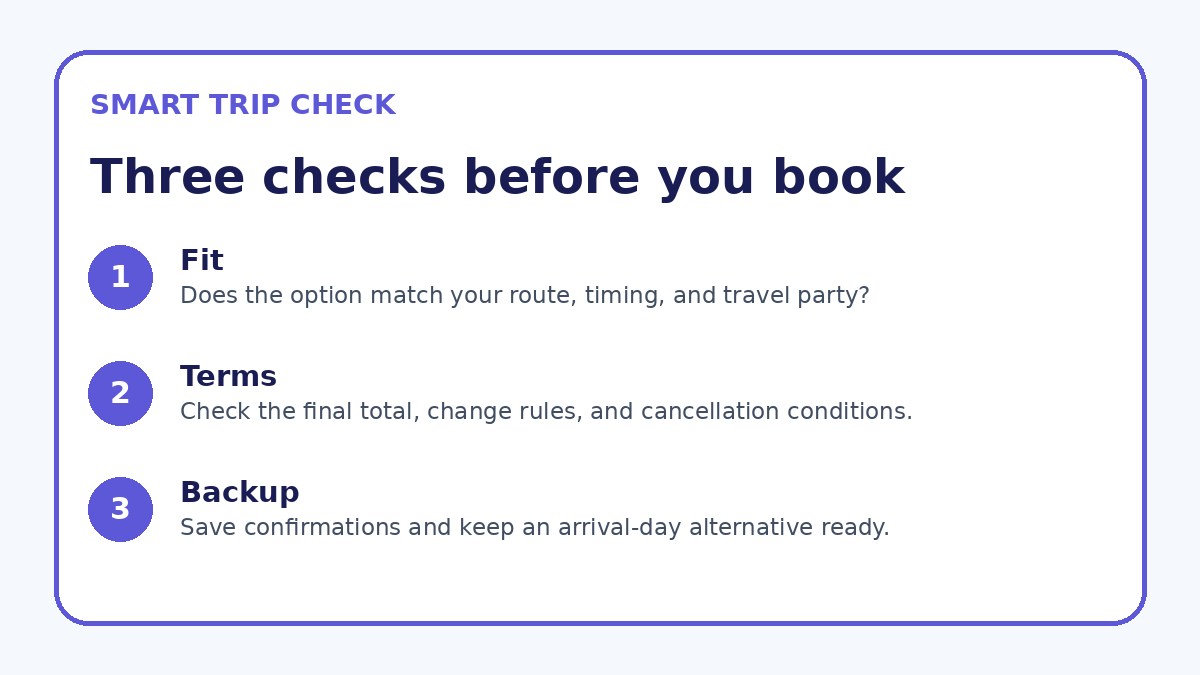
- Confirm the airline’s exact checked-baggage weight, size limits, and fees for extra or oversized pieces before booking.
- Verify whether your ticket includes through-checking of baggage on connecting flights or requires you to collect and re-check in the middle.
- Map door-to-door travel time including terminal transfers, station access, and walking distances with heavy luggage.
- Check availability and cost of porter, meet-and-assist, or oversized-item services at the departure airport.
- Compare train, coach, or taxi luggage rules and accessibility at both the London airport and your Paris arrival point.
- If prices look similar, prioritise the airport with fewer transfers and clearer baggage-handling procedures.
Booking tactics and what to verify before you buy
When you compare London to Paris flights, explicitly filter results by baggage allowance, checked-bag weight, and number of permitted pieces rather than assuming standard allowances. If a fare appears cheaper, confirm whether the listed price includes the exact baggage you need and whether fees apply for weight or oversize items. Also check whether the fare allows through-checking of baggage on connecting carriers or if you'll need to collect and re-check bags in London or Paris. If the provider pages are unclear, call the airline or use a reputable booking agent to confirm the handling rules before committing.
Next, verify airport services that matter to you: porter or meet-and-assist availability, luggage trolleys and their cost, oversized item desks, and the ease of terminal transfers at the chosen airport. For ground transfers, inspect train or coach operators’ baggage policies and the step-free access of stations you’ll use. Trip.com can be a convenient place to compare current schedules and availability, but always double-check baggage rules and transfer specifics on the airline’s and airport’s official pages before finalising a booking.
Frequently asked questions
Is it cheaper to fly from Stansted or Luton if I have a lot of baggage?
Stansted and Luton often list lower base fares, but those savings can be reduced or erased by added baggage fees and the practical costs of moving luggage. Low-cost fares commonly exclude checked baggage or limit size and weight; purchasing multiple checked items or paying for oversized pieces raises the total. Also consider indirect costs: longer transfers, taxis or extra coach fees, and the physical effort or time lost handling bags. Always calculate the total door-to-door cost—including any baggage fees and transfer expenses—before choosing a smaller airport.
Can I avoid rechecking bags when connecting through London?
Avoiding rechecking is possible when your entire itinerary is on a single ticket or when airlines have interline agreements that explicitly allow through-checked baggage. When you book separate tickets or mix carriers without confirmed baggage transfer, you usually need to reclaim and recheck luggage. To reduce risk, choose single-carrier itineraries or explicitly confirmed through-checked fares, and check the airline’s transfer rules. If the provider page doesn’t clearly state through-checking, contact the airline or your travel agent to confirm before you travel.
What services should I prioritise at the departure airport with bulky items?
Prioritise porter or meet-and-assist services that can help from curbside to check-in, confirmed oversized-luggage desks, ample luggage trolleys, step-free access, and short terminal-to-train connections. Also consider secure short-term storage or oversized-item counters if you need to consolidate bags. Check terminal maps to identify how far from public transport your check-in area is, and verify whether lifts or ramps are available where you’ll pass. These services remove physical strain and reduce the risk of missed connections or damaged items.
Final planning note
For most travellers with extra luggage, choosing Heathrow or Gatwick as your London departure will simplify handling, reduce transfers, and increase access to assistance and direct routes to Paris. That simplicity often outweighs modest savings from smaller airports once baggage fees and transfer inconvenience are included. However, if your London start point is much closer to Stansted or Luton and you’re prepared to self-handle, those airports can still be practical. The decisive steps are to compare total door-to-door time, verify baggage allowances and through-checking, and confirm porter or accessibility services on the airline and airport pages before you complete booking.
Continue planning
Check current options and final conditions
Use the provider page to confirm live availability, the final total, cancellation terms, and every condition that matters to your trip.
This evergreen planning guide was created with AI-assisted drafting and a structured quality review. It does not display live prices, schedules, availability, visa guidance, or provider rankings. Verify current details before booking. Some links are affiliate links; we may earn a commission at no additional cost to you.