Practical answer first: for most couples staying inside central Lisbon neighborhoods (Baixa, Chiado, Bairro Alto, Alfama, Avenida) public transport plus walking is the simpler, cheaper, and less stressful choice. Rent a car if your itinerary includes day trips to distant beaches, Sintra’s hilltop palaces with awkward public links, cascading coastal towns, or if you prefer full flexibility on arrival and departure times. Which is right depends on your priorities: convenience and independence versus convenience within the city and ease of parking and navigation. Below you’ll find clear tradeoffs, decision criteria like cost, mobility needs, luggage and driving comfort, and specific checks to run on car rental terms and transport passes before you book.
See current options before you compare the details
Availability and final conditions change. Open Trip.com now or keep reading for the practical comparison.
Getting around central Lisbon: why public transport often wins
Lisbon’s central neighborhoods are dense and walkable, with frequent metro lines, historic trams, and hill-climbing elevators that connect most tourist areas. For couples who plan to stay within the city, this network reduces the need for a car: you avoid one-way streets, narrow lanes, and the hunt for scarce parking spots. Public transport lets you relax with wine on evenings out without worrying about where to leave a vehicle, and many attractions are best enjoyed on foot because of steep streets and viewpoints that cars cannot access.
Using the tram and metro also simplifies timing when you’re visiting museums, restaurants and viewpoints that cluster close together. It’s practical to purchase a rechargeable transport card and plan day trips with regional trains from central stations when needed. That said, pick your base wisely: staying near a metro line or a tram route reduces transfers and speeds up mornings, so couples should weigh accommodation location heavily if they plan to rely on public transit.
When renting a car makes sense for couples
A rental car gives you freedom to design fluid day trips beyond the city’s core and to travel at your own pace, which can be especially appealing if you want to chase sunsets at secluded beaches or explore dispersed heritage sites. If your itinerary includes multiple towns in a short period, a car can cut total transit time and eliminate the need to coordinate train or bus schedules. For couples who prefer spontaneous detours, grocery runs for a self-catered stay, or scenic drives along the coast, a car can be a significant convenience.
However, driving in Lisbon requires comfort with narrow streets, steep hills and frequent one-way systems. Parking in central areas can be limited, and many historic buildings have no private spots, so couples should assess whether their chosen lodging offers secure parking or if they will rely on paid public garages. Balance the attraction of flexible mobility against potential time spent searching for parking and the stress of urban driving.
| Approach | Best for | Tradeoff to check |
|---|---|---|
| Rely on public transport and walking | Couples staying central who want low-stress city mobility and cheaper daily costs | Less flexibility for remote day trips and more dependence on schedules and transfers |
| Rent a car for the whole trip | Couples planning multiple remote day trips or carrying lots of luggage | Extra costs, parking hassles, and stress driving in narrow, hilly streets |
| Use public transport in city, rent car for specific days | Couples who want both inexpensive city movement and occasional flexible excursions | More planning for pick-up/return and potential extra fees for short rentals |
| Combine public transport with organised day tours | Couples who prefer no driving but want guided access to farther attractions | Less personal schedule flexibility and possible group tour timing constraints |
Ready to check the option that fits your plan?
Use your exact dates and traveler details so the provider page can show the current total and conditions.
Costs, convenience, and hidden considerations to compare
When deciding between a car and public transport, compare total trip costs rather than headline rental rates. Add fuel, parking, congestion zones (if applicable), tolls for regional routes, and insurance options when estimating rental expense. With public transport, add the cost of recharge cards, occasional taxis or ride-shares for late nights, and any regional train tickets for day trips. Couples should run a simple budget comparison for their exact itinerary days to see which option is more economical.
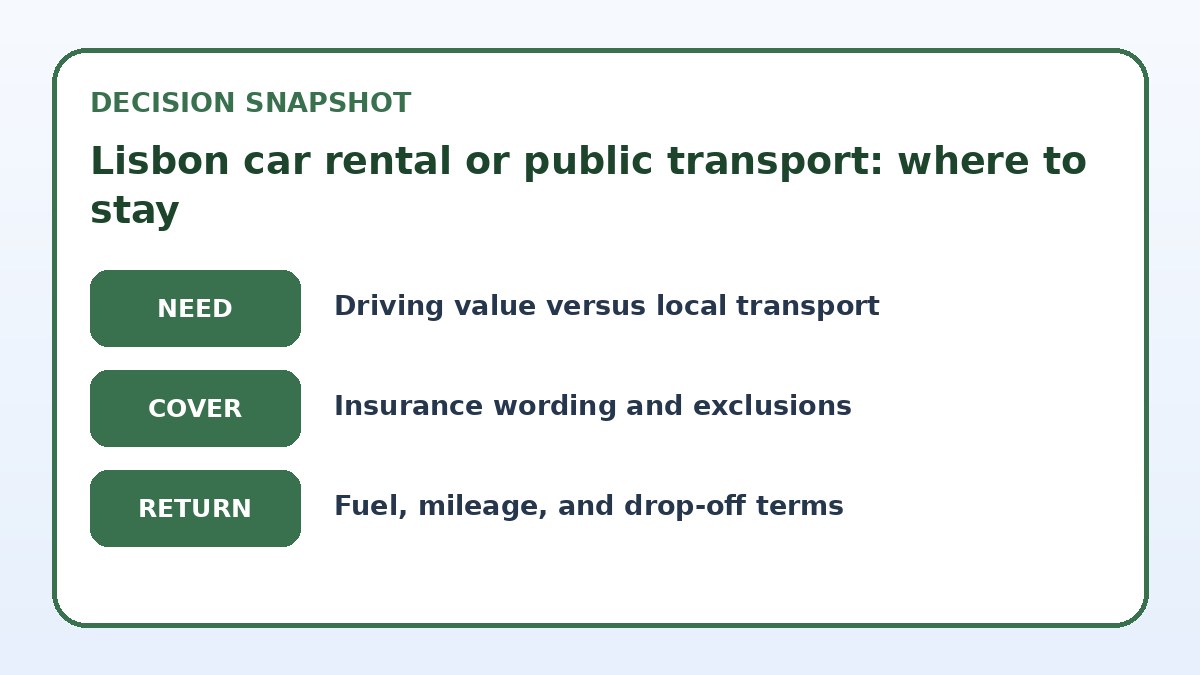
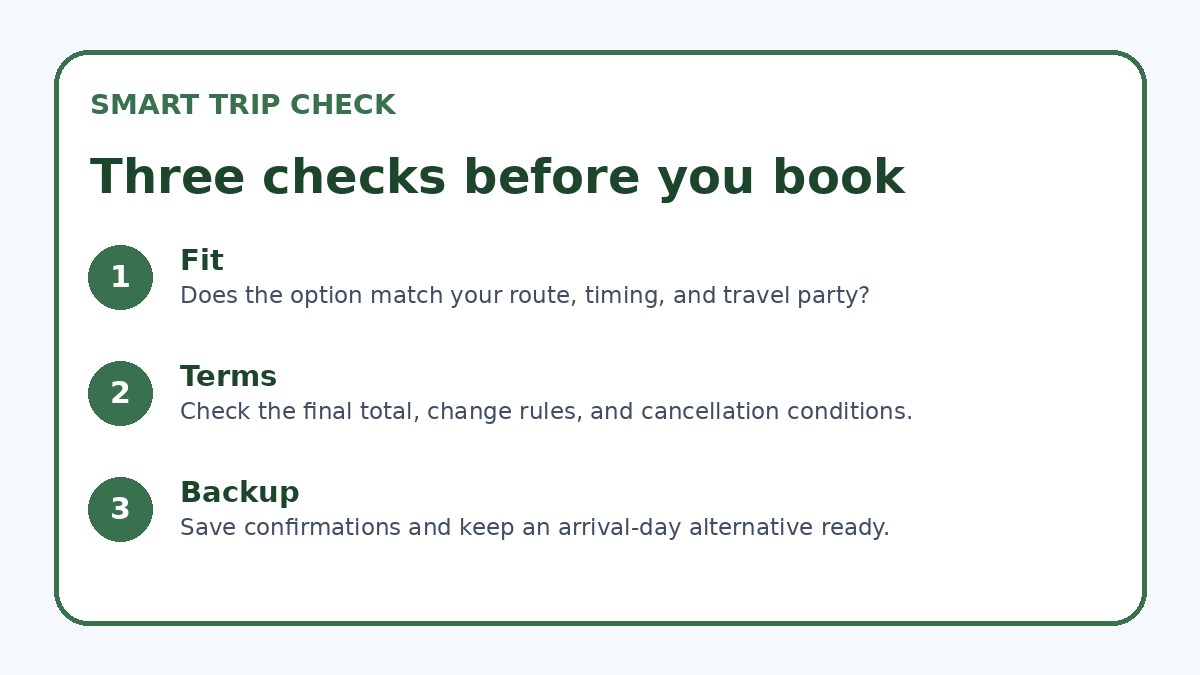
Beyond money, think about convenience metrics: how much luggage you’ll carry, how much walking you’re comfortable with after dinner, accessibility needs, and how fresh each of you will feel after a day of walking versus driving. Also verify logistics that change frequently: rental company fuel policies, additional driver fees, cross-border restrictions if you plan to leave Portugal, and the exact coverage in your insurance. When in doubt, check the final terms on the rental provider’s booking page and the official transport operator pages for pass details.
Before you book
- Locate your accommodation on a map and note the nearest metro, tram, and main bus stops within a five- to ten-minute walk.
- If considering a rental, confirm with your host whether secure on-site parking exists and the exact cost and reservation process.
- Compare total car rental costs by adding estimated fuel, parking fees, and tolls to the supplier’s posted daily rate.
- Check the rental agreement for fuel policy, additional driver fees, cross-border restrictions and insurance coverage before paying.
- If relying on public transport, buy or top up a rechargeable transport card and map regional train times for planned day trips.
- Plan at least one full day simulating each option (car vs public transport) for your itinerary to spot logistical pain points.
Practical checks and timing to help you decide before booking
Before you finalize a car rental, confirm pickup/drop-off locations, whether airport pick-ups attract extra fees, and if there is a mileage or geographic restriction on the contract. Ask your accommodation about on-site or nearby secure parking and whether they reserve spaces. Review the rental company’s policy on additional drivers and fuel. For public transport, check where the nearest metro or tram stops are to your lodging, the availability of rechargeable cards, and whether night buses or taxis will cover evenings when metro service ends.
Timing matters: if you arrive late at night, a car may feel like the simplest option for reaching your hotel without coordinating late train or bus services. Conversely, if you’re staying only three or four nights concentrated in the city center, public transport and a few organised day trips may save time and hassle. Run a mock day-by-day plan with both options and mark the pain points—parking searches, early departures, or multiple transfers—to see which approach aligns with your travel style as a couple.
Frequently asked questions
Can couples manage Lisbon without a car if they want to visit Sintra and Cascais?
Yes—Sintra and Cascais are reachable from central Lisbon by regional trains and buses, and many day tours run from the city. Trains to Sintra depart from Rossio or Oriente stations and require a transfer if coming from some metro lines, so plan connections. Cascais trains run along the coast from Cais do Sodré and are straightforward. Using public transport means you’ll follow timetables and may need early starts to fit both towns into a single day, but it avoids parking and narrows the need to navigate unfamiliar roads.
What should couples check about parking before booking a rental in Lisbon?
Ask your accommodation whether they include a reserved space, if it’s on-site or nearby, and whether the parking is secure and suitable for your vehicle size. If your hotel doesn’t provide parking, identify nearby public garages and their typical distance from your lodging. Consider whether you can handle street parking, which varies by neighborhood and often uses pay-and-display machines or resident permits. Also verify garage operating hours and whether overnight parking is permitted if you plan late returns.
How do late evenings and nightlife affect the transport vs car decision?
Nightlife can push couples toward a car for door-to-door convenience, but that advantage depends on available parking and the driver’s willingness to navigate late. Lisbon’s metro closes overnight, but night buses and taxis serve many neighborhoods; check routes and expected wait times for the areas where you’ll spend evenings. If you expect late dinners or bars in Bairro Alto, factor in the convenience and safety of returning on foot, by taxi, or via ride-share versus driving back through dim, narrow streets.
Final planning note
For most couples staying in central Lisbon, public transport combined with walking is the practical default: it reduces stress, lowers daily hassles, and places you within easy reach of the city’s main attractions. Rent a car if your heart is set on flexible, off-the-beaten-path day trips or if you’ll be traveling with significant luggage or mobility needs. The right choice is highly personal: compare total costs, parking availability at your lodging, the timing of your arrival and departure, and how much driving you'd enjoy. Verify final rental terms on the provider’s booking page and transport pass details on official operator pages (or consult Trip.com for availability comparisons) before you commit.
Continue planning
Check current options and final conditions
Use the provider page to confirm live availability, the final total, cancellation terms, and every condition that matters to your trip.
This evergreen planning guide was created with AI-assisted drafting and a structured quality review. It does not display live prices, schedules, availability, visa guidance, or provider rankings. Verify current details before booking. Some links are affiliate links; we may earn a commission at no additional cost to you.